The Anatolian Fortress

Located in the Beykoz district on Istanbul’s Asian side, the Anatolian Fortress is one of the historic landmarks that enrich the shoreline of the Bosphorus. Giving its name to the surrounding area, the fortress was built under the edict of Bayezid I as an auxiliary structure intended to support the siege of Istanbul, then under Byzantine control. In 1452, Rumeli Fortress was constructed on the opposite shore under the edict of Fatih Sultan Mehmet as reinforcement. During the construction of that new stronghold, the Anatolian Fortress was also repaired under the sultan’s orders.

istanbul.com Editor
istanbul.com Editor
September 28, 2022 4 min
Share
The Anatolian Fortress

Anatolian Fortress history on the Bosphorus

The Anatolian Fortress stands at a strategic point where the Göksu brook meets the Bosphorus. Its position made it highly valuable in Ottoman military planning, especially during the final stages leading to the conquest of Istanbul. Together with the fortress later built across the strait, it formed part of a wider effort to control movement on this crucial waterway.

The major function of the Anatolian Fortress during the siege of Istanbul was, like that of Rumeli Fortress, to help ensure control of navigation through the strait. In the years following the conquest of Istanbul, both fortresses also played an important role in preventing threats coming from the Black Sea and in securing Turkish sovereignty in the Bosphorus.

Architecture of the Anatolian Fortress

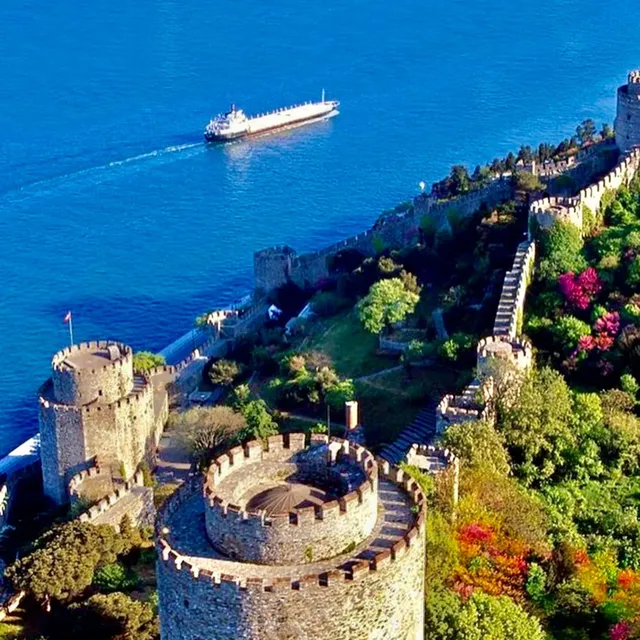
The Anatolian Fortress can be considered a typical example of Ottoman military architecture. In its construction, bricks were used alongside square-cut block stones. The main structure of the fortress, established on a narrow area by the water, is centered on a high rectangular tower.

This tower functions as an inner castle and is enclosed by walls. The tower and the inner wall are strengthened by a second rampart, while bastions surround these ramparts to create an outer defensive layer. In overall form, the complex consists of the main castle, the inner rampart, the outer rampart, and three secondary towers.

Why the fortress still matters today

Beyond its military history, the fortress remains important as part of Istanbul’s layered urban and cultural landscape. Today, the fortresses are counted among the landmarks that add distinctive beauty to the Bosphorus silhouette. Their presence also helps visitors understand how geography, defense, and imperial ambition shaped the city’s history.

If you are exploring the Bosphorus, the site gains even more meaning when considered alongside a Bosphorus Cruise, which offers a broader sense of how the strait connected and divided the city through the centuries. You may also wish to compare it with nearby waterfront heritage such as Beylerbeyi Palace, another important stop on Istanbul’s Asian shore.

Visiting and learning more

The fortress is best appreciated as a historic Bosphorus landmark and as part of the paired defensive system completed by Rumeli Fortress on the European side. For general historical background, see Wikipedia’s overview of Anadolu Hisarı. For broader Istanbul travel planning, GoTürkiye provides official destination information.

Whether you approach it for its architecture, strategic location, or place in the story of the conquest of Istanbul, the Anatolian Fortress remains one of the city’s notable monuments on the water.

FAQ about Anatolian Fortress

Where is the Anatolian Fortress located?

The Anatolian Fortress is located in Beykoz on the Asian side of Istanbul, directly on the Bosphorus. It stands near the point where the Göksu brook flows into the strait, giving it a highly strategic position in the city’s historic geography.

Why was the Anatolian Fortress built?

It was built under the edict of Bayezid I as an auxiliary military structure to support the siege of Istanbul during the Byzantine period. Its location helped the Ottomans strengthen control over movement through the Bosphorus.

What is the connection between Anatolian Fortress and Rumeli Fortress?

Rumeli Fortress was built in 1452 on the opposite side of the Bosphorus under Fatih Sultan Mehmet. Together, the two fortresses helped control navigation through the strait and formed an important defensive system before and after the conquest of Istanbul.

What are the main architectural features of the fortress?

The fortress includes a high rectangular tower, inner walls, a second rampart, surrounding bastions, and three secondary towers. Built with square-cut stones and brick, it is regarded as a typical example of Ottoman military architecture.
Find more Istanbul inspiration

Nişantaşı
calendar_today Jun 16, 2022 5 min

Nişantaşı

The fashionables and people who follow the latest trends in fashion always hit their rotation to Nişantaşı. It is located in the Şişli district on the European Side of İstanbul. It includes neighborhoods like Teşvikiye, Maçka, and Osmanbey. Nişantaşı is known for its unique shopping selections.

Cinemas in Istanbul
calendar_today Sep 26, 2022 6 min

Cinemas in Istanbul

Zorlu Center has one of the most attractive and all enjoyable cinema you will ever see, with its amazing and urban design, this cinema in this amazing complex will give you the latest 3D movies there are so you can enjoy your time there. As well as the complex of Zorlu Center provides many other entertainments for you and your family, definitely worth every part of the experience. It also offers the best theme park to let your children having a joy.

Tursu Suyu
calendar_today Jun 13, 2022 5 min

Tursu Suyu

When you visit Istanbul, don’t go through without trying pickle juice, a drink that you can drink on your feet, get healthy calories, and gain energy.

3-Day Istanbul Itinerary (For First-Time Visitors)
calendar_today Jul 9, 2026 14 min

3-Day Istanbul Itinerary (For First-Time Visitors)

Three days is enough to fall for Istanbul without trying to swallow it whole. The trick is geography: the city is split by water into clusters, and a good plan groups sights by cluster so you spend your time looking at domes rather than sitting in traffic. This istanbul 3 day itinerary does exactly that:

Istanbul for History Nerds: The Ultimate Guide to Empires, Conquests, Cisterns, Walls, and Layered Civilizations
calendar_today Jul 29, 2026 27 min

Istanbul for History Nerds: The Ultimate Guide to Empires, Conquests, Cisterns, Walls, and Layered Civilizations

If Istanbul has ever felt less like a city and more like a timeline you can walk through, this guide is for you. This is Istanbul for History Nerds: not a checklist of famous sights, but a smart, practical way to underst

5 Days in Istanbul Without Rushing
calendar_today Jul 29, 2026 28 min

5 Days in Istanbul Without Rushing

There are faster ways to see Istanbul. You can sprint between Sultanahmet’s headline monuments, squeeze in a Bosphorus cruise, eat one hurried kebab, buy a box of lokum, and leave feeling productive.

3 Days in Istanbul: The Perfect First Trip
calendar_today Jul 29, 2026 27 min

3 Days in Istanbul: The Perfect First Trip

Your first time in Istanbul should feel layered, not rushed: the great domes and minarets, the Bosphorus light, the ferry crossings, the backstreets where the city suddenly becomes quieter and more intimate. This itinera

Four Ways To Reach Your Hotel
calendar_today Sep 30, 2022 6 min

Four Ways To Reach Your Hotel

Kebab & Meat Restaurants
calendar_today Jun 14, 2022 5 min

Kebab & Meat Restaurants

Would you like to try the countless varieties of meat and kebab dishes in Turkish cuisine? Here are a couple of restaurants for this hunger.

Byzantine Istanbul: Churches, Mosaics, and the Hidden Christian History of the City
calendar_today Jul 29, 2026 26 min

Byzantine Istanbul: Churches, Mosaics, and the Hidden Christian History of the City

Istanbul is often introduced through its Ottoman skyline, Bosphorus views, and famous bazaars. But long before the minarets defined the horizon, this was Constantinople: the capital of the Eastern Roman Empire and one of