Inside
Inside Topkapı Palace: Courtyards, Harem & Treasury
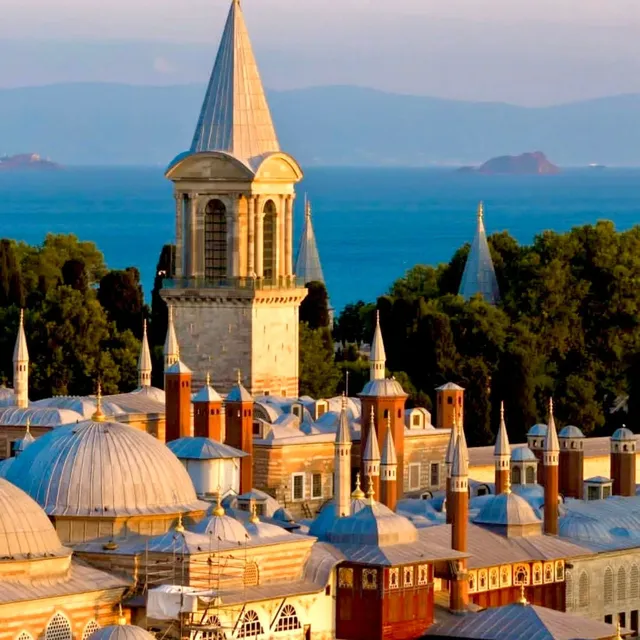
Topkapı Palace was the command center of the Ottoman Empire for almost 400 years. Part royal residence, part government, part treasury, it crowns the headland where the Bosphorus meets the Golden Horn. Plan half a day here: it is less a building than a small walled city.
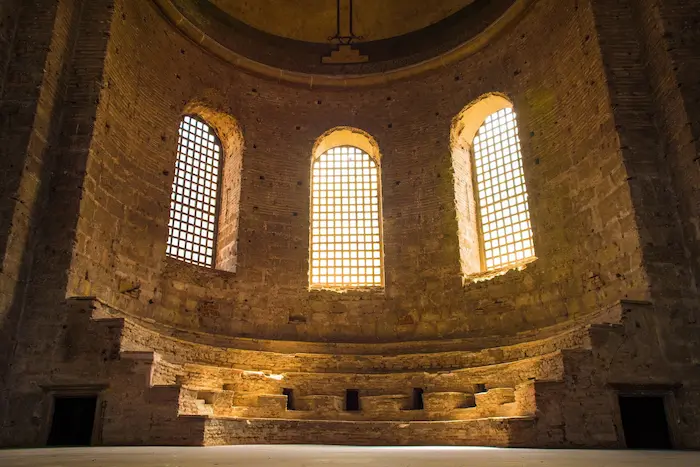
The palace unfolds as four courtyards, each more private than the last. The first is a public park holding Hagia Irene. The second was where the empire did its governing, home to the Imperial Council and the palace kitchens. The third belonged to the sultan's inner court and school; the fourth, in contrast, is all pavilions and Bosphorus views. As a result, to walk Topkapı is to walk inward through Ottoman power, gate by gate, toward rooms few subjects ever saw.
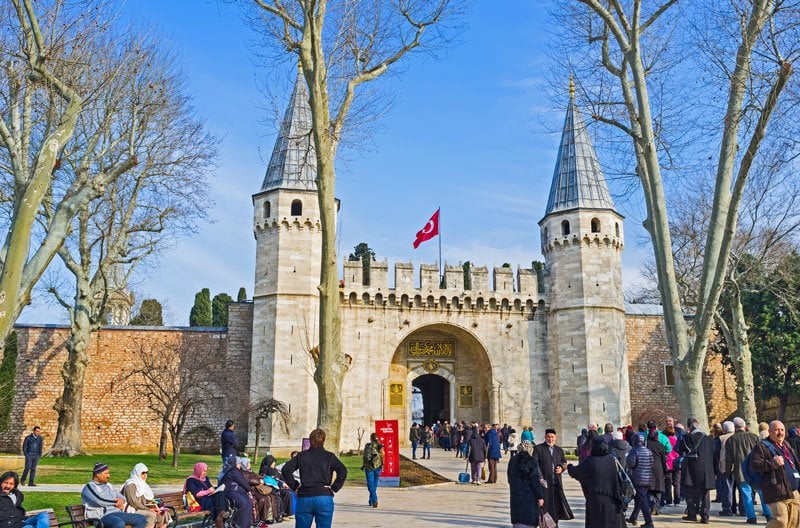
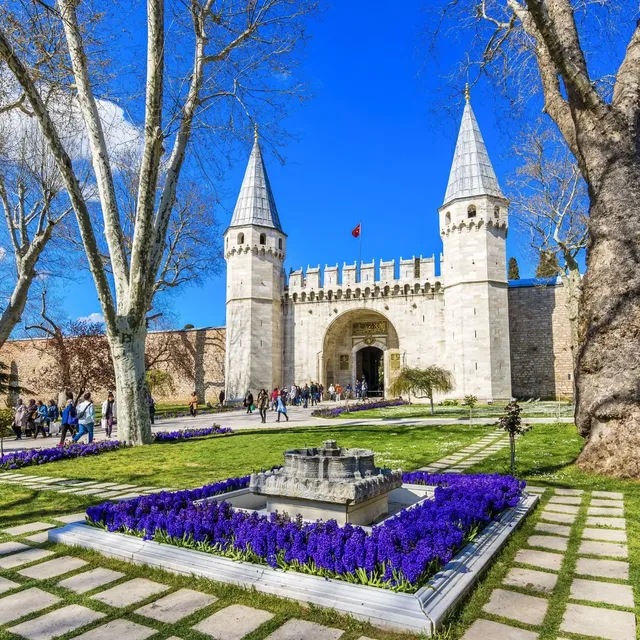
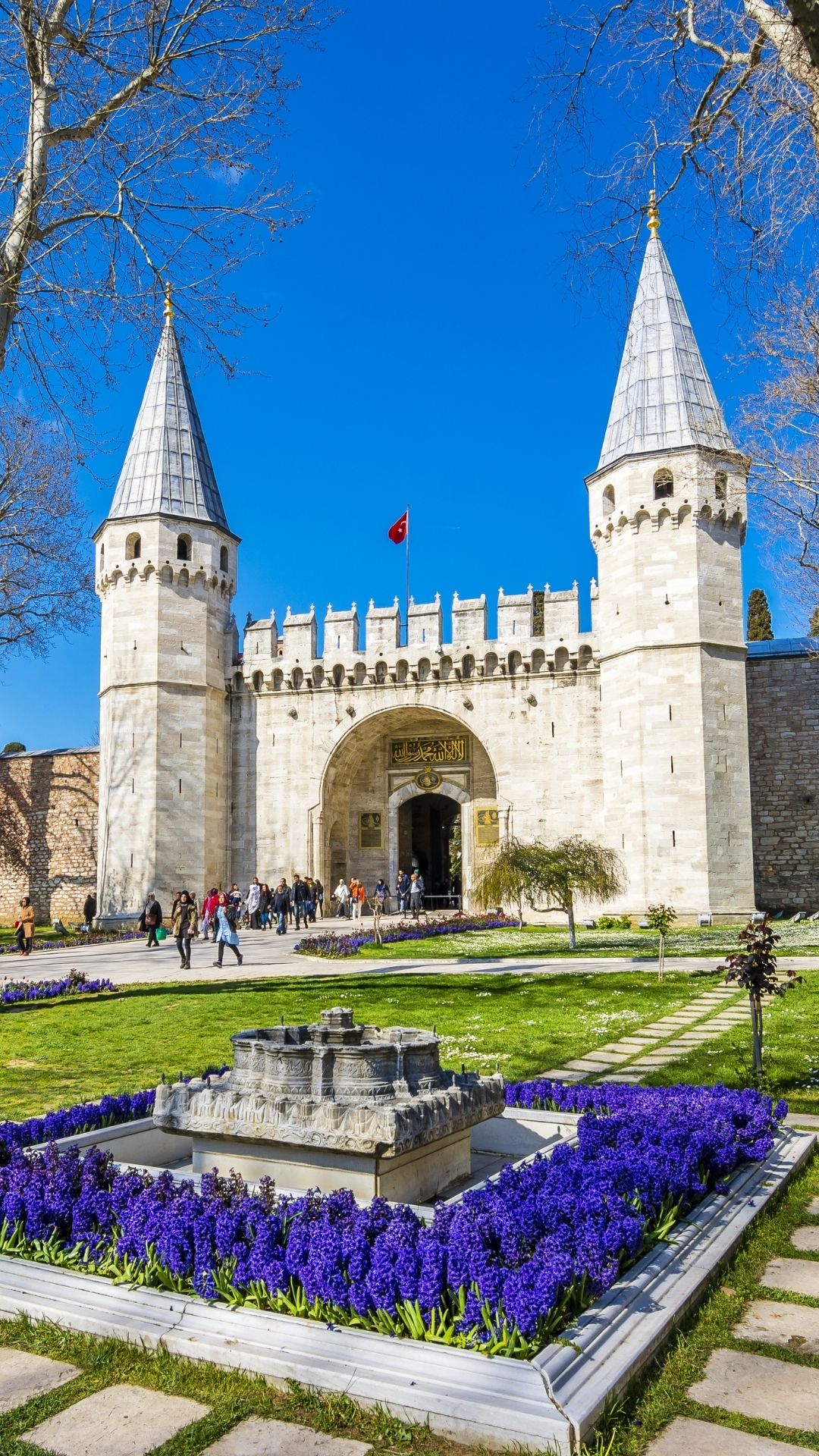
The gates themselves carry the names visitors still pass under today: the Imperial Gate (Bâb-ı Hümâyun) opens the first courtyard, the Gate of Salutation (Bâbüsselâm) — the twin-towered gate on every postcard — admits you to the second, and the Gate of Felicity (Bâbüssaâde) guards the threshold of the sultan's inner world. The Ottomans split the palace along that last gate: the outer service courts were the Bîrun, everything beyond — the sultan's private domain, including the Harem — the Enderun.
The Treasury brings the spectacle: the Topkapı Dagger and the Spoonmaker's Diamond, an 86-carat stone ringed by 49 smaller diamonds. Nearby, the Chamber of Sacred Relics holds items revered across the Islamic world, displayed to the sound of continuous Quran recitation, a tradition kept here since the sixteenth century.
The relics reached this hill as spoils of the empire's greatest expansion: when Selim I conquered Egypt in 1517, the caliphate passed to the Ottoman sultans, and with it came the Holy Mantle of the Prophet (Hırka-i Saadet) and the other revered objects, surrendered by the last Abbasid caliph. Later sultans kept adding to the chamber, which is why it reads today as four centuries of accumulated devotion rather than a single collection.
Two smaller stops earn their detour. For instance, the Baghdad and Revan kiosks in the fourth courtyard are jewel-box pavilions built to celebrate campaigns, with the best terrace view in the palace. Their gilded domes and tiled porches show the empire at play rather than at work. Meanwhile, the kitchens — which once fed thousands daily — display one of the world's great Chinese porcelain collections, over 10,000 pieces gathered across six centuries of imperial appetite. Look for the celadon ware: the court prized it on the belief that it revealed poison.
Beyond porcelain and treasure, the museum's storerooms run deep: the sultans' own robes and kaftans, imperial portraits, and one of the world's great collections of arms and armor rotate through the exhibition halls.
Look up in the second courtyard, too. Above the Imperial Council Hall, a latticed window let the sultan listen to his viziers unseen. In the fourth courtyard, the Baghdad Kiosk was built in 1639 for Murad IV’s recapture of Baghdad, and the Mecidiye Kiosk below it is the last building ever added to the palace.
The Harem: what's inside, and is it included?
Yes. The standard foreign-visitor ticket is a combined palace, Harem and Hagia Irene ticket, so the Harem is included. You do not need to buy anything extra for it.
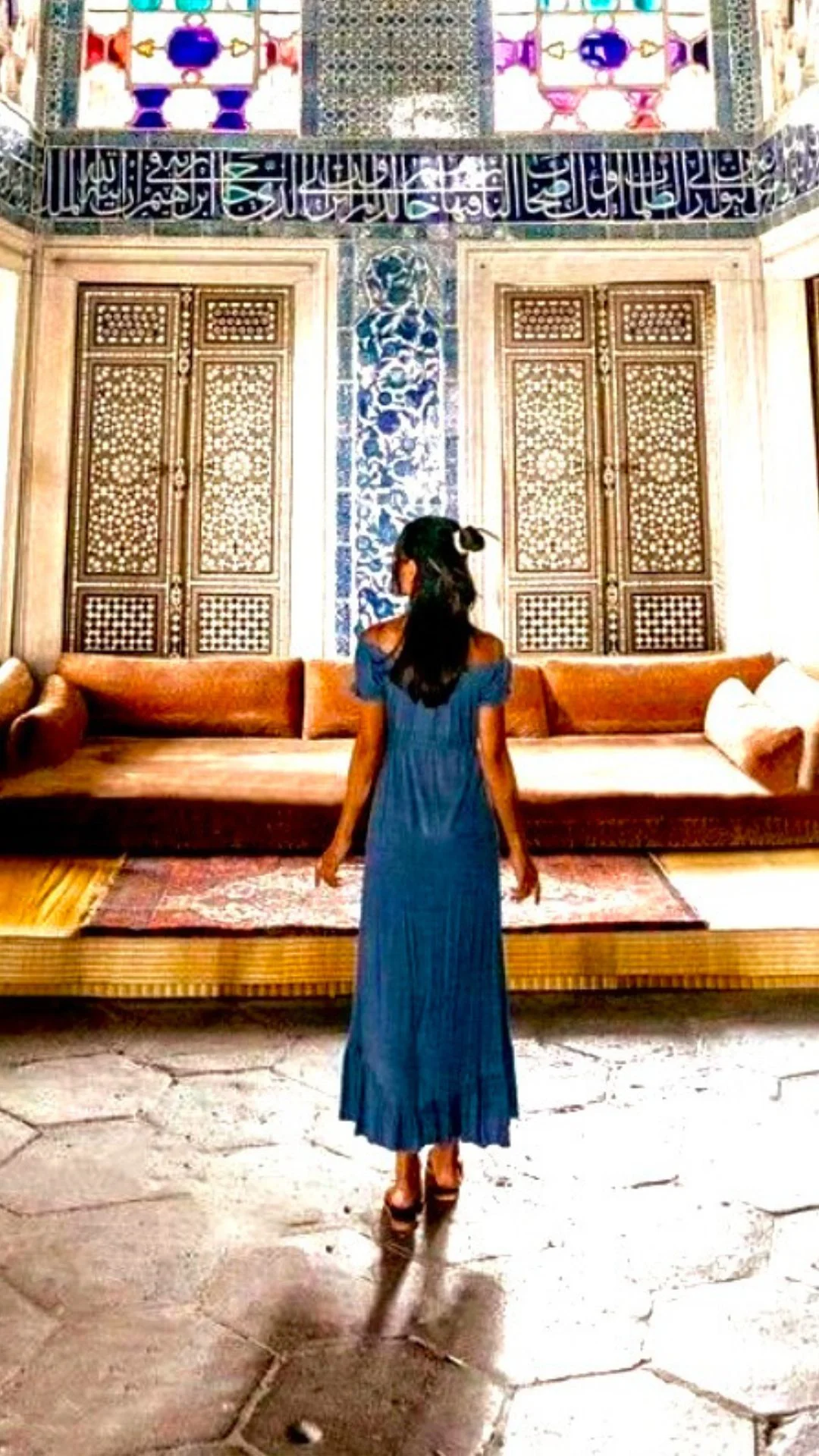
The Harem is the palace within the palace: the private quarter of the sultan's family, run by the queen mother. The word means "protected" or "forbidden", and the architecture takes it literally, sealing the whole quarter behind a single guarded entrance. What you see inside:
- The queen mother's (valide sultan's) quarters, the centre of power inside the Harem.
- Rooms lined with İznik tiles, some of the finest tilework anywhere.
- A visitor route through the best of around 300 rooms. Most of the quarter stays closed.
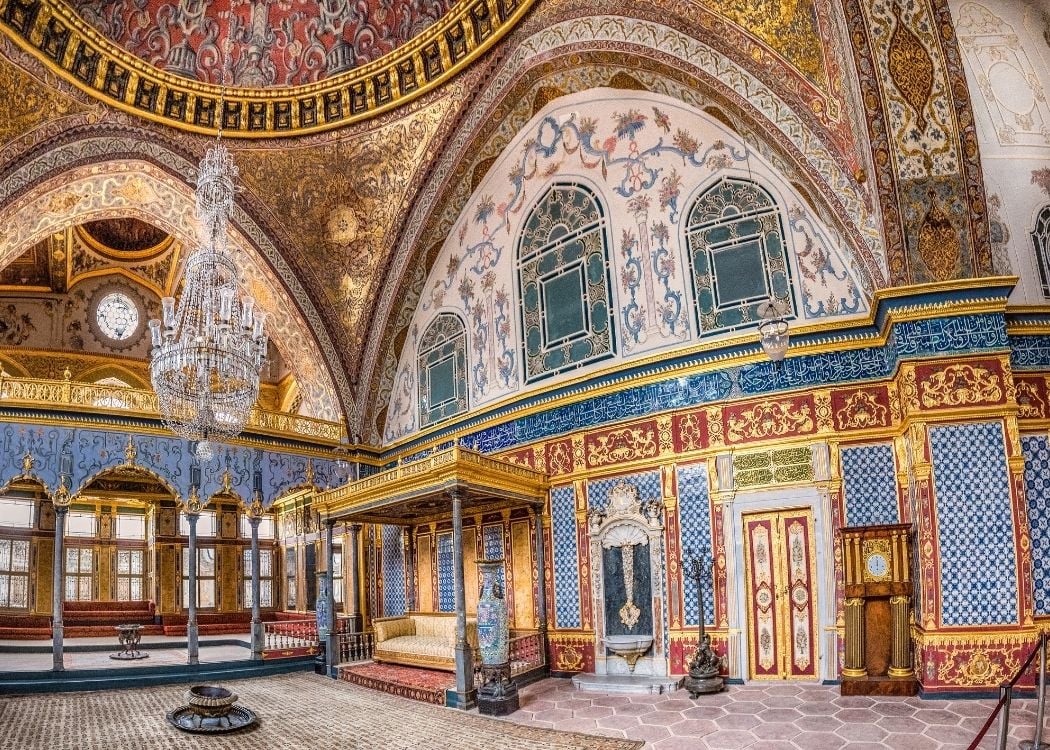
Allow extra time for it on top of the palace's two to three hours. With the Harem and Hagia Irene, Topkapı becomes a half-day visit. In our experience the Harem is the part people remember, and it rewards going early, before the corridors fill with groups. If you want it explained room by room, the Topkapı guided tour with Harem covers it with a guide.
- Combined ticket (palace + Harem + Hagia Irene): 2,750 TL for foreign visitors.
- Harem-only ticket: 1,050 TL for foreign visitors.
- Museum cards: Turkey's MüzeKart is not valid in the Harem or Hagia Irene sections.
- Closed: Tuesdays, like the rest of the palace.
Last checked: 21 October 2026, against the official tariff on millisaraylar.gov.tr.
History
Topkapı Palace History: The Empire's Home for 400 Years
Mehmed II began the palace in 1459, six years after conquering Constantinople, choosing the old Byzantine acropolis for its views and its symbolism. The name came later — Topkapı, "cannon gate," borrowed from a shore gate in the sea walls below. For roughly four centuries it served as the empire's seat: sultans were crowned here, envoys were humbled here, and the empire's orders went out from its second courtyard. Consequently, no address in the empire carried more weight. Specifically, this was never one building. The walled complex was laid out on some 700,000 square meters; today it covers about 350,000, without Gülhane Park, once its gardens. As many as 4,000 people lived inside it, from pages and cooks to the royal family itself.
Nor was it the work of one architect. Over four centuries the complex passed through the hands of the empire's chief builders — Acem Ali and, most famously, Mimar Sinan in the sixteenth century, Davud Ağa after him, and Sarkis Balyan in the palace's final Ottoman decades — each adding, rebuilding and repairing after fires and earthquakes. The Tower of Justice rising above the second courtyard, long the tallest structure on this point of the skyline, was the empire's way of saying the sultan could see everything.
The palace's political life ended in 1856, when Sultan Abdülmecid I moved the court downstream to the European-style Dolmabahçe Palace. Topkapı, meanwhile, kept the relics and the memories. The rooms emptied of politics. The visitors came later, and they have not stopped since. Then, on April 3, 1924, the young Republic turned it into its first museum. According to Britannica and the palace's own records, that made it one of the Republic's first acts of keeping the imperial past rather than erasing it. Together with the rest of the Historic Peninsula, it has been UNESCO World Heritage since 1985.
The Spoonmaker's Diamond carries the palace's favorite legend: a fisherman supposedly found the stone in a rubbish heap and traded it to a spoonmaker for three wooden spoons. Historians raise an eyebrow; the name, in fact, stuck anyway — and the 86-carat result outshines the story.
In short, Topkapı is where the Ottoman Empire kept its heart. Dolmabahçe got the chandeliers; this hill kept the relics, the archives — some 300,000 documents — and the ghosts.
For its first century the palace was simply the New Palace (Sarây-ı Cedîd), to set it apart from the Old Palace in Beyazıt. Fire shaped what you see. After the 1574 kitchen fire, Mimar Sinan rebuilt the kitchens with the row of chimneys still on the skyline. A great fire in 1665 gutted much of the Harem, which was rebuilt under Mehmed IV and his successors.
Plan your visit
Visiting Topkapı Palace: Tickets, Hours & Timing
Topkapı Palace tickets, hours & entry rules at a glance
| Ticket (foreign visitors) | 2,750 TL combined ticket: palace + Harem + Hagia Irene, valid for one day from purchase (about €50 at October 2026 rates) |
|---|---|
| Single-section tickets | Harem only 1,050 TL · Hagia Irene only 1,050 TL (foreign visitors) |
| Turkish citizens | Combined 500 TL · Harem 400 TL · Hagia Irene 350 TL, on the domestic ticket with ID |
| Children & students | Ages 0–6 free · students aged 7–25 with ID pay the discounted rate (250 TL combined); foreign students pay twice the discounted rate and, from age 12, show an ISIC card |
| Opening days & hours | Every day except Tuesday · ticket offices open 9am and close 5pm, year-round (no separate summer timetable is published) |
| Holidays | Closed on the first day of Ramadan Bayram (Eid al-Fitr); open on all other public and religious holidays, including New Year’s Day and Kurban Bayram |
| Museum cards | MüzeKart is not valid in the Harem or Hagia Irene · the Istanbul Tourist Pass® includes Topkapı with hosted entry and an audio guide |
| How to buy | At the palace ticket offices, or online in advance from licensed resellers such as istanbul.com (skip-the-ticket-line options, live prices on the cards below). The National Palaces e-ticket page does not currently list Topkapı |
| Security | Everyone passes a security check before the inner courtyards, skip-the-line tickets included |
| Address | Cankurtaran Mah., Babı Hümayun Cad. No:1, 34122 Fatih, İstanbul · T1 tram, Sultanahmet or Gülhane stop |
| Time needed | 2–3 hours for the courtyards and Treasury · about half a day with the Harem and Hagia Irene |
How much are Topkapı Palace tickets in 2026?
A Topkapı Palace ticket costs 2,750 TL for foreign visitors in 2026, about €50 at October 2026 exchange rates. It is one combined ticket for the palace grounds, the Harem and Hagia Irene, valid for one day from purchase. Single tickets for the Harem or Hagia Irene cost 1,050 TL each. Children aged 0–6 enter free.
The old "Harem costs extra" advice is outdated: the combined ticket is the default now. Turkish citizens pay 500 TL on the domestic ticket. Students aged 7–25 get the discounted rate with ID; foreign students pay twice the discounted rate and show an ISIC card from age 12. Prices are set in lira and change periodically, so treat them as current, not fixed.
Official tariff on millisaraylar.gov.tr (Directorate of National Palaces), last checked 21 October 2026.
Is the Harem included in the Topkapı Palace ticket?
Yes. The standard foreign-visitor ticket is the combined palace, Harem and Hagia Irene ticket, so you do not buy anything extra for the Harem. The entrance sits in the second courtyard, beside the Tower of Justice. A Harem-only ticket (1,050 TL) exists for visitors who skip the rest. Turkey’s MüzeKart is not valid in the Harem.
Allow 45 minutes to an hour inside. In our experience it is the part people remember, and it rewards going first, before the narrow corridors fill with groups.
What are Topkapı Palace’s opening hours?
Topkapı Palace is open every day except Tuesday. The official ticket offices open at 9am and close at 5pm, and the palace publishes one timetable for the whole year, with no separate summer or winter hours. Arrive by early afternoon: with the Harem, our team needed just over three unhurried hours.
In summer 2026 the palace also opened on Saturday evenings, 8:30pm–10:30pm, from mid-June to mid-September, on a separate night ticket. Watch the official announcements for a repeat next summer.
Is Topkapı Palace closed on Tuesdays and holidays?
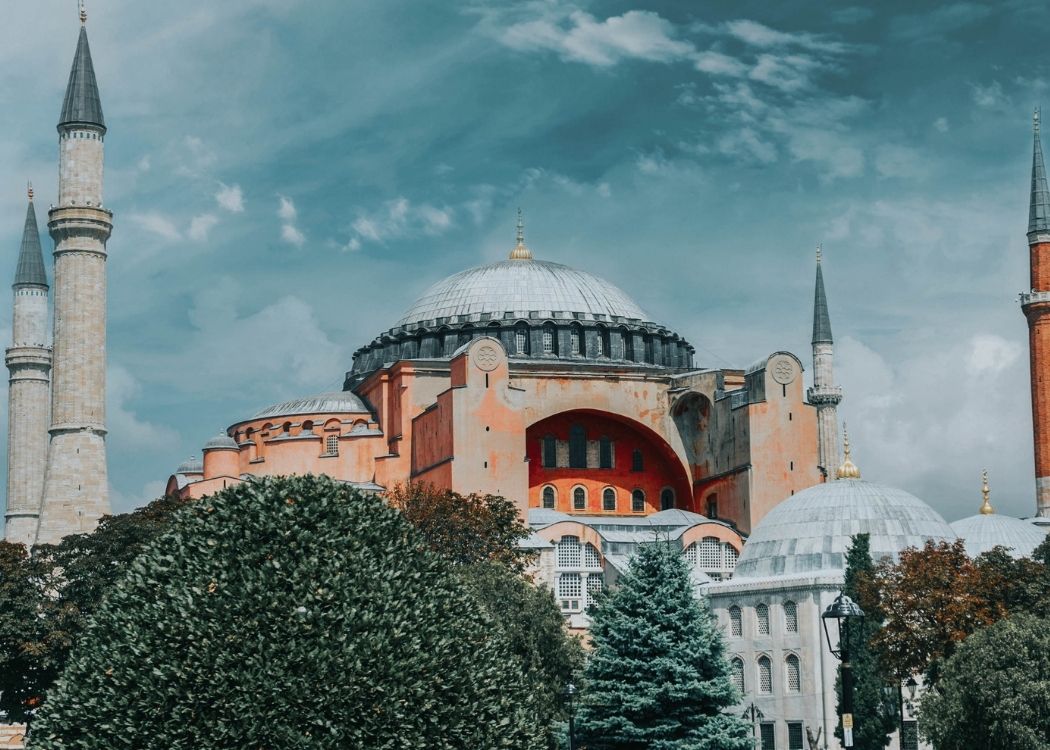
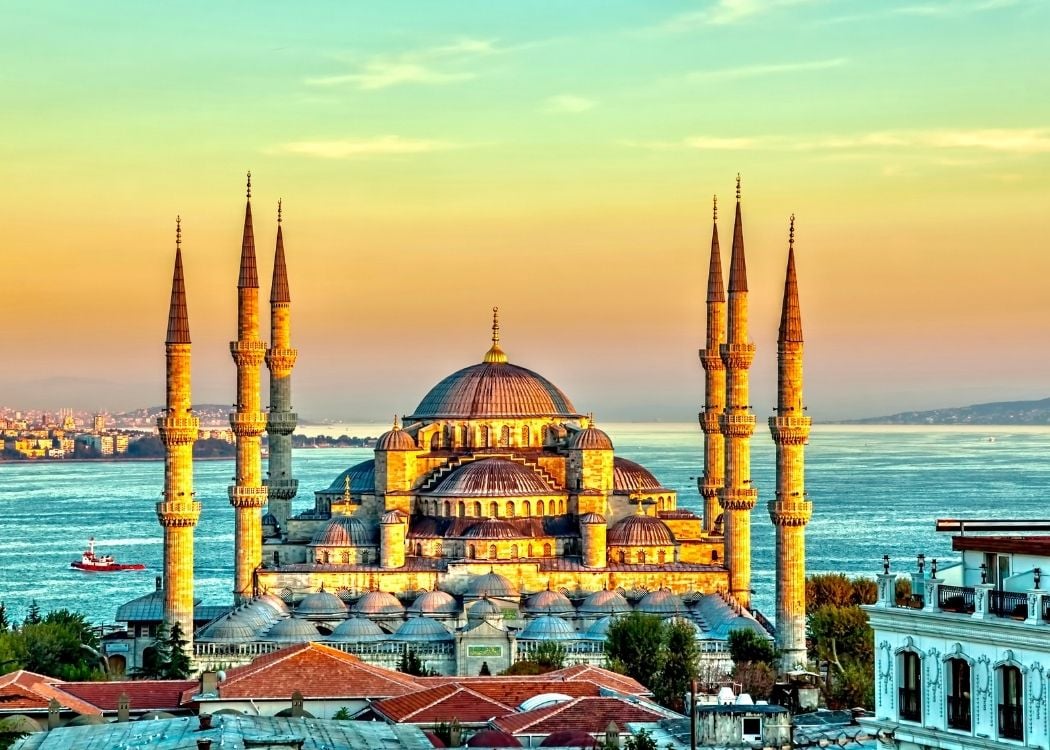
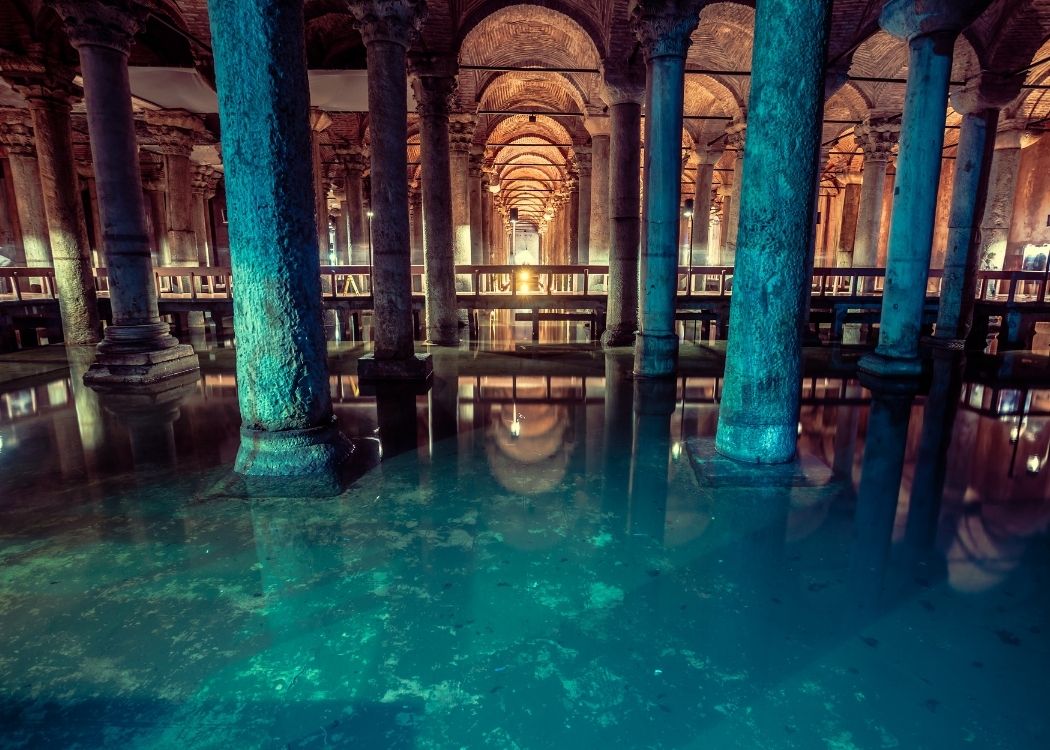
Yes, Topkapı Palace is closed every Tuesday, all year. The only holiday closure is the first day of Ramadan Bayram (Eid al-Fitr). It stays open on New Year’s Day, on all days of Kurban Bayram (Eid al-Adha), and on the national holidays. If Tuesday is your Sultanahmet day, swap in Hagia Sophia and the Basilica Cistern.
Holiday calendar on the official National Palaces Topkapı page, checked 21 October 2026.
Where do you buy Topkapı Palace tickets: on site or online?
The official tickets are sold at the palace ticket offices, from 9am to 5pm. The National Palaces e-ticket page on millisaraylar.gov.tr currently sells other palaces but does not list Topkapı. Online, istanbul.com sells skip-the-ticket-line entry and a guided tour with the Harem; live prices sit on the cards below.
istanbul.com is a TÜRSAB-licensed travel company, not the palace’s ticket office. Watch for lookalike "official" Topkapı websites: the only official source is the Directorate of National Palaces. An online ticket skips the ticket queue, not the security check, which everyone passes.
Do MüzeKart, MuseumPass or the Istanbul Tourist Pass work at Topkapı?
Partly. Turkey’s MüzeKart is not valid in the Harem or Hagia Irene sections, according to the official National Palaces rules. The Istanbul Tourist Pass® includes Topkapı Palace with hosted entry and an audio guide, so you do not queue for a ticket. If you carry another museum pass, confirm at the gate which sections it covers.
How long do you need at Topkapı Palace, and what is the best route?
Plan two to three hours for the courtyards and Treasury, and about half a day with the Harem and Hagia Irene. Our team measured the full loop at just over three unhurried hours. The best route goes from the most crowd-sensitive rooms to the open-air ones.
- Pass the Gate of Salutation and turn left to the Harem while it is quiet.
- Then the Imperial Council Hall and the kitchens in the second courtyard.
- Then the Treasury and Sacred Relics in the third courtyard.
- Finish in the fourth courtyard, at the Baghdad Kiosk and the terrace views.
The courtyards are cobbled and sloping, and the Harem has stairs and narrow corridors. Wheelchair users manage the main courtyards but will find parts of the Harem hard.
How do you get to Topkapı Palace?
Take the T1 tram to Sultanahmet or Gülhane. Both stops leave a short, pleasant walk to the first gate. From Hagia Sophia, the palace entrance is five minutes on foot. For example, the classic old-city day chains them: Hagia Sophia at opening, Topkapı through midday, Basilica Cistern when your feet ask for shade.
When is the best time to visit Topkapı Palace?
Be at the gate for the 9am opening and do the Harem first. We found it nearly empty before 10am, and shoulder-to-shoulder by noon. Weekdays beat weekends, when local visitors add to the tour groups. If mornings are impossible, late afternoon thins out as the tour groups leave for dinner, but leave time before the 5pm ticket cut-off.
Fact-checked against official sources · October 21, 2026 · TURSAB-licensed operator
Tours
Topkapı Palace Tickets & Tours
The palace rewards context more than most sites. The rooms are labeled, but the stories live between them. So what fits your day? A guided tour with the Harem included covers the essentials in expert company and handles the timing traps. The hosted fast-track option gets you through entry friction and moving at your own pace. Likewise, if Topkapı is one stop in a bigger Istanbul plan, a city pass can bundle it with the rest — check current inclusions before you count on it. Live prices sit on the cards below.


FAQ
Frequently Asked Questions
The combined ticket costs 2,750 TL for foreign visitors in 2026, about €50 at October 2026 rates. It covers the palace, the Harem and Hagia Irene for one day. Harem-only and Hagia Irene-only tickets cost 1,050 TL each. These are the official National Palaces prices, last checked 21 October 2026, and they change periodically.
Yes. The standard combined ticket, 2,750 TL for foreign visitors, includes the Harem and Hagia Irene. A Harem-only ticket also exists for 1,050 TL. Turkey’s MüzeKart is not valid in the Harem or Hagia Irene.
It is open every day except Tuesday. The official ticket offices open at 9am and close at 5pm, with one timetable all year. Saturday night visits ran in summer 2026, from mid-June to mid-September. Arrive at opening if you want a quiet Harem.
Mostly yes. The only holiday closure is the first day of Ramadan Bayram (Eid al-Fitr). The palace is open on New Year’s Day, on every day of Kurban Bayram (Eid al-Adha) and on the national holidays, according to the official National Palaces calendar.
Not from the palace itself at the moment: the official National Palaces e-ticket page does not list Topkapı, so official tickets are sold at the palace ticket offices. Licensed operators such as istanbul.com sell skip-the-ticket-line entry online. Avoid lookalike "official" Topkapı websites.
Children aged 0–6 enter free. Students aged 7–25 with a student ID pay the discounted rate (250 TL for the combined ticket). Foreign students pay twice the discounted rate and, from age 12, must show an International Student Identity Card (ISIC).
No. Topkapı Palace and Hagia Sophia are separate sites with separate tickets. The Topkapı combined ticket covers Hagia Irene, the Byzantine church in the palace’s first courtyard, not Hagia Sophia. The two entrances are five minutes apart on foot, so they pair well in one morning.
Yes — for many visitors it is the highlight. The Harem is the palace's private quarter, with its finest tilework and the most intimate sense of how the court actually lived. It is included in the combined ticket, so the only cost is time: add roughly an hour.
Two to three hours covers the main courtyards and Treasury at a steady pace; with the Harem and Hagia Irene, plan closer to half a day. The site is large and mostly outdoors; as a result, comfortable shoes matter more than the guidebook.
The Harem, the Treasury with the Spoonmaker's Diamond and Topkapı Dagger, the Chamber of Sacred Relics, and the fourth-courtyard kiosks with their Bosphorus terrace. If time is short, do the Harem and Treasury, and walk the rest.
Hagia Irene is the Byzantine church standing in Topkapı's first courtyard — older in origin than Hagia Sophia and never converted to a mosque. It is covered by the combined ticket and has its own page worth reading before you go.
Mehmed II (the Conqueror) built it between 1460 and 1478, after taking Constantinople. Later sultans kept adding to it, and the empire’s chief architects, including Mimar Sinan, expanded and rebuilt it. It served as the sultans’ seat until the court moved to Dolmabahçe in 1856.
The palace itself has no strict dress code, but the Chamber of Sacred Relics is treated as a sacred space: modest dress with covered shoulders and knees is expected there, as in Istanbul's mosques.
Photography is fine in the courtyards and gardens, while interior exhibition halls — the Treasury, Sacred Relics and parts of the Harem — restrict it. Follow the signs in each room.
Still have questions?
Our Istanbul travel experts are happy to help.
Nearby