The history of Süleymaniye quarter
The quarter of Süleymaniye, the scene of numerous revolts in both the Ottoman period and the early years of the republic, was founded under Süleyman the Magnificent (1520–66), whose reign was the longest of all the Ottoman sultans. Overlooking the Golden Horn, and possessing one of the most beautiful vistas of Istanbul, the quarter takes its name from the mosque complex of Süleymaniye. The neighborhood that sprang up around this 16th-century complex eventually became one of the city’s most exclusive areas.
Its residents were largely drawn from the faculties of educational institutions, a class of learned men. It is said that those wishing to settle in the quarter were required to pay a certain sum for the privilege. Preserving its importance until the first quarter of the 17th century, Süleymaniye later felt the impact of the social disorders that affected the Ottoman state in the 18th century. In the changing context of the 19th-century Ottoman Empire, the neighborhood also changed. Military institutions began to cast a shadow over Süleymaniye’s earlier role in science, philosophy, and literature. The façade of the quarter came to be marked by the Headquarters of the Imperial Ottoman Armed Forces, the Imperial Barracks, and the Süleymaniye Barracks.
In the 20th century, with the collapse of the Ottoman state, the quarter gradually bade farewell to its former days of glory. For centuries an area where only the elite were permitted entrance, Süleymaniye became home to immigrants forced to flee from different parts of the former Ottoman Empire. Today, as you walk toward the mosque complex near one of the schools of Istanbul University, a sense of bewilderment may arise. Government offices occupy historical structures, and the contrast between relics of the past and the present day is striking.
Yet the traditional structural fabric of Süleymaniye, despite fires and other natural disasters, especially since the 1950s, still persists. Where the madrasa once occupied a dominant place in Ottoman life, there is now Istanbul University. In place of the darüşşifa, or hospital, of the Süleymaniye Complex stands the Süleymaniye Women’s and Lying-in Hospital, while touristic restaurants now occupy the former soup kitchen (darüzziyafe). Descending the slope toward the Golden Horn, the copperworkers, glassware and china dealers, textile merchants, and stationery shops along the side streets make the quarter feel like a haven for small businesses. The Ottoman Ayşe Kadın Public Bath today houses the Süleymaniye Library, where valuable manuscripts are preserved, including a copy of Leyla and Mejnun, written by Fuzuli in 1535. Opposite it stands Süleymaniye Mosque in all its glory.
Suleymaniye Istanbul and the turning of the key
The date was 16 August 1557. Süleyman the Magnificent, ruler of an empire that stretched across continents, commanded the imperial architect Sinan: “It is more fitting that you who have built this temple of worship should dedicate it with joyful sincerity and benediction!” A masterpiece was about to embrace humanity. Sinan approached the entrance of the work whose silhouette was sanctified on the earth. In the presence of the gathered crowd and accompanied by prayers, the key was turned and the doors of the temple were opened to eternal time.
Süleymaniye Mosque
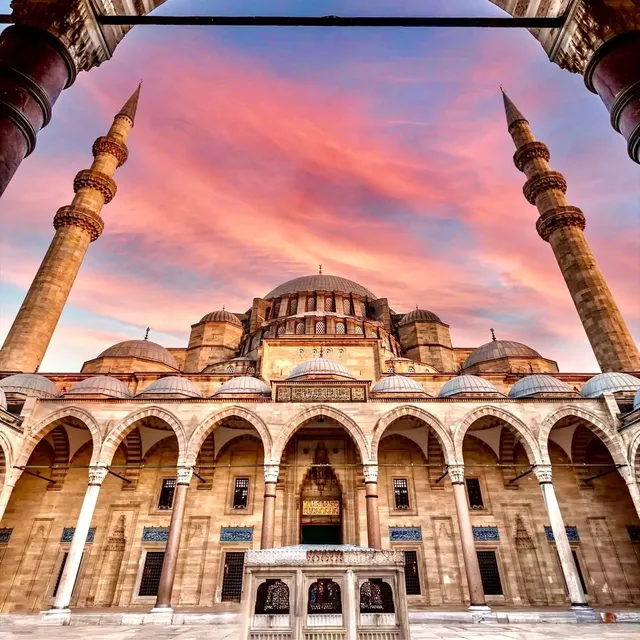
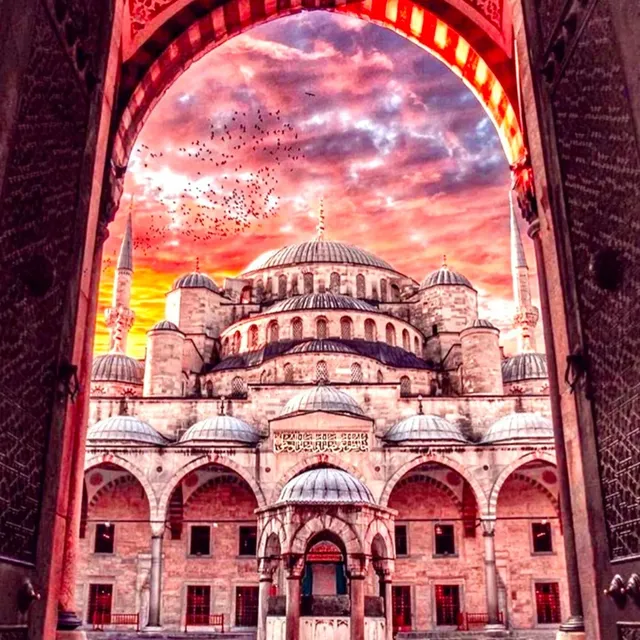
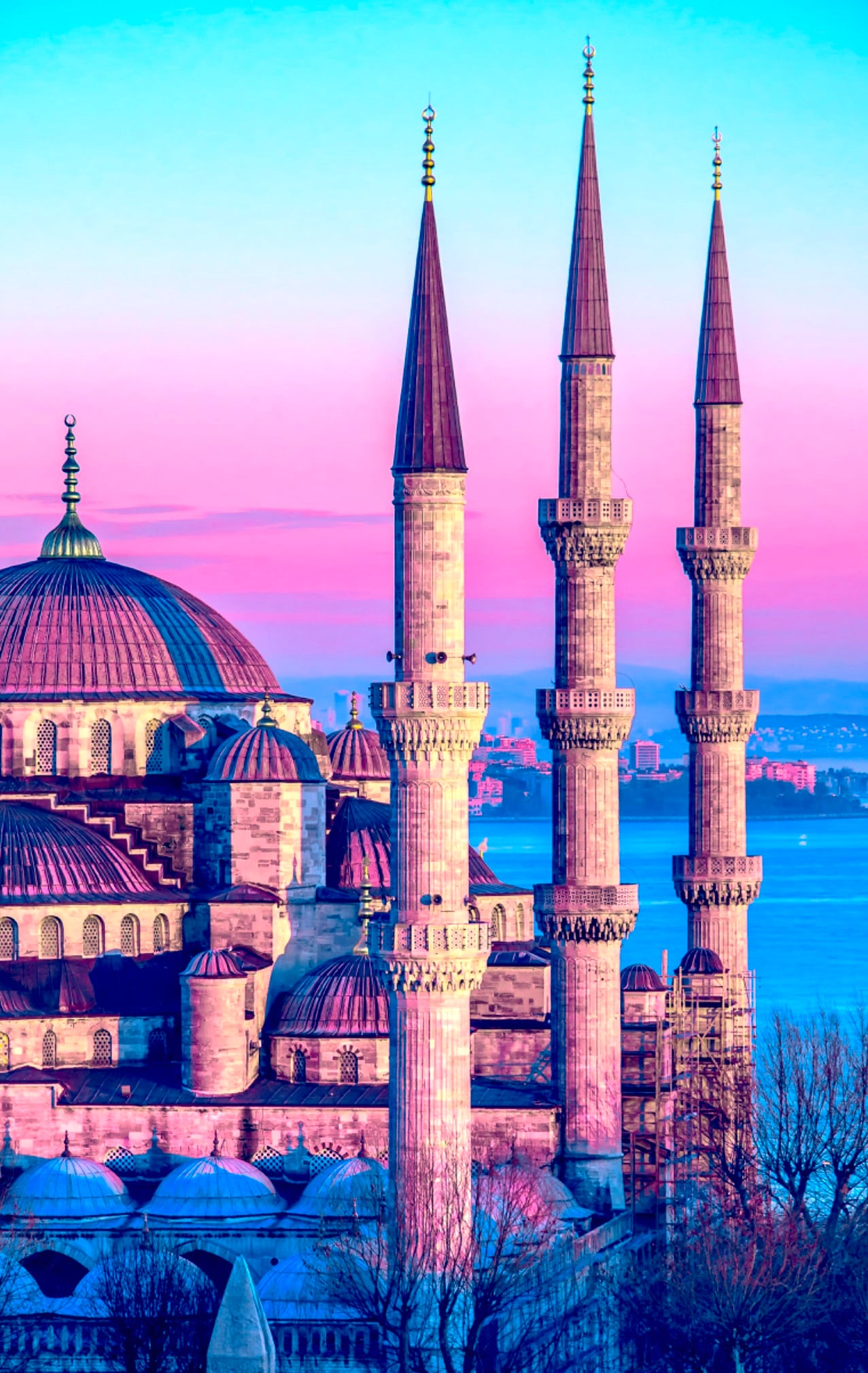
Süleymaniye Mosque, preceded by an enormous courtyard, is distinguished by four tall minarets, whose number is said to symbolize that Sultan Süleyman was the fourth ruler to ascend the throne after the conquest of Istanbul. The combined effect of the colored glass windows, the wall-to-wall hand-knotted carpet, and the glazed revetment tiles inscribed with Koranic verses from the books of “Victory” and “Light” is dazzling. It is said that the mosque calligrapher Ahmet Karahisarı went blind from astonishment, and that his pupil Hasan Çelebi had to complete the work.
Counted among the most important examples of 16th-century Ottoman architecture, the mosque was begun in 1550 and, including the three years devoted to the construction of the foundation, completed in seven years. Imperial Architect Sinan, appointed by Süleyman I to build it, modestly described it as the work of a journeyman.
The Süleymaniye Mosque complex includes a treasury, school, hospital, library, public bath, soup kitchen, and shops. Building materials were brought from all parts of the empire. One of the piers supporting the central dome came from the ruins of Baalbek, another from Alexandria, and the other two from ruined Byzantine works in Istanbul. Evliya Çelebi reports that the white marble came from the Marmara Sea and the green marble from Saudi Arabia.
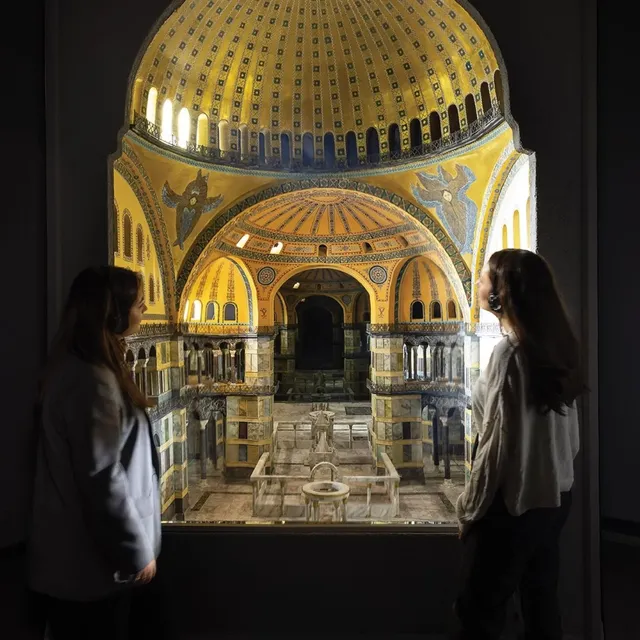
Evliya Çelebi also recounts a memorable story about the construction of the mosque. After the foundation was completed, a one-year interlude followed. Shah Tahmasb Khan of Persia, hearing that the mosque would exceed the dimensions of Hagia Sophia, sent a casket filled with diamonds and precious stones to Süleyman, suggesting that if funds were insufficient, the jewels could be sold to complete it. Süleyman’s pride was wounded. In anger, he declared that every material used in the mosque was more precious than the shah’s gift and handed the diamonds over to Sinan. Sinan had the gems expertly cut and set among the masonry of the minaret. For this reason, the minaret, sparkling in the sunlight, came to be called the Bejeweled Minaret.
The genius of Imperial Architect Sinan
Imperial Architect Sinan, who displayed his genius in Süleymaniye Mosque, signed his works as “Your humble and lowly servant, Sinan.” He rests in a simple tomb between the mosque and the Istanbul Office of the Mufti. Going beyond the technological limits of his time, Sinan engineered special acoustics for the mosque and addressed the problem of stale air during crowded winter prayers by adding a ventilation room over the entrance. Especially remarkable is the ink made from the soot collected there.
Süleymaniye, one of the oldest quarters of Istanbul on the Historical Peninsula, is made legendary by the works of Sinan and by the legacy of Süleyman the Magnificent. Their presence can still be felt in every step you take through the quarter. For additional background on the architect, see Britannica’s entry on Sinan.
The botanical garden near Süleymaniye
Just outside the compound of Süleymaniye Mosque is the Botanical Garden of Istanbul University, with greenhouses, pools, gardens, and 5,000 species of plants.
Entire panoply of nature
Plants from many climates and in a wide range of colors create an almost utopian impression. The oldest botanical garden of Turkey possesses 10,000 species, with 127 families, 400 kinds of trees, and about 3,500 green plants. Containing nine greenhouses, the garden is spread over 17 hectares and shares the same entrance as the Office of the Istanbul Mufti.
A red banana tree and piranhas
As you stroll through the Botanical Garden, routine concerns begin to fade. There is greenery everywhere, flowers in bloom, and the atmosphere changes from one climate zone to another. Thanks to buildings designed to create ideal growing conditions, different environments can be experienced in a short walk. A structure blocking the northern wind allows plants peculiar to the Black Sea to grow in front, while spring seems to linger at the back. The plants come from all parts of Turkey and the wider world. In the tropical greenhouse, there is a red banana tree said to yield fruit only once, coffee trees whose leaves decorate the entire space, and even piranhas in a specially heated pool.
Volunteer tours by faculty members
The Botanical Garden of Istanbul University is described as open to all. Even if no employee is available to show you around, one of the faculty members may volunteer to do so. Admittance is said to be free, while groups were asked for 150 kuruş per person; as details may change, check official sources before your visit. The Kabataş–Zeytinburnu surface metro line was noted as a way to reach the garden, and from the Istanbul University/Beyazıt stop it is about a ten-minute walk into the historical atmosphere of Süleymaniye. For current transport information, see Metro İstanbul.
Time out for Süleymaniye
If you want to take a break during this historical journey, just across from the main entrance to Süleymaniye Mosque there are small eateries known for serving beans, a specialty of the quarter. The beans at Kanaat Restaurant, established in 1939, are described as excellent. Those who went there as students are said to return whenever they can. For four generations, father to son, the preparation of the bean dish has been personally overseen.
Before leaving the historical atmosphere of the Süleymaniye quarter, you can drink Turkish coffee and smoke a nargile at Lale Bahçesi beside the mosque. The restaurant next to it, Darüzziyafe, serves special dishes from Ottoman cuisine, and even the names of its dining rooms are part of the experience: the Mimar Sinan dining room and the Kanuni Sultan Süleyman dining room. If you are exploring nearby historic districts on the same day, the Grand Bazaar is also within easy reach.