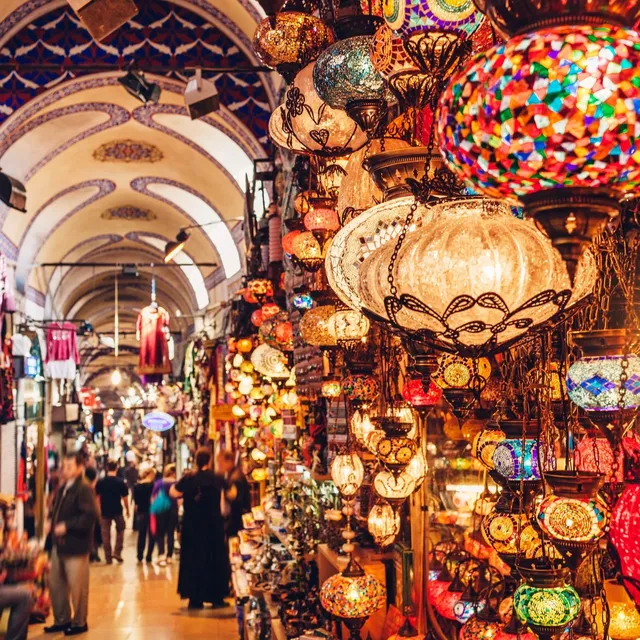


A little history makes the layout easier to understand. The market grew from two stone bedesten (beh-des-TEN, lockable vaults) built under Mehmed the Conqueror in the 1450s to store valuable goods. Trades clustered into their own streets under the Ottoman guild system. Gold merchants occupied one lane, leather traders another, and carpet sellers their own halls. That logic still survives today. Think of the Grand Bazaar as a map rather than a maze.
Grand Bazaar at a Glance
| Category | Details |
|---|---|
| Hours | Generally 9:00 AM to 7:00 PM, Monday through Saturday. Closed on Sundays. |
| Entry | Free |
| Size | More than 60 covered streets, over 4,000 shops, and 18 gates |
| Best Time to Visit | Weekday mornings between 9:00 AM and 11:00 AM |
| Payment | Cash often secures the best price, although cards are widely accepted |
| Bargaining | Expected for many items, especially crafts, carpets, jewelry, and lamps |
How the Bazaar Is Laid Out (and How Not to Get Lost)
The main artery of the market is Kalpakcilar Caddesi, the broad jewelry street that stretches from gate to gate and sparkles with gold displays. Branching off from it are lanes that still loosely follow their historical trades: Kuyumcular for jewelers, Yaglikcilar for textiles and scarves, Takkeciler for ceramics and lamps, and the peaceful Cevahir Bedesten at the center for antiques and premium-quality pieces.
You will get lost briefly, and that is perfectly normal. The Grand Bazaar has 18 named gates, making it easy to find your bearings again. Remember which gate you entered through, particularly the popular Nuruosmaniye Gate, and you can always navigate back.
It also helps to understand the scale. Although the number of shops sounds overwhelming, the entire market fits within a relatively compact footprint. You can walk from one side to the other in around fifteen minutes. The two domed bedesten halls form the historic core, while later additions expanded outward around them.
Before visiting, check the official Grand Bazaar website for current opening hours and holiday closures. The market is located within easy walking distance of many of the attractions covered in our Sultanahmet area guide.
What to Buy in the Grand Bazaar
Some products here offer excellent value and authentic craftsmanship. Others are mass-produced souvenirs marketed as treasures. Knowing the difference can save you money and help you take home something genuinely special.
1. Hand-Knotted Carpets and Kilims
This is the Grand Bazaar’s signature craft and where the largest purchases are made. It is also where many visitors make costly mistakes.
A handmade wool kilim (kee-LEEM, flat-woven rug) can vary significantly in price depending on age, quality, size, and craftsmanship. Premium silk pieces can cost many thousands of dollars. Reputable dealers, particularly around the historic Bedesten sections, will gladly explain knot counts, materials, and weaving techniques without pressuring you.
Insider tip: Ask to see the carpet in natural daylight near one of the gates. Authentic vegetable dyes reveal subtle color variations in sunlight, and trustworthy dealers are usually proud to demonstrate this.
Avoid shops that pressure you aggressively, prevent photography, or discourage close inspection of the rug’s reverse side.
2. Turkish Ceramics and Iznik-Style Tiles
Hand-painted bowls, plates, and decorative tiles in shades of cobalt blue, turquoise, and coral remain among Istanbul’s most beautiful souvenirs.
Authentic handmade ceramics usually show slight variations in brushwork and glazing. Many quality pieces feature an artist’s signature on the base. Machine-produced alternatives are cheaper and more uniform in appearance.
Takkeciler offers one of the best concentrations of ceramic shops in the bazaar. Ask whether an item is el yapimi (handmade) or factory-produced. Reputable sellers will answer honestly because both categories have their own price points and buyers.
3. Lamps and Lanterns
Mosaic lamps are among the most photographed items in the Grand Bazaar. Their colorful glass patterns create the warm glow that visitors remember long after leaving Istanbul.
When shopping for lamps, inspect the craftsmanship carefully. Quality pieces use properly soldered metal frames and hand-cut glass mosaics. Cheaper versions often use plastic components or glued decorations that lack the depth and character of authentic work.
Also confirm whether bulbs, wiring, and adapters are included, particularly if you plan to use the lamp outside Türkiye.
4. Gold, Silver, and Evil-Eye Jewelry
The Grand Bazaar remains one of Istanbul’s best-known destinations for jewelry shopping. Gold is generally priced according to weight, current market rates, and a workmanship fee.
Always ask for both the gram weight and purity level in writing. Established jewelers on Kalpakcilar Caddesi typically provide certificates and detailed receipts.
For smaller gifts, silver jewelry and the iconic nazar boncugu (evil-eye bead) are popular choices. Quality sterling silver pieces should carry a visible stamp indicating purity.
5. Turkish Delight, Spices, and Tea
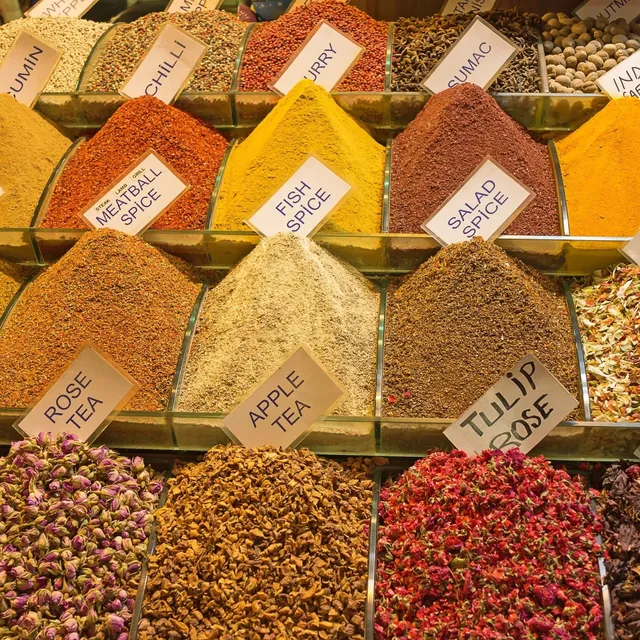
You will find lokum (Turkish delight), saffron, herbal teas, and spice blends throughout the Grand Bazaar. While the selection can be tempting, prices are often higher than those at the nearby Spice Bazaar.
Always taste before buying. Reputable vendors freely offer samples because they know the quality will sell itself. Fresh pistachio Turkish delight should be soft and fragrant, not dry or overly chewy.
Be particularly cautious with saffron. Genuine saffron is one of the world’s most expensive spices and is sold in small quantities. If a large bag is being offered at a suspiciously low price, it is probably not authentic saffron.
For edible souvenirs specifically, I usually recommend heading downhill toward Eminonu. Our Spice Bazaar and Eminonu guide explains why many locals prefer shopping there for food products.
6. Leather Goods and Textiles
Leather jackets, handbags, belts, and wallets are common throughout the sections near Mahmutpasa Gate. Quality varies enormously, so inspect materials carefully before making a purchase.
Good leather should feel supple, smell natural, and feature clean stitching and well-finished lining. Do not rely solely on labels or verbal claims.
Among textiles, one of the best-value purchases is the traditional pestemal (pesh-teh-MAHL), a flat-woven Turkish hammam towel. Lightweight, practical, and easy to pack, it makes an excellent souvenir or gift.
One honest warning: leather sellers can sometimes be among the most persistent merchants in the bazaar. If a deal feels rushed or pressured, move on. There are hundreds of alternatives.
7. Antiques, Calligraphy, and Curiosities
The quieter corners of the historic Bedesten house some of the Grand Bazaar’s most fascinating treasures. Here you will find Ottoman coins, antique maps, calligraphy panels, silver objects, miniature paintings, and collectible artifacts.
These shops cater to serious collectors and knowledgeable buyers. Prices can be substantial, but so is the expertise.
If purchasing an authentic antique, ask about export regulations. Türkiye restricts the export of certain historical artifacts and antiquities, and reputable dealers should be able to explain any documentation requirements.
What to Skip
The Grand Bazaar offers many wonderful products, but not everything is worth your money. A few categories are better purchased elsewhere or avoided entirely.
- Mass-produced “I Love Istanbul” souvenirs that can often be found cheaper outside the bazaar.
- Luxury-brand watches and handbags offered at suspiciously low prices. These are not authentic designer products.
- Cheap saffron sold in large bags. Genuine saffron is expensive and sold in small quantities.
- Food products as your primary shopping focus. The Spice Bazaar generally offers better selection and pricing.
- Shops recommended aggressively by touts. These often carry higher markups.
None of this means the Grand Bazaar is a tourist trap. Quite the opposite. It remains one of the world’s great shopping destinations. It simply rewards visitors who can distinguish authentic craftsmanship from mass-produced souvenirs.
How to Bargain Politely and Effectively
Bargaining in the Grand Bazaar is not a confrontation. It is a social ritual, often accompanied by tea, conversation, and hospitality. Your attitude matters just as much as your negotiating strategy.
If a shopkeeper offers tea, accepting it does not commit you to making a purchase. It is simply part of the shopping culture.
Here is the approach I use:
- Browse first and stay calm. Avoid showing overwhelming excitement about a specific item.
- Ask the price and pause. Give the seller’s opening offer time to settle before responding.
- Make a respectful counteroffer. Negotiations often begin below the asking price and gradually move toward a middle ground.
- Bundle purchases. Buying multiple items often creates opportunities for additional discounts.
- Use cash when possible. Paying in Turkish lira may result in a better final price.
- Be willing to walk away. This remains one of the most effective negotiation tools available.
There are also a few important etiquette rules.
- Do not negotiate aggressively if you have no intention of buying.
- Once a final price is accepted, avoid reopening negotiations.
- Remain friendly throughout the discussion, regardless of the outcome.
One useful phrase is son fiyat ne? (sohn fee-YAHT neh), meaning “What is your final price?” Using it politely signals that you understand local bargaining customs.
It is also helpful to read the seller’s behavior. If a merchant dramatically lowers the price before you respond, the original markup was likely very high. If they move only slightly, they may be dealing in products with tighter profit margins or genuinely higher-quality goods.
Keep in mind that not everything is negotiable. Food products, packaged sweets, beverages, and items with clearly printed prices are often sold at fixed rates.
Fair Price Reference Guide
| Item | Typical Price Range | Shopping Tip |
|---|---|---|
| Small Wool Kilim | Varies significantly by size and quality | Inspect the reverse side and buy from reputable dealers. |
| Hand-Painted Ceramic Bowl | Mid-range handcrafted souvenir | Look for an artist signature underneath. |
| Mosaic Glass Lamp | Depends on size and craftsmanship | Check for soldered metalwork rather than glued parts. |
| Silver Evil-Eye Pendant | Affordable souvenir category | Look for sterling silver markings. |
| Turkish Delight | Varies by ingredients and quality | Taste before purchasing. |
| Leather Bag | Depends heavily on leather quality | Inspect stitching and lining carefully. |
| Pestemal | Generally affordable | Lightweight, practical, and easy to pack. |
Prices in the Grand Bazaar fluctuate regularly due to exchange rates, material costs, and market conditions. Treat any quoted figure as a guideline rather than a fixed benchmark.
Bargaining Cheat Sheet
- The first price is rarely the final price.
- Paying in Turkish lira may improve your negotiating position.
- Bundle items whenever possible.
- Walking away politely remains one of the strongest bargaining tools.
- Accepting tea is hospitality, not an obligation to buy.
Practical Tips for Your Visit
The best time to visit the Grand Bazaar is on a weekday morning between 9:00 AM and 11:00 AM, before tour groups fill the main lanes. The atmosphere is calmer, shopkeepers have more time to talk, and browsing becomes much more enjoyable.
Wear comfortable shoes, as the market covers a large area and you will spend more time walking than you expect. Keep bags zipped and close to your body in crowded sections, and set a rough budget before entering. The lamps, carpets, ceramics, and jewelry can be surprisingly tempting.
Several traditional tea houses and small cafes inside the bazaar provide excellent places to rest and people-watch between shopping sessions.
Foreign visitors may be eligible for a VAT (KDV) refund on qualifying purchases from participating stores displaying a Tax Free sign. Ask for the necessary paperwork when making your purchase and keep all receipts for airport processing. Current regulations can change, so check the latest requirements before traveling.
Getting here is easy via the T1 Tram, which stops at Beyazit-Kapalicarsi directly beside one of the market entrances. For route details, see our Istanbul public transport guide.
If you prefer a more structured experience, guided market walks and cultural experiences are available through the Istanbul Tourist Pass®, providing additional context about the history, architecture, and traditions of the bazaar.
You can also combine your visit with nearby attractions. Our Istanbul street food guide highlights excellent local food stops nearby, while the Hagia Sophia visitor guide covers one of the city’s most famous landmarks just a short walk away.
Where to Refuel Inside and Nearby
- Sark Kahvesi for traditional Turkish coffee and a classic Grand Bazaar atmosphere.
- Fes Cafe for tea, sweets, and a quieter place to take a break.
- Nuruosmaniye Gate area for kebabs, doner, and casual local restaurants.
- Cemberlitas, just a few minutes away, where visitors can combine shopping with a traditional hammam experience. See our best hammams guide for recommendations.
Istanbul Tourist Pass®
If you plan to visit several major attractions during your stay, the Istanbul Tourist Pass® can help simplify your trip. Depending on the package, it may include guided tours, attraction entry, cultural experiences, and additional benefits that complement a day exploring the Grand Bazaar and Istanbul’s historic center.
Frequently Asked Questions
What are the Grand Bazaar opening hours?
The Grand Bazaar is generally open from 9:00 AM to 7:00 PM, Monday through Saturday, and is closed on Sundays. Hours may vary during religious holidays and special occasions, so it is always worth checking before your visit.
Is bargaining expected at the Grand Bazaar?
Yes. Bargaining is part of the shopping culture for many items, especially carpets, lamps, jewelry, textiles, and decorative crafts. Approach negotiations politely and with a sense of humor for the best experience.
What are the best things to buy at the Grand Bazaar?
Hand-knotted carpets, kilims, Turkish ceramics, mosaic lamps, silver jewelry, textiles, and traditional crafts remain among the most popular and authentic purchases.
Can I pay by card, or should I bring cash?
Most shops accept credit cards, but cash in Turkish lira often provides greater flexibility when negotiating. Carrying some cash is recommended even if you plan to pay electronically.
How can I avoid overpaying?
Compare prices at multiple shops, inspect quality carefully, avoid high-pressure sales tactics, and be prepared to walk away if something does not feel right. Knowledge and patience are your best tools.
How much time should I spend at the Grand Bazaar?
Most visitors enjoy spending two to three hours exploring the market. Shoppers interested in carpets, antiques, or serious collecting may wish to allow half a day or more.
How do I get to the Grand Bazaar?
The easiest option is the T1 Tram to Beyazit-Kapalicarsi. The market is also within walking distance of Sultanahmet, Cemberlitas, and several major historic attractions.
Useful Turkish for the Bazaar
| Turkish | Pronunciation | Meaning |
|---|---|---|
| ne kadar? | neh kah-DAR | How much? |
| son fiyat ne? | sohn fee-YAHT neh | What is your final price? |
| cok pahali | chok pah-hah-LUH | Too expensive |
| indirim | in-dee-REEM | Discount |
| tesekkurler | teh-sheh-kur-LEHR | Thank you |
The Grand Bazaar Istanbul remains one of the world’s most remarkable shopping destinations. Beyond the thousands of shops, it offers a living connection to centuries of trade, craftsmanship, and daily life in Istanbul.
Take your time, explore beyond the busiest lanes, enjoy a cup of Turkish tea, and treat bargaining as part of the cultural experience. Whether you leave with a hand-painted ceramic bowl, a handmade kilim, or simply memories of the atmosphere, the Grand Bazaar is an experience that stays with visitors long after they return home.