You do not need a luxury budget to have an extraordinary trip here. In fact, some of Istanbul's best experiences are the ones that cost very little: riding a ferry between continents, wandering through neighborhood streets at golden hour, eating a fresh simit by the Bosphorus, listening to the call to prayer echo across the old city, or spending an afternoon in a lively market with no agenda at all.
This guide is for travelers who want maximum experience and minimum waste. Not cheap for the sake of it, but smart. The goal is to help you spend on what genuinely improves your trip, skip what does not, and build an Istanbul itinerary that feels rich even if your budget is not. If we were planning Istanbul for a friend, this is exactly how we would do it.
Many first-time visitors assume Istanbul is either overwhelmingly expensive or unbelievably cheap. The truth is more useful than either stereotype. Istanbul can be very affordable if you stay in the right area, use public transport well, choose local food over tourist menus, and know which paid attractions are worth it for you and which are not. You will find direct answers, realistic daily costs, neighborhood strategy, transport advice, money-saving food tips, and sample plans for one day, three days, and five days.
PLAN & SAVE See more of Istanbul for less Pick the few paid attractions that are truly worth it — and let ferries, markets, and neighborhoods do the rest.Quick Overview
| Topic | Quick Answer | ||
|---|---|---|---|
| Is Istanbul budget-friendly? | Yes, especially if you use public transport, eat where locals eat, and stay in well-connected neighborhoods rather than premium waterfront districts. | ||
| Best budget areas to stay | Karaköy, Beyoğlu side streets, Kadıköy, Üsküdar, and selected parts of Sultanahmet if you prioritize walking access over nightlife. | ||
| Average daily budget | Budget travelers can do Istanbul comfortably with a modest daily spend, while smart mid-range travelers can experience much more without overspending. | ||
| Best low-cost experiences | Public ferries, major mosques, neighborhood walks, bazaars, Bosphorus viewpoints, street food, tea gardens, and select museum days. | ||
| When a pass is worth it | Only if you plan to visit several major paid attractions in a short time. For slower, neighborhood-focused trips, it often is not necessary. | ||
| Best money-saving move | Build your days by district. Staying local for half the day saves both transport money and energy. |
Why Istanbul Works So Well for Budget Travel
- Curiosity beats spending power. Istanbul rewards curiosity more than spending power. Some of the city's strongest moments — fishing lines along Galata Bridge, seagulls over the Bosphorus ferry, walking downhill through Cihangir into Karaköy — are not "attractions" in the traditional sense. They are central to the city.
- Extensive public transportation. Ferries, metro, tram, Marmaray, buses, and funicular connections cover most visitor needs and keep costs low.
- High-value local food culture. From soup and pide to döner, dürüm, simit, meze, and home-style esnaf restaurants, eating memorably does not require upscale dining.
- Icons without high ticket costs. Many iconic places can be admired from outside or experienced without high ticket costs, and neighborhood walking — one of the city's best experiences — costs nothing.
- Mix paid highlights with free hours. You can mix one or two paid highlights with many free or low-cost hours. Budget travel here works best when it is strategic rather than restrictive — disorganization (long taxi rides, tourist-corridor meals) is what gets expensive.
How Much Does Istanbul Cost Per Day?
The honest answer depends less on your travel style label and more on your decision-making. A budget traveler who stays in a practical neighborhood, eats local, and uses ferries and trams well can have a very full Istanbul experience without feeling deprived. A traveler who keeps booking taxis, rooftop drinks in premium locations, and every major ticketed attraction will spend far more very quickly.
One thing we often tell first-time visitors: in Istanbul, saving one hour can be more valuable than saving a small amount of money. The trick is to know where convenience matters and where it does not.
Where to Stay in Istanbul on a Budget
Sultanahmet
If your priority is seeing the Hagia Sophia, Blue Mosque, Basilica Cistern, and the historical core with minimal transport, Sultanahmet can work very well — you save on transit simply by walking. Parts of it get quiet at night, and some restaurants are priced more for convenience than quality. See our Sultanahmet guide to judge the fit.
Best for Best for first-time visitors who want to walk to the classics
Karaköy
One of the most practical bases in the city: near tram and ferry connections, walking distance of Galata and parts of Beyoğlu, well placed for both the old city and the Bosphorus. Staying somewhere merely scenic is not the same as staying somewhere efficient — Karaköy often gives you both.
Best for Best balance of transit, atmosphere, and value
Beyoğlu and Galata side streets
A good fit if you want a livelier city atmosphere: cafes, bars, independent shops, and easy walks through some of Istanbul's most enjoyable urban streets. The trade-off is hills — a hotel that looks close on a map can feel farther on foot. See our Beyoğlu neighborhood guide and Galata area planning guide.
Best for Best for cafes, views, and urban energy
Kadıköy
On the Asian side, one of the smartest choices for local rhythm, excellent food, and a lived-in feeling. Not ideal if you plan to be in Sultanahmet at sunrise every morning, but excellent if you like ferries, markets, and evenings with real neighborhood energy. Our Kadıköy guide helps you decide between sides.
Best for Best for local life, food, and longer stays
Üsküdar
Bosphorus atmosphere, easier local pricing in many places, and excellent ferry connections. It feels more local and less tourist-oriented than many first-time bases; the compromise is that evenings are calmer than Beyoğlu or Kadıköy.
Best for Best for scenic calm and local pricing
The Budget Playbook: Timing, Free Experiences, and Sample Plans
 When to go
 Best Time to Visit Istanbul on a Budget
Istanbul is a year-round city, but not every season is equally easy for budget travelers. Prices, crowd levels, weather, and how much walking you will enjoy all change the equation.
Best overall seasons for value
Spring and autumn are usually the sweet spot. The weather is comfortable, daylight is generous, and the city is enjoyable on foot. These seasons make it easier to build low-cost days around walking, ferry rides, outdoor viewpoints, and neighborhoods.
Long days, higher demand
Summer brings long days and energetic evenings, but also higher accommodation demand and more crowds in famous areas. Start your mornings early: see major sights before the peak heat and save ferries, shaded streets, and long meals for later.
Calmer and often cheaper
Winter can be excellent for budget-conscious travelers who do not mind cooler weather. Hotel prices may be more attractive outside holiday peaks, museums feel calmer, and the city's tea houses, mosques, markets, and ferry rides take on a different mood. The trade-off is shorter days.
Ramadan and holiday timing
Istanbul remains very visitable during Ramadan, but meal rhythms and crowd patterns can shift. National holidays and school breaks can affect pricing and crowd density too. If budget matters, compare accommodation costs across several date windows before locking in flights.
Insider tip: when comparing hotels, do not only check the nightly rate. Compare the real cost of your trip: transport time, likely taxi use, breakfast value, and whether you can walk to meaningful evening options. A slightly higher room rate in the right location can be the cheaper trip overall.
 Free & low-cost
 The Best Free and Low-Cost Things to Do in Istanbul
These experiences offer strong value, real atmosphere, and a sense of place. Some are free, some are inexpensive, and all can form the backbone of a memorable trip.
Take a public Bosphorus ferry
If there is one classic budget move in Istanbul, this is it. A regular city ferry gives you water, skyline, neighborhoods, and the feeling of crossing between worlds. Best for first-time visitors, photographers, and anyone who wants Bosphorus views without premium cruise prices. Head for the upper deck toward the old city skyline in softer morning or late afternoon light, and pair the ride with Karaköy, Kadıköy, or Üsküdar rather than treating it as a standalone activity.
Visit the Blue Mosque and major mosques respectfully
Some of Istanbul's most important spiritual and architectural spaces are accessible without the admission costs of major museums. Dress respectfully, check prayer times, and approach these visits as active places of worship. Avoid arriving at peak midday with no flexibility — early morning or later in the day is calmer and more atmospheric.
Wander Sultanahmet early
The historic core feels very different before the tour groups arrive. Even if you plan to visit ticketed sites later, there is huge value in simply walking the area at the start of the day. The spaces between monuments matter here.
Explore the Grand Bazaar and surrounding streets
You do not need to buy much to enjoy the experience. The architecture, movement, sounds, and adjoining commercial streets are part of Istanbul's urban character — nearby lanes often feel more interesting than the most obvious central corridors. See our Grand Bazaar guide for planning context.
Cross Galata Bridge on foot
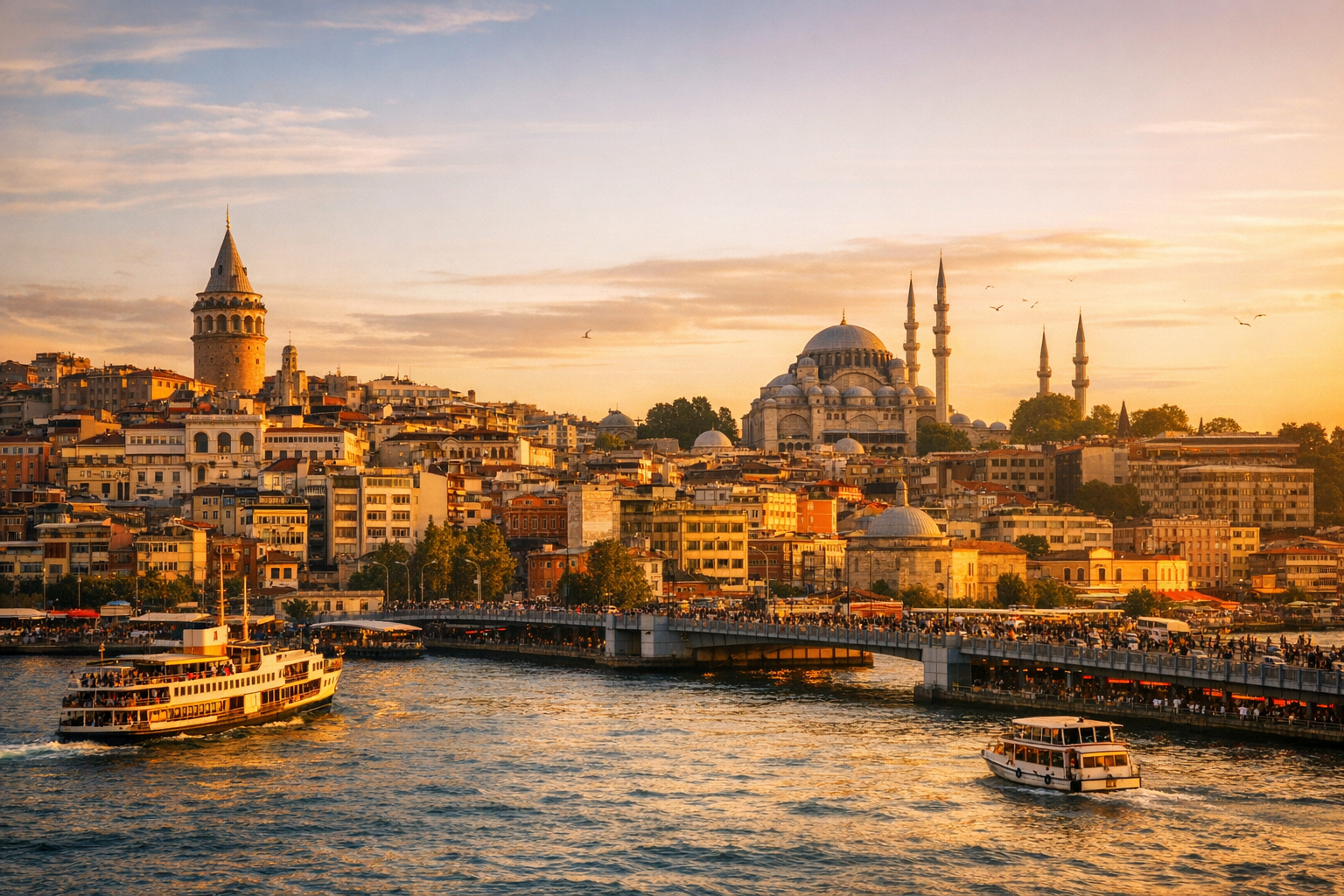
One of the simplest ways to feel the city's layers: fishermen overhead, ferries below, mosques in the distance, Eminönü markets at one end, Karaköy and Galata energy at the other. Walk it once in daylight and, if time allows, again near sunset.
Spend time in Kadıköy market streets
Browsing, snacking, and people-watching create a full day without major ticket costs. Food value here can be excellent if you choose well.
Enjoy viewpoints without paying for every tower or rooftop
Not every good view requires an entrance ticket or a high-priced drink. Ferry decks, waterfront promenades, hilltop streets, mosque courtyards, and public spaces often deliver stronger emotional payoff than a rushed viewpoint checklist.
Use neighborhood walking as an actual activity
Cihangir, Balat, Fener, Karaköy, Kadıköy, and Üsküdar all offer different textures. Walking neighborhoods helps you understand how Istanbul changes block by block. For area-specific ideas, our Istanbul neighborhoods hub is a useful next step.
Visit markets and food streets with a plan to snack, not feast
This is how to keep food exciting without overspending. Share items if you are traveling with someone, try smaller portions in several places, and leave room for one proper sit-down meal later.
Sit for tea somewhere with a view or rhythm
A simple tea stop can be one of the most restorative budget moments in Istanbul. Do not underestimate it. The city reveals itself while you slow down.
 Paid attractions
 Which Paid Attractions Are Worth It on a Budget?
Being budget-conscious does not mean avoiding paid attractions altogether. It means choosing them deliberately — some add context and depth, others are worth skipping if the line, cost, or overlap is too high.
Hagia Sophia area and historic core context
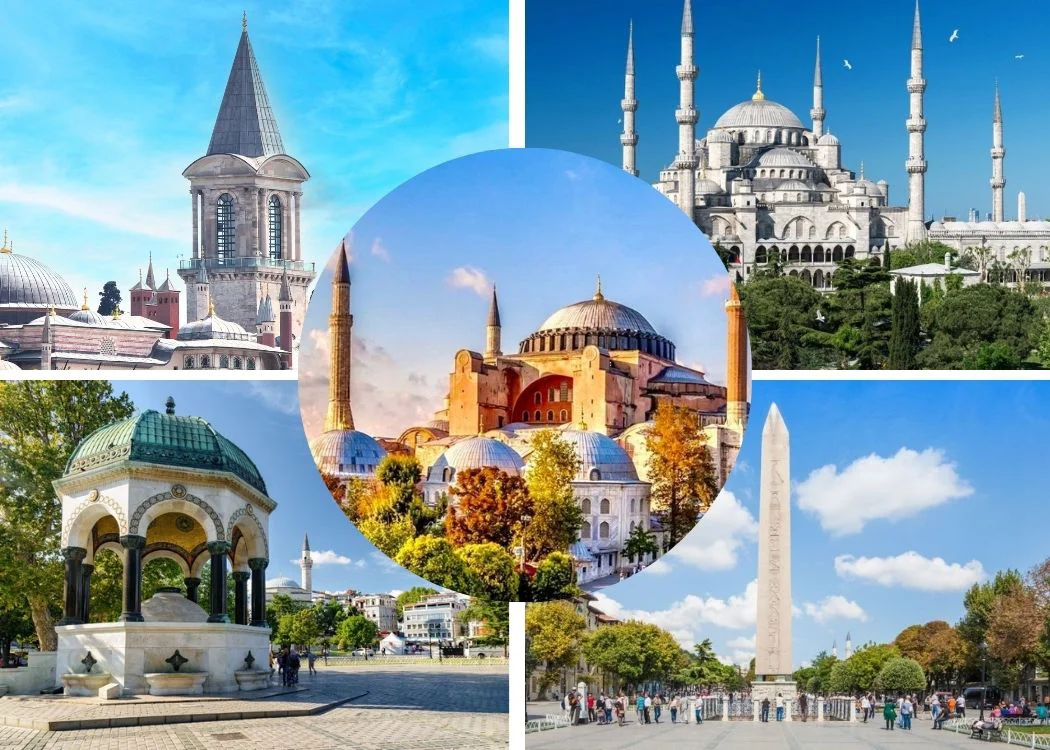
Even if your focus is budget, the historical center matters. Depending on current entry rules and your interests, it may be worth allocating money here because the cultural significance is so high. Go early and combine the visit with nearby sites while you are already in the area.
Basilica Cistern
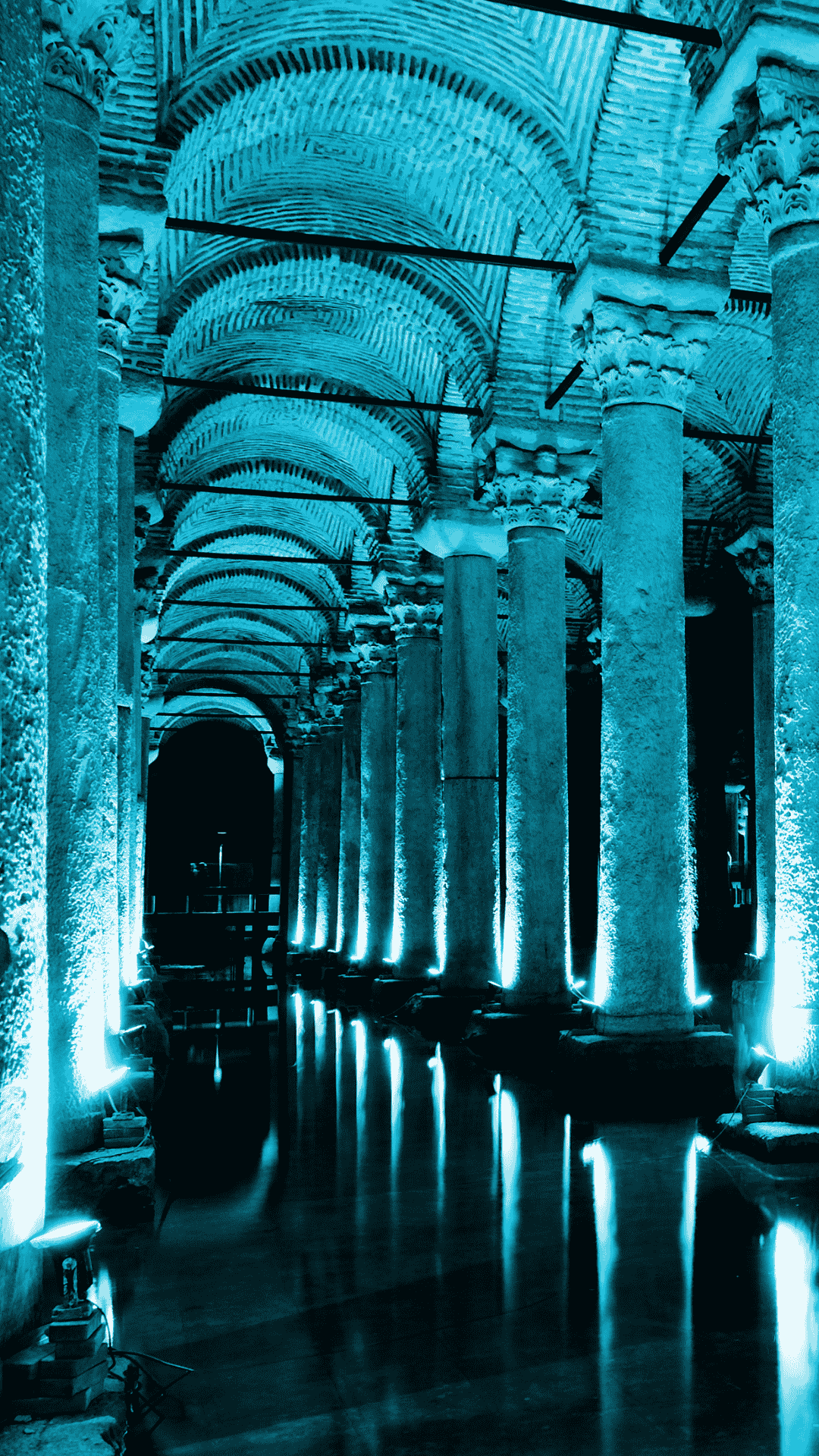
For many visitors, one of the most atmospheric paid sites in the city — visually dramatic and easy to combine with Sultanahmet. Choose it if you are a first-time visitor, photographer, or short-stay traveler wanting a memorable single-ticket experience; skip it if you are focused more on neighborhood life than monuments.
Topkapı Palace
If imperial history interests you, this is often worth the time and budget. But it is not a quick stop — give it proper time or skip it. Half-rushing Topkapı after a long morning elsewhere often leaves travelers tired and underwhelmed. Our Topkapı Palace guide can help you decide.
Galata Tower, performances, and guided tours
Galata Tower: views are the draw, but the trade-off is queue time and crowds. If skyline views matter a lot and you go at a smart time, it can be worthwhile — if you already plan ferry rides and neighborhood viewpoints, you may not need it. Whirling dervish or cultural performances can add meaningful texture, but quality varies; prioritize authenticity and setting over flashy marketing. Guided tours: a good guide can transform a major historic site, but usually one well-chosen tour is enough.
When an attraction pass makes sense
The question is not "Will I save something?" but "Will I actually use enough of it without turning my trip into a rush?" Our Istanbul tourist pass guide is worth comparing before buying.
- Worth considering if: you have two or three packed sightseeing days, plan several major paid attractions close together, value skipping ticket lines, and are more monument-focused than neighborhood-focused.
- Usually not worth it if: you prefer slow travel, will spend a lot of time in Kadıköy, Üsküdar, Karaköy, or local neighborhoods, only want one or two major paid sites, or dislike schedule pressure.
If your plan includes multiple headline attractions in a short time, compare the total cost of individual tickets with a well-designed city pass option — but do the math honestly.
 Food
Food How to Eat Well in Istanbul Without Overspending
This is one of the easiest places in Europe and the wider region to eat memorably without booking upscale dining every night. The secret is not to chase "cheap food" — it is to understand where value lives.
Best budget food strategy
- Have one or two substantial local meals each day
- Use street food and bakery stops between sights
- Prioritize busy places with turnover
- Eat away from the most obvious tourist strips
- Use neighborhood food streets rather than random convenience choices
High-value foods to look for
- Simit for a low-cost breakfast or snack
- Soup and home-style lunch menus at esnaf lokantası restaurants
- Pide and lahmacun for shareable, satisfying meals
- Döner and dürüm from reputable high-turnover spots
- Rice, beans, grilled items, and daily stews in local eateries
- Meze shared strategically rather than ordered without a plan
Where budget travelers often eat best
Kadıköy, Karaköy side streets, parts of Beyoğlu beyond the most visible corridors, and local lunch spots near business districts often offer better value than restaurants positioned directly in front of headline sights. Browse our Istanbul food guides and restaurant recommendations. And avoid this mistake: do not sit down in the first restaurant beside a major attraction just because you are hungry and tired — a short walk often changes both quality and pricing dramatically.
Breakfast, lunch, and dinner strategy
Breakfast: hotel breakfast can be a real money-saver if it is included and reasonably good — but if it is weak, do not force it just because it is "free." Lunch: the best time to enjoy traditional local places; look for busy spots serving workers and locals. Dinner: save your nicest meal for an area with atmosphere rather than an expensive view alone — a memorable evening in Kadıköy, Karaköy, or Beyoğlu can cost less than a mediocre "special occasion" dinner in a tourist-heavy zone. If you have limited time, pick one neighborhood with strong food density and eat there well.
 Planning
 How to Build a Budget-Friendly Istanbul Itinerary
The smartest Istanbul itinerary is not the one with the most pins on the map. It is the one that groups experiences geographically, balances paid and free time, and protects your energy.
One anchor, two nearby layers
Each day should have:
- One anchor experience: a major site, neighborhood focus, or ferry route
- Two nearby layers: food, market, walk, viewpoint, or secondary stop
- One flexible window: tea break, shopping, weather adjustment, or spontaneous discovery
Best district-based combinations
- Sultanahmet + Eminönü: monuments, bazaars, bridge walk, casual eating
- Karaköy + Galata + Beyoğlu: urban walking, cafes, views, evening energy
- Kadıköy + ferry ride: market streets, local food, waterfront mood
- Üsküdar + Bosphorus edge: calmer scenic day with skyline views
Walking estimates travelers actually need
- Sultanahmet major cluster: easy half-day on foot, but allow time for queues
- Galata to Karaköy: short distance, often downhill and pleasant
- Taksim to Karaköy on foot: possible, but depends on hills and your energy
- Kadıköy market area: best experienced slowly over several hours
- Grand Bazaar to Spice Bazaar area: walkable with breaks and browsing time
 1-day plan
 1-Day Budget Istanbul Itinerary
If you have only one day, keep it simple. Focus on classic atmosphere, one or two major highlights, and a ferry ride — do not attempt both sides of the city in a rushed checklist.
Sultanahmet early
Start early in Sultanahmet. Walk the square, visit the Blue Mosque area, and choose one major paid attraction based on your interests: Basilica Cistern for atmosphere or Topkapı Palace for imperial history if you can give it real time. Starting early helps you avoid wasted queue time and lets you experience iconic places before they feel overcrowded.
Eminönü or nearby local streets
Walk downhill toward Eminönü and avoid the first obvious tourist menus. Look for practical, busy lunch spots or a simple street-food style meal.
Cross the Galata Bridge and explore Karaköy
Walk across the bridge, take your time with photos, and spend the afternoon in Karaköy and up toward Galata if your energy allows.
Public ferry
Take a public ferry, ideally as a scenic transition rather than an isolated ride. Even a short crossing adds a lot to a one-day experience.
Choose one neighborhood feel
End in Karaköy, Beyoğlu, or Kadıköy depending on where you are and how much movement you want. For one day, do not overcomplicate dinner — pick atmosphere and convenience over a long cross-city search.
 3-day plan
 3-Day Budget Istanbul Itinerary
Three days is enough for a strong first trip if you stay disciplined: combine iconic sights with neighborhood texture and keep transport costs low by clustering areas.
Sultanahmet and the Historic Peninsula
- Early morning in Sultanahmet
- One or two key historical sites, not all of them
- Grand Bazaar or nearby streets later in the day
- Sunset walk or tea around Eminönü
Smart choice: if you pay for a major attraction today, keep the rest of the day relatively low-cost.
Karaköy, Galata, Beyoğlu
- Breakfast or coffee in Karaköy
- Walk toward Galata and into Beyoğlu
- Visit a museum or tower only if it genuinely matches your interests
- Enjoy the evening energy without planning too much
This is a day where the city itself does a lot of the work. You do not need to keep buying entries.
Ferry day with Kadıköy or Üsküdar
- Use the ferry as part of the experience
- Spend real time on the Asian side
- Eat well in Kadıköy or enjoy a calmer waterfront day in Üsküdar
- Return around golden hour for skyline views
Most tourists miss this: the Asian side is not just an "extra." It often becomes the most relaxing and memorable part of a first trip.
 5-day plan
 5-Day Budget Istanbul Itinerary
With five days, Istanbul starts to breathe. You can move more slowly, spend less reactively, and avoid the expensive convenience decisions that come from trying to do too much in too little time.
Historic center foundation
Focus on Sultanahmet, with one major paid site and plenty of open walking time.
Bazaar and old commercial Istanbul
Explore the Grand Bazaar zone, Spice Bazaar area, Eminönü movement, and surrounding streets. Eat locally and keep it flexible.
Karaköy, Galata, Beyoğlu
Neighborhood walking, a viewpoint if desired, cafe time, and evening in Beyoğlu.
Kadıköy or Üsküdar
Choose based on your travel style. Kadıköy for food and energy; Üsküdar for quieter scenic character.
Bosphorus-focused day
Use ferries, waterfront stops, and a selective paid experience only if it adds something distinct. This can also be your shopping or museum catch-up day.
Who should add a guided tour on a 5-day trip? Travelers with a strong interest in Ottoman or Byzantine history. One good tour can give structure to the rest of your independent exploring.
 Spend smart
 Smart Splurges and Sample Budget Breakdowns
Budget travel should never become penny-wise and experience-poor. There are moments when spending a little more is the most rational decision.
Airport transfer after a difficult arrival
If you land late, are traveling with children, or feel unsure about transport after a long flight, a pre-arranged airport transfer can be the right choice. It buys clarity when your energy is lowest.
One well-chosen guided tour and one memorable meal
Especially for Topkapı Palace or a layered historical route, a strong guide can prevent the "I saw it, but I didn't really understand it" feeling. And budget trips feel more satisfying when they include one intentional splurge meal rather than many small mediocre expenses.
A better-located hotel
This is often the smartest splurge of all.
Sample budget breakdown by trip type
- Backpacker-style trip: simple accommodation with strong transit access, mostly public transport and walking, street food, bakeries, and local lunch spots, one or two paid highlights across several days.
- Smart couple's city break: compact, well-located hotel, mostly public transport with maybe one transfer, one special dinner, one or two major attraction tickets, ferry rides and neighborhoods doing most of the work.
- Family keeping costs sensible: stay near practical transport, reduce unnecessary crossings, mix major sights with open-air time and ferry rides, use a pre-booked transfer for airport logistics if it simplifies the trip.
Getting Around Istanbul Cheaply and Efficiently
The combination of tram, metro, Marmaray, and ferry covers most visitor needs extremely well. Public ferries are not just transport; they are one of the best-value experiences in the city — a normal crossing can feel like a mini Bosphorus cruise. Our detailed Istanbul transportation guide explains the system, but the simple rule is: trams for the historic center, ferries for cross-city scenic movement, metro for efficiency, taxis only selectively.
Late-night arrival after a long flight, very early airport departure, traveling with lots of luggage or family, or reaching a poorly connected hotel after dark. In these cases, pre-booking an airport transfer can make more sense than improvising — not always the cheapest option, but often the best-value one.
Across busy central areas during rush hour, short journeys that a tram or funicular handles easily, bridge crossings when public ferries are available, and trips between tourist districts where traffic can erase any convenience.
Ferry from Eminönü or Karaköy to Kadıköy, ferry to Üsküdar for classic skyline views, tram access through the old city, Marmaray for efficient cross-city rail movement, and walking downhill routes, especially from Galata toward Karaköy.
What to Book Ahead and What to Leave Flexible
Book ahead
- Accommodation in popular seasons
- Airport transfers if arriving very late or leaving very early
- Any must-do cultural performance or limited-entry experience
- Passes only after confirming your actual attraction plan
Keep flexible
- Most neighborhood exploration days
- Casual ferry rides
- Many meals
- Secondary museums or optional add-ons
A Sample Budget Day, Hour by Hour
Budget Mistakes and Insider Tips
Mistakes that drain budgets
- Staying too far out — low nightly rates in remote areas lead to daily taxi costs, complicated commutes, and tired evenings
- Taking taxis for everything — Istanbul traffic changes your day; public transport is often the smarter move
- Eating every meal in tourist corridors — you will spend more and often eat worse
- Buying a pass without a real plan — a pass only saves money if you use it
- Overbooking tours — most travelers do not need a tour every day; Istanbul rewards independent exploring
- Ignoring hills and crossing continents repeatedly in one day — build in breaks, tea stops, and downhill logic
Insider tips
- Do not confuse low price with good value — a "cheap" decision that costs time, comfort, or momentum ends up being the expensive one
- Compare the real cost of a hotel: transport time, taxi use, breakfast value, and walkable evenings, not just the nightly rate
- Sequence your days by district — the biggest transport savings come from better sequencing, not cheaper tickets
- A short walk away from any major attraction changes both food quality and pricing dramatically
- The Asian side is not an "extra" — it often becomes the most relaxing and memorable part of a first trip
Frequently Asked Questions
Is Istanbul good for budget travel?
How many days do you need in Istanbul on a budget?
What is the cheapest way to get around Istanbul?
Is it better to stay in Sultanahmet or Taksim on a budget?
Are attraction passes worth it in Istanbul?
What are the best free things to do in Istanbul?
Can you visit Istanbul without taking taxis?
Where can I eat cheaply in Istanbul?
Is the Asian side worth it on a short budget trip?
What should I avoid spending money on in Istanbul?
Is an airport transfer worth it for budget travelers?
What is the smartest budget neighborhood for first-time visitors?
Do I need to book Bosphorus cruises in advance?
Spend Intentionally, Not Fearfully
The best budget trips to Istanbul do not feel restricted. They feel well judged: you spend on location, timing, and a few meaningful experiences, save on transport by planning geographically, and let ferries, neighborhoods, and street life do more of the work. A modest lunch in the right neighborhood can be more memorable than an expensive dinner with a view. Istanbul does not demand a big budget — it rewards good decisions.
Build your smart Istanbul plan