Key Takeaways
- Start with the Basilica Cistern, then compare it with one smaller cistern.
- Theodosius Cistern is polished and easy to pair with Sultanahmet sights.
- Binbirdirek feels less theatrical and more architectural.
- Not every underground site is a full attraction; some are fragments, basements, or fortress spaces.
- Plan around current opening hours and last entry times for each listed site.
Underground Istanbul: where to start
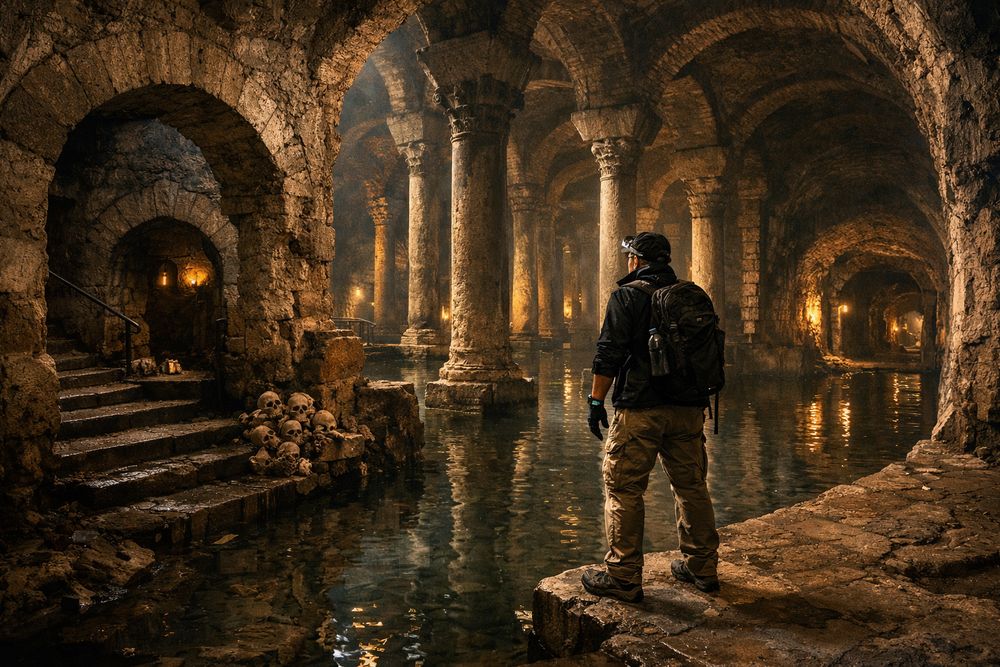
Istanbul is a city layered over Greek, Roman, Byzantine, and Ottoman ground, so many important spaces sit below today’s streets. Sultanahmet is the old imperial core, and it holds the easiest cluster of underground places for first-time visitors.
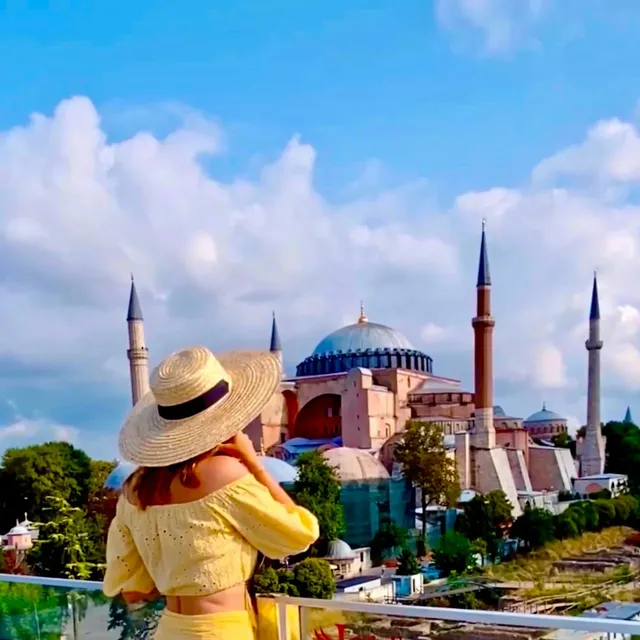
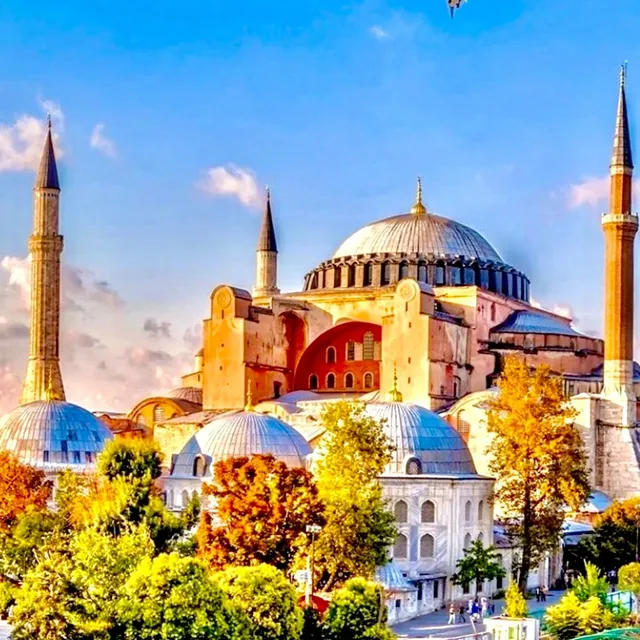
Start in Sultanahmet if your priority is efficiency. The core underground Istanbul experience is cisterns, and the best-known examples sit close to major monuments above ground. In practice, that means you can build a compact walking route around the Basilica Cistern, Hagia Sophia, and Blue Mosque.
Byzantine cisterns are covered water-storage systems built to secure supply for the city and its palaces. Some are monumental halls with columns. Others are plain chambers that feel more like exposed infrastructure than spectacle.
If you only have half a day, choose two sites. If you have a full day, choose three underground stops and two major monuments above ground. Do not try to collect every possible basement or partial excavation. The better approach is to prioritize places with clear visitor value.
Basilica Cistern: the essential first stop
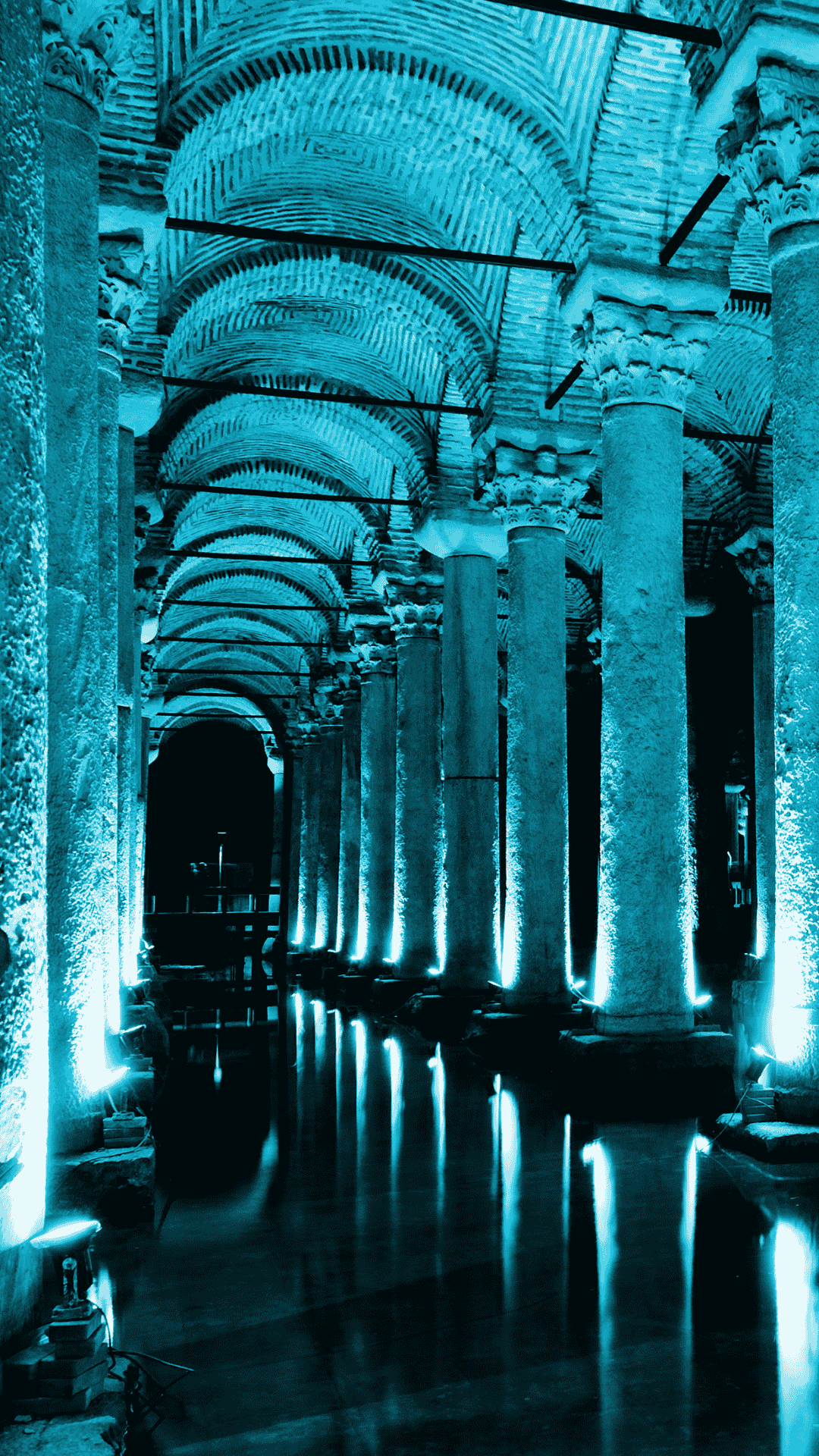
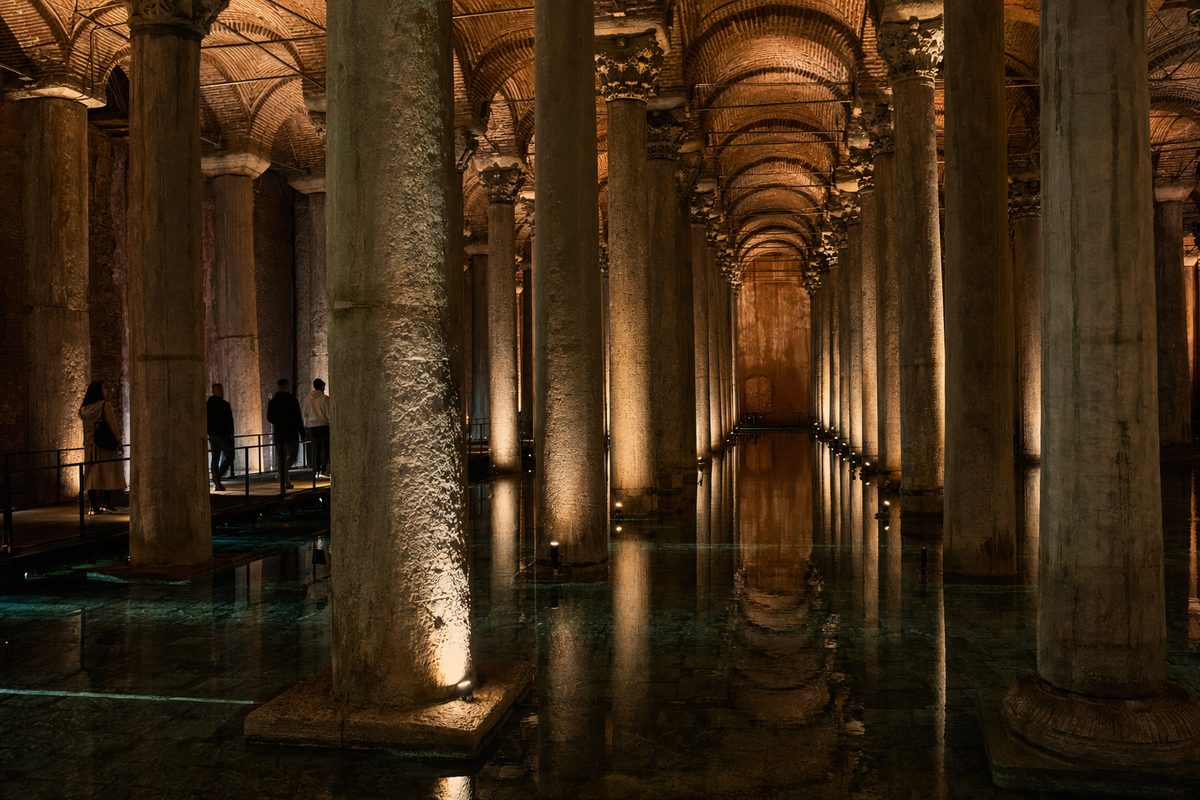
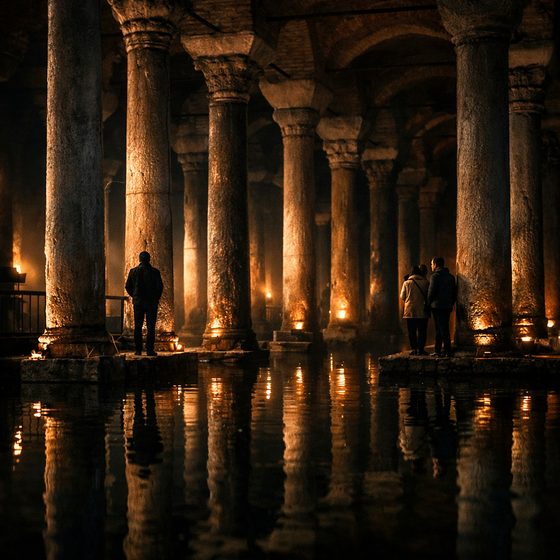
Basilica Cistern is a vast Byzantine underground water reservoir beneath Sultanahmet. It is the most famous underground monument in Istanbul and the first place most visitors should choose.
Why go: it is visually strong, central, and easy to understand even if you know little Byzantine history. How long it takes: [STAT: recommended average visit duration for Basilica Cistern] is worth verifying, but many visitors are satisfied with about 30 to 45 minutes when lines are manageable. Where it fits geographically: it sits in the middle of the old city cluster, steps from major landmarks. Who should skip it: travelers with very limited time who dislike queues and low-light interiors may prefer to focus on above-ground monuments instead.
What you see inside
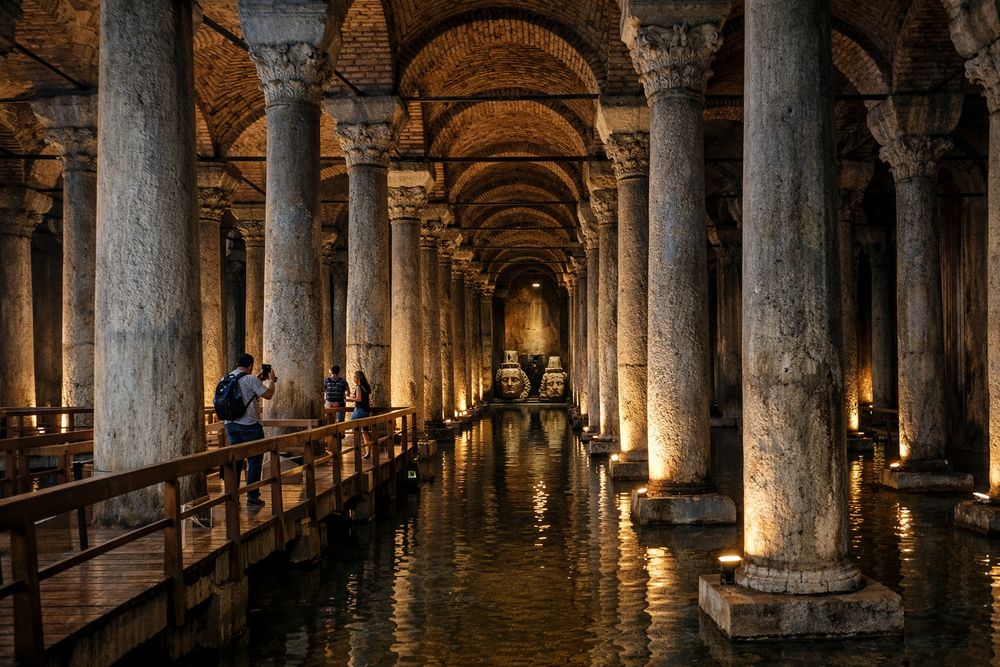
The main appeal is scale. Repeating columns create a rhythm that makes the chamber feel larger than it is. The brick vaults, shallow water, and lit walkways give the site its signature look.
Medusa heads are two reused stone blocks at the base of columns in one corner of the cistern. Their original source remains debated, but they are easy to find and worth seeking out once you have taken in the main hall.
Crowds matter here more than at most other underground sites in Istanbul. Early or late visits often feel calmer than the middle of the day. Check current Basilica Cistern opening hours, last entry, and any timed-entry system.
How to visit smartly
Give yourself enough time to walk the full circuit instead of stopping at the first photo point. The site works best as a first stop in the morning or as a late-day visit after nearby monuments.
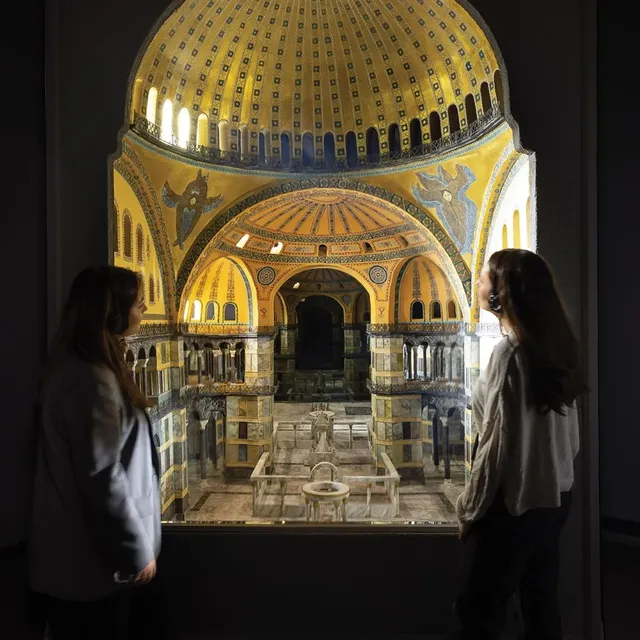
Hagia Sophia is the former Byzantine cathedral and later imperial mosque, now functioning as a mosque with a layered interior history. Blue Mosque is the early 17th-century Sultan Ahmed Mosque. Pairing them with the cistern makes practical sense because all three sit in the same walkable zone. For Blue Mosque access, check current Blue Mosque visitor rules, dress code, entry process, and prayer-time restrictions.
This cluster explains underground Istanbul well. Above ground, you see imperial religious and civic space. Below ground, you see part of the infrastructure that helped sustain it.
Other cisterns worth your time
Once you have seen the Basilica Cistern, the most useful next move is comparison. The best second-tier sites are not equal, and readers benefit from a clear ranking.
Theodosius Cistern
Theodosius Cistern is a restored Byzantine cistern near Sultanahmet, also known as Şerefiye Cistern in modern usage. For most visitors, it is the best second underground stop after the Basilica Cistern.
Why go: it is easy to add to an old-city itinerary, and its presentation usually helps first-time visitors read the structure quickly. How long it takes: a short to moderate stop, usually easier to fit between major monuments than a district-to-district transfer. Where it fits geographically: still in the Sultanahmet area. Who should skip it: travelers who only want one cistern should keep Basilica Cistern and move on.
The chamber is smaller and more curated than the Basilica Cistern. That is not a weakness. It works well precisely because it gives you a cleaner comparison point.
Check current exhibition format, audiovisual elements, and opening hours at Theodosius Cistern.
Binbirdirek Cistern
Binbirdirek Cistern is another large Byzantine reservoir, known in English as the Cistern of Philoxenos. It is usually the third-best underground pick in central Istanbul, after Basilica and Theodosius.
Why go: it gives you a more stripped-back feel for underground architecture. How long it takes: usually a shorter visit than a full major monument. Where it fits geographically: still within the old-city area, making it possible to add if access aligns. Who should skip it: anyone on a tight schedule if the site is only partly open, event-led, or not presented as a full visit.
The draw is the structure itself: columns, broad floor space, and a drier, more utilitarian atmosphere. It often feels less polished than the Basilica Cistern, which is exactly why some travelers prefer it.
Visitor access and setup can change over time, so verify current public access status and visitor setup at Binbirdirek Cistern. If access is limited or the visitor experience is thin, treat it as optional rather than essential.
Nakilbent Cistern
Nakilbent Cistern is a smaller Byzantine cistern in the old city that appears in some lists of lesser-known underground sites. It is not a priority stop for most travelers.
Why go: mainly for niche interest if you are already exploring Byzantine remains in depth. How long it takes: usually a brief add-on rather than a destination. Where it fits geographically: old-city context. Who should skip it: almost everyone building a first-time one-day route.
This site is useful mainly as a reminder that many cisterns in Istanbul survive in partial, adapted, or uncertain visitor form. Some are used for events or limited exhibitions rather than standard tourism.
Check whether Nakilbent Cistern is open to the public and under what conditions.
Crypts, dungeons, and buried traces
Not every underground place in Istanbul is a cistern. Some of the more compelling alternatives are lower fortress spaces, undercrofts, and museum basements where earlier layers remain visible. Still, this category has less consistent visitor value than the major cisterns, so it should come after them in your planning.
The prison cells below Yedikule Fortress
Yedikule Fortress is an Ottoman and earlier defensive complex built into the old land walls, long associated with ceremony, imprisonment, and state power. If you want the closest thing to dungeon-like spaces with real historical weight, this is the strongest candidate.
Why go: thick masonry, enclosed cells, and political history make it a very different underground experience from the cisterns. How long it takes: usually part of a larger visit rather than a five-minute look. Where it fits geographically: away from Sultanahmet, near the land walls. Who should skip it: travelers who only want central, easy, polished sights.
Pair it with the Theodosian Walls if you want the broader defensive context. This combination is more history-heavy and less visually theatrical than the cistern cluster, but stronger for repeat visitors.
Verify current restoration status, accessible sections, and opening hours at Yedikule Fortress before you go.
Church crypts and museum basements
Little Hagia Sophia is a former Byzantine church later converted into a mosque, known for its early domed plan and quiet setting. It is not, by itself, a major underground attraction. That distinction matters.
In Istanbul, church crypts and museum basements are often better understood as occasional buried traces than as guaranteed headline sites. You may find exposed foundations, lower levels, undercrofts, or archaeological sections in museum contexts, but many are limited, minor, or not open on every visit.
Why go: only if you already enjoy architectural fragments and partial remains. How long it takes: usually brief. Where it fits geographically: depends on the individual site, often within old-city religious or museum routes. Who should skip it: readers looking for dramatic underground halls should not build a day around this category.
If a museum or religious site advertises a lower level, check whether the lower level is open to visitors and if photography is allowed.
Tunnels and passages with real visitor value
Some travelers use “underground” broadly, and that is reasonable in Istanbul. A few tunnel-like places are worth adding because they show how subterranean space still works in daily life, not just in archaeology.
The Tunnel funicular
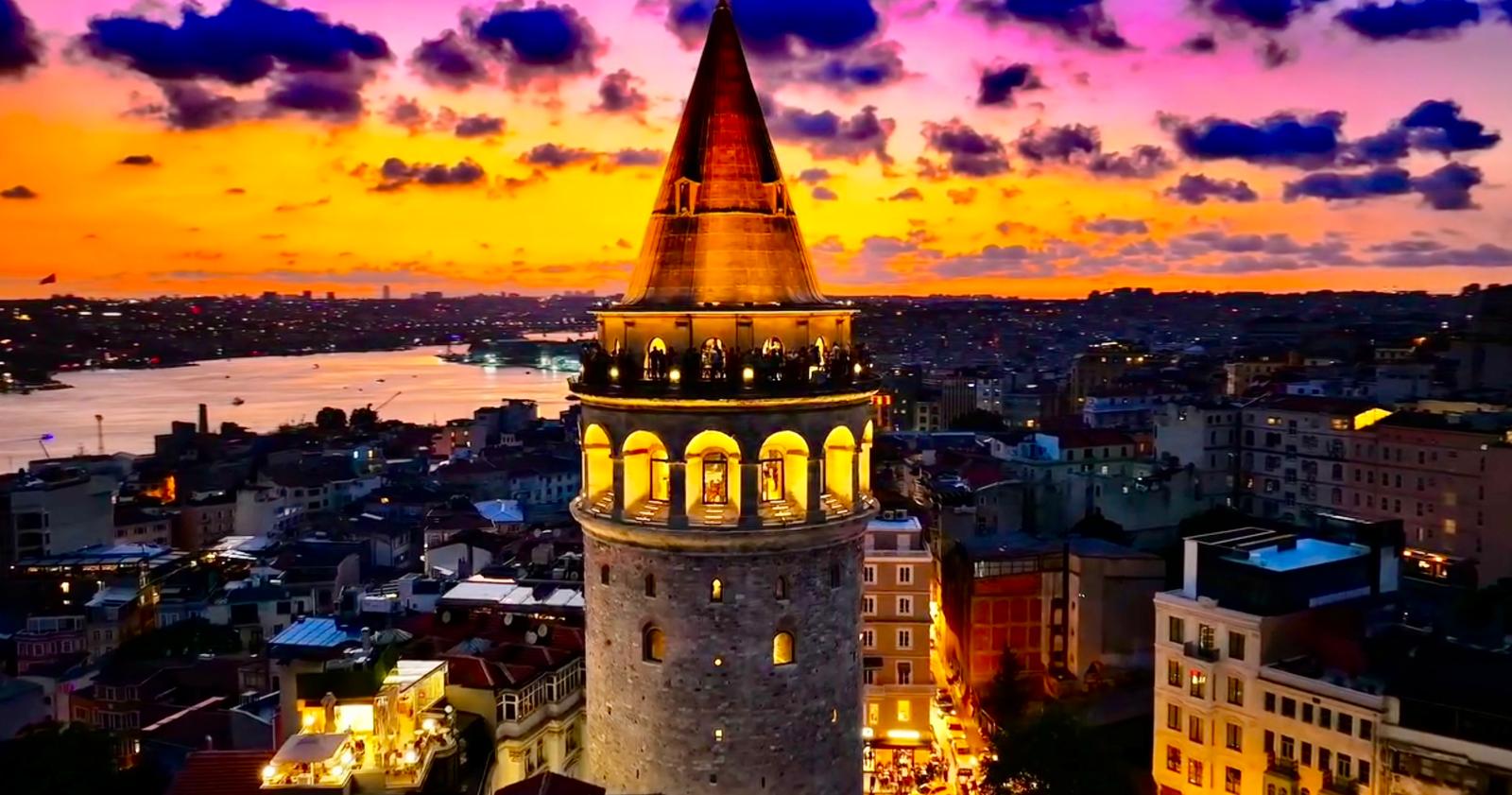
Tünel is the short historic underground funicular linking Karaköy and Beyoğlu. It is the best modern underground add-on in Istanbul because it is quick, practical, and easy to pair with other neighborhoods.
Why go: it gives you a real operating underground experience rather than a preserved monument. How long it takes: only a short ride, so it works best as part of a larger Karaköy-Beyoğlu walk. Where it fits geographically: between the waterfront side of Karaköy and the lower end of Beyoğlu. Who should skip it: travelers who only want ancient sites may find it too brief on its own.
Pair it with Istiklal Avenue for a Beyoğlu walk or with Galata Bridge if you are linking waterfront and hilltop routes.
Check current Tünel operating hours and service updates.
Rumeli Hisarı and fortress passages
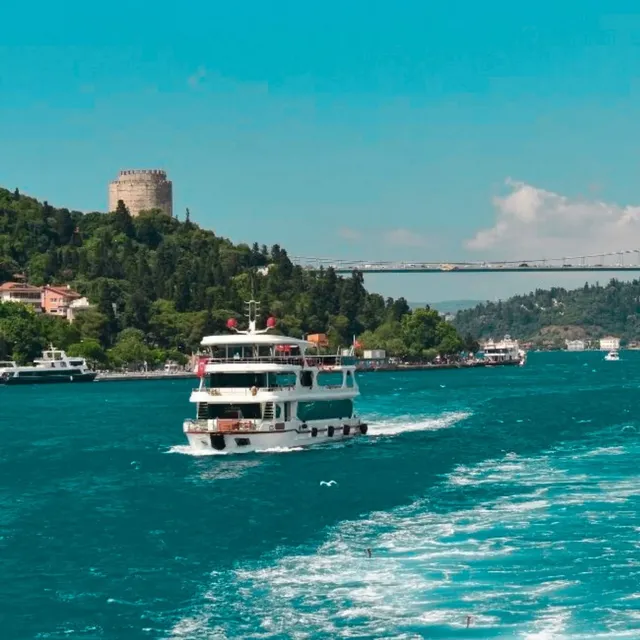
Rumeli Hisarı is the 15th-century fortress on the Bosphorus built before the Ottoman conquest of Constantinople. It is known mainly for towers, walls, and strategic position rather than deep underground chambers, but some interior passages, stairways, and enclosed sections can still appeal to travelers who enjoy military architecture.
Why go: it adds a defensive and Bosphorus-side contrast to the old-city cisterns. How long it takes: usually a moderate stop, especially if you also want to linger for views. Where it fits geographically: well north of the historic center on the European side of the Bosphorus. Who should skip it: visitors with only one day in central Istanbul should not force it into a tight Sultanahmet itinerary.
This is not a true underground headline attraction, so keep expectations realistic. The payoff is the combination of fortress circulation, stone interiors, and major views over the water. It works best as a separate half-day add-on or as part of a Bosphorus route rather than a same-neighborhood stop after Sultanahmet.
Check current visitor route, stair access, and any closed sections at Rumeli Hisarı. If you are nearby, you can also book a Bosphorus cruise for a strong contrast between enclosed stone spaces and open water.
How to build a one-day underground route
The simplest one-day underground Istanbul route is to base yourself in Sultanahmet, do the Basilica Cistern first, add Theodosius Cistern second, then choose either a third cistern or a shift to a different type of site depending on your energy and transport tolerance.
Old city focus
- Basilica Cistern
- Theodosius Cistern
- Hagia Sophia
- Blue Mosque
- Binbirdirek Cistern if open
This is the best version for first-time visitors. It keeps walking simple and puts the highest-value sites first. It also gives you the strongest internal logic: Byzantine infrastructure below ground, then imperial monuments above it.
History-heavy route
- Basilica Cistern
- Theodosian Walls
- Yedikule Fortress
- A relaxed dinner back in Sultanahmet or Sirkeci
Choose this if you care more about defense, imprisonment, and urban layers than about a polished monument cluster. It takes more effort and usually suits repeat visitors better.
Mixed city route
- Basilica Cistern in the morning
- Tünel and Istiklal in the afternoon
- Rumeli Hisarı near sunset
This version covers different eras quickly, from Byzantine infrastructure to modern urban transit to Ottoman military architecture. It is rewarding, but it also needs more transport planning. Check current traffic conditions and best transit options between listed districts.
If you want the safest one-day plan, keep it to Basilica Cistern, Theodosius Cistern, Hagia Sophia, and Blue Mosque, then add Binbirdirek only if access is clearly worthwhile.
Practical tips before you go
Wear shoes with grip. Some surfaces are damp, uneven, or polished by heavy foot traffic.
Bring a light layer if you are sensitive to temperature changes. Underground chambers can feel cooler than the street.
Expect stairs. Not every underground Istanbul site is equally accessible, and fortress spaces can be more demanding than cisterns.
Keep one backup stop ready. Smaller sites may close for restoration, private events, or exhibition changes.
Use geography to avoid wasted time. Sultanahmet sites combine well with one another. Yedikule works best with the land walls. Tünel belongs naturally with Karaköy, Galata, and Beyoğlu. Rumeli Hisarı belongs on a Bosphorus-focused outing, not a rushed old-city loop.
Photography can be rewarding, but low light changes expectations. Move slowly, steady your phone or camera, and do not spend the whole visit chasing one perfect shot.
If prayer times affect your mosque visits, use the cisterns as flexible fillers around them. Verify current visitor rules and prayer-time access at Hagia Sophia and Blue Mosque.
FAQ
What is the best underground site in Istanbul?
The Basilica Cistern is the best first choice for most visitors. It is central, memorable, and easy to combine with Hagia Sophia and the Blue Mosque.
Are there other cisterns in Istanbul besides the Basilica Cistern?
Yes. Theodosius Cistern and Binbirdirek Cistern are the main alternatives with real visitor interest. Smaller cisterns, including Nakilbent, can have limited or uncertain access.
Is Theodosius Cistern worth it after the Basilica Cistern?
Yes. It is the best second cistern for most travelers because it is nearby, easier to slot into a Sultanahmet route, and different enough in scale and presentation to feel useful rather than repetitive.
Is Binbirdirek Cistern worth visiting?
Yes, if it is open in a meaningful visitor format. If access is partial or the setup is thin, most first-time visitors should prioritize the Basilica Cistern and Theodosius Cistern instead.
Does the Blue Mosque require a ticket?
No. Blue Mosque entry is FREE, but visitors should still check current access rules, dress expectations, and prayer-time restrictions. See current Blue Mosque visitor rules, dress code, entry process, and prayer-time restrictions.
Can you visit tunnels or dungeons in Istanbul?
Yes, but the category is mixed. Tünel is a historic underground funicular with practical visitor value, while Yedikule Fortress offers lower spaces and cells that feel closer to dungeons.
How long do you need for an underground Istanbul itinerary?
Half a day is enough for the Basilica Cistern and one more nearby stop. A full day works better if you want to add Yedikule, Tünel, or a cross-city route.
Are Istanbul’s underground sites good for children?
Usually yes, especially the Basilica Cistern. Still, low light, stairs, damp floors, and enclosed spaces may not suit every child, so shorter visits often work best.
Is Rumeli Hisarı an underground attraction?
Not primarily. It is better understood as a fortress with some enclosed passages and interior circulation rather than a major underground monument. Visit for military architecture and Bosphorus views, not for a cistern-like experience.