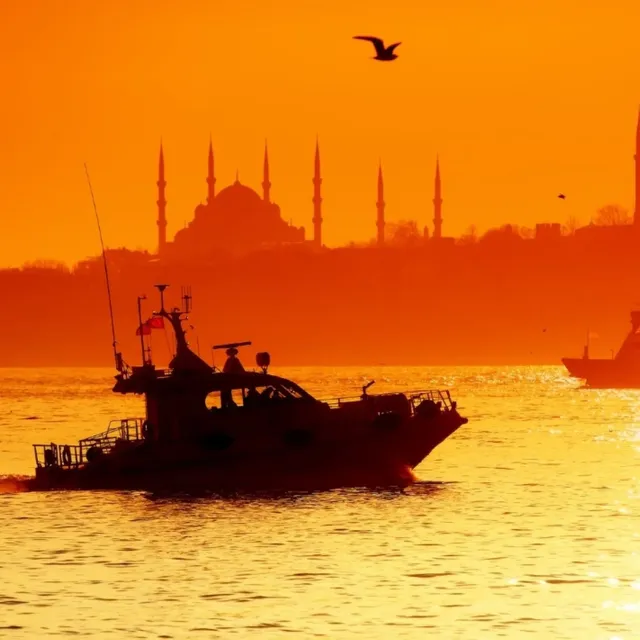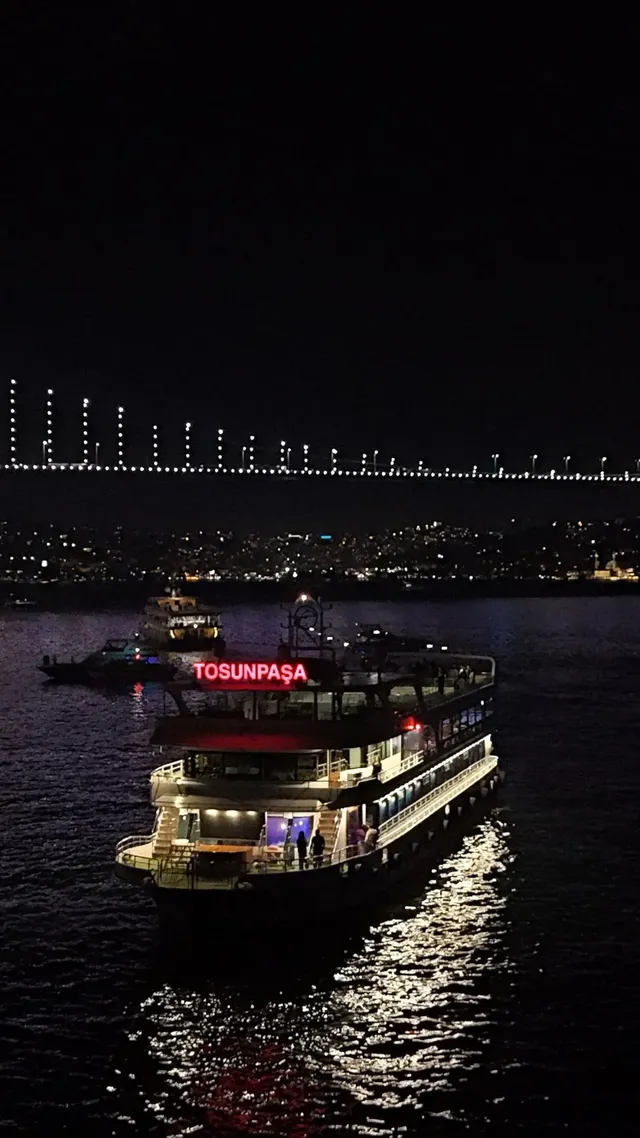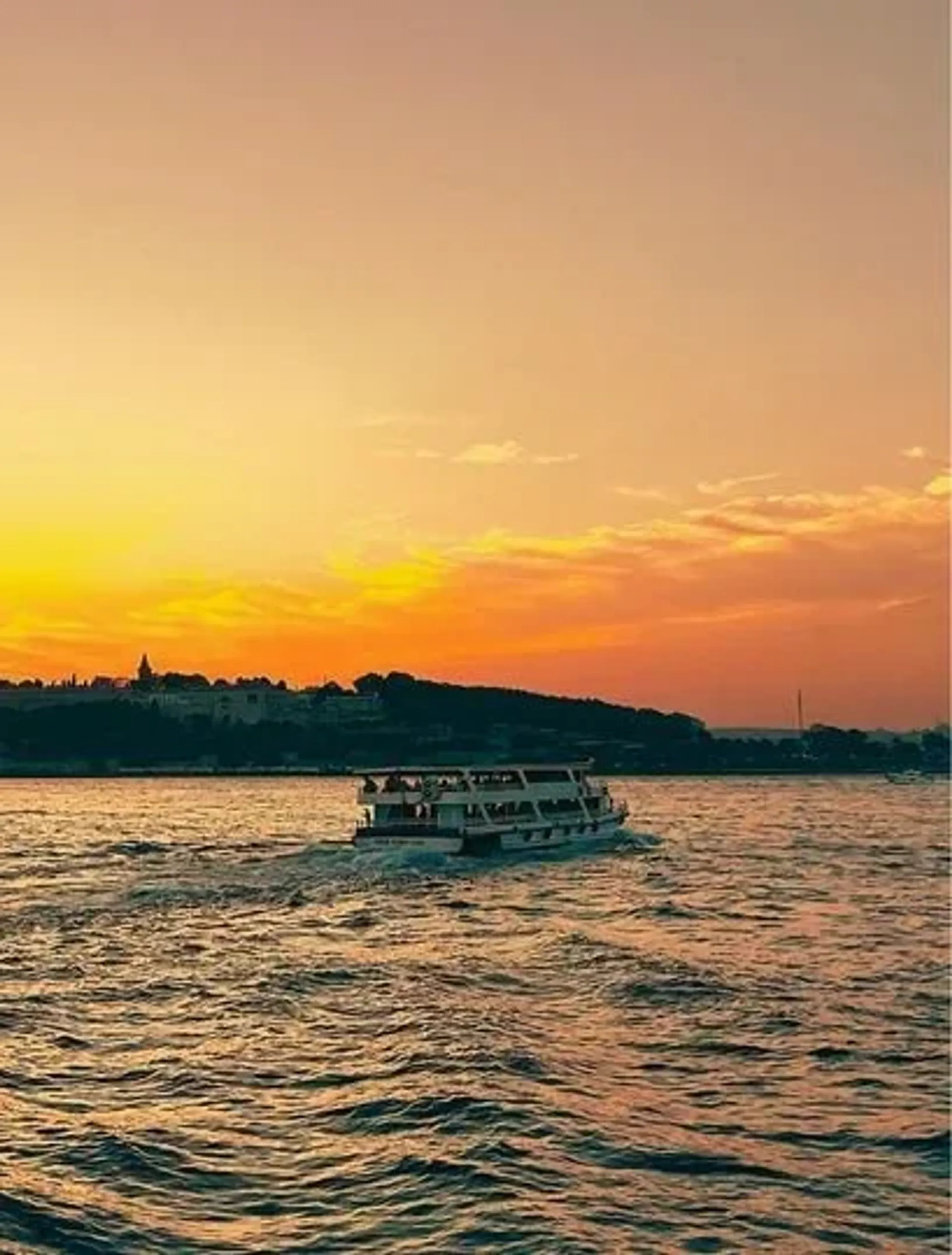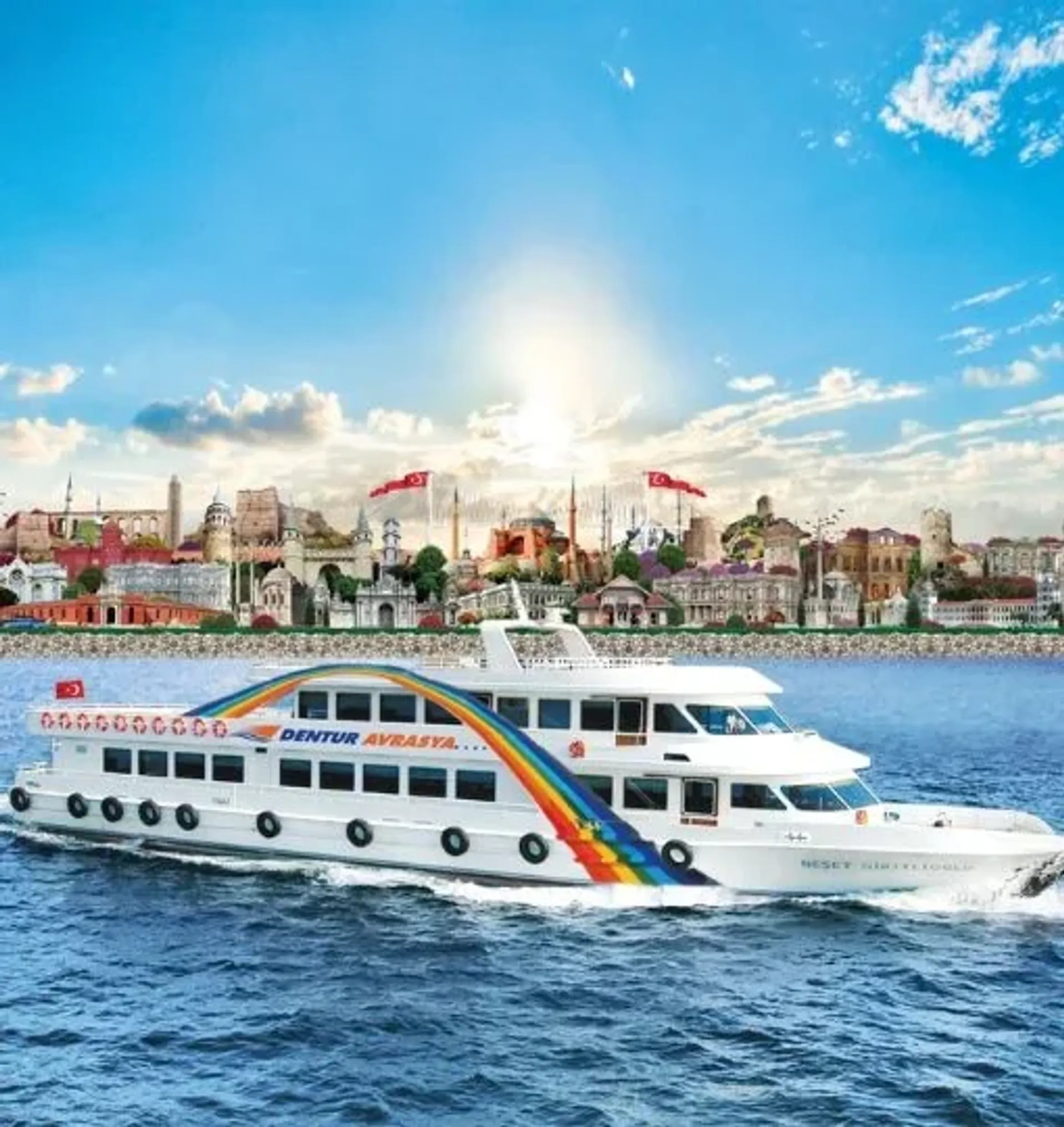
A Bosphorus cruise, a boat trip on the strait linking the Black Sea and the Sea of Marmara, is the fastest way to see how Istanbul’s skyline, palaces, ferry districts, fortresses, and residential waterfront all fit together. Operator details still vary by pier, direction, and tour type. actual turn-around points used by major Bosphorus cruise operators in 2026
Bosphorus cruise route: what you see from the water
The route usually starts near the mouth of the Golden Horn, with departures commonly using Eminönü, Karaköy, or Kabataş. Eminönü, a historic transport hub beside the old city, puts the skyline front and center early. Karaköy, the old port district across the water, gives you a stronger harbor and Galata opening. Kabataş, a ferry and tram interchange below Beşiktaş, can move you more quickly toward the palace stretch.
The visual sequence is usually clear even when operators vary. You begin with dense port and skyline views, move into the ceremonial waterfront of palaces and mosques, then continue toward greener upper-Bosphorus neighborhoods and the fortress zone. On shorter routes, the boat may turn back around the bridge area or near the two medieval fortresses. Longer routes continue farther north. actual turn-around points used by major Bosphorus cruise operators in 2026
| Route feature | What is typical |
|---|---|
| Common departure points | Eminönü, Karaköy, Kabataş current standard short, sunset, and full Bosphorus cruise routes |
| First sights | Galata side, old port edge, historic peninsula skyline |
| European-shore highlights | Dolmabahçe Palace, Çırağan Palace, Ortaköy Mosque, Arnavutköy, Bebek, Rumeli Hisarı |
| Asian-shore highlights | Üsküdar, Maiden’s Tower area, Kuzguncuk, Beylerbeyi Palace, Çengelköy, Kandilli, Anadolu Hisarı |
| Common turn-around zones | Around the bridges, near Rumeli Hisarı and Anadolu Hisarı, or farther north on longer routes current route lengths and turn-around points |
| Stop patterns | Some tours are non-stop; some include a stop or transfer point; public, sunset, and private cruises vary current stop patterns and durations for public Bosphorus tours, private cruises, and sunset cruises |
Key Takeaways
- Most cruises start from Eminönü, Karaköy, or Kabataş and follow a lower-Bosphorus-to-upper-Bosphorus sightseeing sequence.
- The first major views are usually Galata, the old port edge, and the historic peninsula skyline.
- The European shore delivers the strongest run of headline monuments, especially Dolmabahçe, Çırağan, Ortaköy, and Rumeli Hisarı.
- The Asian shore gives a calmer sequence of ferry piers, palaces, neighborhoods, and fortress views, especially around Üsküdar, Beylerbeyi, and Anadolu Hisarı.
- Short, sunset, and full cruises differ mainly in distance, turn-around point, and whether they stop. current standard short, sunset, and full Bosphorus cruise routes
- Midday is best for architectural detail; sunset is best for atmosphere. best departure times by operator and season
Start point: the Golden Horn mouth and the first stretch
Galata, Karaköy, and the old port edge
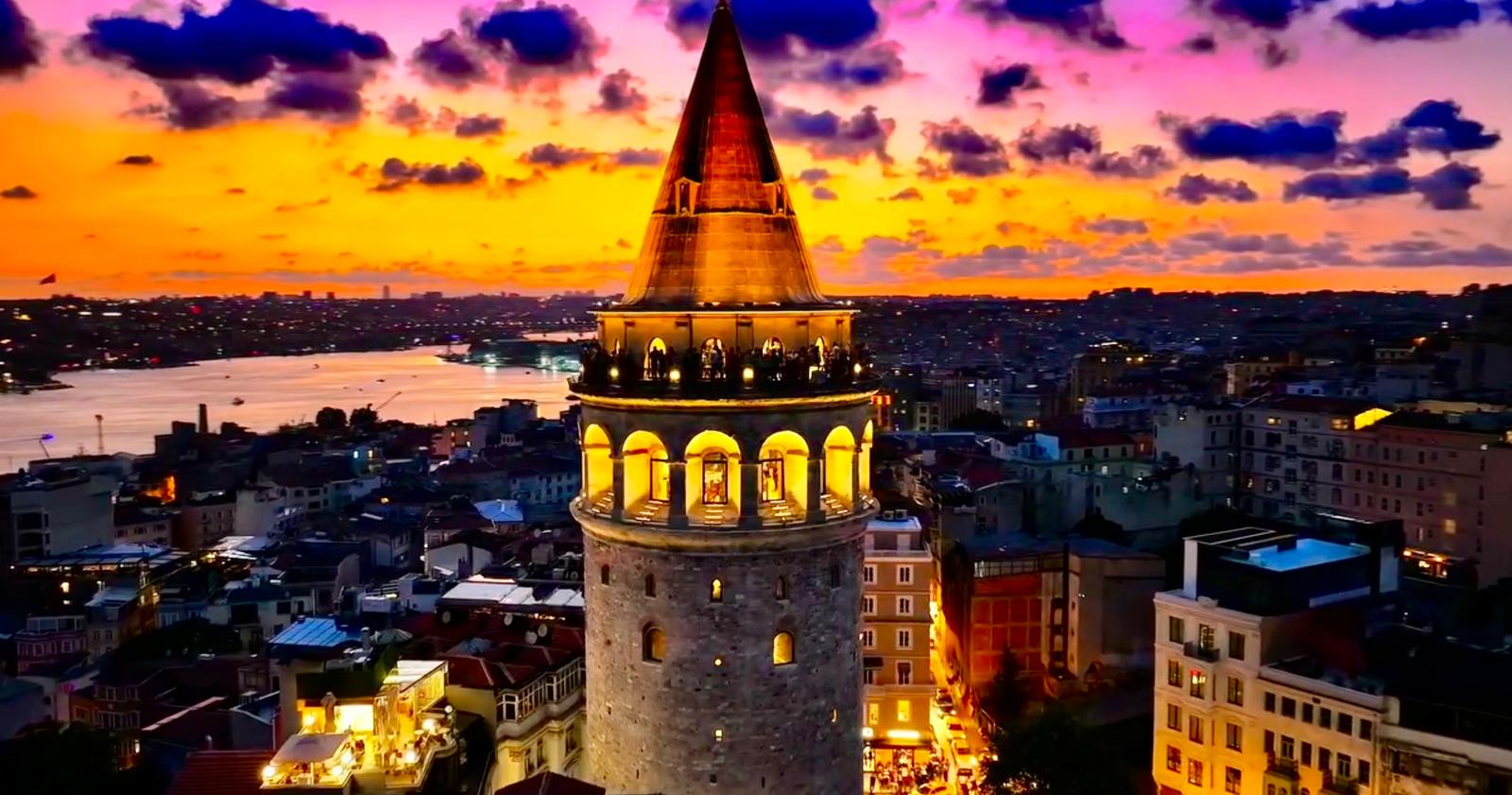
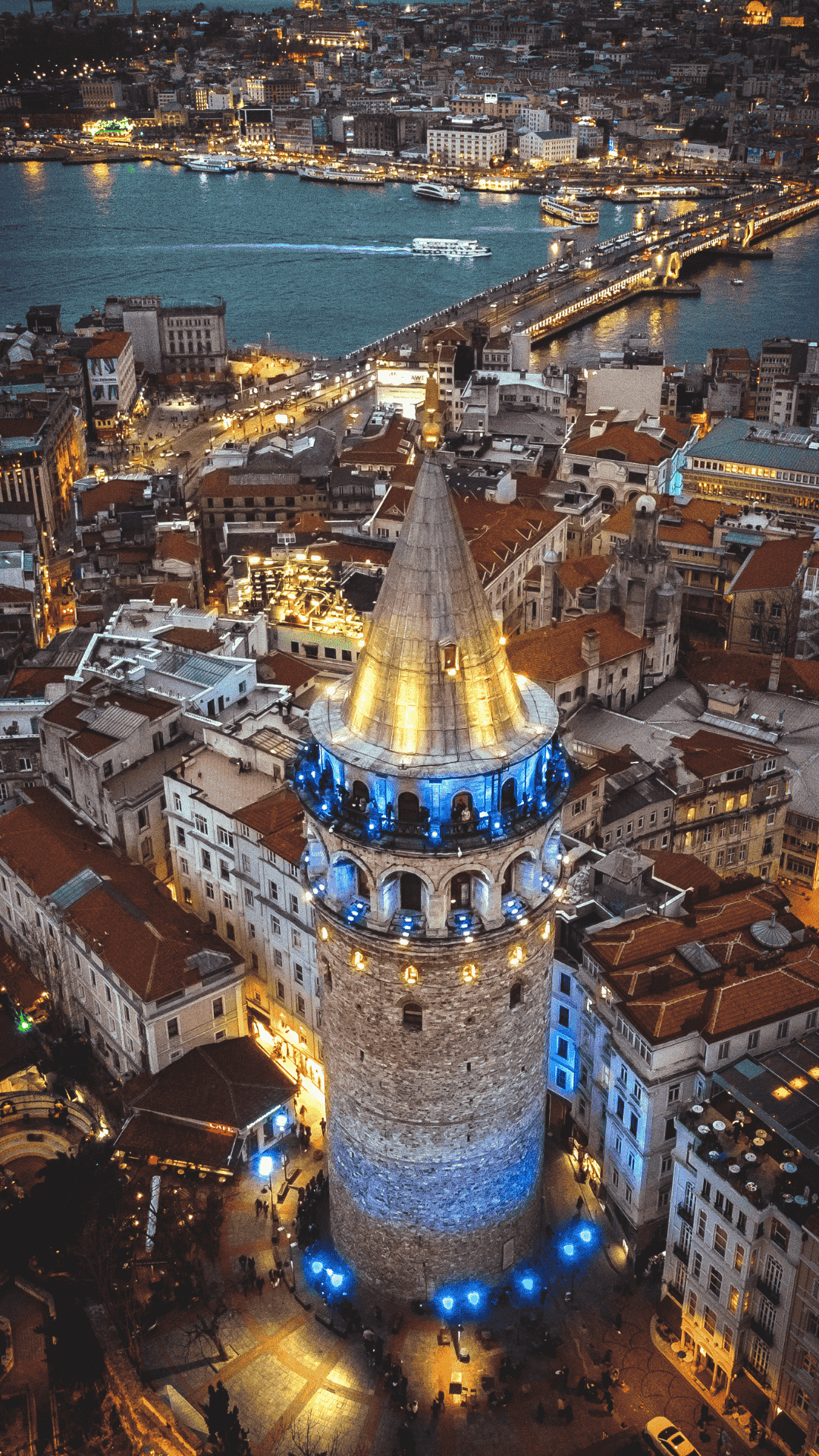
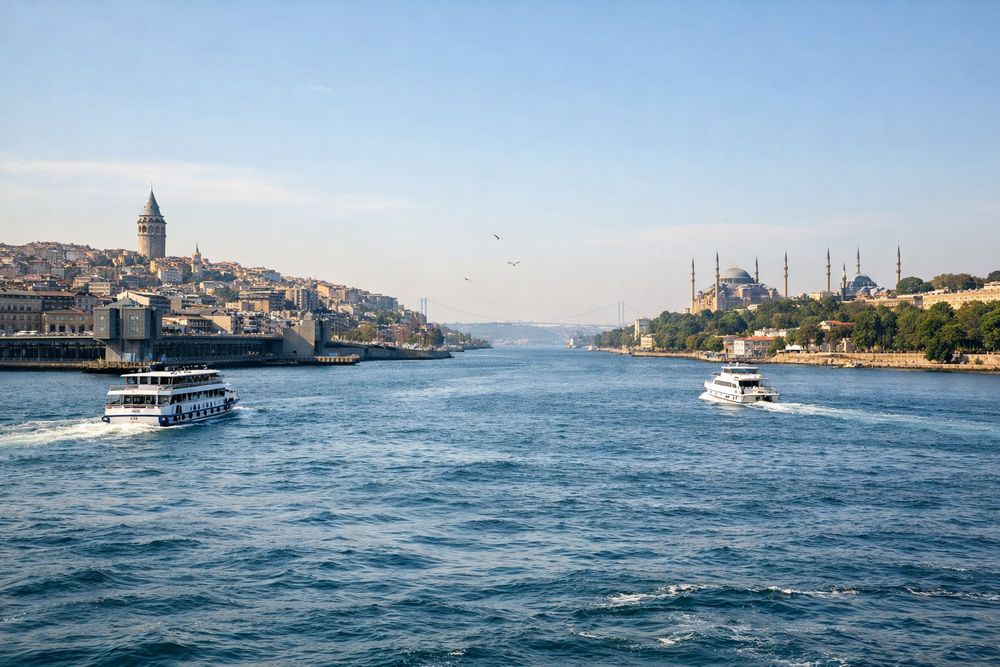
Galata, the historic Genoese and later trading quarter north of the Golden Horn, rises steeply behind the waterfront. From the boat, Galata Tower, the medieval stone watchtower above the slope, is often easy to pick out. Karaköy shows quays, ferry movement, piers, and the old port edge reworked into a modern waterfront district.
This first section matters because it explains Istanbul as a maritime city before it becomes a palace panorama. You see ferries, harbor traffic, and layered shoreline construction rather than garden walls and ceremonial façades.
Topkapı horizon, Hagia Sophia, and the Blue Mosque skyline
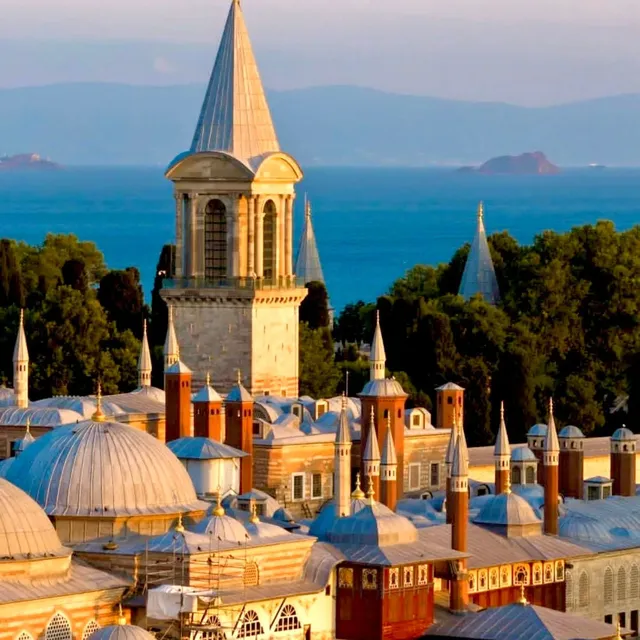
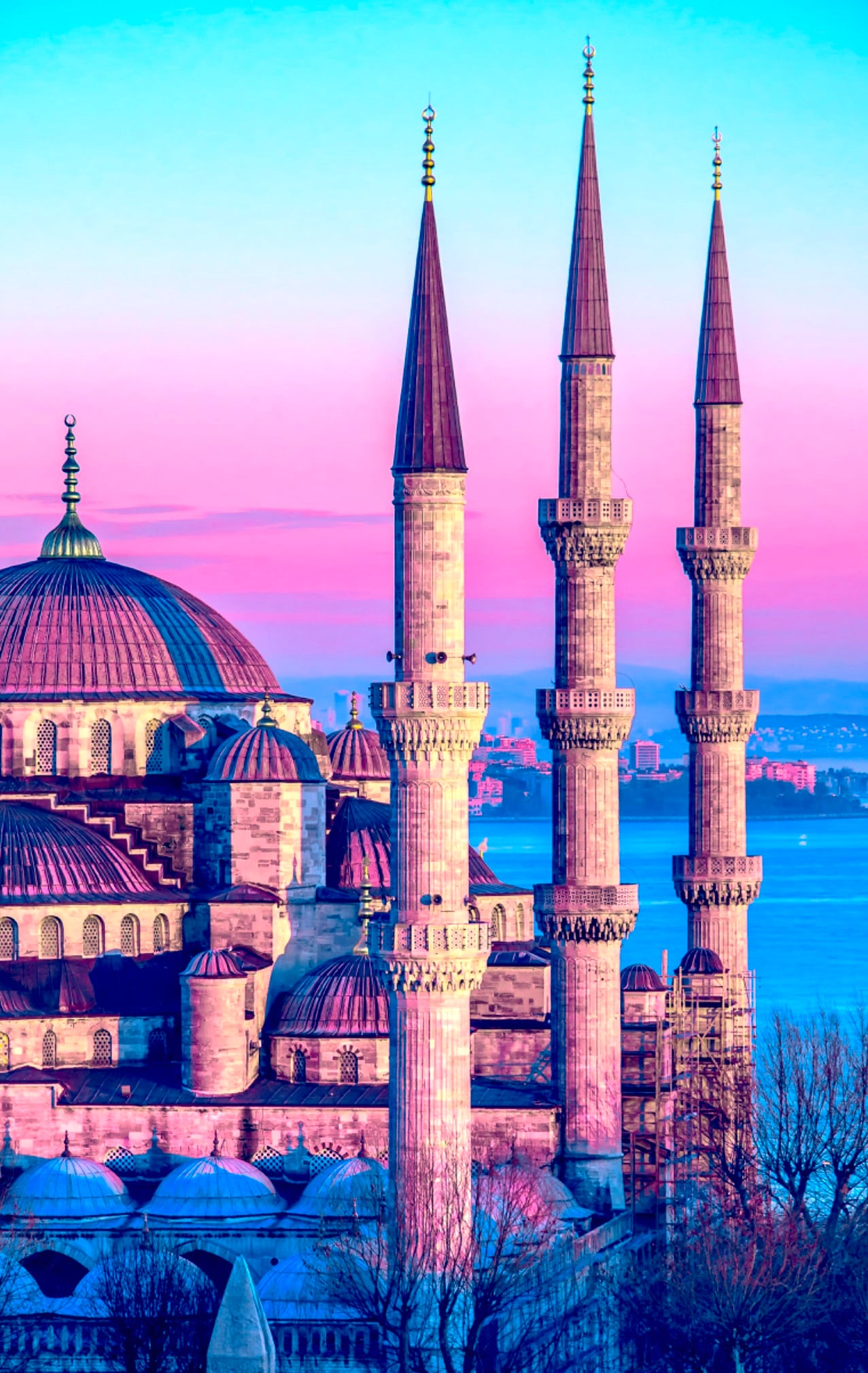
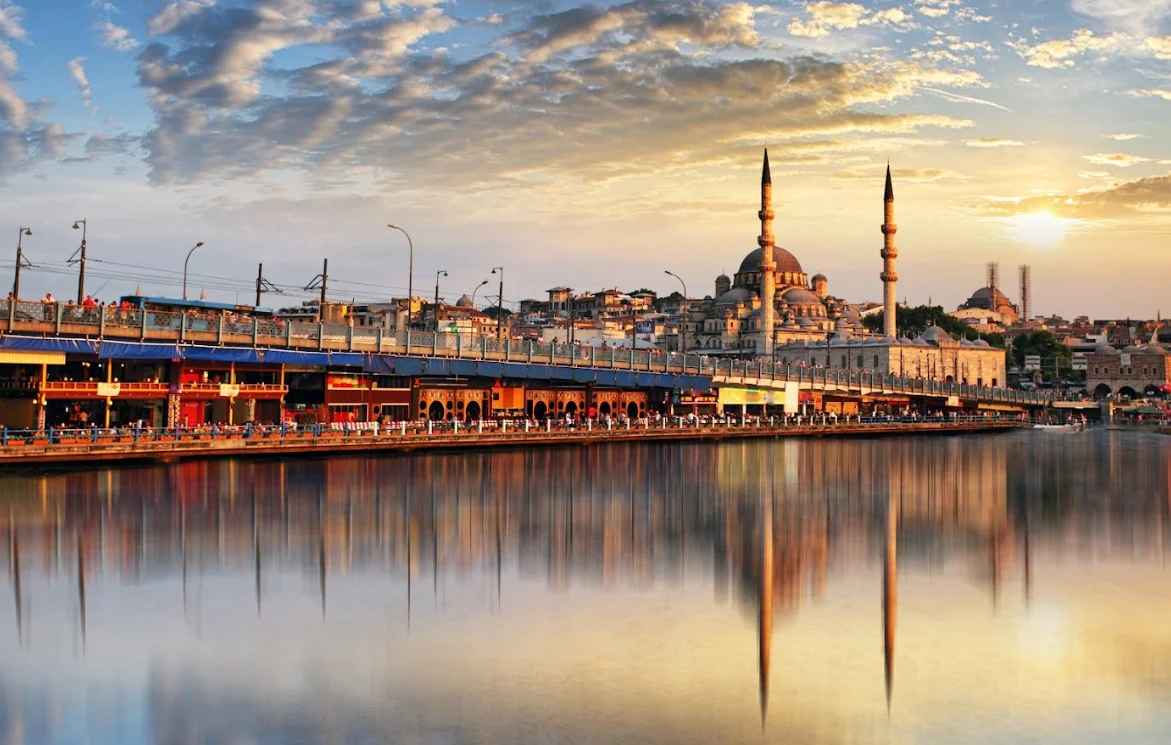
Across the water, the historic peninsula forms one of the city’s strongest long views. Topkapı Palace, the main Ottoman dynastic residence for centuries, sits on the headland above the meeting of the Bosphorus, the Golden Horn, and the Sea of Marmara. Hagia Sophia, the great Byzantine church later converted into an imperial mosque and now an active mosque, appears as a heavy central mass in the skyline. The Blue Mosque, Sultan Ahmed Mosque, adds the familiar cascade of domes and six minarets.
You do not pass these monuments at close range on a standard Bosphorus cruise, but the water view shows why they dominate the approach to the city. If you plan to visit afterward, check current visitor procedures for the Blue Mosque. current prayer-time access rules and visitor entry procedures for Blue Mosque
European shore: palaces, piers, and old waterfront districts
Dolmabahçe Palace and the Beşiktaş waterfront
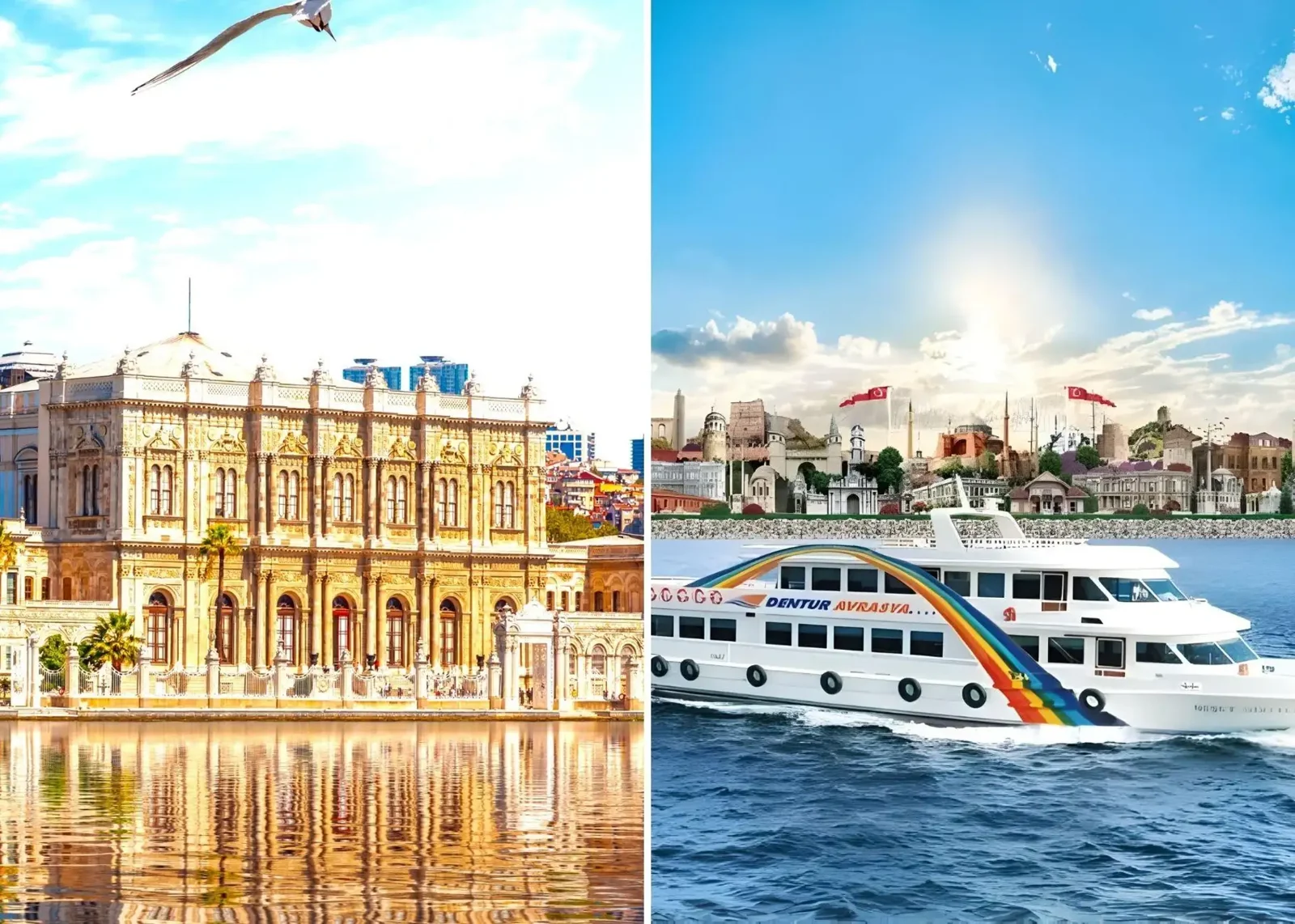
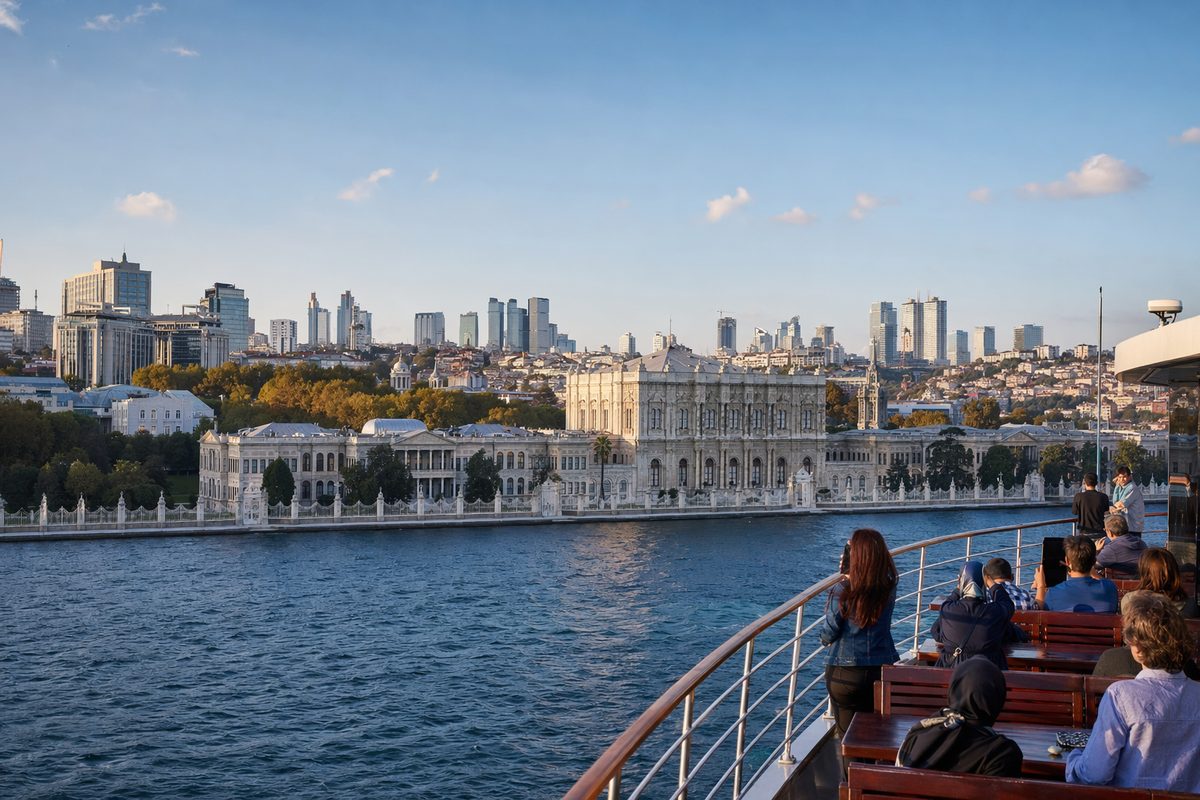
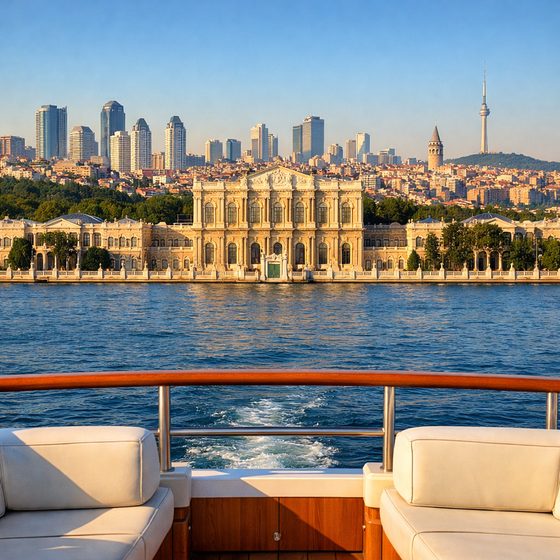
Dolmabahçe Palace, the 19th-century Ottoman imperial palace with a long, ornate waterfront façade, is one of the clearest highlights from the boat. The sea-facing frontage, gates, and symmetry make more sense from the strait than from the road.
Just beyond it, Beşiktaş, a busy central waterfront district with ferries and daily commuter traffic, marks the shift from old imperial skyline to lived-in Bosphorus shoreline. If palace architecture is your priority, this stretch is one of the best reasons to book a Bosphorus cruise and later visit Dolmabahçe Palace.
Çırağan Palace, Ortaköy Mosque, and the first bridge views
Çırağan Palace, another former Ottoman palace on the European shore, continues the imperial waterfront sequence. From the water, its long frontage reads less as an isolated building than as part of a chain of court architecture facing the strait.
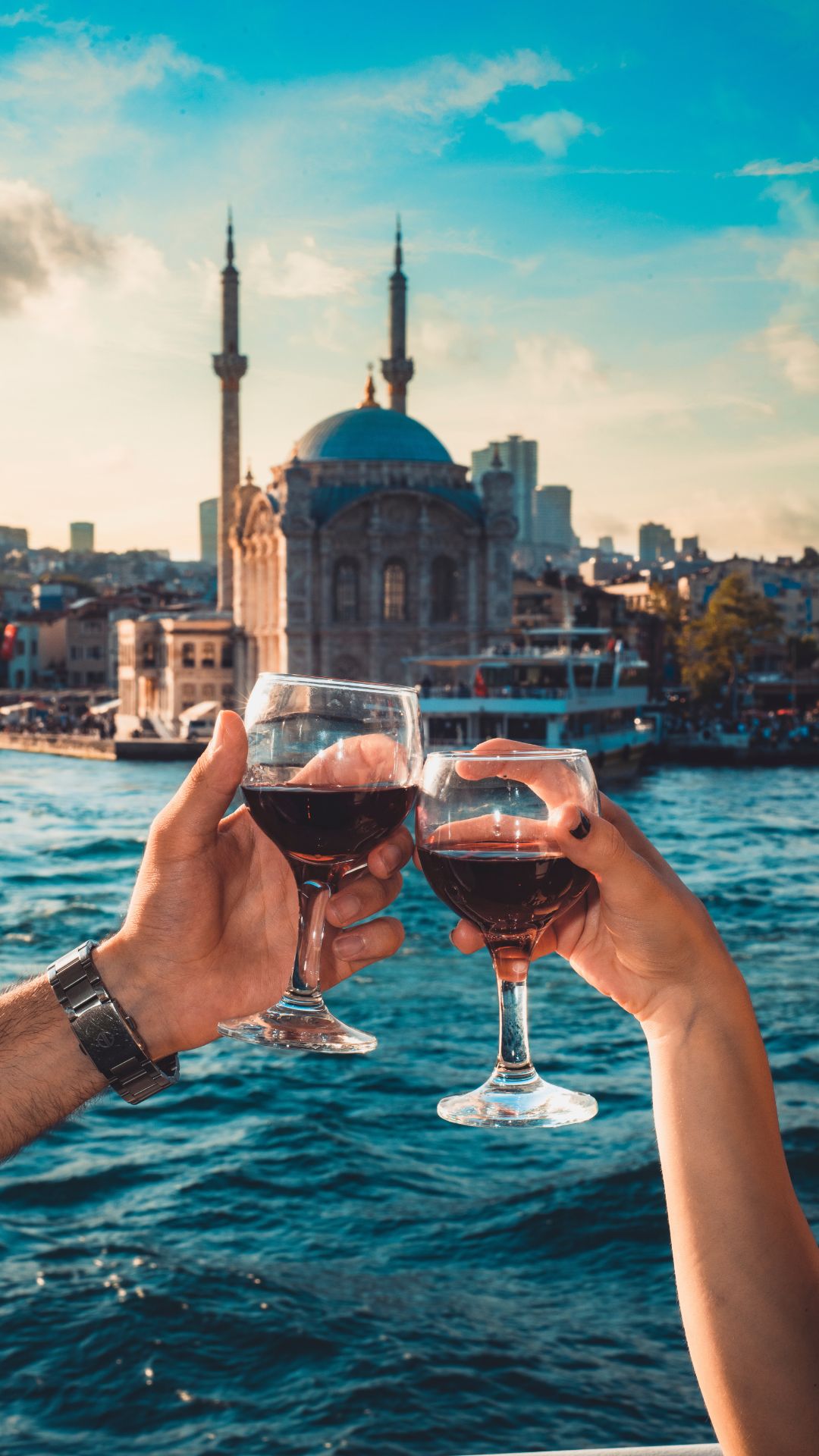
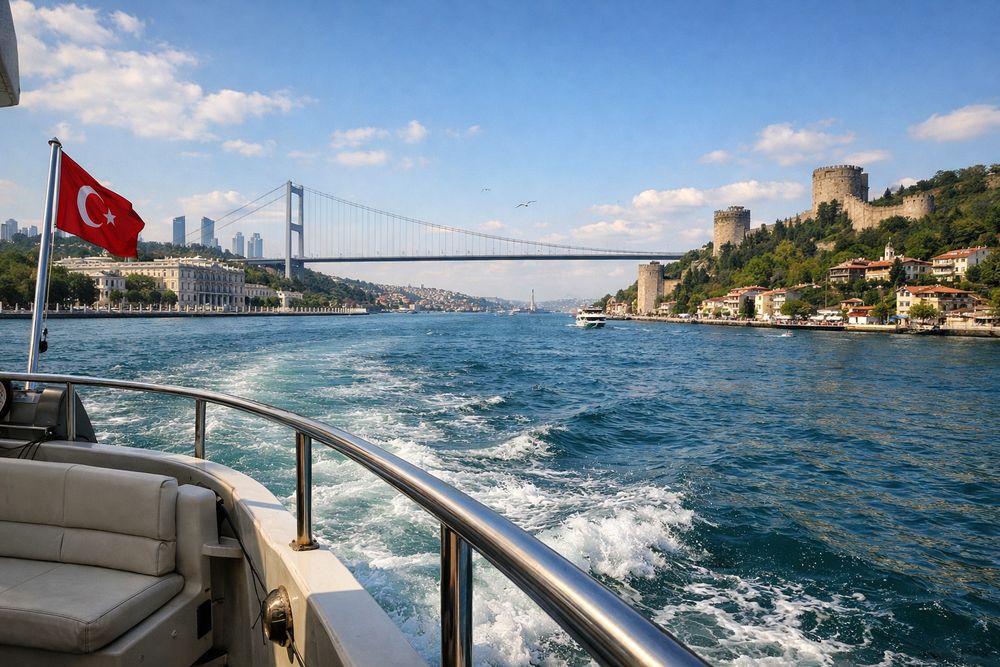
Then the route reaches one of Istanbul’s classic compositions. Ortaköy, the waterside district below the bridge, opens into a compact waterfront scene. Ortaköy Mosque, the elegant 19th-century mosque on the shore, sits directly beneath the first Bosphorus bridge in many cruise views. This is why Ortaköy is such a common stop or follow-up neighborhood for visitors.
Arnavutköy, Bebek, and Rumeli Hisarı
Arnavutköy, a historic Bosphorus neighborhood known for wooden waterfront houses and a curved shoreline, shows the residential side of the European bank. Bebek follows with a broader, more open bay-like feel, marina activity, and hillside development.
These sections matter because they break the route out of monument mode. You start noticing yalıs, small landing points, private boats, schools, and the changing width of the strait.
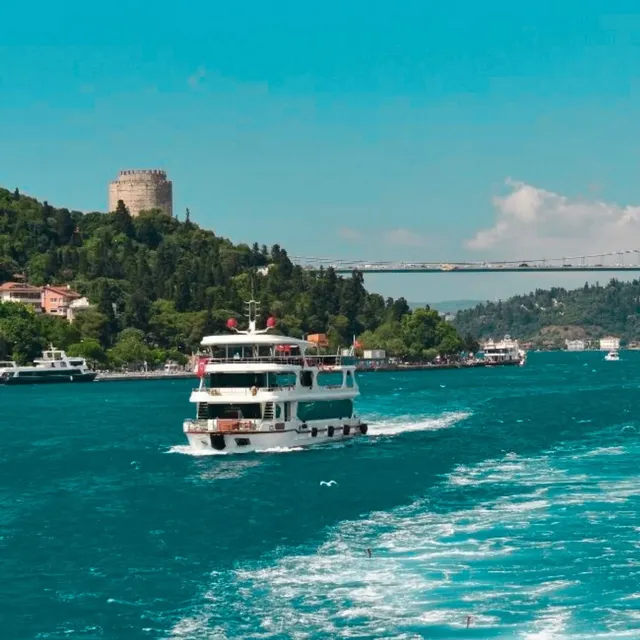
Rumeli Hisarı, the massive 15th-century fortress built by Mehmed II before the conquest of Constantinople, brings the strategic logic of the Bosphorus into view. From the boat, its walls and towers make immediate sense because you can see how it commands one of the narrowest parts of the channel. For a closer land visit, see Rumeli Hisarı.
Asian shore: ferry piers, mansions, and calmer silhouettes
Üsküdar and the Maiden’s Tower
Üsküdar, the historic Asian-side district facing the old city, appears as a lower, calmer shoreline marked by ferry piers and mosque silhouettes. It feels less ceremonial than the European palace front and more tied to everyday movement across the water.
Near this zone sits Maiden’s Tower, the small tower on an islet off Üsküdar and one of Istanbul’s best-known waterfront landmarks. Depending on your exact departure point and route, you may see it early, at an angle, or as a side view rather than a close pass. visibility and pass-by proximity of Maiden’s Tower on standard 2026 Bosphorus cruise departures For context before or after the cruise, see Maiden’s Tower.
Kuzguncuk, Beylerbeyi Palace, and Çengelköy
Kuzguncuk, a small Bosphorus neighborhood with an older residential character, reads from the water as a gentler hillside with tighter domestic scale than the European shore opposite.
Beylerbeyi Palace, the 19th-century Ottoman summer palace on the Asian side below the first bridge, is one of the main reasons to keep watching the Asian bank carefully rather than treating it as background. Its position and proportions are more restrained than Dolmabahçe’s, but it is a major landmark from the water. If you want the land visit afterward, see Beylerbeyi Palace.
Past it, Çengelköy, a long-established waterfront neighborhood with mosques, piers, and historic houses, adds a more local Bosphorus rhythm. The shoreline here shows why the Asian side often feels more human in scale even when the real estate is just as prized.
Kandilli, Anadolu Hisarı, and the upper Bosphorus feel
Kandilli, a leafy upper-Bosphorus neighborhood on the Asian shore, shifts the mood away from central Istanbul. The shores appear greener and the spacing between major sights widens.
Anadolu Hisarı, the smaller Ottoman fortress on the Asian side, faces Rumeli Hisarı across the narrow channel. Seeing both fortresses in relation to each other is one of the most useful parts of the cruise because it explains the Bosphorus as a defensible passage, not just a scenic waterway. For a related land stop, see Anadolu Hisarı.
Why the palaces matter on this route
The palace sequence is the clearest way to understand how the Ottoman court turned toward the Bosphorus in the 19th century. The Ottoman Empire, the dynasty and state that ruled Istanbul for centuries, used waterfront architecture not only as residence but also as display.
Dolmabahçe and Çırağan show that most clearly on the European shore. Beylerbeyi gives the Asian-side counterpart. A cruise gives you the strategic overview first: where these palaces sit, how they face the strait, and how close court life remained to shipping lanes, diplomatic arrival, and public visibility. A land visit later adds the interiors and ceremonial detail.
How to choose the best side, seat, and sailing time
If your priority is headline landmarks, try to sit where you can keep the European shore in view for at least one leg of the trip. The best side still depends on departure pier, route direction, and whether the boat loops or reverses. typical direction of travel by major public and private Bosphorus cruises
Choose the European side if you care most about palace façades, Ortaköy Mosque, and the most photographed sequence of monuments. Choose the Asian side if you prefer neighborhood texture, ferry piers, and a calmer shoreline.
Midday usually gives the clearest architectural reading. Sunset is better for softer light, bridge silhouettes, and atmosphere. Night cruises shift attention away from detail and toward lighting effects on the water and along the bridges. current sunset and evening cruise availability by season
If there is open seating, sit outside when weather allows. The upper deck is better for skyline reading and photography, while lower enclosed seating can be steadier in windy conditions. Bring a layer; the water often feels cooler than the streets nearby. average on-water temperature feel by season if adding practical packing notes
Bosphorus cruise stops, turn-around points, and practical checks
Not all cruises follow the same operating pattern. Some are simple non-stop panoramas. Some include a northern stop, an Asian-side stop, or a turnaround without disembarking. Public ferry tours, private cruises, and sunset sailings each handle distance and pacing differently. current stop patterns and durations for public Bosphorus tours, private cruises, and sunset cruises
Before you book, check these points:
- exact departure pier
- total duration
- whether the route is a loop or out-and-back
- whether there are stops
- whether commentary is included
- how far north the boat actually goes
If your goal is to see the fortresses, verify that the route reaches Rumeli Hisarı and Anadolu Hisarı rather than turning back earlier. current route lengths and turn-around points
Also check access and transport. Eminönü, Karaköy, and Kabataş are all linked into the city’s ferry, tram, and metro networks in different ways, so your easiest pier may depend on where you are staying. See Istanbul ferry and transport. Visibility also matters: clear days make upper-shore landmarks much easier to read than hazy ones. seasonal visibility considerations for Bosphorus sightseeing
Pair your cruise with nearby sights
A Bosphorus cruise works well in the middle of a sightseeing day because the departure piers connect naturally with major landmarks and neighborhoods.
If you start from the historic center, pair the cruise with Hagia Sophia, the Blue Mosque, or Topkapı Palace. If you board near Karaköy or Galata, add nearby walking and food stops through the surrounding districts and nearby-sights pages. If the palace stretch is what stays with you, follow the cruise with Dolmabahçe Palace or Beylerbeyi Palace.
If Ortaköy was your favorite section from the water, continue with Ortaköy. If the fortresses were the main draw, plan around Rumeli Hisarı or Anadolu Hisarı. If the lower-Bosphorus skyline caught your attention, use the cruise as orientation before visiting the old city monuments in detail. The point is simple: the boat shows how the shoreline fits together, and the land visits let you go deeper where your interest is strongest.
FAQ
What is the usual Bosphorus cruise route?
Most routes start from Eminönü, Karaköy, or Kabataş, pass the lower Bosphorus skyline and the palace-lined European shore, then continue toward the upper Bosphorus before turning back or completing a longer run. Exact direction and distance vary by operator. current standard short, sunset, and full Bosphorus cruise routes
What landmarks do you see on a Bosphorus cruise?
Typical highlights include the old city skyline, Dolmabahçe Palace, Çırağan Palace, Ortaköy Mosque, the first bridge, Arnavutköy, Bebek, Rumeli Hisarı, Üsküdar, Beylerbeyi Palace, and Anadolu Hisarı. Longer routes may continue farther north. exact landmark sequence by route type
Which side of the Bosphorus cruise is better?
The European side usually gives the strongest run of major monuments and palace frontage. The Asian side feels calmer and more residential. The better side for your seat depends on route direction and departure pier. typical route direction by operator
Do all Bosphorus cruises pass the two fortresses?
No. Some shorter routes turn back earlier, while longer cruises reach Rumeli Hisarı and Anadolu Hisarı or go beyond them. Check the turn-around point before booking. current route lengths and turn-around points
Is a sunset Bosphorus cruise better than a daytime cruise?
Daytime is better for reading architecture and identifying landmarks. Sunset is better for atmosphere, softer light, and skyline silhouettes. current seasonal sunset cruise schedules
Can you see the Blue Mosque on a Bosphorus cruise?
Yes, on many lower-Bosphorus routes you can see the Blue Mosque as part of the historic peninsula skyline, though not at close range. If you plan a separate visit, Blue Mosque entry is free, but visitor access changes around prayer times. current visitor access rules during prayer times