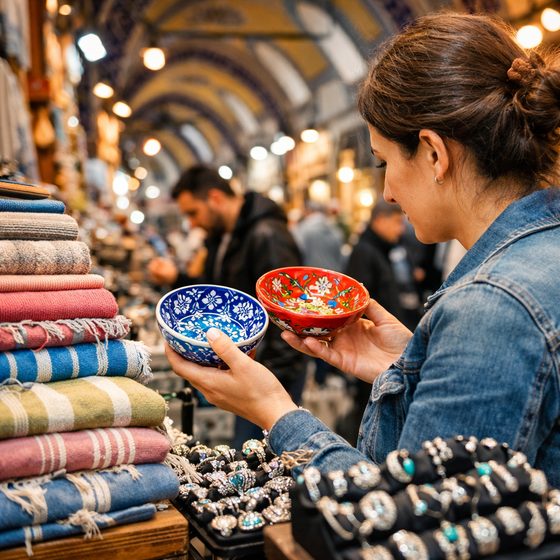
Two days is just enough time to understand one of Istanbul's great truths: this city is best read through its tables, tea glasses, ferry snacks, market counters, and late-night grills. You do not come here only to "eat Turkish food." You come to move between neighborhoods where breakfast habits change, desserts shift, seafood gets lighter, spices get deeper, and the city's European and Asian sides reveal two distinct rhythms of appetite.
If we were planning 48 Hours of Eating in Istanbul for a friend visiting for the first time, we would not send them chasing a checklist of famous spots from one end of the city to the other. That usually leads to traffic, rushed meals, and a version of Istanbul that feels more exhausting than delicious. A better plan is to organize your time by geography, appetite, and mood: start with classic old-city flavors, move toward street food and meyhanes, cross the Bosphorus for a different culinary tempo, and leave room for the tea, simit, dessert, and ferry moments that make the city memorable.
Think of this as an Istanbul travel guide focused on appetite—part food route, part neighborhood strategy, part decision-making tool for anyone building an Istanbul itinerary around meals that are actually worth the time.
EAT LIKE A LOCAL Build your Istanbul food weekend One guided food tour is the maximum worth booking for a short stay—browse curated food tours and experiences.Quick Overview
| Category | Best Choice | Why It Works | |
|---|---|---|---|
| Best area to stay | Karaköy, Galata, Sultanahmet, or Kadıköy | You stay connected to ferries, tram lines, and major food neighborhoods without losing hours in traffic | |
| Best first meal | Traditional Turkish breakfast | It introduces the pace of Istanbul dining and gives you a broad taste of local staples at once | |
| Best cross-continental move | Ferry to Kadıköy for lunch or an afternoon food walk | The ferry ride is part of the experience, and Kadıköy offers one of the city's strongest concentrations of casual, high-quality food | |
| Best evening format | Meyhane dinner with meze and fish or rakı | This is where Istanbul feels social, unhurried, and unmistakably itself | |
| Best snack breaks | Simit, börek, roasted chestnuts in season, baklava, Turkish tea | Small stops help you experience the city between major meals, not only at sit-down restaurants | |
| Transport strategy | Walk + tram + ferry | Faster, more scenic, and usually less stressful than relying on taxis in central areas | |
| If time is limited | One historic breakfast, one ferry crossing, one Kadıköy stop, one meyhane dinner | You will still get a strong sense of Istanbul's culinary identity without overpacking the schedule |
Why Istanbul Is One of Europe and Asia's Great Food Cities
- Food explains the city. Food here explains history, geography, migration, religion, class, seasonality, trade routes, and daily life—far beyond a parade of kebabs: breakfast spreads, olive-oil meze, Black Sea anchovies in season, street snacks, lokantas, and regional dishes from all over Turkey.
- A city of transitions. Morning belongs to bakeries, breakfast houses, simit sellers, and tea. Midday can mean soup, pide, döner, or a market lunch. Late afternoon belongs to dessert and coffee. Evening opens into meyhane tables, ocakbaşı grills, and seafood by the water.
- Contrast is the point. Do not judge Istanbul by a single meal in a tourist-heavy square. You need the old center and the neighborhoods, the formal meal and the snack eaten standing up, the European side and the Asian side.
- Ideal for. Couples, solo travelers, first-time visitors, and repeat visitors who want a neighborhood-driven trip—especially anyone who enjoys walking, ferries, and several smaller dishes over one oversized meal.
- Who should adjust it. If your trip is focused primarily on museums, religious sites, or shopping, use this as a framework rather than following it meal by meal. Families with very young children may prefer fewer neighborhood jumps.
- Mobility note. If mobility is a concern, choose one side of the city per day and limit uphill walking in Beyoğlu and around Galata.
The Culinary Logic Behind This 48-Hour Route
This itinerary is designed around appetite curves and neighborhood flow, not around internet fame. Day 1 combines the historic peninsula with Beyoğlu and Karaköy, where first-time visitors can balance iconic dishes with atmosphere. Day 2 moves across the Bosphorus to the Asian side, where Kadıköy and its surrounding districts offer one of the city's richest everyday food scenes.
The route intentionally varies your meal styles: one substantial Turkish breakfast, one old-Istanbul lunch, several snack and dessert stops, one street-food or casual market sequence, one classic meyhane dinner, and one Bosphorus or neighborhood seafood option. If every meal is heavy, you will slow down. If every meal is "famous," the trip starts to feel performative.
Best Neighborhoods for Food Lovers in Istanbul
Karaköy
Best all-around base for a short culinary trip: excellent transport, dessert stops, modern cafés, ferries, walkability, and easy crossings between old and new Istanbul. If this is your first trip and you want food plus classic sightseeing, Karaköy is often the best compromise.
Best for Best all-around base
Galata & Beyoğlu
Atmospheric and central, with strong café, dinner, and bar options and a more contemporary urban experience. Great for evening energy—less ideal if you want flat walking routes, since some streets are steep.
Best for Evening atmosphere
Sultanahmet
Best if you want to combine major attractions with classic food stops and tram convenience. Strong for breakfast and traditional lunches; weaker for nightlife and neighborhood variety compared with Karaköy or Kadıköy.
Best for Sights + classic food
Eminönü
Best for market energy, transit connections, and quick classic bites. Strong for atmosphere and snack culture, though it can feel crowded and transactional if you do not know what you want.
Best for Market energy & snacks
Kadıköy
Best for everyday local food culture, market browsing, casual excellence, and a less touristic evening atmosphere. Essential if food is a major trip priority.
Best for Everyday food culture
Moda
Best for a slower-paced food afternoon or dinner—cafés, coast walks, dessert stops, and a softer urban mood just beyond central Kadıköy.
Best for Slow afternoons
The 48-Hour Eating Route
 European side
 Historic Istanbul, Karaköy, Galata, and a Meyhane Evening
Day 1 combines the historic peninsula with Beyoğlu and Karaköy: iconic dishes balanced with atmosphere, from a proper Turkish breakfast to the social table of a meyhane.
Start With a Proper Turkish Breakfast
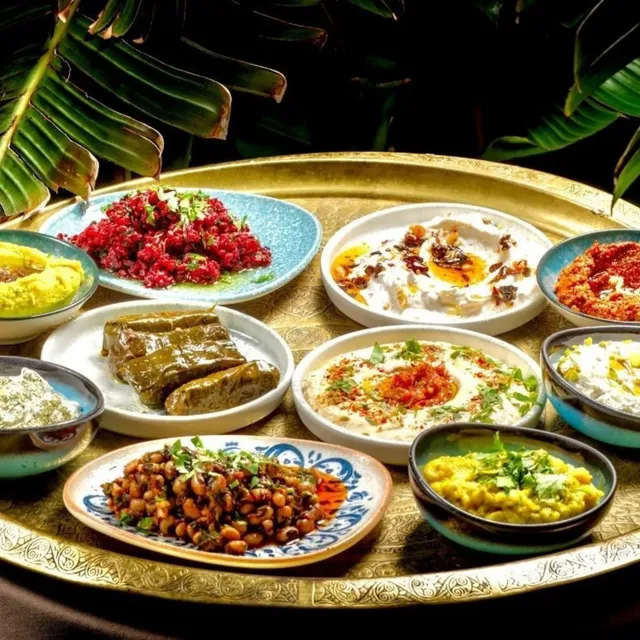
Begin with a traditional Turkish breakfast rather than grabbing something quick. A real breakfast here is not one dish but a table: cheeses, olives, tomatoes, cucumbers, eggs, honey, clotted cream, jams, bread, simit, maybe menemen, maybe sucuk, and endless tea. If you are staying in Sultanahmet, eat before the area fills with tour groups; from Karaköy or Galata, choose a spot with easy access to the tram or a walk downhill toward the waterfront.
What to order: menemen for something warm and classic, a village-style spread if sharing, simit or fresh bread with local cheeses—tea first, Turkish coffee later. Insider tip: do not order too much at once; you are not trying to "win" breakfast on the first morning. Avoid this mistake: aim to finish by 10:00 AM so you can still enjoy a proper midday stop.
Walk Through Sultanahmet or Eminönü Before the Crowds Peak
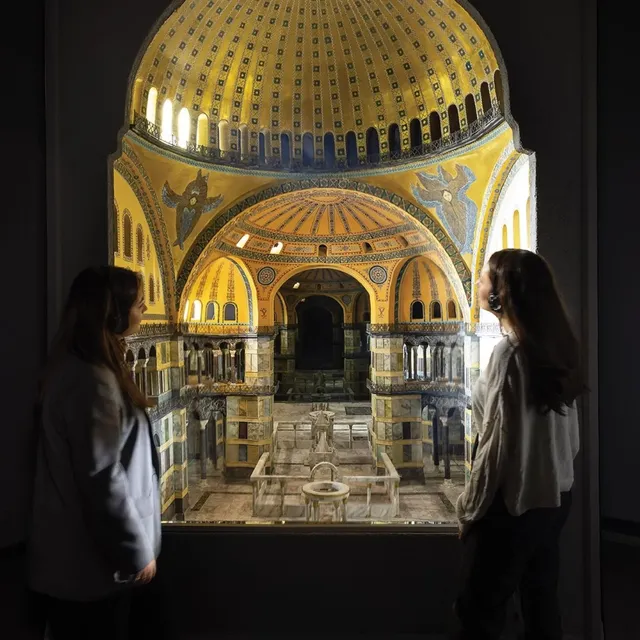
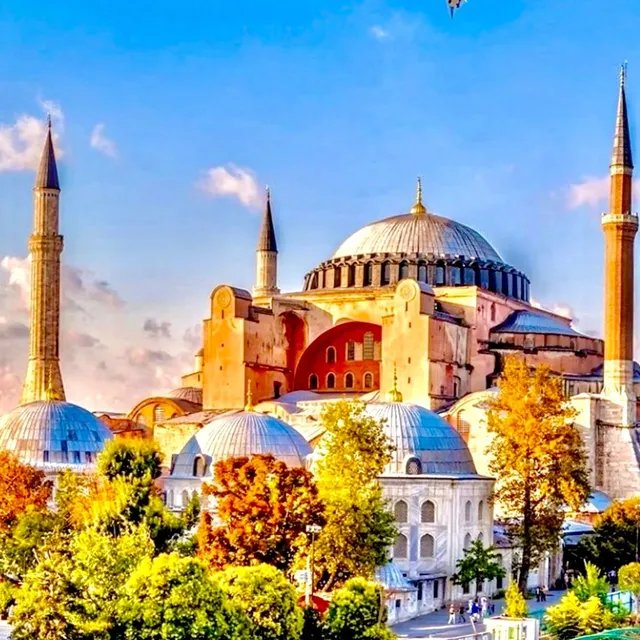
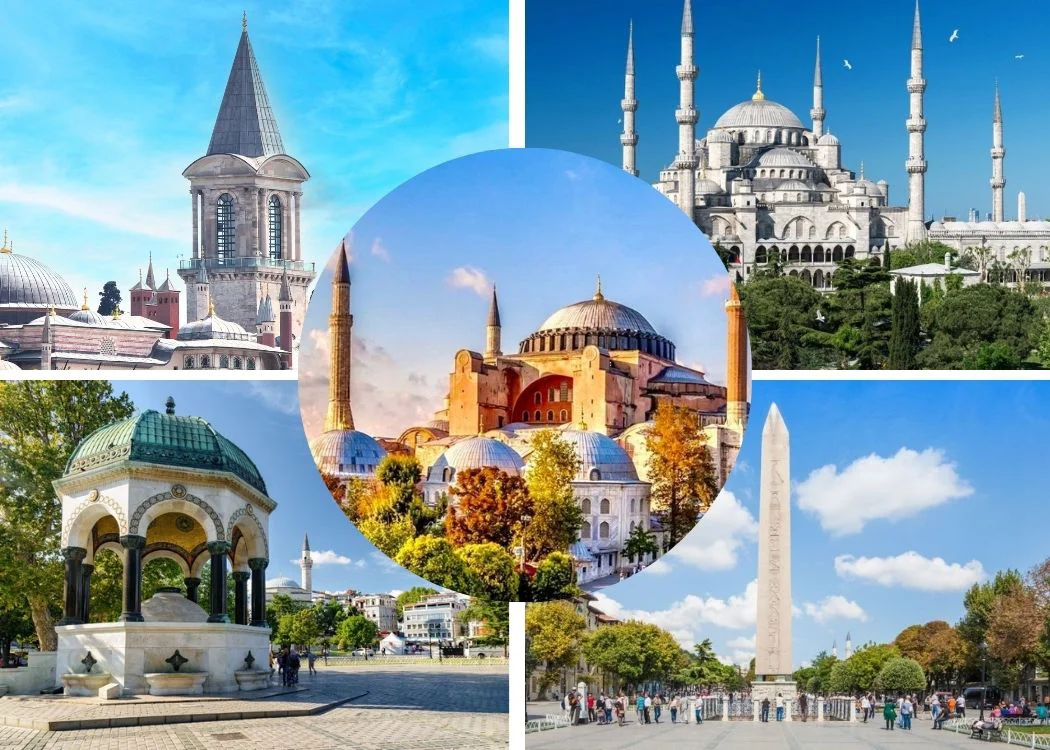
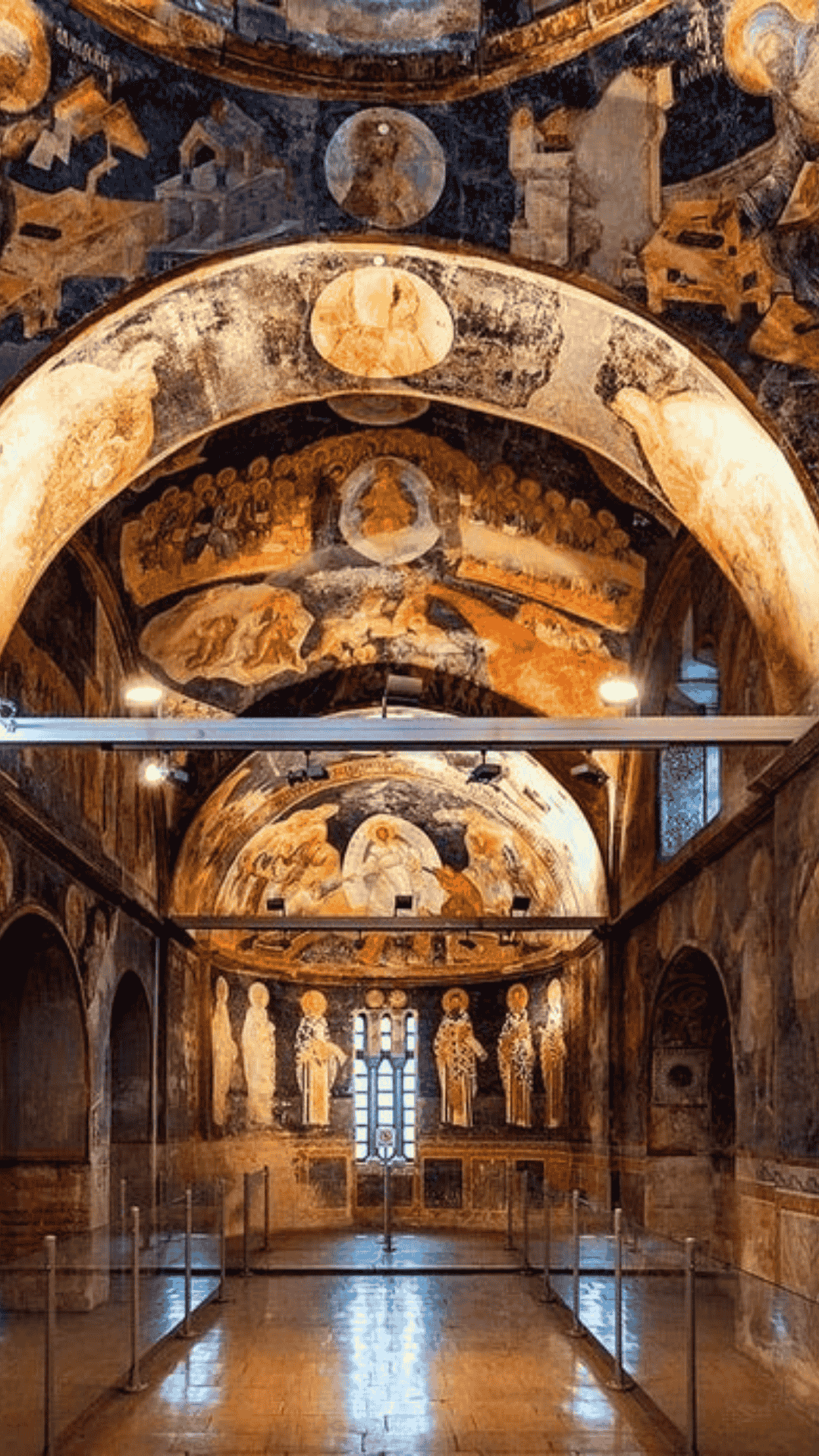
Use the morning for a gentle appetite-building walk. If this is your first trip, this is the right time to see the core of the old city: Hagia Sophia, the Blue Mosque, the Hippodrome, and surrounding historic streets. If you prefer a more market-led food walk, head toward Eminönü and the Spice Bazaar for context on Istanbul's trading history and classic snack territory.
Walking estimate: the Sultanahmet core loop takes 45 to 75 minutes at an easy pace; Sultanahmet to Eminönü on foot is roughly 20 to 30 minutes.
Mid-Morning Snack: Simit or Börek
This is where restraint helps. A fresh simit with tea is one of the simplest and most Istanbul experiences possible; börek—especially cheese or minced-meat versions—is another excellent mid-morning bite. But choose according to your lunch ambitions: if lunch will be a full sit-down meal, share one snack. If you have limited time: buy simit to eat while walking toward the waterfront—the point is the rhythm of the city, not checking off another venue.
Lunch in the Historic Core: Go Classic, Not Fancy
Choose something rooted in old Istanbul eating habits: a lokanta-style meal, a good döner, köfte, soup, pide, or a simple kebab lunch. Keep it traditional and efficient rather than booking a destination restaurant that pulls you out of the area—the old center is best understood through classic dishes served at a steady pace.
- Lokanta: variety and comfort food—stews, rice, vegetables, soups
- Döner or köfte: quick and iconic without losing momentum
- Pide: good for sharing, lighter than heavy grilled meat
- Soup and small plates: ideal in cooler months or after a large breakfast
Most tourists miss this: the best old-city lunches are often not the most polished. Local regulars, fast turnover, and a focused menu beat a broad multilingual menu with someone calling you in from the street. If dinner will be a heavy meyhane, keep lunch modest.
Cross Toward Karaköy for Coffee and Dessert
Make your way toward Karaköy by tram or on foot via Eminönü and the Galata Bridge—one of the most satisfying transitions in Istanbul, from imperial monuments and market energy to a denser, café-rich urban texture. Pause for baklava or another syrup-based dessert, Turkish coffee for a ritual stop, or third-wave coffee if you need a break from tea.
Insider tip: if you want baklava, go in the afternoon rather than after a huge dinner. You will taste it more clearly and enjoy it more.
Explore Galata and Nearby Streets
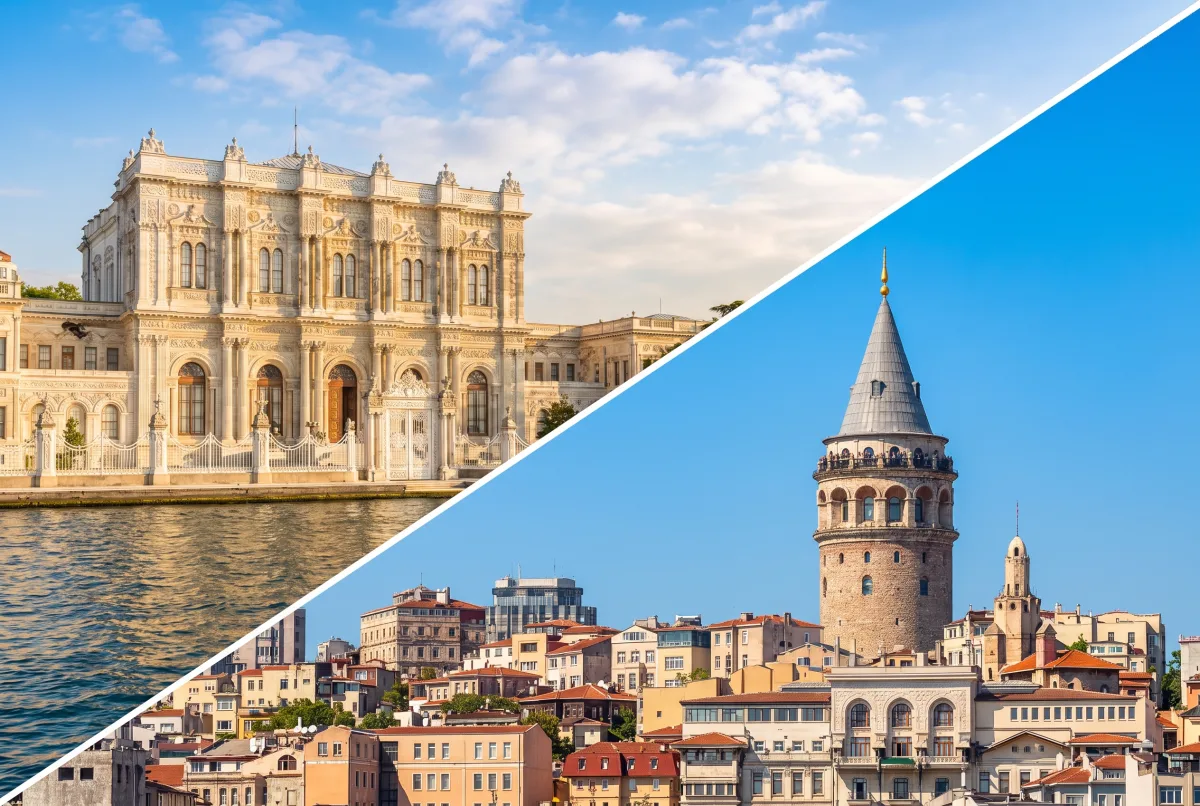
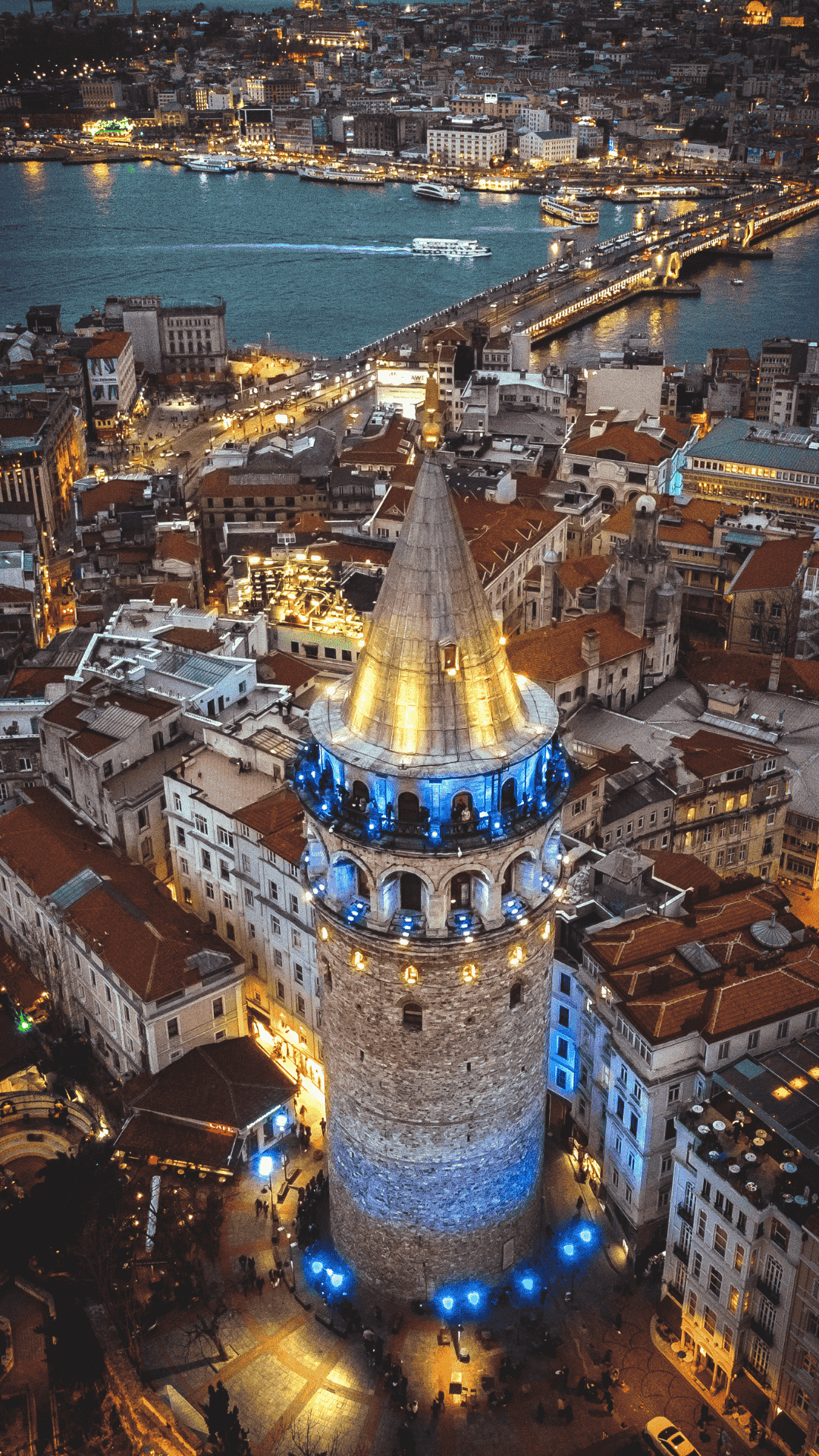
Head uphill into Galata, where streets narrow, architecture changes, and food options shift toward contemporary cafes, wine bars, and bakeries. Depending on energy: climb toward Galata Tower and explore side streets, pause for dessert or coffee, browse design shops between food stops, or simply slow the day down before dinner. If you want to keep walking, continue toward Istiklal Avenue and the broader Beyoğlu neighborhood.
Crowd avoidance: Galata gets crowded in late afternoon and sunset hours, especially around the tower. The quieter experience is in the side streets, not the obvious photo bottlenecks.
Pre-Dinner Pause: Tea, Meze Mindset, or Sunset by the Water
One of the easiest ways to improve this day is to avoid rushing from afternoon dessert straight into a heavy dinner. Sit for tea, walk by the water, or take a short ferry if the route helps reset your appetite. Your strongest first-night options: a meyhane for atmosphere and shared plates, an ocakbaşı for grilled meats and livelier dining, or seafood by the Bosphorus if views matter. For a two-day culinary trip, we recommend a meyhane first.
Dinner: A Proper Meyhane Experience
A meyhane is not just a restaurant category—it is a way of eating: meze shared across the table, fish or grilled dishes following, conversation stretching out, and no pressure to rush through courses. By now the city has begun to open up: the old center showed you history, Karaköy and Galata showed you texture, and the meyhane gives you Istanbul's social table.
What to order: a selection of cold meze—haydari, eggplant dishes, fava, stuffed vine leaves—one or two hot starters to share, fish if the house is strong in seafood, and rakı for the full traditional pairing or wine for a lighter approach. How to order smartly: meze is the event; start with fewer dishes than you think—you can always add more.
Avoid this mistake: do not choose a meyhane only for the view. The best meal is usually where locals would happily stay for hours, not where everyone photographs the Bosphorus and leaves after one round.
Late-Night Walk or Dessert
End the night with one of Istanbul's simplest pleasures: a slow walk through lit streets with tea or dessert afterward. In Beyoğlu and Karaköy, the city remains active late enough that the night feels like part of the meal. If you still want something sweet, choose one small dessert—künefe, baklava, or a lighter milk-based dessert depending on how rich dinner was.
 Asian side
 Ferry to Asia: Kadıköy Market Culture, Moda, and Your Final Dinner
Day 2 moves across the Bosphorus to the Asian side, where Kadıköy and its surrounding districts offer one of the city's richest everyday food scenes—a different Istanbul: younger, more local in feel, and deeply strong in everyday eating.
Start Lighter Than Day 1
You do not need another huge breakfast unless breakfast is the main event for you. A lighter start works better: simit with cheese and tea, börek and ayran, poğaça from a bakery and coffee, or simple eggs if you want to stay seated. The goal is to leave room for Kadıköy, where food opportunities arrive quickly and continuously.
Take the Ferry to Kadıköy
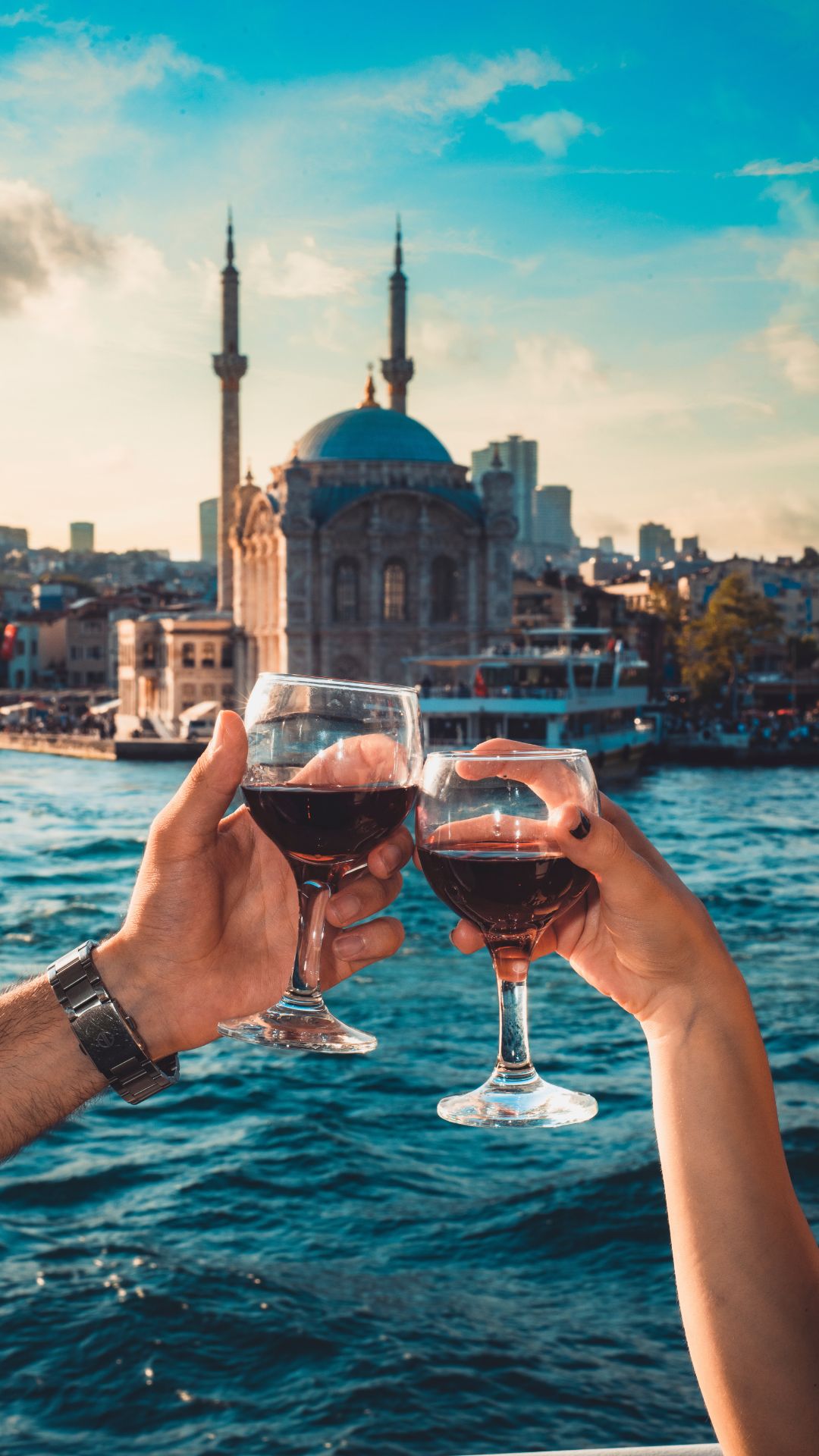
This crossing is essential to the spirit of the itinerary. Take the ferry from Eminönü, Karaköy, or Beşiktaş depending on where you are staying—and if this is your first Bosphorus crossing by public ferry, stand outside for at least part of it. The ferry saves time compared with traffic-heavy road options, gives you skyline views and a better sense of Istanbul's geography, and naturally separates your two food days into different moods.
Explore Kadıköy Market Streets
Kadıköy balances quality with normal life: fishmongers, pickle shops, spice sellers, bakeries, small restaurants, dessert counters, and cafés all within easy walking distance. To explore without overeating too early: share bites where possible, alternate savory and sweet, pause for tea instead of a full second breakfast, and browse before committing to the first thing you see.
Most tourists miss this: Kadıköy is not just one "best place to eat." Its value is density—the pleasure comes from moving through several good stops at a human pace.
Build Your Own Market-Style Food Crawl
Rather than one big lunch immediately, assemble a mini crawl—the most flexible and arguably most fun part of the itinerary:
- Stop 1—savory bakery or börek house: your first meaningful bite if breakfast was very light; choose one item and keep moving
- Stop 2—specialty snack or small plate: stuffed mussels from a trusted busy source, a small pide portion, or a deli-style meze tasting
- Stop 3—dessert or sweet counter: baklava, lokum, milk desserts, pastries, or ice cream depending on season and mood
- Stop 4—coffee or tea: if day one leaned heavily traditional, this is a good moment for a more modern coffee stop
Decision support: if you love structure, book a food tour here for context on regional dishes and market etiquette. If you are comfortable navigating on your own, Kadıköy is one of the easiest neighborhoods to self-guide—a food guide to Istanbul neighborhoods can help you narrow options without overplanning every bite.
Main Lunch in Kadıköy or Moda
Two strong directions: a Kadıköy market lunch for convenience, variety, and lively local atmosphere, or a Moda lunch for a more relaxed neighborhood feel and time to walk afterward. Best lunch styles: seafood to lean into the maritime side of the city, a quality kebab or grill if day one focused more on meze than meat, homestyle Turkish cooking for comfort and regional variety, or a contemporary Turkish meal to see how the scene is evolving.
If you have limited time: stay in central Kadıköy and skip the move to Moda—you will save time and still eat very well.
Walk the Moda Coast or Take a Tea Break
After lunch, resist the urge to stack more food immediately. The coastal walk gives you breathing room, Bosphorus views, and the emotional contrast that keeps the trip from feeling like an eating contest. Kadıköy center to Moda is roughly 20 to 30 minutes on foot, plus however long you linger.
Insider tip: use this stretch to notice the non-food details too—apartment life, local shops, students, park edges, ferries in the distance. It helps you understand why so many visitors fall for the Asian side.
Decide Your Final Evening
Your second evening should reflect what you still feel is missing from the trip. Option 1—stay on the Asian side for a relaxed, neighborhood-driven dinner without another transit-heavy evening. Option 2—return by ferry for one more dramatic city moment: a view-focused seafood dinner or the night energy of Karaköy, Beşiktaş, or Beyoğlu. Option 3—a street-food-style evening: kokoreç if you enjoy adventurous eating, dürüm, mussels from busy trusted vendors, or a sequence of smaller bites.
Avoid this mistake: do not force a luxury dinner just because it is your last night. If your best memories have come from ferries, markets, bakeries, and neighborhood tables, finish in that spirit.
Final Dinner: Seafood or Casual Neighborhood
Ending A—seafood dinner: the stronger choice for a polished final meal; Istanbul's relationship with water is central to its food culture, and a well-chosen seafood dinner ties together the Bosphorus, the markets, and the meze tradition. Best for couples, seafood lovers, and anyone celebrating; skip it if you already did a large fish-focused meyhane meal on night one.
Ending B—casual neighborhood dinner: often the more satisfying choice if your trip already included one major dinner—one excellent dürüm, a bowl of soup, a kebab, or a small series of neighborhood plates can feel truer to the city than another elaborate booking. Best for solo travelers, return visitors, and anyone craving ease.
Last Dessert and Tea
Wherever you end up, leave room for a final sweet and tea. It does not need to be grand—one small pastry, one milk dessert, or one well-made baklava portion is enough. Tea closes the loop on the trip. This is where Istanbul often lands emotionally: not in the biggest meal, but in the quieter ending after it.
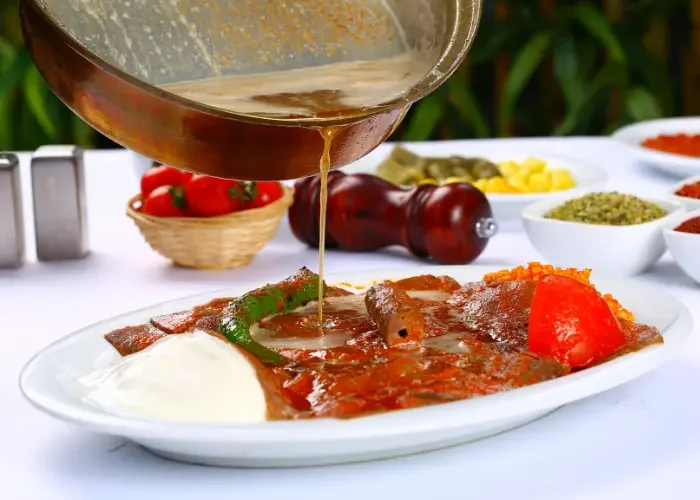 What to eat
 Priority Dishes: What to Eat in 48 Hours
If you are wondering what foods deserve priority during a short trip, these are the ones we would place highest for a first-time food-focused visit.
Must-Try Foods
- Turkish breakfast: the best single-meal introduction to local eating culture
- Simit: everyday Istanbul in one handheld form
- Börek: essential bakery culture
- Meze: the social language of a meyhane meal
- Fish or seafood: especially meaningful in a city shaped by water
- Baklava or another classic dessert: best enjoyed intentionally, not as an afterthought
- Tea: not optional if you want to understand the city's everyday rhythm
Worth Trying If They Fit Your Taste
Menemen, köfte, döner, pide, kokoreç, stuffed mussels, milk-based desserts, and Turkish coffee.
What not to overprioritize: do not spend your whole trip chasing viral spots for the "best baklava" or "best kebab" in neighborhoods that destroy your schedule. In a city this large, a very good version in the right place is usually smarter than the supposedly best version two districts away.
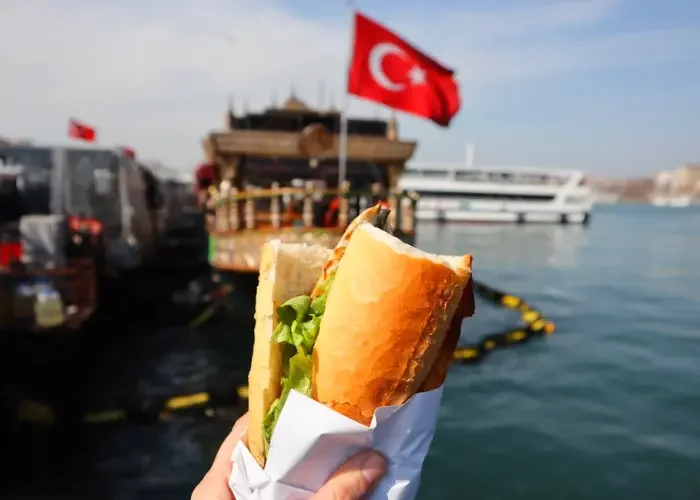 Pairing strategy
 How to Combine Food With Sightseeing Without Ruining Both
The classic mistake in Istanbul is planning every attraction and every meal as if distances on the map are meaningless. They are not. This city is large, hilly, and traffic-prone—so pair attractions with nearby meals.
Smart Pairings
- Hagia Sophia + Sultanahmet breakfast or lunch
- Spice Bazaar + Eminönü snack walk
- Galata Tower + Karaköy dessert or Beyoğlu dinner
- Bosphorus cruise + seafood meal
- Kadıköy market + Moda stroll
Less smart: Old City breakfast + far-away Asian-side lunch + back to the European side for sunset + a distant dinner reservation; booking a single famous restaurant in a neighborhood you otherwise do not need to visit; combining too many museums with too many heavy meals in one day.
Where Guided Food Tours Make Sense—and Where They Don't
Food tours genuinely improve a short trip when they solve a real problem: first-time arrival, wanting immediate confidence, or hesitancy about choosing stalls and smaller local places. A well-run tour in Kadıköy, Karaköy, or the old city can accelerate your understanding of the city's flavors. But if you travel comfortably and prefer controlling your own pace, a self-guided version is usually enough. For a 48-hour trip, one guided experience is the maximum worth booking—and choose a route covering a district you want to understand more deeply, not one that duplicates meals you already planned.
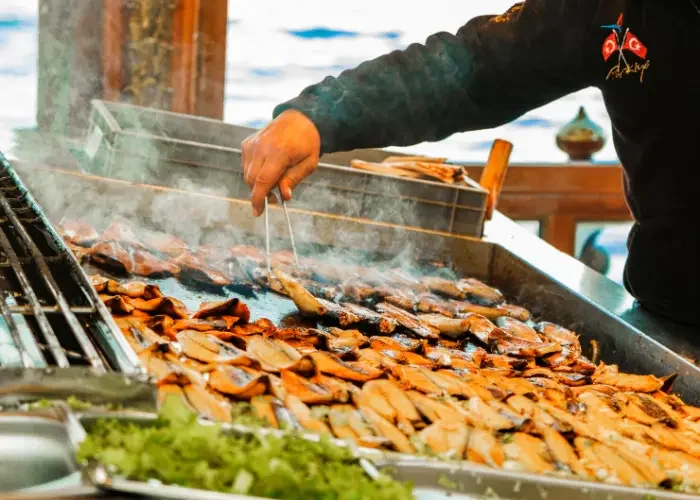 When to go
 Seasonal Notes for Food Lovers
Spring and autumn are the easiest seasons for this itinerary—you can comfortably walk, sit outdoors, and take ferries without peak summer heat or winter rain.
Season by Season
- Spring: excellent for walking, ferries, and outdoor dining—one of the best seasons for this itinerary
- Summer: best for Bosphorus evenings, seafood, and long light-filled days; harder for midday walking in crowded central districts—start early and rest in the afternoon
- Autumn: arguably the ideal season—strong produce, comfortable temperatures, and atmospheric evenings
- Winter: wonderful for soups, tea, desserts, indoor market wandering, and meyhane meals—be ready for rain and build in flexibility
Transportation Strategy for a Food-Focused Weekend
Walk when the neighborhood is dense—Sultanahmet, Karaköy, Galata, and the Kadıköy market streets all reward it.
Use ferries whenever crossing the Bosphorus makes sense. They often feel faster even when they are not strictly shorter, because they are predictable and scenic.
Rely on tram or metro for predictable movement between districts.
Useful late at night or in bad weather—but traffic can erase too much of a short trip.
How Much to Reserve in Advance
Reserve in advance
- One dinner—especially if you want a well-known meyhane or a Bosphorus-view table
- One guided food tour if you prefer deeper context and don't want to do all the decision-making yourself—one is the maximum worth booking for 48 hours
- Your airport transfer if arriving late or if this is your first time in Istanbul
- An attraction pass only if your trip also includes several major paid attractions—do not buy one just because it sounds efficient
Keep flexible
- Breakfasts, market lunches, and snack stops—they usually do not require reservations
- Kadıköy—one of the easiest neighborhoods to self-guide
- Your final night: do not force a luxury dinner just because it is your last
- Street-food evenings—kokoreç, dürüm, mussels from busy trusted vendors
- Do not overbook every meal: Istanbul rewards spontaneity
Sample 48-Hour Eating Schedule at a Glance
Common First-Time Mistakes on a Food Trip to Istanbul
Avoid these mistakes
- Trying to eat too much at every meal—Istanbul rewards pacing; you are not failing if you skip one dessert or split one snack
- Ignoring geography—the city looks compact on some maps; it is not; build each day by district
- Relying too much on taxis—traffic can quietly consume your trip
- Eating every meal in tourist zones—cross into neighborhoods where locals are clearly part of the dining room
- Booking too many "famous" places—one or two intentional bookings are enough; the rest should stay flexible
- Skipping the Asian side—if food is the reason you are here, this is one of the biggest mistakes worth avoiding
Insider tips
- Meze is the event, not an appetizer round—start with fewer dishes than you think; you can always add more
- If you want baklava, go in the afternoon rather than after a huge dinner—you will taste it more clearly
- In Galata, the quieter experience is in the side streets, not the obvious photo bottlenecks
- Local regulars, fast turnover, and a focused menu beat a broad multilingual menu with someone calling you in from the street
- Finish breakfast by 10:00 AM so your lunch timing survives
- A very good version in the right place is usually smarter than the supposedly "best" version two districts away
Frequently Asked Questions
Is 48 hours enough for a food trip to Istanbul?
What is the best neighborhood to stay in for food lovers in Istanbul?
Should I stay on the European side or the Asian side?
What food should I not miss in Istanbul?
Is Kadıköy worth visiting on a short trip to Istanbul?
Should I book restaurants in advance?
Are food tours in Istanbul worth it?
What is the best way to get around during a food weekend in Istanbul?
Is Istanbul expensive for food?
Can I do this itinerary without eating meat?
Is it better to do a Bosphorus cruise or spend more time eating in neighborhoods?
What is the biggest mistake first-time food travelers make in Istanbul?
The Best Way to Taste Istanbul in Two Days
The most rewarding version of 48 Hours of Eating in Istanbul is not the one with the most reservations or the most famous names. It is the one where the city begins to feel coherent: breakfast opening the day slowly, ferries carrying you into a different appetite, old streets giving way to market lanes, tea marking transitions, and dinner stretching just long enough to make you forget the clock. Istanbul does not ask you to eat extravagantly—it asks you to pay attention. Let these two days be an introduction rather than a conquest.
Browse food tours and experiences