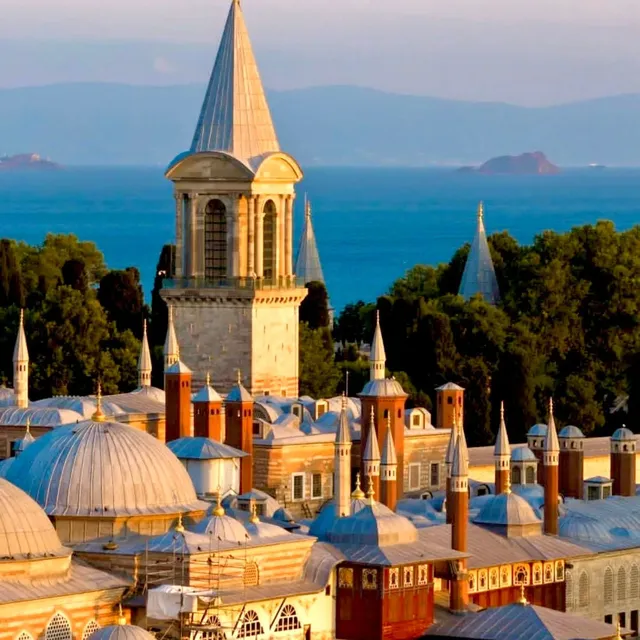
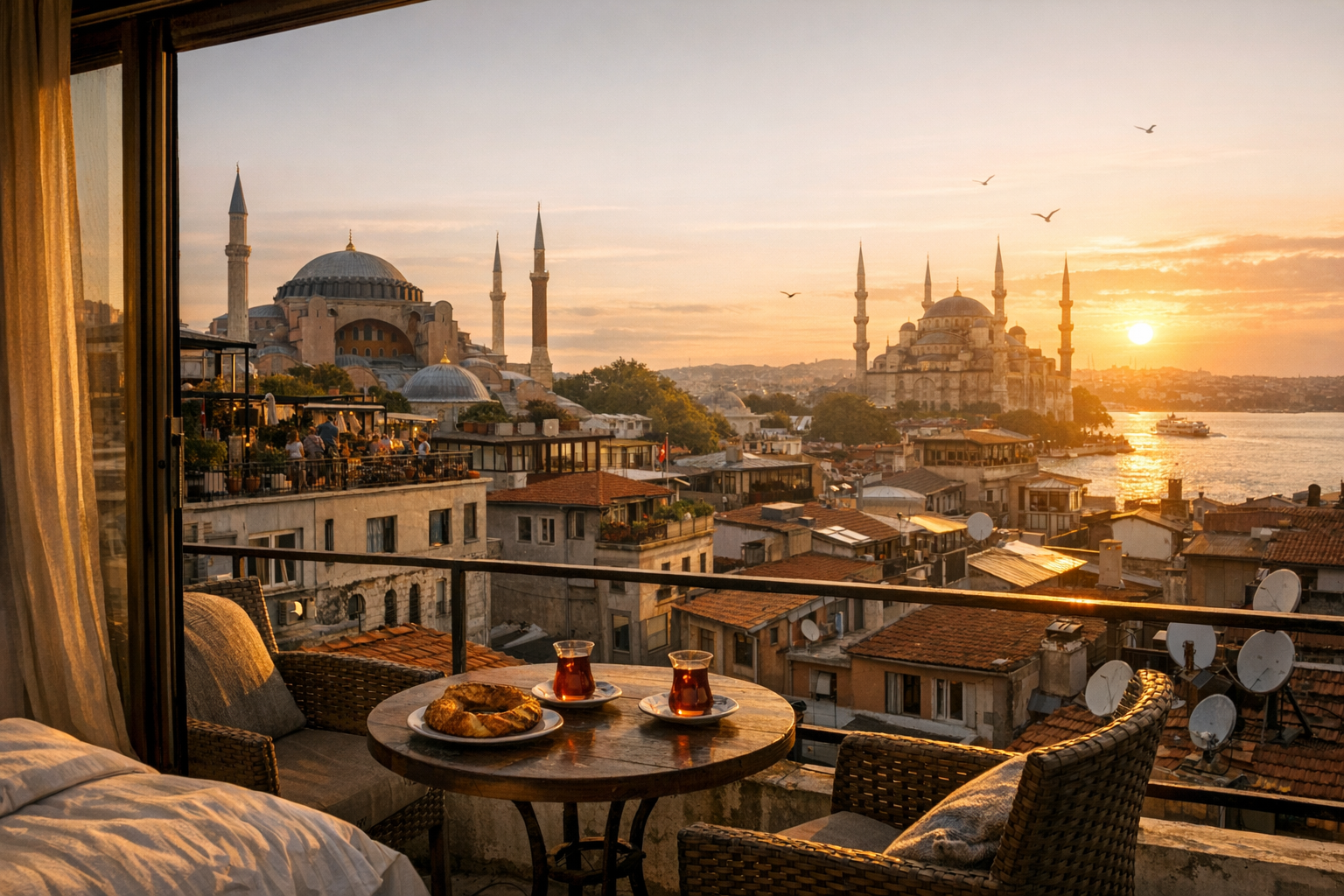
Few cities reward slow looking the way Istanbul does. This is a place where a skyline can tell a 1,500-year story in a single glance: Byzantine brick and domes, Ottoman külliyes and pencil minarets, 19th-century waterfront palaces, Art Nouveau apartment façades, early republican civic buildings, and contemporary museums layered into the same urban frame. Istanbul is not just full of monuments — it is a living design archive shaped by empire, trade, religion, engineering, and daily life.
What makes Istanbul especially rewarding is that its architecture is never isolated from the city around it. A masterpiece is rarely just a building. It is a square, a ferry crossing, a slope, a market street, a tea stop, a call to prayer drifting across the Bosphorus, and a neighborhood rhythm that changes hour by hour.
This guide is built for travelers who want more than a checklist of things to do in Istanbul. It is a decision-making guide: what to prioritize, how to group sites intelligently, when to go, which views are actually worth your time, and how to connect grand monuments with streets, neighborhoods, food, and transport in a way that makes the city legible.
DESIGN & HERITAGE Read the city, don’t just collect buildings Group Istanbul’s masterpieces into coherent clusters and let ferries do the storytelling.Quick Overview
| What You’ll Find | Best For | Time Needed | Key Areas |
|---|---|---|---|
| Byzantine architecture and imperial monuments | First-time visitors, history lovers, photographers | 1 full day | Sultanahmet, Ayasofya area, Basilica Cistern |
| Ottoman mosque architecture and urban design | Travelers interested in spatial planning and religious architecture | 1–2 days | Süleymaniye, Fatih, Eminönü, Üsküdar |
| Bosphorus palaces, kiosks, and waterfront design | Romantic travelers, design enthusiasts, repeat visitors | Half day to full day | Dolmabahçe, Beşiktaş, Ortaköy, Beylerbeyi |
| 19th-century and modern urban layers | Architecture students, urbanists, neighborhood explorers | 1–2 days | Beyoğlu, Karaköy, Galata, Nişantaşı |
| Smart route planning and transport advice | Anyone building an efficient Istanbul travel guide | Use throughout trip | Tram, metro, ferry, walking corridors |
Why Istanbul Is One of the World’s Great Architecture Cities
- A city of transitions, not one style. Istanbul is not defined by one dominant style: Roman to Byzantine, Byzantine to Ottoman, imperial to republican, port city to global metropolis. Those transitions are visible in massing, materials, street widths, topography, and the relationship between sacred and commercial space.
- Read it in layers, not building by building. A Byzantine church converted into a mosque, an Ottoman külliye designed as spiritual and civic infrastructure, a European-style arcade in Beyoğlu, a waterside palace optimized for arrival by boat — these tell a more complete story together than any one monument can alone.
- Architecture is never isolated from the city. A masterpiece here is rarely just a building. It is a square, a ferry crossing, a slope, a market street, a tea stop, and a neighborhood rhythm that changes hour by hour.
- Design your days by era and geography. The biggest mistake architecture lovers make in Istanbul is wasting energy zigzagging. The city is huge, hilly, and emotionally richer when seen in coherent clusters — not random top-10 lists.
How Many Days Do Architecture Lovers Need?
For most travelers, 3 full days is the sweet spot — enough time to understand the main historical arc without turning the trip into a forced march. If architecture is your primary reason for visiting, 4 to 5 full days is ideal. With only 4 hours: Hagia Sophia, Blue Mosque exterior/interior if timing allows, Basilica Cistern, the Hippodrome, and a quick view from Sultanahmet.
Where to Stay for an Architecture-Focused Trip
Sultanahmet
Best if your priority is early access to Byzantine and imperial Ottoman monuments — you can walk to major sites before day-trippers peak. Trade-off: evenings can feel quieter and more tourism-oriented.
Best for Early access to the monumental core
Karaköy or Galata
The best all-around base for architecture lovers: close to 19th-century urban fabric, ferries, and tram connections, with easy reach to both the Historic Peninsula and Bosphorus areas.
Best for Best all-around base
Beyoğlu
Best for travelers interested in late Ottoman, European, Art Nouveau, and urban street architecture. Trade-off: more uphill walking.
Best for Late Ottoman and European street architecture
Beşiktaş
Good if Bosphorus architecture, palaces, and local daily life matter more than immediate access to Sultanahmet.
Best for Bosphorus palaces and local rhythm
The Architecture Itinerary: Era by Era, District by District
 Orientation
 The Architectural Eras That Shape Istanbul
Before the routes, the layers: four eras give the city its structural grammar.
Byzantine Istanbul
The Byzantine layer is the backbone of Istanbul’s architectural imagination. Even after conquest, the city’s urban logic, topography, cistern systems, walls, and monumental precedents continued to shape what came next. Hagia Sophia was not just a church but an engineering statement of imperial authority; the Basilica Cistern was part of a sophisticated urban support system. The surviving monuments feel fragmentary today, but they still provide the structural grammar for reading the city.
Classical Ottoman Istanbul
Ottoman architecture in Istanbul is often reduced to “beautiful mosques,” but the real achievement is urban composition. The great mosque complexes were designed as social ecosystems — religious spaces linked with schools, kitchens, courtyards, tombs, baths, and charitable institutions. The best examples are city-building devices: complexes like Süleymaniye organize skyline, movement, and civic life at once.
Late Ottoman and European influence
As Istanbul modernized in the 19th century, architecture broadened into palaces, embassies, apartment houses, arcades, banks, schools, and infrastructure shaped by European tastes and local adaptation. In Beyoğlu, Karaköy, and along the Bosphorus, the city shifts from imperial sacred monumentalism to cosmopolitan urbanity.
Republican and contemporary layers
Istanbul’s modern architecture is more uneven than its older layers, but it matters. Museums, adaptive reuse projects, transportation hubs, and restored industrial sites explain how the city continues negotiating preservation and growth. Travelers who only look backward miss how Istanbul still experiments with space, memory, and public life.
Best seasons for architecture walking and photography
Spring and autumn are the easiest seasons: softer light, pleasant walking, less physical strain than peak summer. Winter can be atmospheric — domes, ferry views, moody skies — but needs flexibility for rain and wind. Summer offers long daylight, but afternoon fatigue is real on steep routes and exposed courtyards. Best months overall: April, May, late September, October, early November.
 Sultanahmet
 Day 1 Morning: Byzantine Foundations in Sultanahmet
Start where the city’s architectural story begins — and learn to read buildings from their edges, not just their entrances.
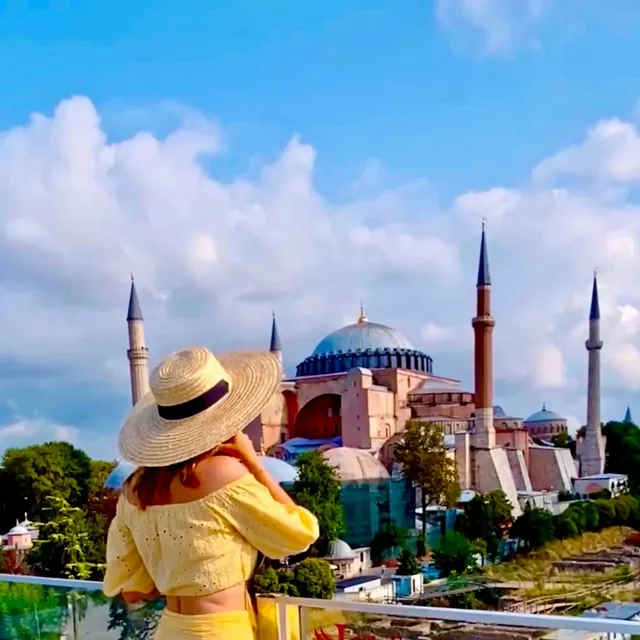
Start with Hagia Sophia
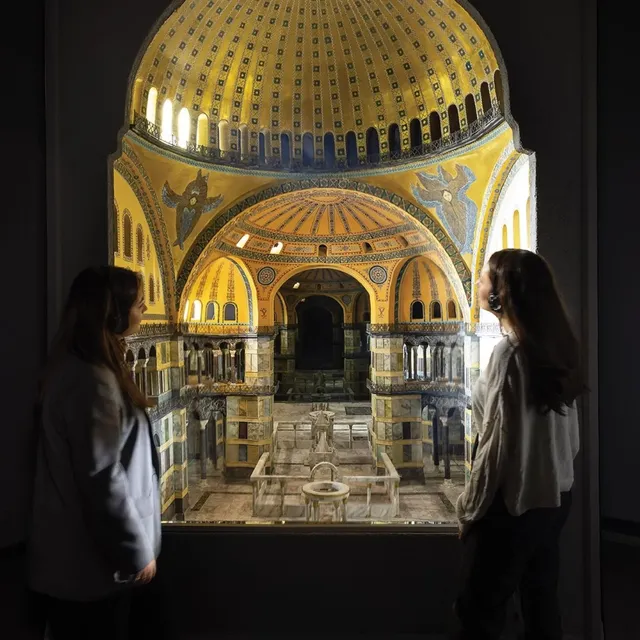
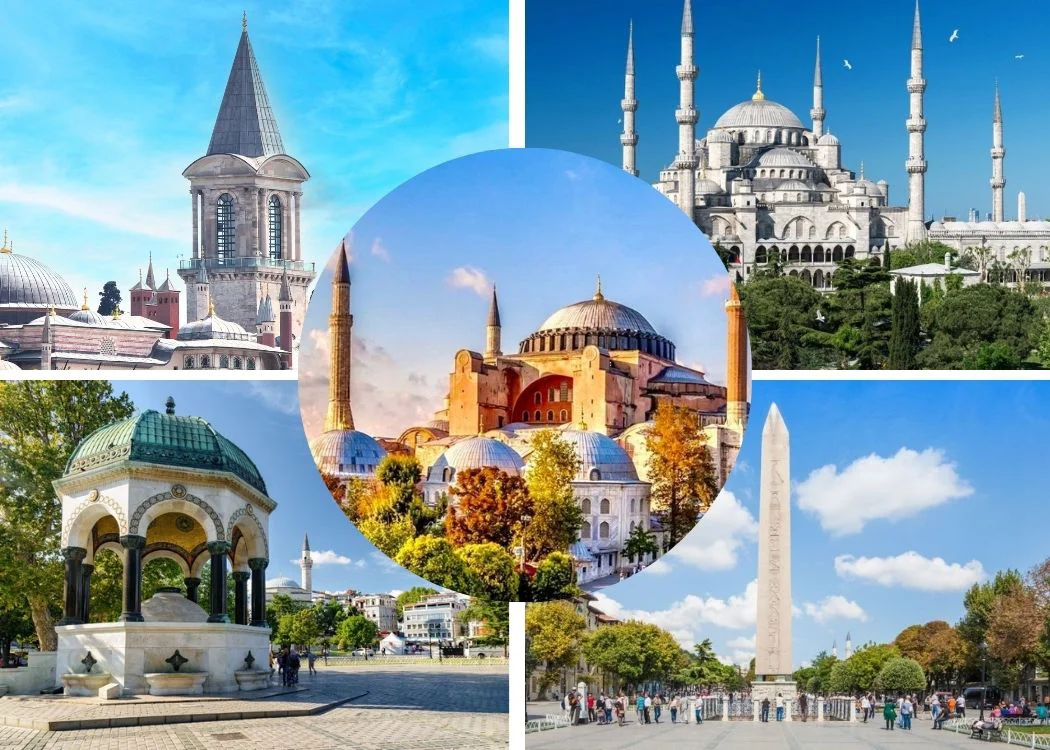
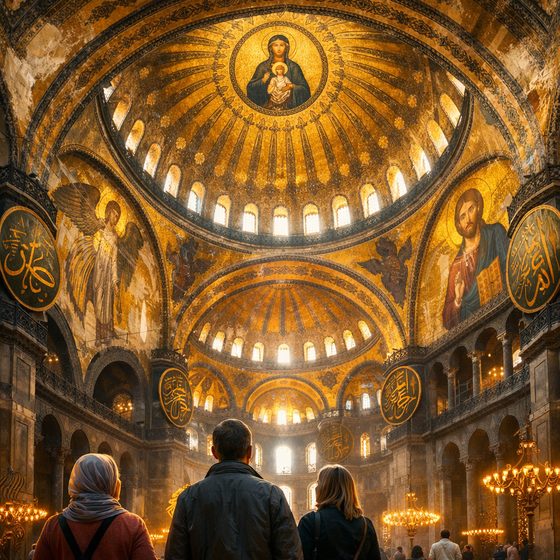
If one building anchors this trip, it is Hagia Sophia — not because it is the “most famous,” but because it changes how you understand every structure that follows. The central dome, the sense of suspended mass, the transition between structure and light, the scale of the interior volume: you feel them physically. Arrive early; the surrounding square in the morning is worth the effort. Focus on the dome as an engineering and symbolic statement, how light distributes through upper levels, the contrast between massive structural support and perceived openness, and the visible coexistence of Byzantine and Ottoman interventions. Insider tip: walk the perimeter — the building becomes more interesting when you read its asymmetry, support systems, and later additions. Keep breakfast simple nearby; on architecture-heavy mornings, momentum matters more than a leisurely start.
Blue Mosque: spatial grace and Ottoman confidence
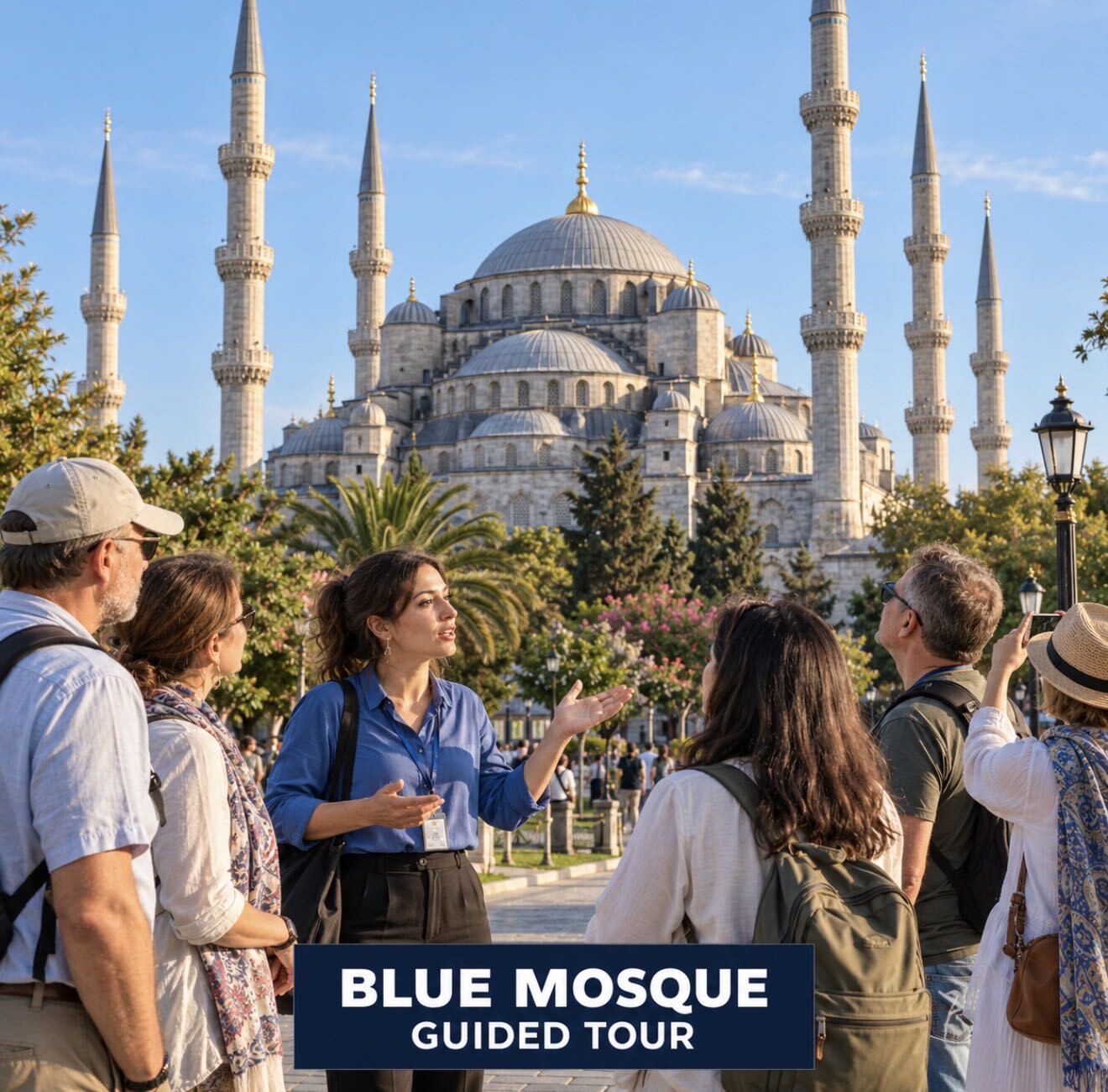
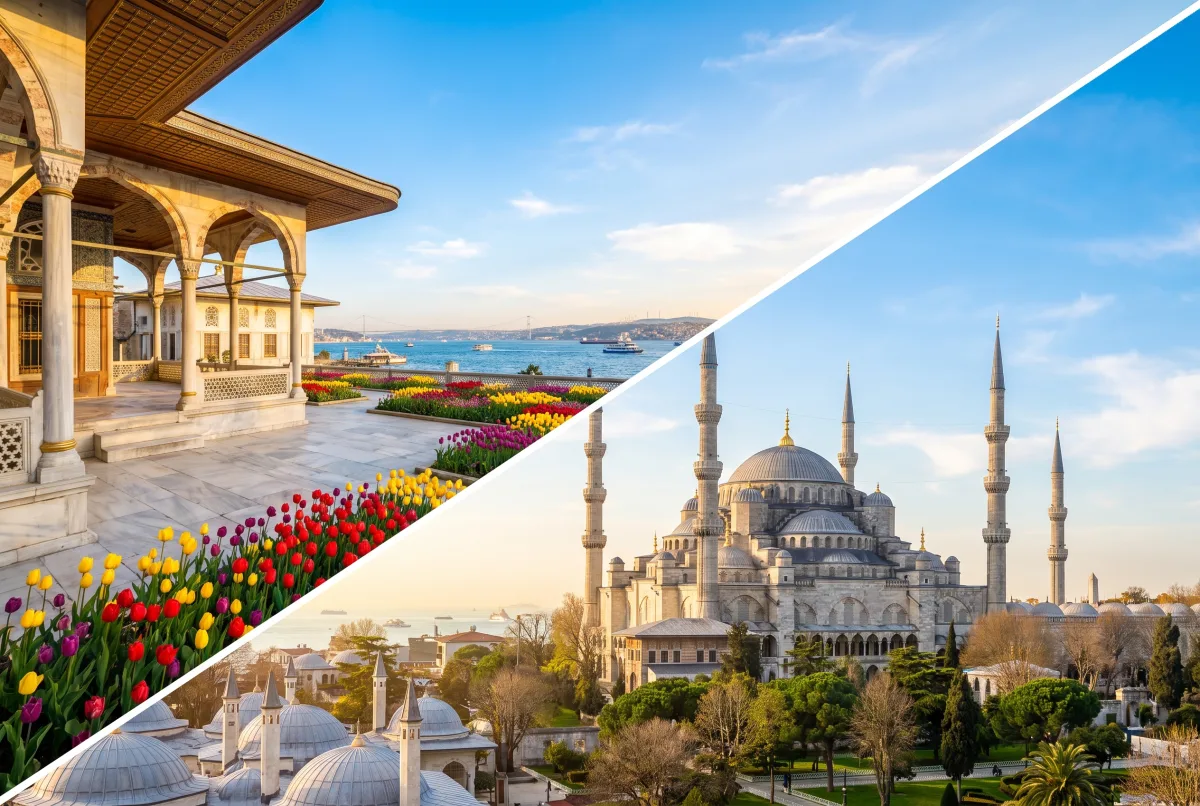
A short walk away, the Blue Mosque offers one of the clearest ways to compare Ottoman responses to the Byzantine legacy. Approach it as a lesson in proportion, sequencing, and mosque-courtyard composition rather than an interior decoration stop. Spend time outside before entering: the cascading domes are best understood from multiple points in the square. Inside, pay attention to rhythm — how repetition, ornament, and window placement shape movement and calm differently from Hagia Sophia’s drama. Avoid this mistake: do not visit at peak midday and assume the crowd is the building; if the interior feels busy, step back into the courtyard or return later.
The Hippodrome and the logic of imperial space
Even architecture-minded travelers sometimes underplay the Hippodrome because less survives above ground. That is a mistake: this open space explains urban continuity from Roman and Byzantine planning into the Ottoman city, and it is one of the easiest places to imagine how political ceremony, spectacle, and public gathering shaped the monumental core. Walking estimate: 15 to 25 minutes with stops and photographs.
Basilica Cistern: infrastructure as experience
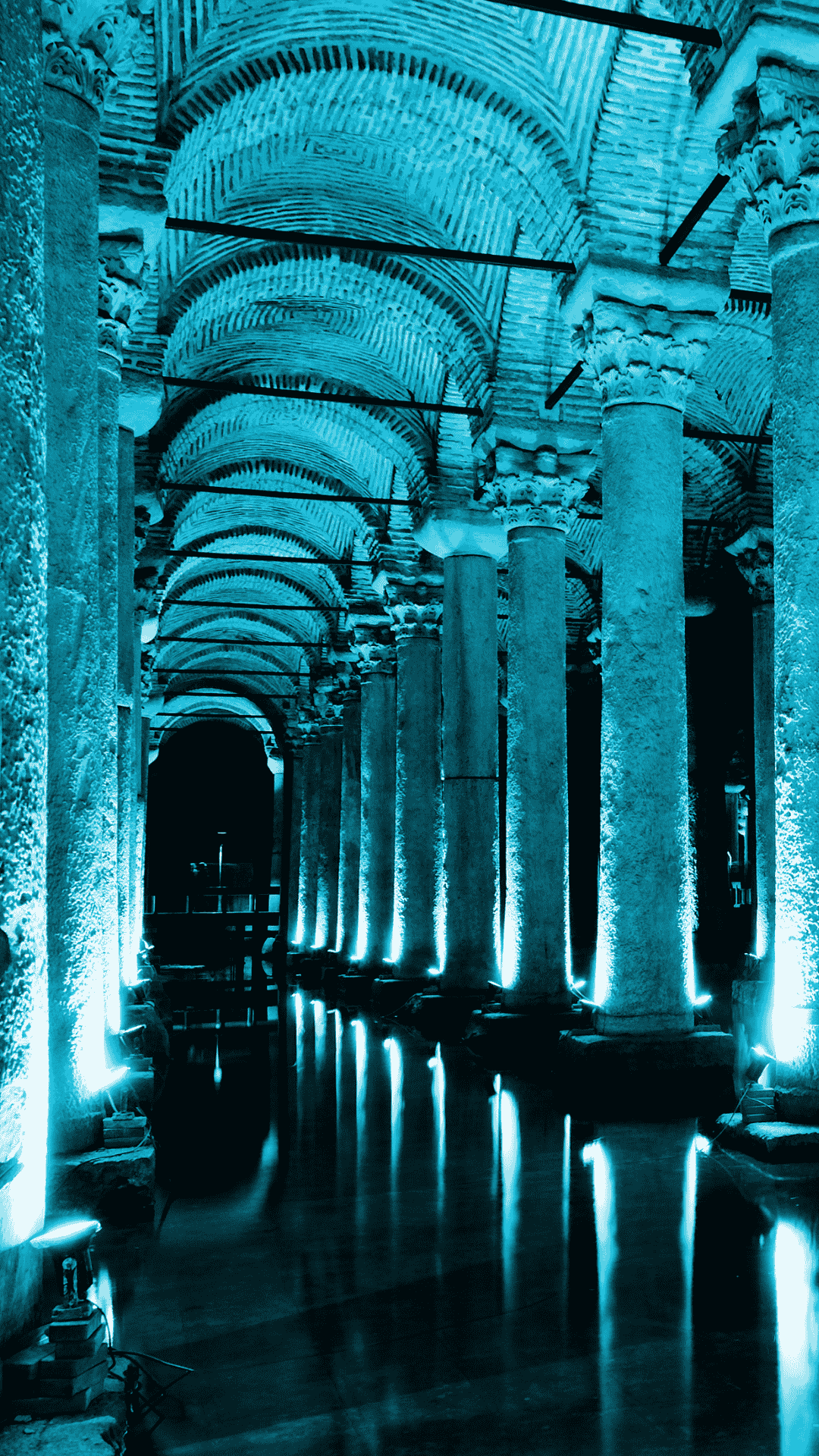
The cistern is a reminder that architecture in Istanbul is not only about sacred or imperial display — infrastructure is part of the story. The columns, reflections, and subterranean atmosphere can feel theatrical, but the real significance lies in what it reveals about the complexity of the Byzantine city. Good for mood-rich photography, but bring patience with crowd flow; if you prefer contemplation over visuals, keep the visit focused.
Lunch in Sultanahmet or Eminönü — then on to Süleymaniye
If you want efficiency, eat in Sultanahmet and continue. If you want a stronger sense of urban transition, move toward Eminönü — we usually prefer that option; it turns the day from a monument crawl into a city-reading exercise. Pair the route with our Sultanahmet food guides or Eminönü food recommendations. Afterwards, walk to Süleymaniye (25–35 minutes with urban gradients) or use the tram plus a shorter uphill walk — keep our Istanbul transportation guide open on your phone.
 Ottoman ridge
 Day 1 Afternoon: Süleymaniye and the Ottoman City at Its Most Complete
If Hagia Sophia is the building that astonishes, Süleymaniye is the one architecture lovers remember most warmly.
Why Süleymaniye matters so much
It is not just the mosque itself, although the design is superb. It is the total composition: terrace, courtyard, surrounding structures, topographic placement, views over the Golden Horn, and the feeling that architecture and city are finally speaking the same language. Study how the mosque sits on the ridge and controls the skyline, the relationship between courtyard calm and city vastness, the balance between grandeur and discipline in Sinan’s design language, the külliye concept as social infrastructure, and the framing of Bosphorus and Golden Horn views.
Don’t leave too early — and who should prioritize it
Most tourists miss this: do not leave after the main prayer hall and courtyard. Spend time in the surrounding precinct and viewpoints — the complex makes the most sense at its edge conditions and urban setting. Absolutely yes for anyone interested in Ottoman architecture, city planning, skyline composition, or Sinan; even non-specialists find this one of the best places to feel architecture emotionally rather than academically.
Photography, timing, and nearby additions
Late afternoon is often ideal: the light brings out stone surfaces and the elevated views become more atmospheric. For interior quiet, earlier is better; for exterior mood and skyline perspective, later wins. Nearby: traditional streets descending toward the Golden Horn, views over the water and old city roofscape, and a simple tea break with one of the city’s strongest monumental panoramas.
 Bosphorus
 Day 2: Bosphorus Grandeur and the Shift to Late Ottoman Modernity
Widen your lens: ceremonial modernity, European influence, and architecture designed to be seen from land and water.
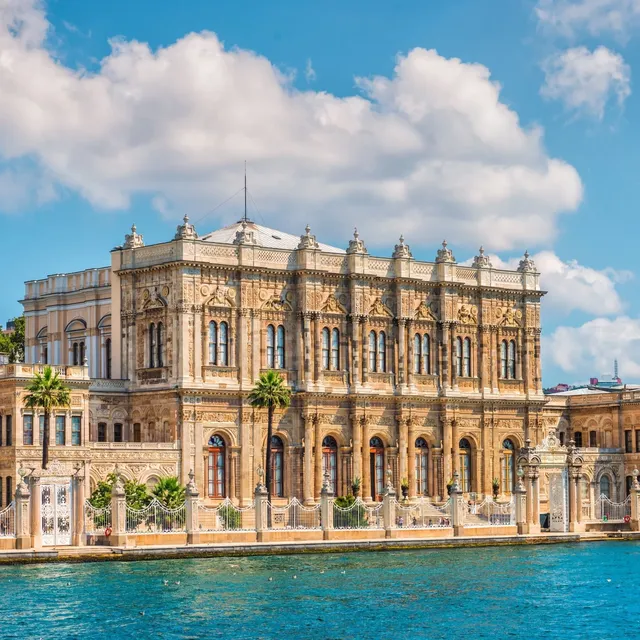
Dolmabahçe Palace: imperial theater on the water
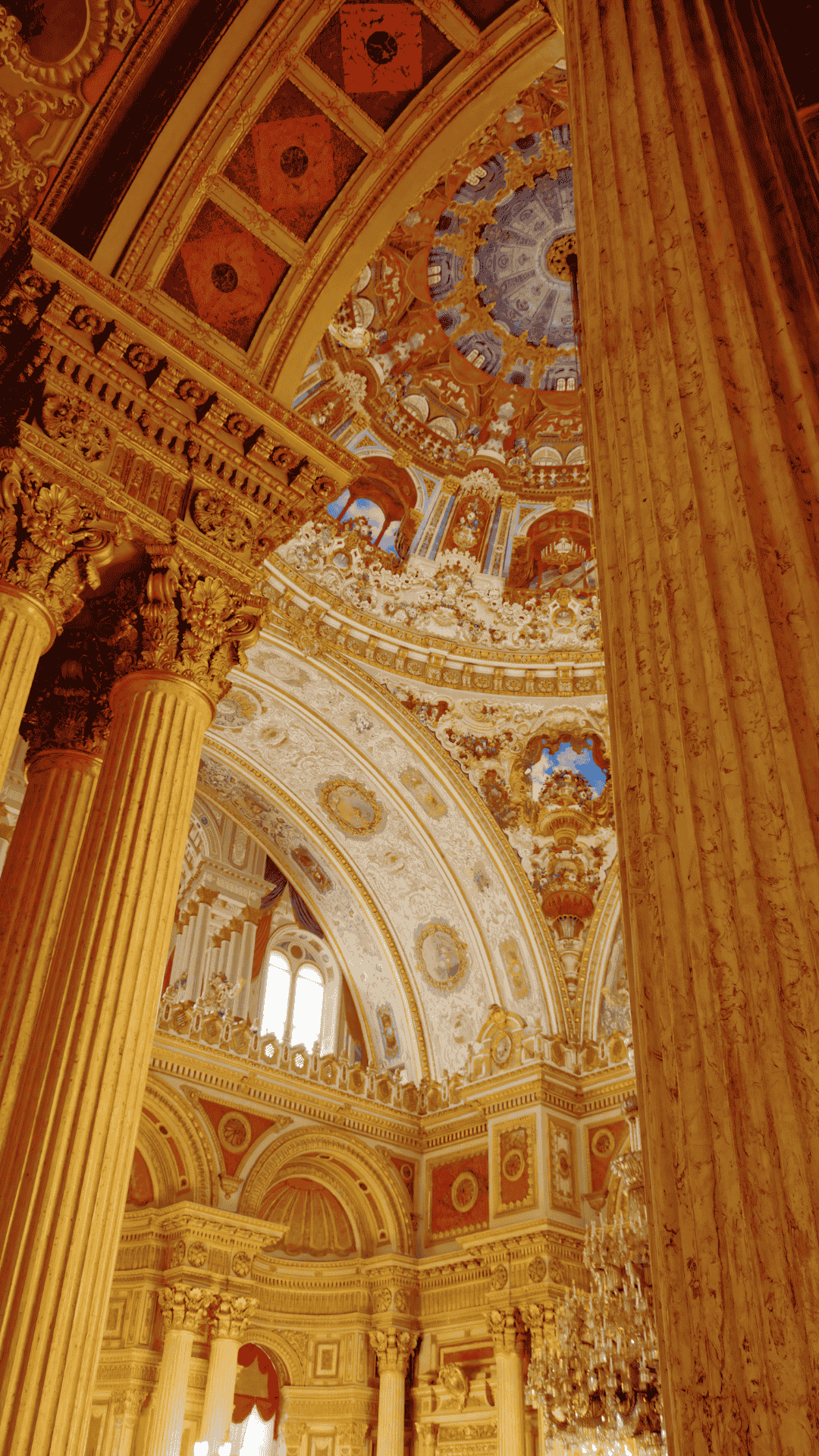
Dolmabahçe marks a different moment in Istanbul’s story: ceremonial modernity, European influence, and waterfront display. Arrive with enough time to understand the Bosphorus frontage, gates, and relationship to approach — this is architecture designed to be seen from land and water. Visit if you are interested in palace design, decorative interiors, and 19th-century imperial identity; skip with only one day in the city or a strong preference for medieval and early imperial architecture. This is one of the sites where a good guided experience genuinely improves the visit — browse current Dolmabahçe Palace visit options before you go.
Walk the Bosphorus edge: Beşiktaş to Ortaköy
Do not treat Dolmabahçe as a standalone attraction. Continue north along the Bosphorus if the weather is good — seeing how palace walls, waterfront life, mosques, piers, and later development relate to each other gives this period context. Walking estimate: 45 to 90 minutes depending on stops. Beşiktaş is one of the easiest areas to eat well without overplanning — see our Beşiktaş food guide.
Ortaköy Mosque and Bosphorus framing
Not the city’s most historically important religious structure, but one of the most photogenic examples of how architecture and waterfront setting create an outsized emotional impact together. The building’s intimate scale against the Bosphorus, and the contrast with the bridge, make it especially rewarding for photographers. Insider tip: come near sunset for atmosphere, earlier for cleaner photos.
Alternative: cross to Asia for Beylerbeyi or Üsküdar
For a smarter, less obvious architecture day, cross to the Asian side. Beylerbeyi Palace is smaller and less overwhelming than Dolmabahçe — a better fit for elegant scale and relaxed pacing. Üsküdar is excellent for understanding how monumental and everyday architecture coexist: mosque complexes, waterfront views back toward the Historic Peninsula, and a lived-in neighborhood rhythm. Use a ferry whenever possible — for architecture lovers, ferries are part of how the city is meant to be read. Arriving from the airport? Our airport transfer options can make first-day logistics easier.
 Cosmopolitan layer
 Day 3: Beyoğlu, Galata, Karaköy, and the Cosmopolitan City
If Sultanahmet tells the story of empire, Beyoğlu and Karaköy tell the story of exchange: trade, diplomacy, banking, apartments, passages, and modern circulation.
Begin in Karaköy
Karaköy is best approached on foot and with open eyes. Look at banks, commercial buildings, street widths, corner conditions, and how façades handle the steep terrain. This is not an area for racing toward a single icon — it rewards noticing thresholds, materials, and urban grain. Pair the walk with our broader Karaköy neighborhood guide for cafés, galleries, and ferry information.
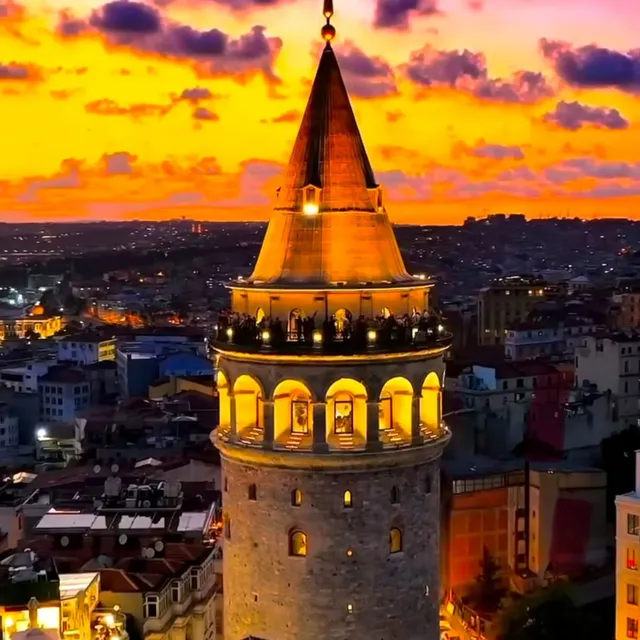
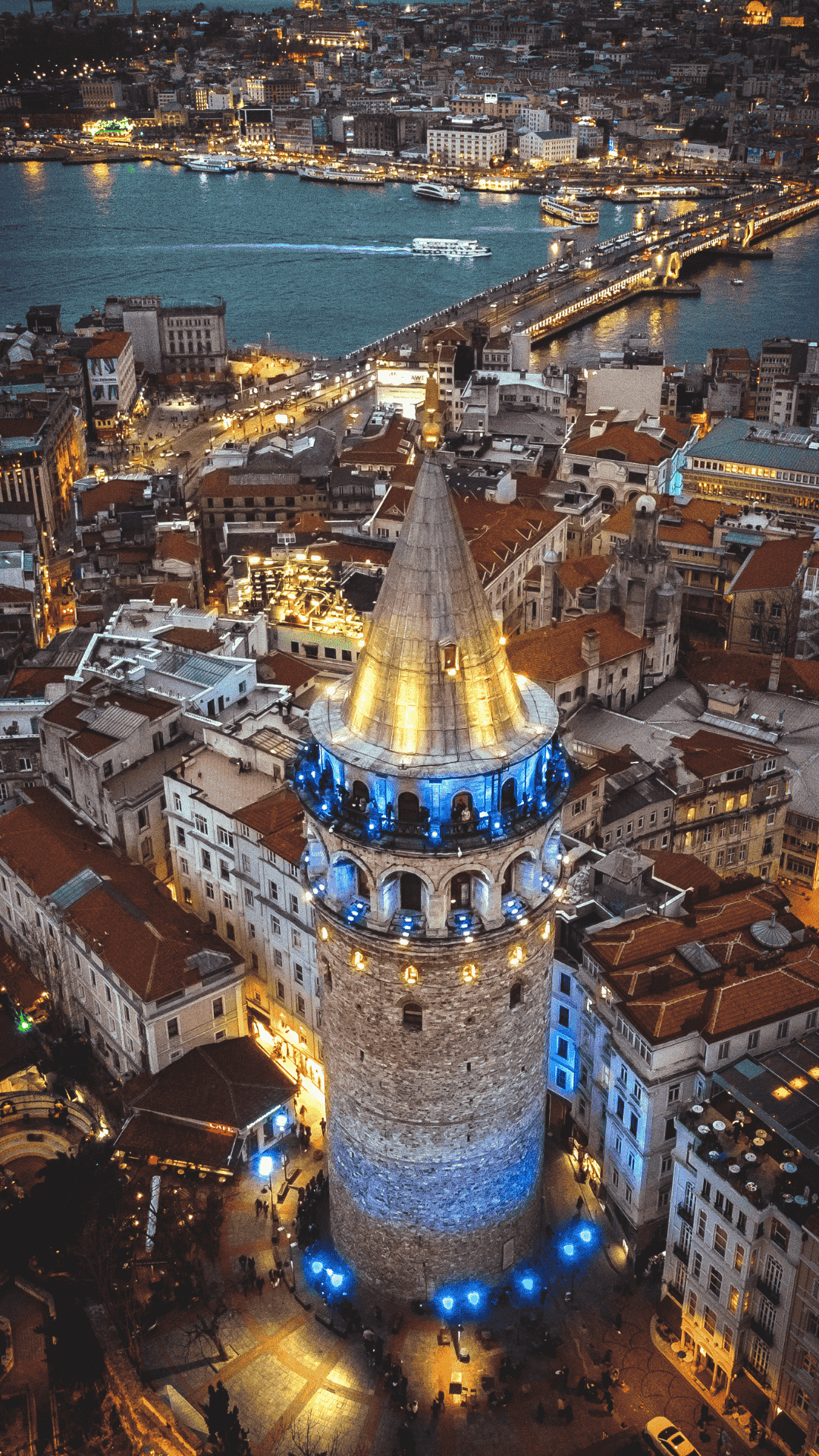
Galata Tower district and surrounding streets
The tower absorbs visitor attention, but the surrounding fabric is often more interesting than the ticket line: Genoese legacies, later apartment buildings, churches, workshops, and dramatic changes in perspective as streets climb and narrow. Avoid this mistake: do not spend your best morning light in a long queue if your primary interest is architecture rather than panoramic selfies. Look for stonework and masonry contrasts, narrow street alignments and view corridors, the relationship between commerce and residence, and adaptive reuse in older buildings.
Climb into Beyoğlu and Istiklal Avenue
Moving uphill, you encounter embassies, passages, apartment blocks, churches, schools, and consulates — the remains of a highly cosmopolitan late Ottoman city. Do not walk Istiklal as a shopping street only; read it as an urban sequence. Most tourists miss this: spend as much time on the side streets and passages as on the avenue itself. The intelligence of Beyoğlu is often in its secondary spaces.
Art Nouveau, eclecticism, and apartment culture
Slow down for turn-of-the-century detail: wrought iron, floral motifs, arched windows, projecting bays, and the ways European styles were adapted to local conditions. Some of Istanbul’s most pleasing architectural moments are not major monuments but mid-scale façades that reveal the city’s social shifts.
Food break, then Pera Museum or Istanbul Modern?
This is an ideal day to linger over lunch: historic pastry shops, meyhanes, casual lokantas, and coffee stops all fit naturally — use our Beyoğlu food guide. For one interior stop, choose Pera Museum for historic district context and cultural atmosphere, or Istanbul Modern for a contemporary architectural layer and an artistic reset after days of historic structures. If you are feeling monument fatigue, switch from landmark chasing to museum pacing and neighborhood wandering.
 Choose your layer
 Day 4 Options: Choose the Architectural Layer That Fits Your Style
Four ways to spend a fourth day, depending on whether you want texture, Byzantine depth, refinement, or everyday urbanism.
Fener and Balat for texture, continuity, and street character
Often overmarketed online, so approach with realistic expectations: come for urban texture, religious diversity, layered residential fabric, schools, churches, and streetscape continuity — not a single blockbuster monument. Streets are steep and surfaces uneven; the best discoveries come from wandering slowly. Pair with our Balat guide or Fener guide for orientation.
Chora area and the land walls for Byzantine depth
For a more specialized Byzantine day, consider the Chora area and parts of the land walls — especially rewarding for repeat visitors or anyone whose interest goes beyond headline sites. Trade-off: you gain historical texture and a broader understanding of Byzantine Istanbul, but lose some of the easy iconic payoff of central routes.
Nişantaşı and modern urban elegance
Not usually the first district in architecture guides, but a smart addition for later urban residential life, upscale avenues, and a polished, more European-facing layer of the city. Less about grand revelation, more about refinement.
Kadıköy and Moda for urban everyday design
On the Asian side, Kadıköy and Moda reward travelers interested in urban character, apartment streets, civic rhythm, and local life more than monumental architecture — a strong choice once you have covered the major historic layers and want to understand contemporary Istanbul through neighborhood form.
 Route planning
 The Masterpieces and the Smart Route Clusters
What not to miss — and how to group it so the city stays coherent.
The masterpieces you should not miss
For first-time architecture lovers: Hagia Sophia, the Blue Mosque, Süleymaniye Mosque, the Basilica Cistern, Dolmabahçe Palace, a Galata/Beyoğlu urban walk, and at least one Bosphorus ferry crossing. For repeat visitors or architecture students: the Üsküdar mosque cluster and waterfront, Beylerbeyi Palace, Fener and Balat, the Chora area and land walls, and the secondary streets of Pera and Galata.
How to group Istanbul’s architectural highlights
- Historic Peninsula Core — Hagia Sophia, Blue Mosque, Hippodrome, Basilica Cistern; walk + tram; half to full day.
- Ottoman Ridge — Süleymaniye and surrounding precinct; walk uphill or tram + walk; half day.
- Bosphorus Imperial — Dolmabahçe, Beşiktaş, Ortaköy, Beylerbeyi; walk + ferry + bus/taxi as needed; half to full day.
- Cosmopolitan Urban Layer — Karaköy, Galata, Beyoğlu, Istiklal side streets; walk + funicular/metro/tram; full day.
- Neighborhood Texture Day — Fener, Balat, Chora area; taxi/bus + walking; half to full day.
 Food
Food Food for Architecture Days
Eat in a way that supports the route: quick, satisfying lunches on heavy monument mornings, slower dinners when the day allows.
Keep lunches efficient on heavy monument mornings
When you are in Sultanahmet or moving between major historic sites, avoid long, scenic lunches in the middle of your best sightseeing window unless that meal is a priority. A smarter rhythm is a quick, satisfying lunch and a slower dinner.
Use neighborhoods to shape your meals
Sultanahmet: good for convenience, not always your most memorable meal. Eminönü: better to feel the city’s energy and continue on foot. Beşiktaş: excellent for casual, local meal breaks on a Bosphorus day. Beyoğlu: best for turning lunch or dinner into part of the cultural experience. Kadıköy: excellent on Asian side routes for stronger everyday food culture. For meal-by-route planning, see our broader Istanbul food guides.
 Routes & photos
 Ready-Made Routes and Photography Notes
Two proven itineraries, plus where and when the city photographs best.
Suggested 3-day itinerary
Day 1 — Byzantine to classical Ottoman: early Hagia Sophia, Blue Mosque, Hippodrome, Basilica Cistern, lunch around Eminönü, Süleymaniye Mosque and precinct, sunset tea or skyline stop. Day 2 — Bosphorus and imperial modernity: Dolmabahçe in the morning, Beşiktaş lunch, walk or ride toward Ortaköy, optional crossing to Üsküdar or Beylerbeyi, sunset on the water. Day 3 — Karaköy, Galata, Beyoğlu: morning in Karaköy streets, Galata district walk, Istiklal side streets, long lunch or café stop, Pera Museum or Istanbul Modern, dinner in Beyoğlu or a return ferry for skyline views.
Suggested 5-day itinerary
Day 1: Sultanahmet core. Day 2: Süleymaniye, Grand Bazaar edges, Eminönü, ferry perspectives. Day 3: Dolmabahçe, Beşiktaş, Ortaköy, Bosphorus. Day 4: Karaköy, Galata, Beyoğlu, museums. Day 5: choose between Fener/Balat, Üsküdar/Beylerbeyi, or Chora/walls depending on your interests.
Best overall viewpoints and light
Viewpoints: the Süleymaniye precinct for old-city massing, ferries for skyline relationships, the Galata and Karaköy slopes for urban layering, the Bosphorus waterfront for palace and mosque framing, and the Üsküdar waterfront for classic peninsula views. Light: early morning for Historic Peninsula exteriors; late afternoon for Süleymaniye and parts of the Bosphorus; golden hour for Ortaköy, Üsküdar, and ferry crossings; blue hour for skyline shots from bridges and waterfronts.
Practical camera advice
A phone is enough for most travelers, but wide-angle flexibility helps in courtyards and interiors. Bring a power bank — you will use your phone heavily for maps, tickets, photography, and transport. Remember that some interiors have changing etiquette or access rules, especially active religious sites.
Transportation Notes for Architecture Lovers
One of the best-value architectural experiences in Istanbul: they show skyline relationships far better than many terraces and are more emotionally memorable than another taxi ride through traffic. Use them strategically between Eminönü, Karaköy, Beşiktaş, Üsküdar, and Kadıköy.
Excellent for connecting the Historic Peninsula with other central areas — but do not reduce the city to station-to-station sightseeing. Some of Istanbul’s best spatial experiences happen between stops.
Use taxis selectively for hill-heavy transitions, time-sensitive reservations, or less efficient route combinations. Pre-booked transfers are especially useful on arrival and departure days, when luggage on steep streets can drain energy you would rather use exploring.
What to Book Ahead vs Keep Flexible
Worth booking ahead
- Guided entry or an expert tour for Dolmabahçe Palace — symbolism, chronology, and ceremonial functions are much richer when explained clearly.
- High-demand ticketed sites where timed entry preserves your itinerary flow.
- Pre-booked airport transfers on arrival and departure days, especially for steep hotel areas like Galata and Beyoğlu.
- A city pass if you plan several paid attractions in a short window and value queue reduction — compare your actual itinerary with current Istanbul passes first.
Keep flexible
- Mosques, neighborhood walks, ferry rides, and free urban observation — the core of an architecture trip needs no tickets.
- Galata, Karaköy, and Beyoğlu — many travelers do just as well with a smart self-guided route as with a tour.
- Wandering time: booking too many tours is a common mistake — leave room to explore intelligently.
- The pass decision: architecture-focused trips often involve fewer ticketed sites than generic sightseeing itineraries, so do not overbuy.
Best Time of Day to Visit Major Sites
Common Mistakes and Insider Fixes
Avoid these mistakes
- Trying to cover both continents and every major landmark in one day.
- Skipping Süleymaniye because it seems “less famous” than Hagia Sophia.
- Treating Beyoğlu as nightlife only instead of an architectural district.
- Ignoring ferries, which are essential for understanding the city spatially.
- Booking too many tours instead of leaving time to wander intelligently, and buying a pass without checking whether your itinerary justifies it.
- Visiting major sites only at midday when crowds and harsh light are worst — and underestimating walking fatigue on steep streets.
Insider tips
- Walk Hagia Sophia’s perimeter — its asymmetry, support systems, and later additions are more interesting than a single frontal photo.
- If the Blue Mosque interior feels busy, step back into the courtyard or return later; architecture becomes legible when you change vantage point.
- At Süleymaniye, stay past the prayer hall — the complex makes the most sense at its edges and viewpoints.
- Around Galata Tower, the surrounding streets often reward you more than the tower queue.
- On Istiklal, spend as much time in the side streets and passages as on the avenue itself.
- Ortaköy: near sunset for atmosphere, earlier for cleaner photos.
Frequently Asked Questions
Is Istanbul good for architecture lovers?
How many days do I need in Istanbul for architecture?
What are the best architectural sites in Istanbul?
What is the best area to stay in Istanbul for architecture lovers?
Is Süleymaniye Mosque worth visiting if I already saw Hagia Sophia and the Blue Mosque?
Should I book guided tours for architectural sites in Istanbul?
Is an Istanbul pass worth it for an architecture-focused trip?
What is the best time to visit Istanbul for architecture photography?
Can I see the best architecture in Istanbul without a car?
Which side of Istanbul is better for architecture, European or Asian?
Are Istanbul’s major mosques open to tourists all day?
What should architecture students focus on in Istanbul?
Is Dolmabahçe Palace worth it if I prefer older architecture?
What are the best neighborhoods in Istanbul for walking and architectural detail?
Read the City, Don’t Just Collect Buildings
The most satisfying version of this trip is not the one with the longest attraction list — it is the one that helps you understand how the city fits together. If there is one mistake worth avoiding, it is treating Istanbul as a series of isolated icons. The real pleasure lies in sequence: dome to courtyard, courtyard to market street, market street to ferry, ferry to skyline, skyline to neighborhood, neighborhood to dinner. Give the city enough time and it stops feeling like a museum of empires and starts feeling like a living architectural conversation.
Plan your things to do in Istanbul