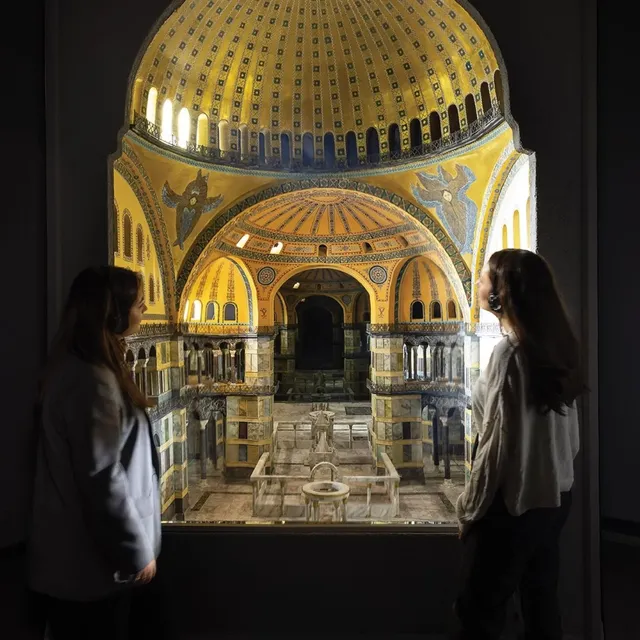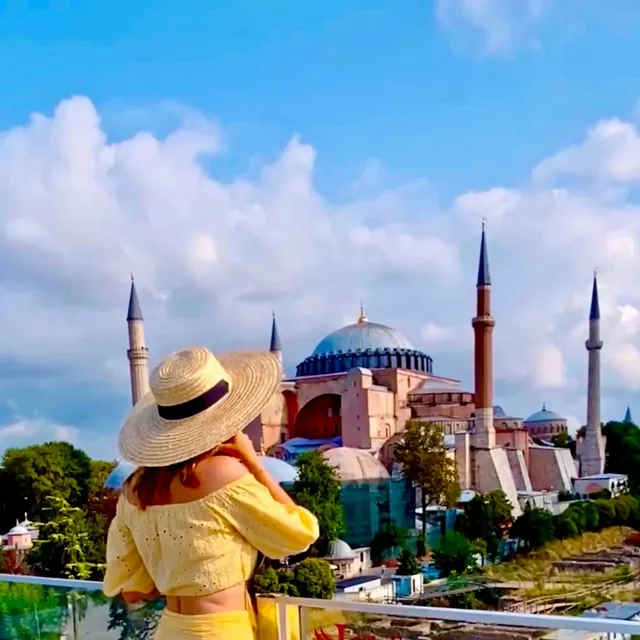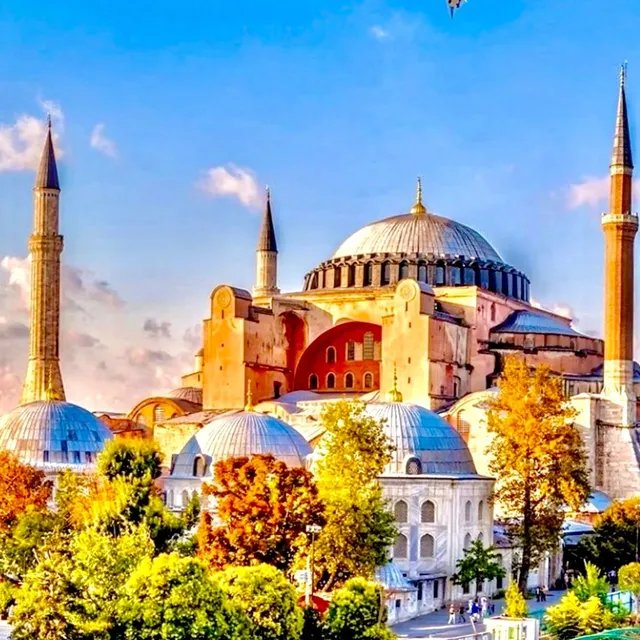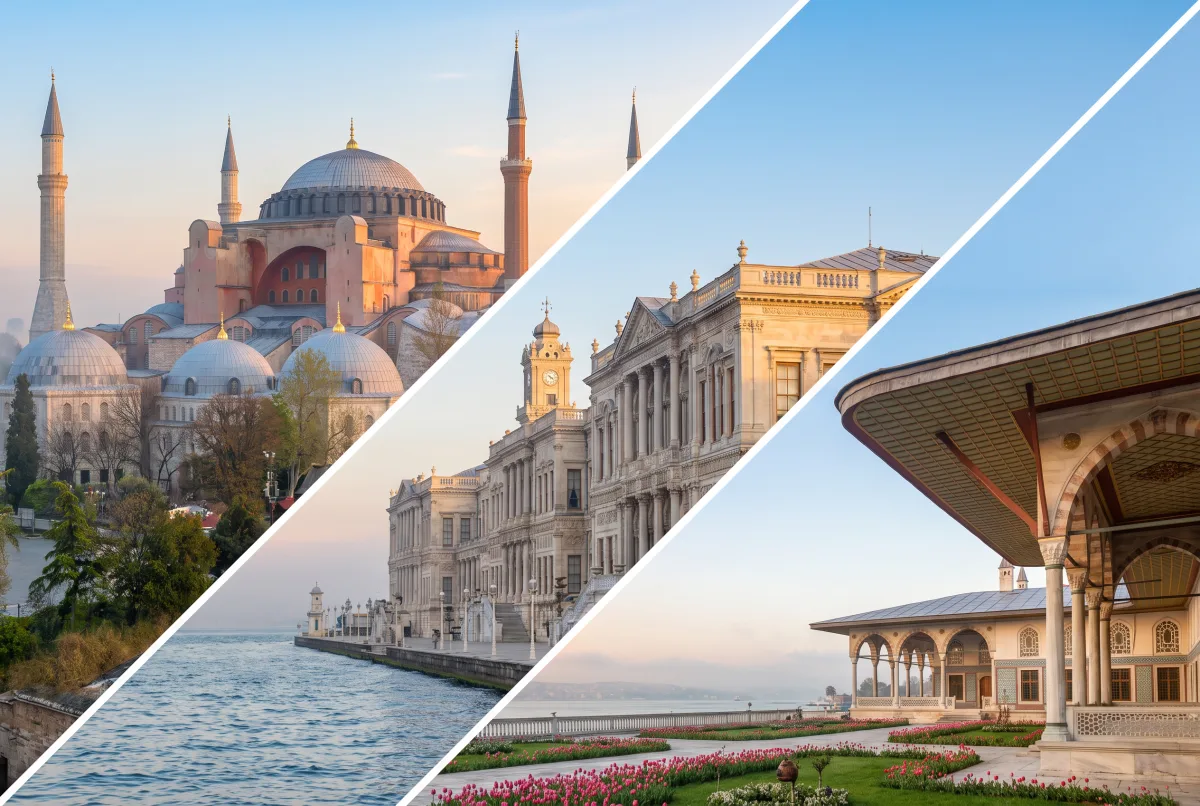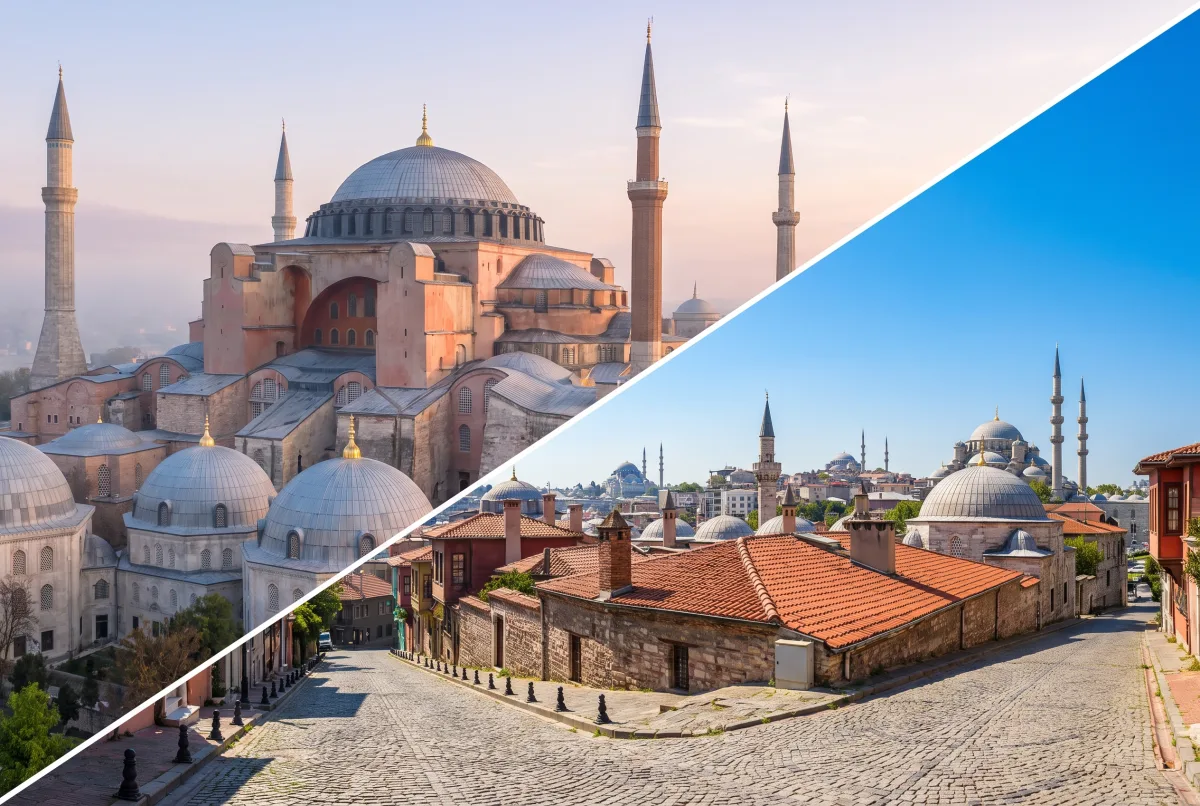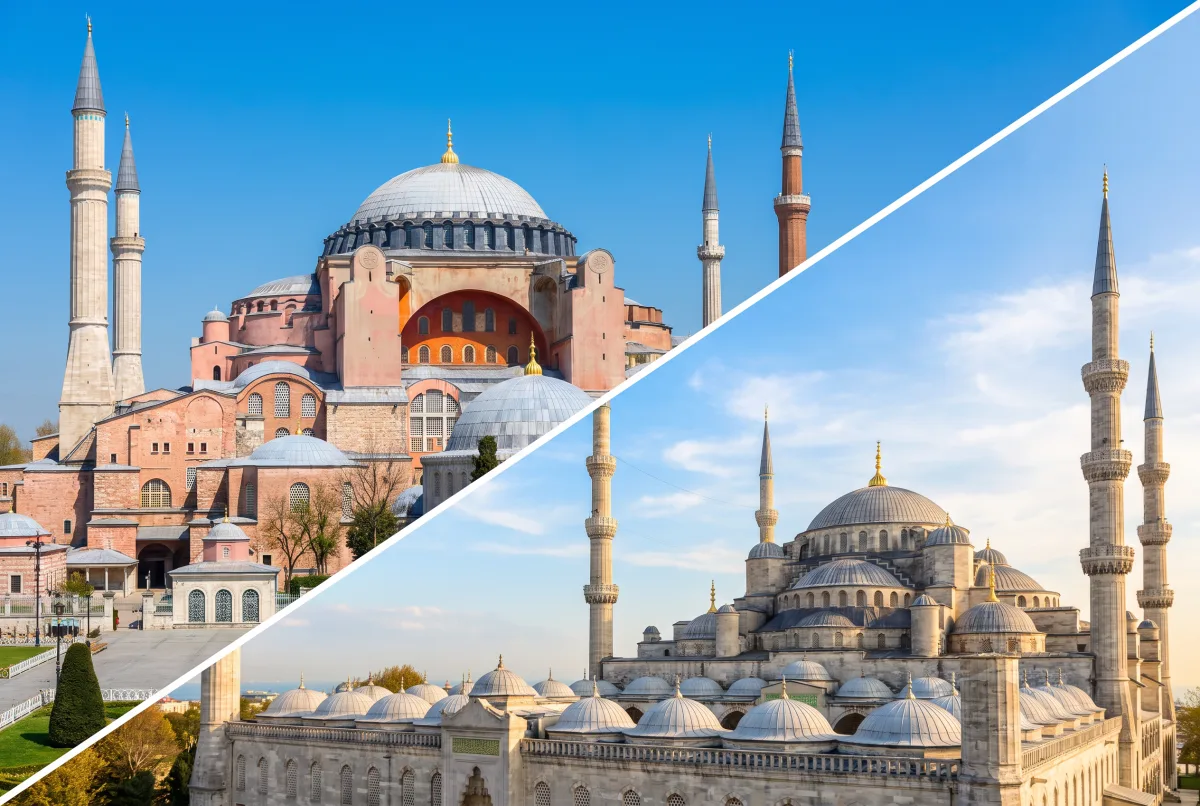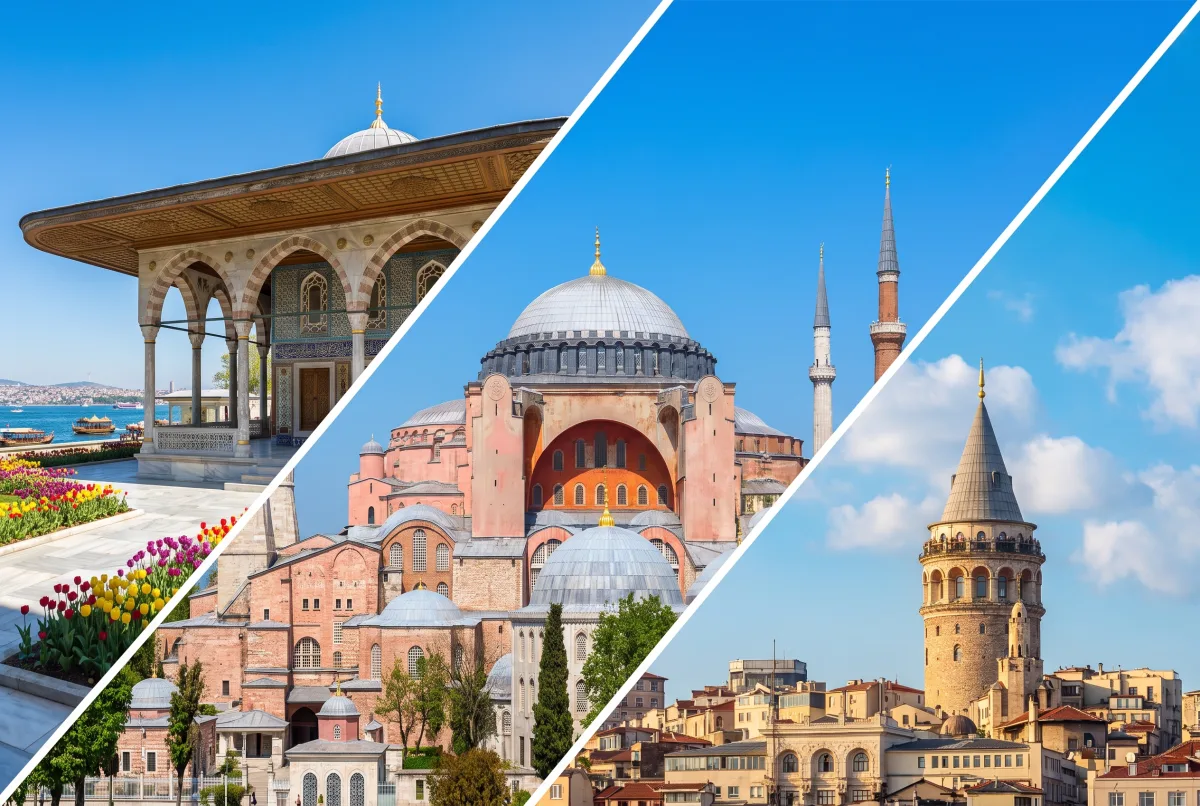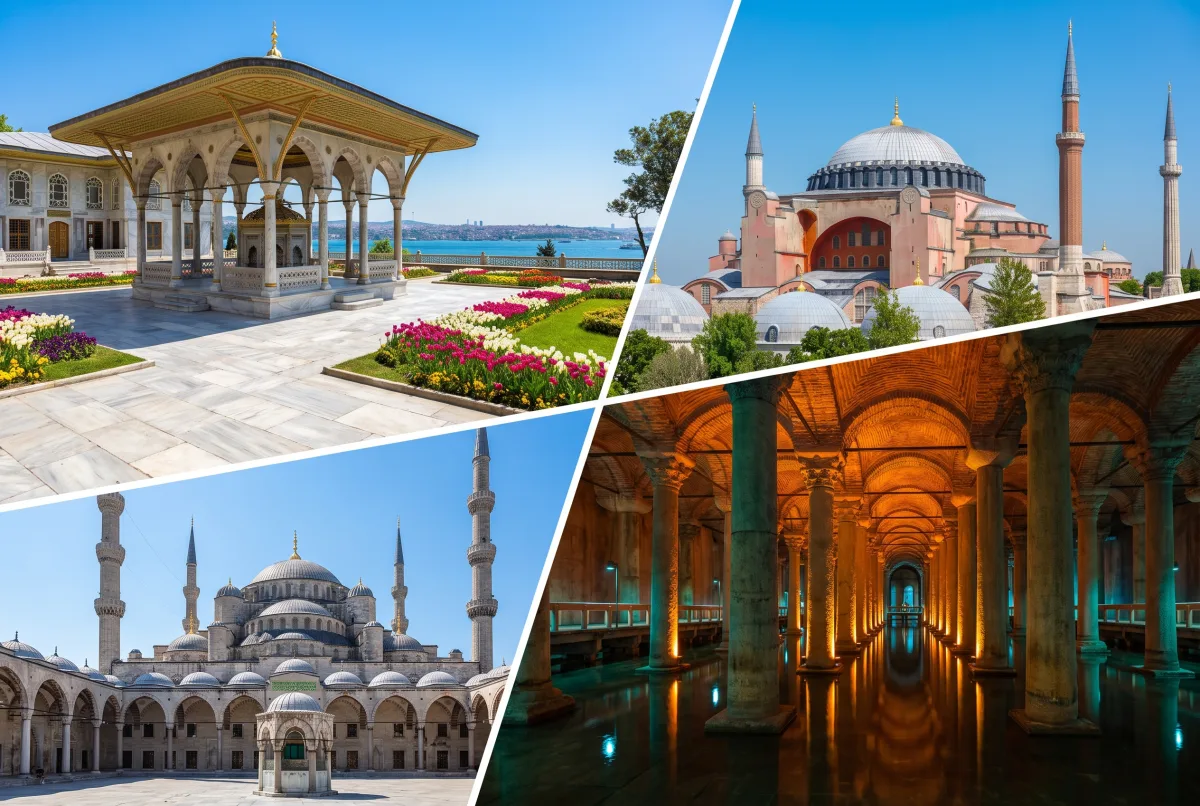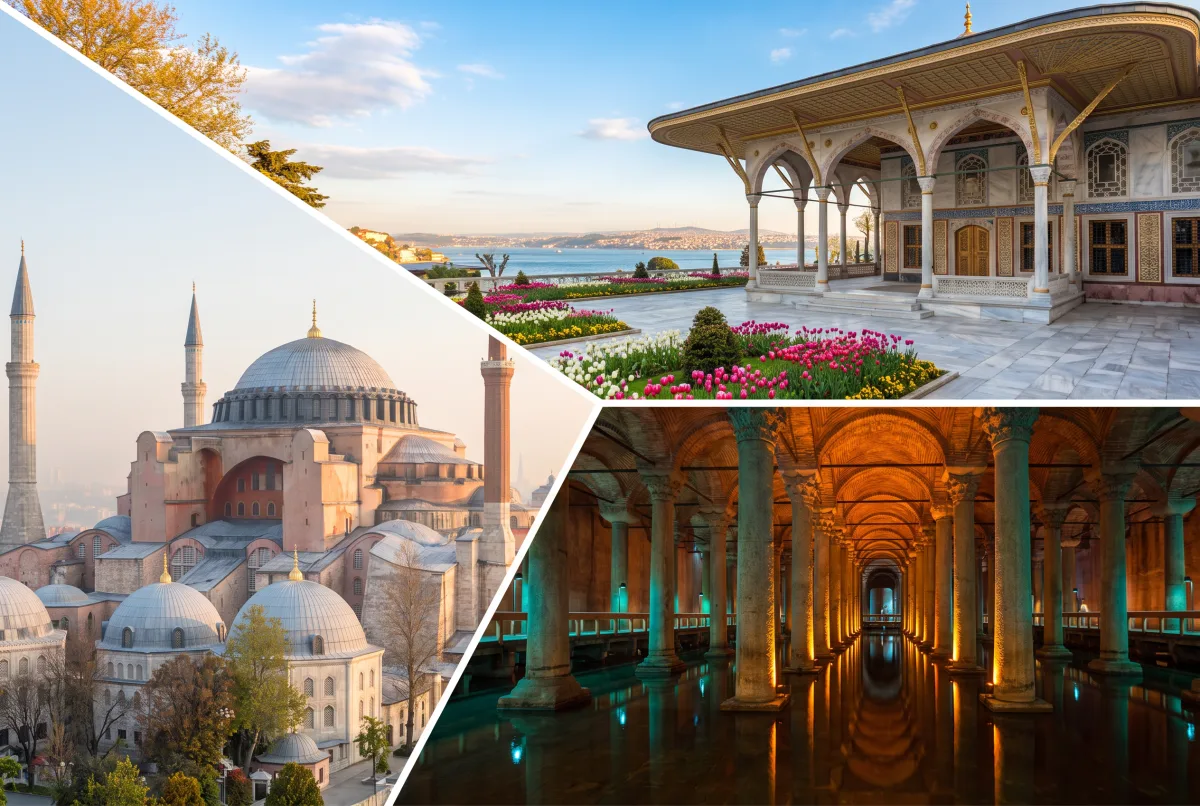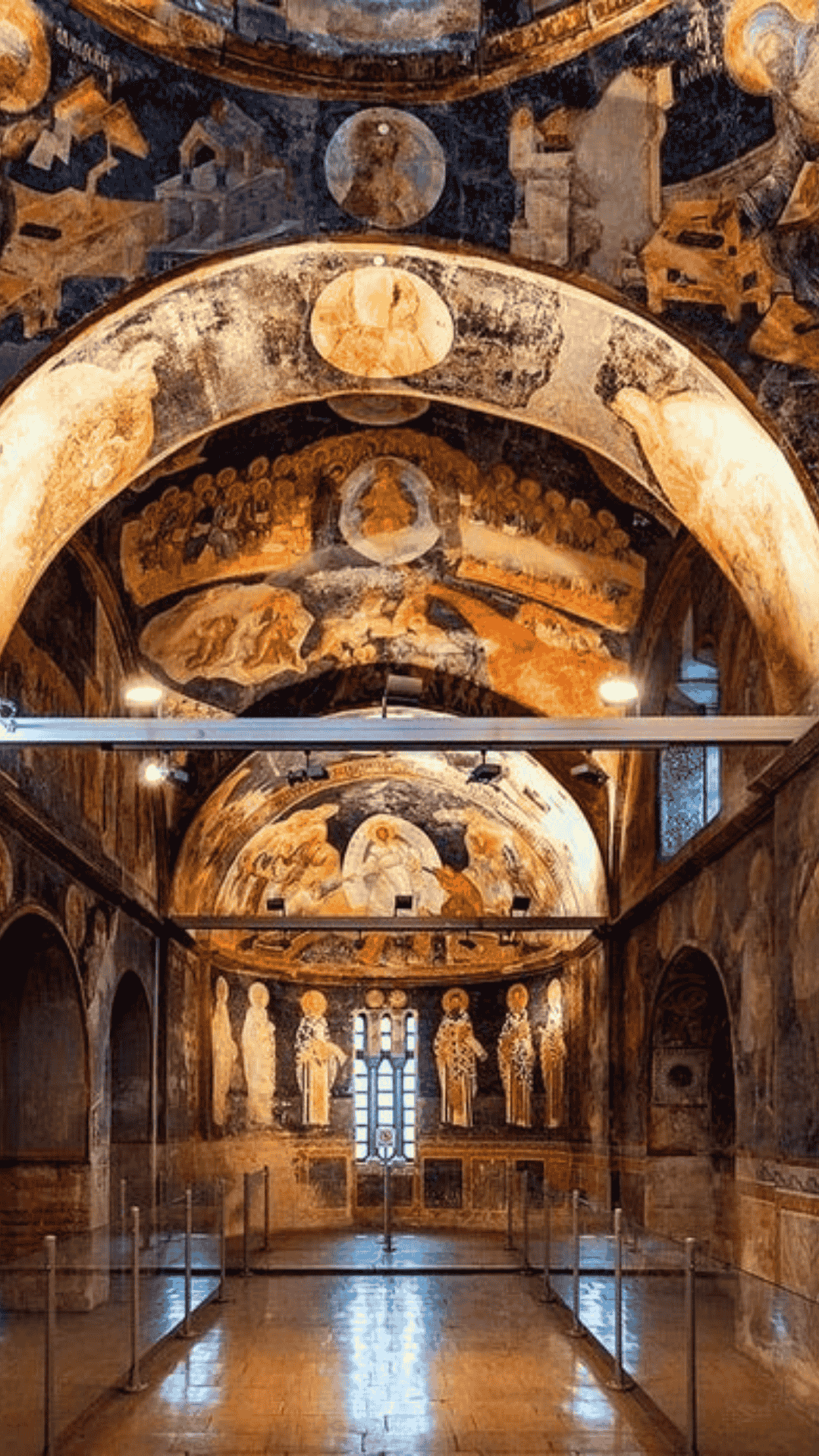

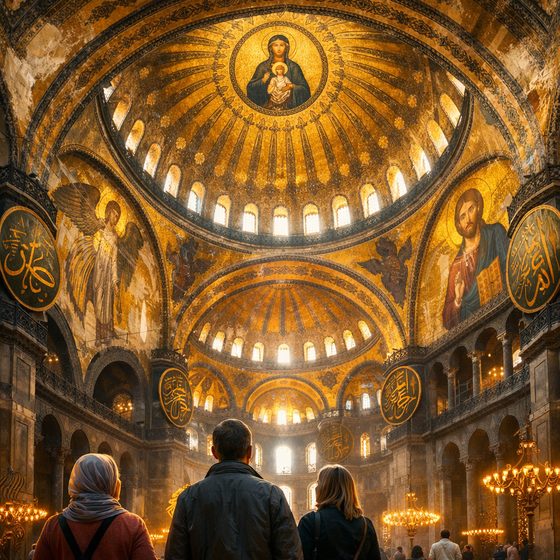
Hagia Sophia is the great sixth-century monument in Istanbul, first built as a Byzantine cathedral and now used as a mosque. Its mosaics matter because they preserve rare layers of Byzantine imperial and religious art inside a building that later became one of the Ottoman world's most important sacred spaces.
Key Takeaways
- The best-known surviving mosaics are the apse Virgin and Child, the Deesis, and major imperial panels.
- Some of the most important works are high up or in gallery areas, so they are not equally easy to see.
- Ground-level visitors can usually appreciate the apse mosaic more easily than upper-gallery panels, though exact sightlines change current visitor route, upper gallery access, and viewing restrictions at Hagia Sophia.
- Covering did not always mean destruction. In some cases, later plaster helped preserve mosaic surfaces.
- For trip planning, also see our Hagia Sophia guide, plus nearby stops like the Blue Mosque and Basilica Cistern.
Which Hagia Sophia mosaics survived?
A mosaic is an image made from tiny pieces of colored glass, stone, or gold-backed material set into plaster. In Hagia Sophia, many original decorative schemes are lost, but several major figurative mosaics and fragments still survive.
Here is the quick-reference version most visitors need first:
- Virgin and Child in the apse
- Date/period: Post-Iconoclasm Byzantine period
- Location: High in the eastern apse
- Why it matters: One of the defining surviving monumental images in the church, associated with the restoration of sacred figural imagery
-
Visibility/access note: Usually understood from ground level, though details are distant and lighting matters current visibility rules for specific mosaics inside Hagia Sophia
-
Deesis mosaic
- Date/period: Late Byzantine period
- Location: Upper gallery area
- Why it matters: Famous for its emotional intensity and refined modeling, especially the face of Christ
-
Visibility/access note: Often depends on whether visitors can access the upper gallery and on current route rules current public access to the Deesis mosaic
-
Leo VI panel
- Date/period: Middle Byzantine period
- Location: Associated with upper-level or gallery viewing context
- Why it matters: Shows an emperor before Christ and expresses Byzantine ideas of rulership and submission to divine authority
-
Visibility/access note: Named-panel visibility can change with routes and barriers which named imperial mosaics are currently visible to standard visitors
-
Zoe mosaic
- Date/period: Middle Byzantine period with later alterations
- Location: Upper gallery area
- Why it matters: A major imperial mosaic showing Christ flanked by Emperor Constantine IX and Empress Zoe, and a good example of dynastic revision within Byzantine art
-
Visibility/access note: Usually tied to upper gallery access and current sightlines which named imperial mosaics are currently visible to standard visitors
-
Komnenos mosaic
- Date/period: Byzantine Komnenian period
- Location: Upper gallery area
- Why it matters: Shows the Virgin with John II Komnenos, Empress Irene, and Alexios; important for imperial portraiture and patronage
-
Visibility/access note: Often difficult or impossible to see closely if the upper gallery is restricted which named imperial mosaics are currently visible to standard visitors
-
Non-figurative and fragmentary survivals
- Date/period: Various Byzantine phases
- Location: Vaults, ornamental zones, partial fields, and restored patches
- Why it matters: These fragments help you imagine how much more extensive the original mosaic program once was
- Visibility/access note: Some are easier to miss than the headline panels, especially from the main visitor flow
Freshness note: current access guidance inside Hagia Sophia changes more often than many guidebooks do, so treat any viewing advice as route-dependent and verify the latest rules close to your visit current visitor route, upper gallery access, and viewing restrictions at Hagia Sophia.
Why so little survived — and why what remains matters

The basic reason is simple: Hagia Sophia was never frozen in time. Earthquakes, repairs, Iconoclasm, conversion, neglect, and restoration all changed what remained on the walls.
Iconoclasm is the period in Byzantine history when religious images were contested and many were removed or destroyed. That matters because some early figurative decoration disappeared long before the Ottoman conquest.
Later, after 1453, the building became a mosque. The Ottoman Empire is the Muslim imperial state that took Constantinople in 1453 and reused Hagia Sophia as a major mosque. Some mosaics were covered, some were damaged, and some remained hidden for centuries. Survival often depended as much on building history as on deliberate preservation.
From church to mosque to museum to mosque
Constantinople is the historical name of Istanbul during the Byzantine and early Ottoman periods. As Hagia Sophia changed from cathedral to mosque, then museum, then mosque again, its art was revealed, concealed, studied, and reinterpreted in different ways.
In the modern era, restoration teams uncovered several major mosaics. More recent status changes affected visitor movement and what standard visitors can see easily current legal status and visitor access rules at Hagia Sophia as of publication.
That matters on the ground. Some mosaics may be visible only from a distance, some only from specific angles, and some only when upper-level access is allowed. Other areas may be under conservation or temporarily off-route current conservation areas, coverings, and no-entry sections inside Hagia Sophia.
Why plaster sometimes protected the art
This is one of the most important points for non-specialists. Plaster can damage a mosaic, but it can also shield it from soot, moisture, touching, and later alterations. Concealment sometimes became preservation.
That does not mean every covered mosaic survived well. Some lost inscriptions, facial features, or larger sections. Still, the survival of major Byzantine mosaics in a heavily reused monument is exceptional.
The mosaics you should know before you visit
You do not need a full catalog before entering. You just need to know which works define the building's surviving Byzantine image program.
Virgin and Child in the apse
The apse is the semi-domed recess at the east end of a church, usually its most sacred focal point. Hagia Sophia's apse mosaic of the Virgin Mary holding the Christ Child is one of the building's great survivors.
This image belongs to the post-Iconoclasm restoration of sacred figural imagery. It matters not only theologically but spatially, because it occupies the symbolic heart of the former cathedral.
From the main floor, you usually read it as a commanding high image rather than a close-up work. Look for the frontal stillness, the dark garment, and the gold background catching available light.
The Deesis mosaic
A Deesis is a Byzantine composition showing Christ in the center with the Virgin Mary and John the Baptist turned toward him in intercession. Hagia Sophia's Deesis is one of the most admired Byzantine mosaics anywhere.
It is usually dated to the late Byzantine period and is prized for its unusual emotional depth. Christ's face feels more psychologically present than many visitors expect from medieval art, and the surviving figures of Mary and John retain a strong sense of movement and appeal.
It is also a damaged work, and that damage is part of its force. The surviving faces feel all the more intense because the panel is incomplete.
Imperial mosaics and named panels
The upper gallery is the elevated level inside Hagia Sophia that historically offered privileged views and now holds several major mosaic panels, subject to current access rules whether visitors can enter the upper gallery at Hagia Sophia.
If access is open, the named imperial mosaics are the ones to look for:
- Leo VI panel: an emperor shown before Christ, important for understanding Byzantine rulership and ceremonial humility.
- Zoe mosaic: Christ flanked by Empress Zoe and Emperor Constantine IX, with evidence of dynastic revision and reworking.
- Komnenos mosaic: the Virgin with John II Komnenos, Empress Irene, and Alexios, central for imperial portraiture and family patronage.
These are not just donor portraits. They fuse politics, piety, and sacred legitimacy. In Byzantine art, emperors appear within a divine order rather than outside it.
For most visitors, the practical issue is not importance but access. These named panels are often the hardest major mosaics to see well because they depend on upper-gallery entry and current visitor circulation which named imperial mosaics are currently visible to standard visitors.
What you may miss at ground level
Not every meaningful survival is a famous panel. Look for mosaic surfaces in vaults, ornamental fields, crosses, and partial gold grounds. Even a fragment can tell you how rich the original interior once was.
Ground-level visitors should also expect limits. If upper-gallery access is restricted, you may understand the building's mosaic history better than you can actually inspect it. That is normal in Hagia Sophia and one reason a little preparation helps.
How to see them inside Hagia Sophia today

The challenge is practical as much as historical. Hagia Sophia is large, active, and often crowded, so a viewing plan matters.
Best viewing strategy
Start by stopping still for a minute and looking upward before you chase individual details. The building makes more sense when you grasp its scale first.
If current rules allow, bring small binoculars or rely on a steady phone zoom for high images whether small binoculars are permitted for visitors inside Hagia Sophia.
Try to visit at a quieter time if possible, because crowd flow and prayer-related movement affect what you can actually see current visitor peak hours and recommended quiet visiting windows.
Dress and behavior rules matter because Hagia Sophia is an active mosque current dress code and visitor etiquette requirements at Hagia Sophia. For broader planning, our Hagia Sophia guide is the best companion page.
What is visible from ground level, and what may require upper gallery access
For many visitors, the apse Virgin and Child is the clearest major mosaic to understand from the main floor, even though it is distant. Other mosaic fragments and decorative survivals may also be read from below if you know where to look.
The Deesis and the best-known imperial panels are different. They are associated with the upper gallery, so close viewing often depends on whether that level is open to standard visitors whether visitors can enter the upper gallery at Hagia Sophia.
Visibility can also shift during the day. Some Christian imagery may be screened, partly obscured, or harder to inspect during prayer periods or under current management arrangements current policies on screening or covering mosaics during prayer times.
So the realistic expectation is this: from ground level, you can usually grasp Hagia Sophia's surviving Byzantine image world in part; to study the named gallery masterpieces properly, you may need upper-level access that is not always available current visibility status of major mosaics at Hagia Sophia.
What the mosaics tell you about Byzantine Istanbul
Byzantine Istanbul is Constantinople seen through its eastern Roman, Greek-speaking Christian centuries. Hagia Sophia's mosaics are one of the clearest surviving entrances into that world.
They show a court culture that linked emperor, church, liturgy, and divine order. Gold backgrounds were not mere decoration. They suggested sacred space beyond ordinary time and made the church interior feel like a liturgical cosmos.
They also show artistic change across centuries. Earlier Byzantine imagery often feels monumental and hieratic. Later work, especially the Deesis, can feel more expressive and psychologically charged.
For visitors, that means the mosaics are not only remnants of lost decoration. They are evidence for how Constantinople imagined authority, intercession, ceremony, and beauty.
If you want to extend that Byzantine context, pair Hagia Sophia with other nearby monuments and museum pages on our site where available, especially those focused on late Roman, Byzantine, or early Ottoman Istanbul.
Pair your visit with nearby sites
Hagia Sophia sits in one of Istanbul's easiest areas for same-day historical pairings.
Start with the Basilica Cistern if you want a strong late Roman and Byzantine engineering counterpoint. Then visit the Blue Mosque to compare Ottoman sacred space with Hagia Sophia's earlier Byzantine framework.
If you want an imperial Ottoman follow-up, add Topkapi Palace. That pairing helps clarify how political power moved from Byzantine cathedral culture to Ottoman court culture.
You can also keep the route simple: Hagia Sophia, Blue Mosque, and Basilica Cistern make a compact Sultanahmet trio that works well on foot. For a broader city contrast later in the day, a Bosphorus cruise shifts you from monument interiors to the larger imperial geography of Istanbul.
For logistics, etiquette, and route planning, return to the main Hagia Sophia guide.
FAQ
Are all Hagia Sophia mosaics visible today?
No. Some are visible, some are partially visible, and some may be inaccessible or screened depending on current visitor rules, prayer use, and conservation current visibility status of major mosaics at Hagia Sophia.
Which mosaic can most visitors usually understand from ground level?
Usually the apse Virgin and Child, because it is a major high-level image visible from the main interior, even if details remain distant. Upper-gallery mosaics are less dependable for standard visitors.
Is the Deesis mosaic currently open to visitors?
Access can change. The Deesis is associated with the upper gallery, so public viewing depends on current route and access rules current public access to the Deesis mosaic.
Which named imperial panels should I know?
The key ones are the Leo VI panel, the Zoe mosaic, and the Komnenos mosaic. Together they show how Byzantine emperors and empresses used sacred imagery to express legitimacy, devotion, and dynasty.
Were the mosaics destroyed by the Ottomans?
Not all of them. Some were damaged or lost over time, but some were covered rather than destroyed. That later made rediscovery and restoration possible.
Do I need a special ticket or route to see the mosaics?
Visitor procedures can change, and access to upper areas may be more restricted than access to the main floor. Verify current entry and route rules before you go current visitor entry procedure, fees if any for non-worship visitors, and route rules at Hagia Sophia.
Is Hagia Sophia better with a guide?
Usually, yes. The building is layered, and the surviving mosaics make more sense once you understand what is visible from ground level versus what depends on upper-gallery access. Start with our Hagia Sophia guide if you want the planning basics first.