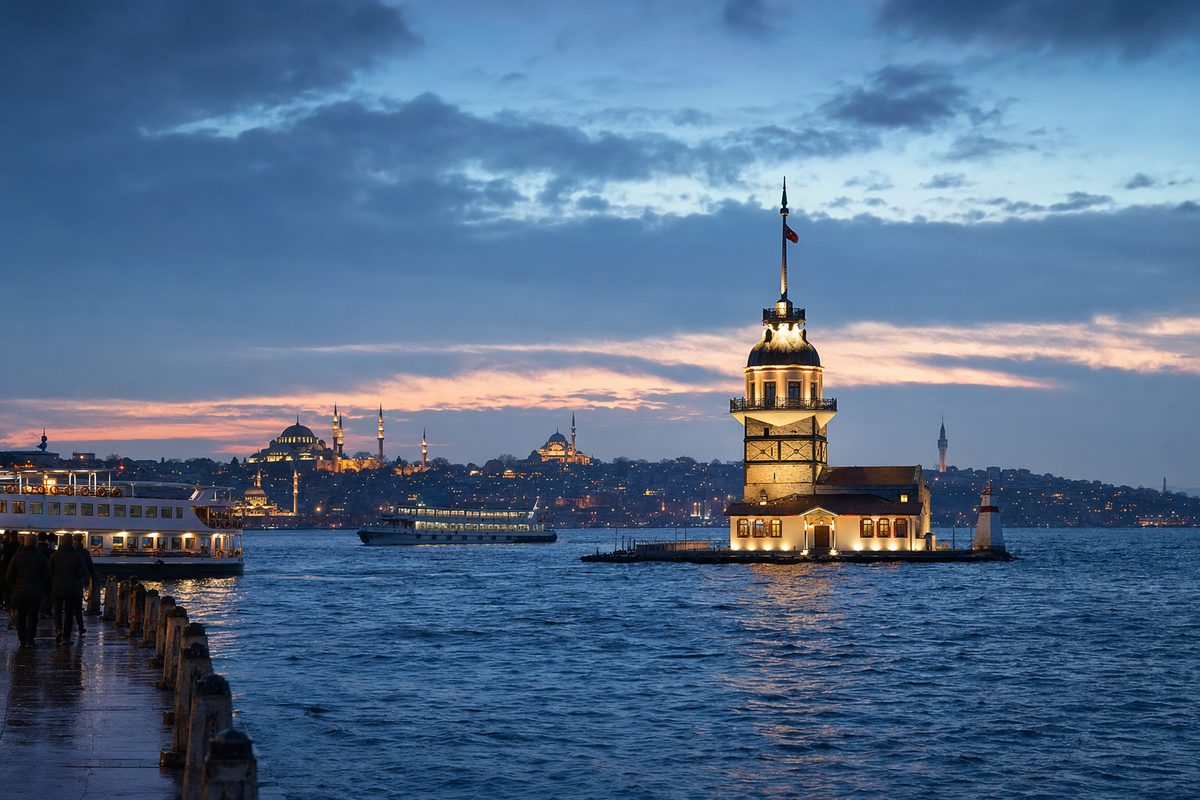
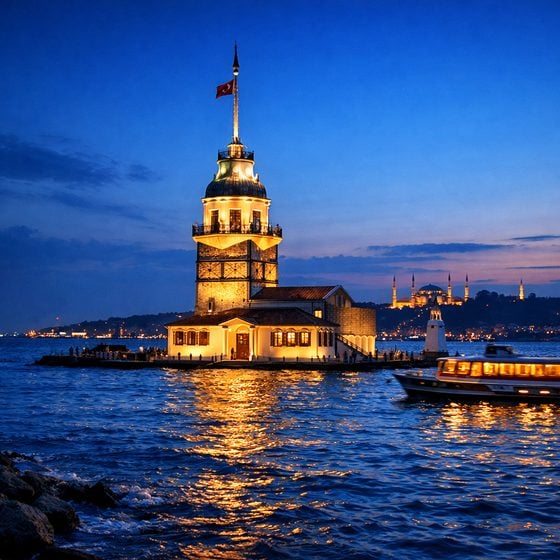
Kız Kulesi is the Turkish name of Maiden's Tower, the landmark standing just offshore from Üsküdar on Istanbul's Asian side. Üsküdar is a historic district on the Asian shore of Istanbul. Bosphorus is the strait dividing the city between Europe and Asia and linking the Black Sea with the Sea of Marmara.
Key Takeaways
- The best-known local Maiden's Tower story is the princess and snake prophecy.
- Hero and Leander is often connected to the tower later, but the original myth belongs elsewhere confirm the cleanest wording for the myth's original geographic setting.
- The tower's position off Üsküdar helps explain why both stories feel plausible.
- The Üsküdar waterfront is the simplest place to understand the tower's scale and atmosphere.
- For practical planning, use our main Maiden's Tower guide.
Maidens Tower Legend: The Short Answer
If you want the short answer, the main maidens tower legend is this: a ruler hears a prophecy that his daughter will die from a snake bite, so he places her in the tower to protect her. A snake later arrives hidden in a fruit basket, and the prophecy comes true.
The second story people mention is Hero and Leander, the classical tale of lovers separated by water and guided by a light. That association suits Maiden's Tower visually, but it is best understood as a later adaptation rather than the tower's main local legend.
Why the Tower Invites Legend
Maiden's Tower sits in a spot that almost explains the stories by itself. It is close to shore, easy to see, and still physically separate. That combination makes people imagine protection, waiting, danger, and failed crossings.
From Üsküdar, the tower can look decorative in calm weather and remote in rougher conditions. Ferries, wind, current, and shifting light make a short distance feel larger than it is. That is why the site lends itself so easily to stories about fate and separation.
The Princess and the Snake Prophecy
This is the legend most visitors mean when they talk about Maiden's Tower. A ruler, often described in retellings as either a sultan or an emperor, learns that his daughter will die from a snake bite on her eighteenth birthday verify the most commonly cited age in popular retellings.
To prevent that future, he isolates her in the tower. The logic is simple: remove her from gardens, streets, and every obvious place where a snake might appear.
The plan fails. A basket of fruit is delivered to the tower, a snake has hidden inside it, and the daughter is bitten. The attempt to outwit fate becomes the reason the story is remembered.
The tale lasts because its structure is clear and harsh. A parent tries to protect a child. Protection turns into confinement. The very refuge meant to stop danger becomes the place where danger arrives.
Retellings vary on the ruler's identity. Some call him a Byzantine emperor, while others call him an Ottoman sultan identify the most common figure used in mainstream tourism and cultural retellings. The core image stays the same: an isolated daughter, an anxious father figure, and a threat carried in by human hands.
The story also shapes how many visitors understand the tower's name. Official wording matters here, because the naming history is often simplified in tourism copy verify how official site materials explain the names Maiden's Tower and Kız Kulesi.
If you want the practical visitor side after the story, start with our main Maiden's Tower guide.
The Hero and Leander Association From the Dardanelles
Hero is a priestess in Greek myth. Leander is the young man who swims across the water each night to reach her, guided by her light.
In the story, a storm extinguishes the light, Leander loses his way in the dark water, and he drowns. Hero then throws herself into the sea.
The important accuracy point is that the original myth is associated with the Dardanelles rather than the Bosphorus confirm the cleanest wording for the myth's original geographic setting. For Maiden's Tower, this is better described as a later literary or popular association than as the monument's primary local legend.
Even so, the adaptation is easy to understand. A solitary tower, a visible light, dark water, and a dangerous crossing fit the emotional logic of the myth. The Bosphorus setting makes the borrowed connection feel natural, even if it is not the story's original location.
If you enjoy sites where history and legend blur together, you may also like the Bosphorus viewpoints and cruise ideas that put the tower in its wider waterscape.
What the Legends Get Right About Istanbul
Both stories understand something real about Istanbul: water here is not just scenery. It shapes movement, mood, visibility, and risk.
That is why the legends feel local even when their origins differ. The snake story uses isolation and false safety. The Hero and Leander association uses distance, light, and the danger of crossing. In both cases, the water does part of the storytelling.
The tower also reflects Istanbul's habit of layering meanings over time. Byzantine memory, Ottoman retelling, modern tourism, and literary borrowing can all attach themselves to one landmark. That does not make the stories useless. It shows how strongly the site encourages narrative.
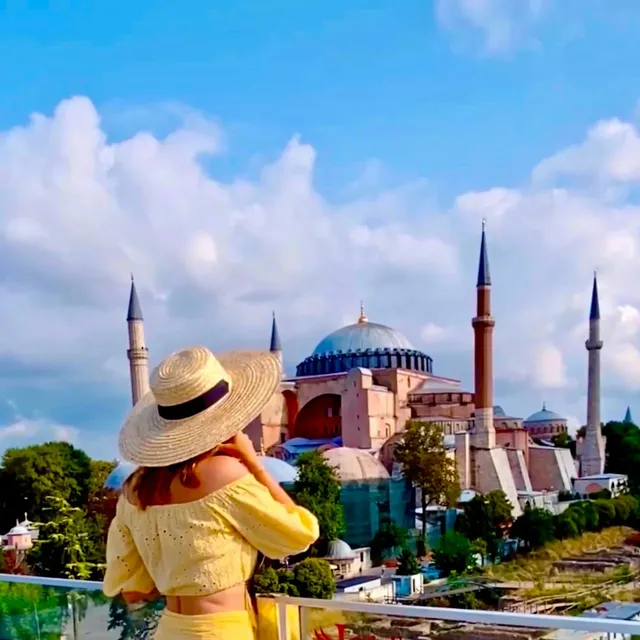
To understand that setting better, it helps to know Üsküdar as more than a ferry stop. See our guide to Üsküdar for the district around the tower, or compare it with nearby classics such as Hagia Sophia and the Blue Mosque after crossing back to the historic peninsula.
How to Experience Maiden's Tower Today
The best way to approach the tower is to treat it first as a place to view and interpret, then as a legend. Its effect depends on angle, weather, and distance.
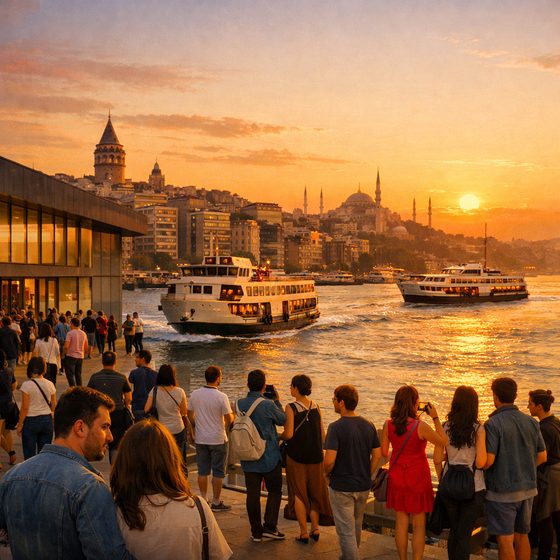
The Üsküdar waterfront is the seafront promenade and ferry area facing the historic peninsula. It gives the clearest sense of how close the tower looks and how separate it remains.
Sunset is often the most atmospheric time to see it if conditions are clear verify current sunset cruise or evening access options related to Maiden's Tower, if any. Morning may work better for quieter photos and softer waterfront traffic verify current visiting hours and first access time for Maiden's Tower.
A Bosphorus perspective is useful too. From the water, the tower looks less like a lone object and more like part of the working strait. If that interests you, consider a Bosphorus cruise.
A simple route is to start around the Üsküdar shore, spend time with the tower views, then continue into the district itself. If you are crossing back to the old city, pair the stop with major landmarks such as Hagia Sophia or the Blue Mosque. Their scale contrasts well with Maiden's Tower, which works through distance rather than size.
Before you go, confirm the latest practical details on access, restoration status, and visitor rules through official Kız Kulesi or museum-linked sources verify current access method, restoration status, and on-site visitor restrictions for Maiden's Tower. If there is a café, exhibition space, timed entry system, or reservation requirement, verify that before planning your day verify current on-site facilities, ticketing setup if applicable, and reservation requirements.
Final Thought
The strongest maidens tower legend is still the local snake-prophecy tale: a ruler tries to block fate, and fate arrives anyway. The Hero and Leander connection remains compelling, but it works best as a later Dardanelles-to-Bosphorus association rather than the tower's original core story.
That distinction matters because it makes the place clearer, not less magical. Maiden's Tower earns its myths through setting: a small landmark off Üsküdar, visible from shore, separated by moving water, and open to centuries of retelling.
For the full visitor overview, practical planning tips, and updated access information, continue to our Maiden's Tower guide.