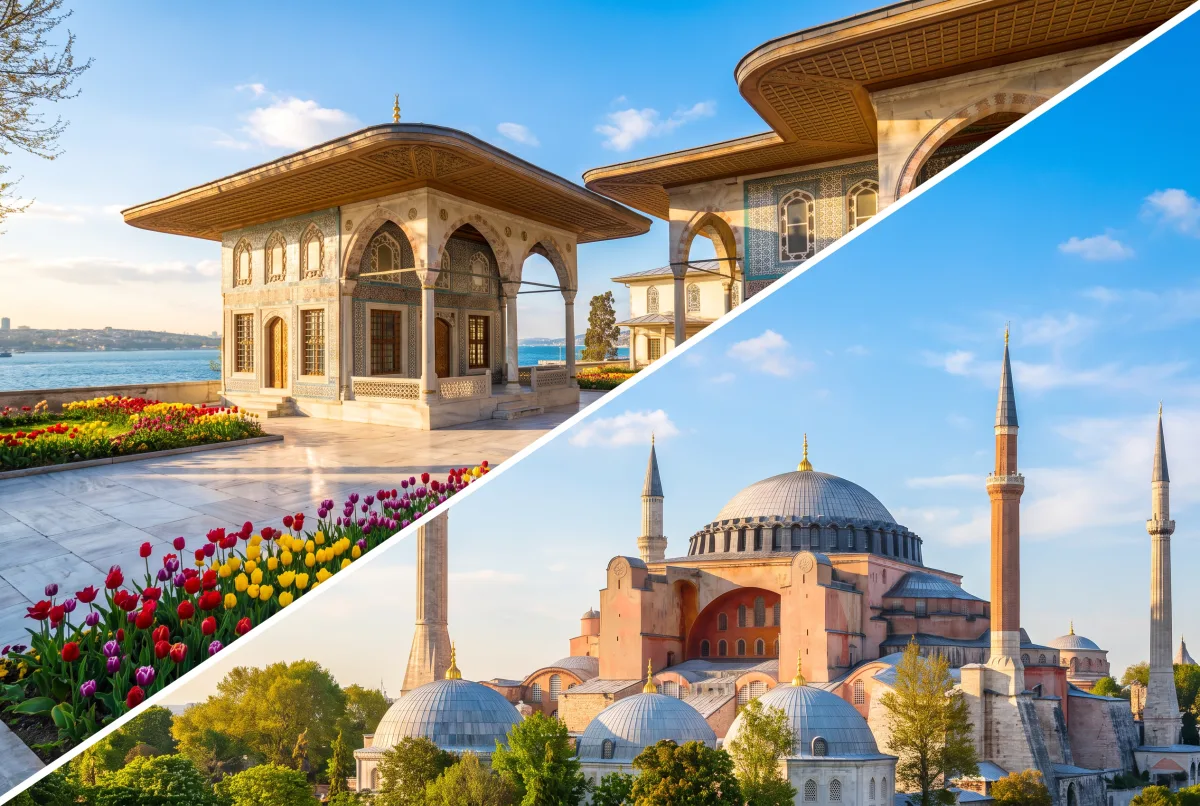
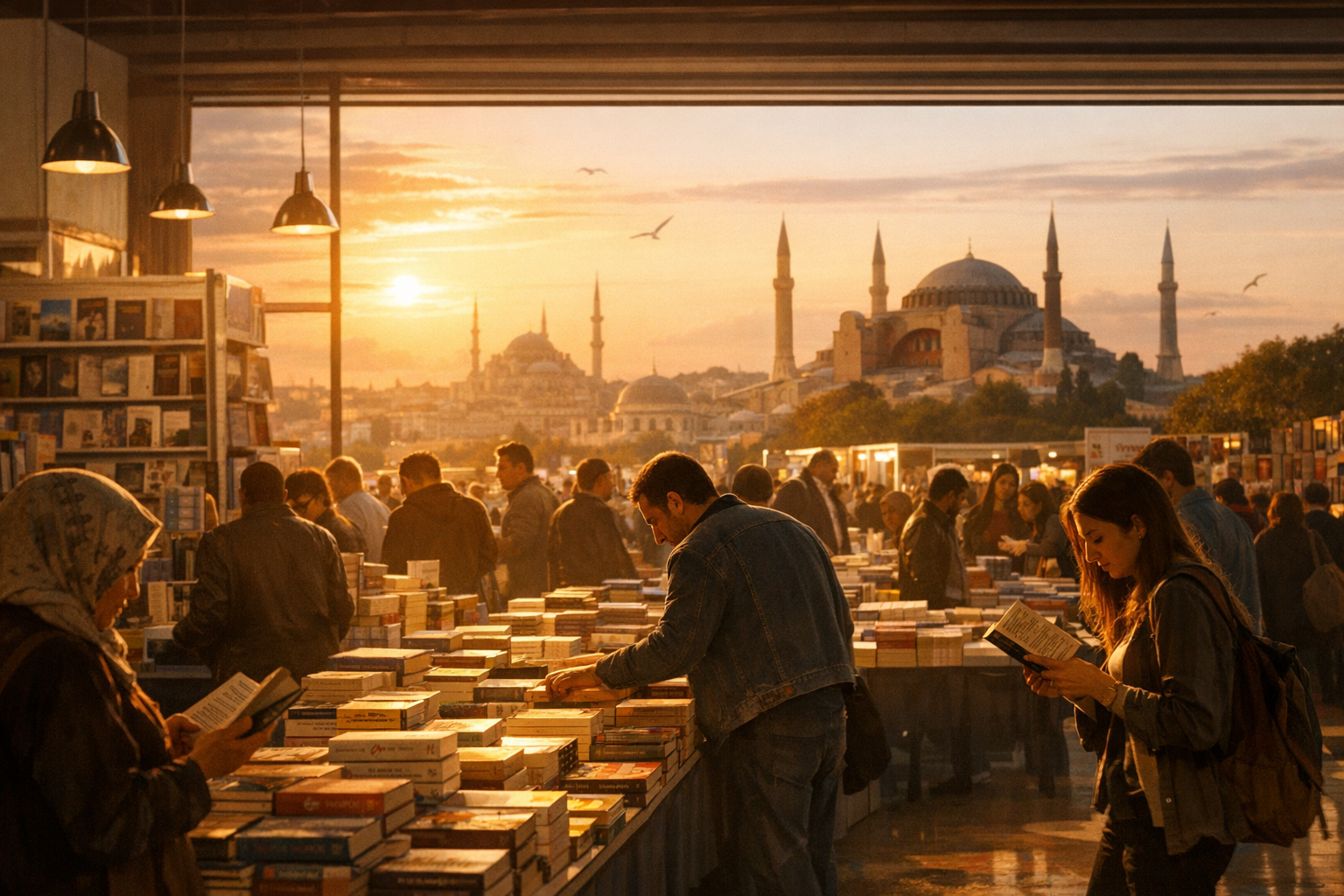
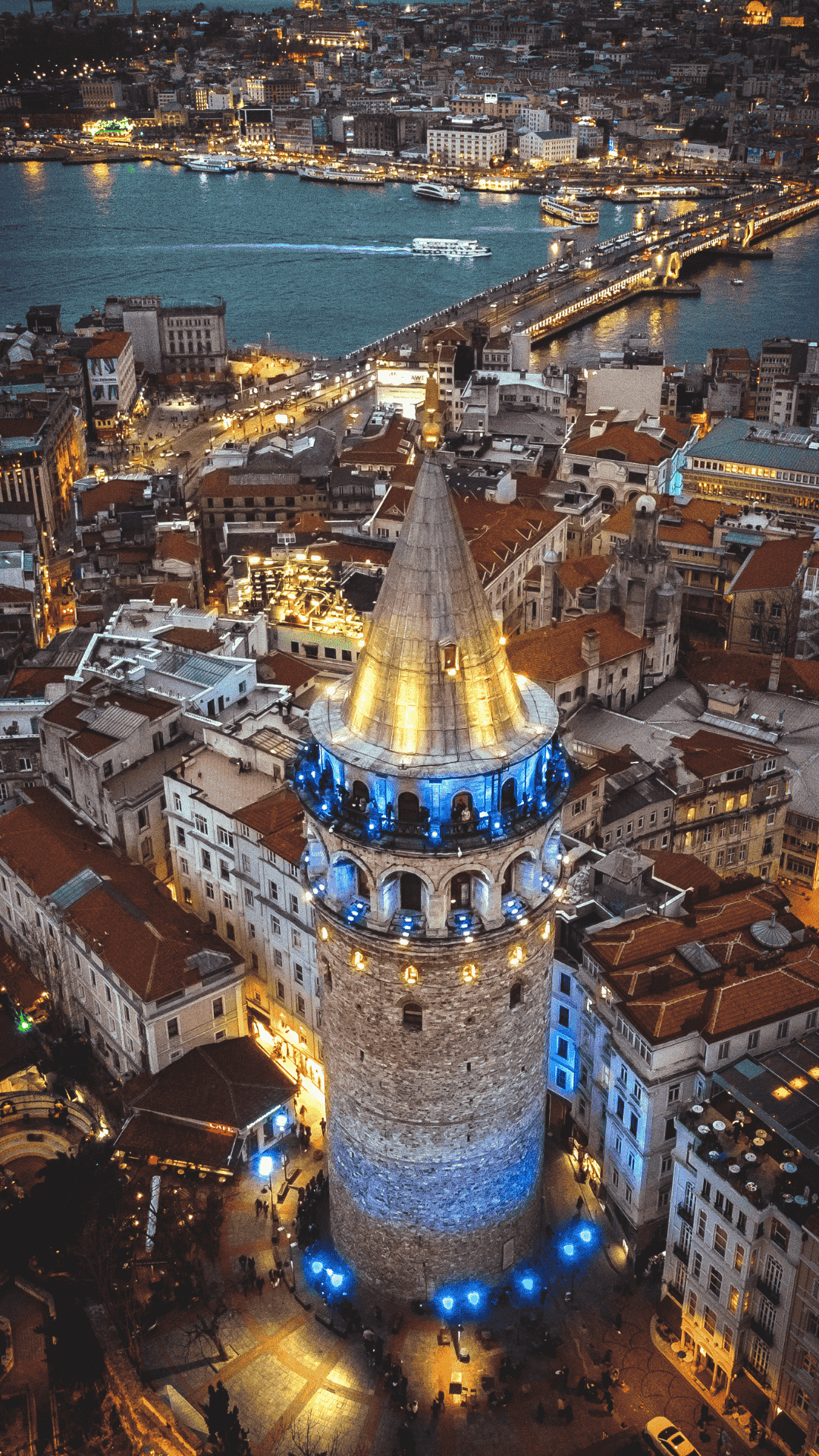
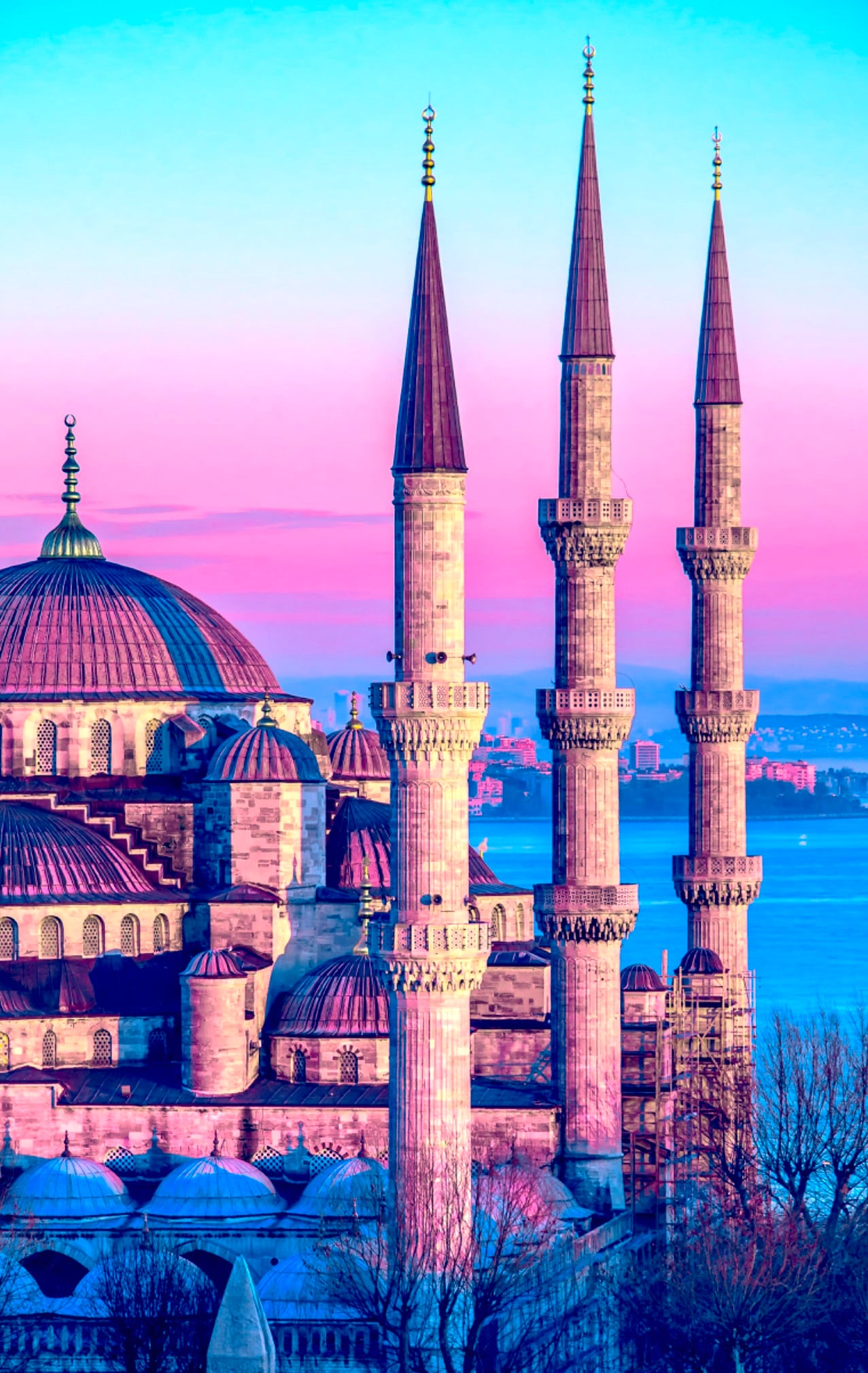
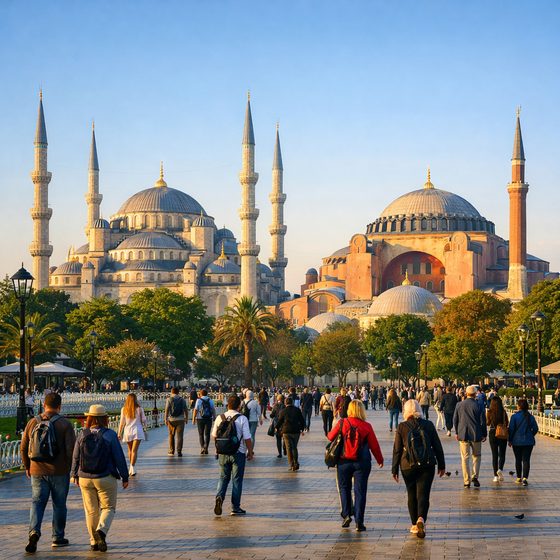
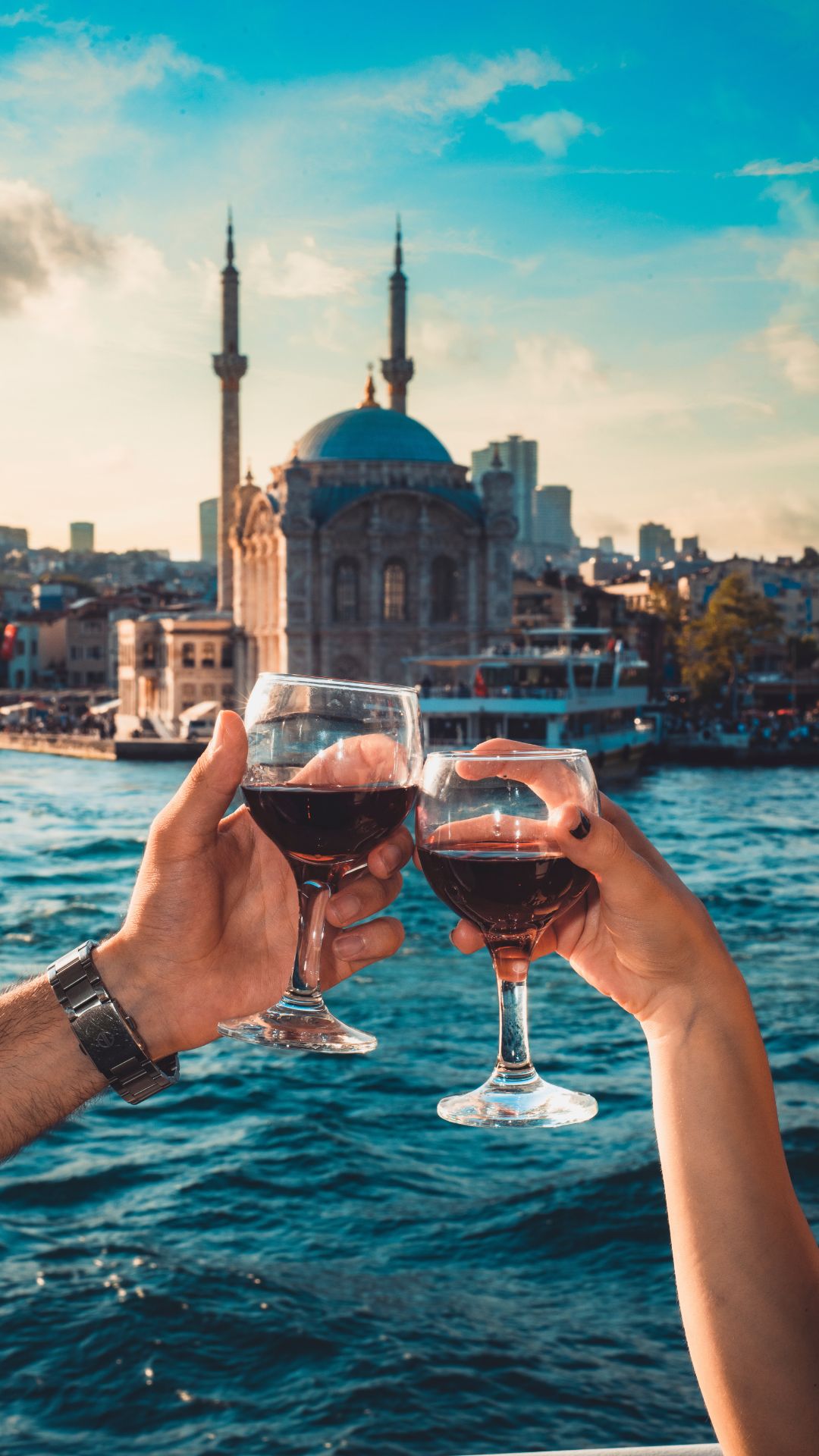
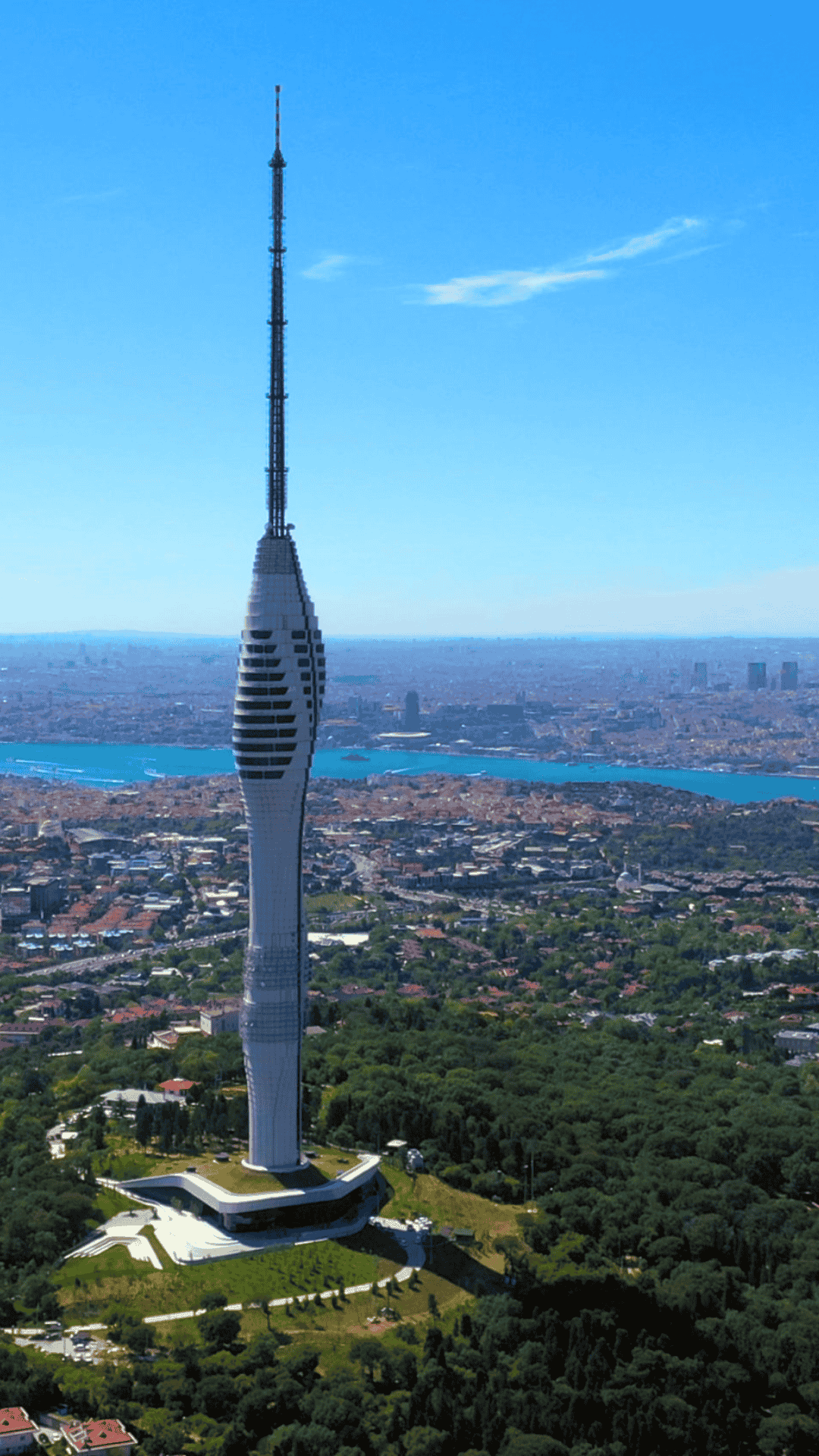
Istanbul’s Islamic heritage is not contained in one monument, one prayer hall, or one neighborhood. It unfolds across imperial mosques, humble local masjids, Sufi lodges, tombs of saints, calligraphy in courtyards, the rhythm of the ezan across the Bosphorus, and entire districts shaped by Ottoman ideas of worship, charity, education, and everyday life.
If you are planning a spiritually focused visit, this guide is designed to help you make better decisions. We’ll cover the most important mosques and sacred sites, how to visit respectfully, which places are worth your time, how to structure an Istanbul itinerary around prayer times and neighborhood flow, and where Ottoman spirituality still feels present rather than staged.
If you have limited time, focus on quality over quantity. Trying to “collect” mosques can flatten the experience. A smarter approach is to pair one grand imperial complex with one spiritually resonant district, one waterfront crossing, one reflective pause for tea or a simple meal, and enough time to absorb what you are seeing. That is when Istanbul starts to feel different.
SACRED ISTANBUL See the sacred city with real context One well-chosen guided half-day early in the trip improves everything else.Quick Overview
| Category | Best Choices | Why It Matters | |
|---|---|---|---|
| Best first mosque visit | Blue Mosque or Süleymaniye Mosque | Blue Mosque is visually iconic and easy for first-timers; Süleymaniye offers a deeper sense of Ottoman scale, theology, and urban presence. | |
| Most spiritual district | Eyüp | More devotional, more local, and closely tied to pilgrimage traditions and Ottoman piety. | |
| Best for architecture lovers | Süleymaniye, Şehzade Mosque, Rüstem Paşa Mosque | These reveal different levels of Sinan’s architectural thinking and decorative refinement. | |
| Best if you only have half a day | Sultanahmet + Süleymaniye | You can experience both the ceremonial heart and the imperial-intellectual heart of Ottoman Istanbul. | |
| Best for a quieter sacred experience | Eyüp Sultan Mosque, Mihrimah Sultan Mosque in Edirnekapı | Less rushed than the main tourist circuit, with stronger neighborhood atmosphere. | |
| Best add-on experiences | Halal food stops, Bosphorus ferry, calligraphy or Islamic art museums, guided heritage walks | These help connect religious architecture to lived culture and the wider city. | |
| When a guided tour helps | First visit, short stay, interest in Ottoman history or Islamic art | A good guide adds context you will not get from signage alone and saves time in dense historic areas. | |
| When public transport is enough | Sultanahmet, Eminönü, Fatih, Eyüp | Tram, metro, buses, ferries, and short walks cover most major sacred sites efficiently. |
Why Istanbul’s Islamic Heritage Matters
- A city rebuilt through institutions. After the Ottoman conquest of Constantinople in 1453, the city was rebuilt through mosques, schools, soup kitchens, hospitals, fountains, markets, libraries, tombs, caravanserais, and charitable endowments. These were not isolated landmarks — they were a system.
- Külliye: worship plus public service. A mosque here was often part of a larger külliye, or social complex. Worship existed alongside teaching, feeding travelers and the poor, public water distribution, manuscript culture, and neighborhood life.
- Look beyond the prayer hall. To visit these places well, notice courtyards, ablution fountains, graveyards, surrounding streets, and the topography of the district itself.
- Atmosphere over spectacle. Some of the most meaningful moments are not the biggest: an elderly worshipper reciting quietly after prayer, a sloping cemetery shaded by cypress trees, Qur’anic inscriptions catching late afternoon light.
- Living sites of worship. Do not approach these places only as monuments. They are living sites of worship — approached that way, the experience becomes richer, more respectful, and more memorable.
How Many Days Do You Need?
For a meaningful introduction, give yourself at least one full day. Two days is much better. Three days lets you experience the major imperial mosques, Eyüp, a few smaller masterpieces, and at least one museum or cultural stop that adds context.
Neighborhoods That Reveal Islamic Istanbul Best
Sultanahmet
The symbolic center of imperial display and one of the easiest areas to navigate on foot, with immediate access to the Blue Mosque, Hagia Sophia, and early-morning entry to the historic core. The downside is crowds — you come here for access and historical concentration, not neighborhood intimacy.
Best for First-time visitors near the major monuments
Fatih
Where many travelers begin to feel the city’s Islamic texture more naturally. It is active, conservative in parts, full of local life, and anchored by major religious institutions — a strong district if you want to move beyond postcard Istanbul.
Best for Local rhythm and major Ottoman religious sites
Eyüp
One of the clearest devotional atmospheres in the city. Less about checking off famous buildings, more about entering a still-active sacred geography. For spiritually motivated travelers, this neighborhood often becomes a highlight.
Best for Devotional depth and pilgrimage tradition
Üsküdar
On the Asian side, Üsküdar presents a softer, more lived-in relationship between mosques, water, ferries, and daily movement. Religious architecture belongs seamlessly to ordinary life, adding emotional range to your understanding of Istanbul.
Best for A contemplative stay where mosque life meets daily movement
Karaköy & Eminönü
These areas work well if you want a mixed trip that balances heritage, ferries, and food, with quick connections to the old city and the Bosphorus.
Best for Mixed trips balancing heritage, ferries, and food
Exploring the Islamic Heritage of Istanbul, Step by Step
 Planning
 How to Plan an Islamic Heritage Visit in Istanbul
The Islamic Heritage of Istanbul is best experienced slowly — a little structure around prayer times, seasons, and dress goes a long way.
How many days do you need?
For a meaningful introduction, give yourself at least one full day. Two days is much better. Three days lets you experience the major imperial mosques, Eyüp, a few smaller masterpieces, and at least one museum or cultural stop that adds context.
Best neighborhoods to base yourself in
Sultanahmet is convenient for first-time visitors who want to be near the Blue Mosque, Hagia Sophia, and early morning access to the historic core. Fatih offers a more local rhythm and easier access to several important Ottoman religious sites. Karaköy or Eminönü work well for a mixed trip balancing heritage, ferries, and food. For a more contemplative stay, some travelers prefer the Asian side, especially Üsküdar. For broader planning, pair this article with an Istanbul travel guide and neighborhood deep dives such as Sultanahmet, Fatih, Eyüp, and Üsküdar.
Best time of day to visit mosques
Mid-morning is often ideal: the first prayer rush has passed, tour groups are not yet at peak volume, and the light is usually beautiful for architecture and photography. Late afternoon can also be atmospheric, especially in courtyards and hillside districts. Avoid arriving right at prayer time expecting a long sightseeing visit — non-worshipping visitors are usually restricted or asked to wait during congregational prayers, especially on Fridays and religious holidays.
Best days and seasons
Spring and autumn are the easiest seasons for a spiritually focused itinerary. Summer can be rewarding, but major sites become very crowded and midday heat makes walking between old city hills tiring. Winter can be excellent for atmosphere; interiors feel especially calm. Friday has special significance but requires smarter planning: meaningful if you want the city’s religious pulse, but choose another day for the biggest mosques if your priority is access and quiet observation.
Dress code and respectful behavior
Modest dress is essential. Women should carry a scarf for sites where head covering is required or expected. Shoulders and knees should be covered for all visitors. Shoes are removed before entering prayer spaces. Speak softly, avoid crossing in front of people who are praying, and do not treat worshippers as photo subjects. Insider tip: carry a lightweight tote or cloth bag for your shoes — having your own is more comfortable than mosque plastic bags.
How to get around between sacred sites
Most travelers can cover the core sites using tram, metro, ferries, buses, and walking. The T1 tram is especially useful for Sultanahmet, Eminönü, and connections toward the old city. Eyüp is easiest by bus, taxi, or a carefully planned Golden Horn route. Üsküdar is best reached by ferry if weather allows. If you are arriving late, traveling with family, or trying to make a Friday prayer schedule work without stress, pre-booked airport transfers or a private transfer for one half-day can be worth it.
 Sultanahmet, Süleymaniye, Eyüp & Fatih
 The Essential Sacred Sites: Where to Start
Pair one grand imperial complex with one spiritually resonant district — these seven sites are the core of the city’s sacred geography.
Blue Mosque (Sultan Ahmed Mosque)
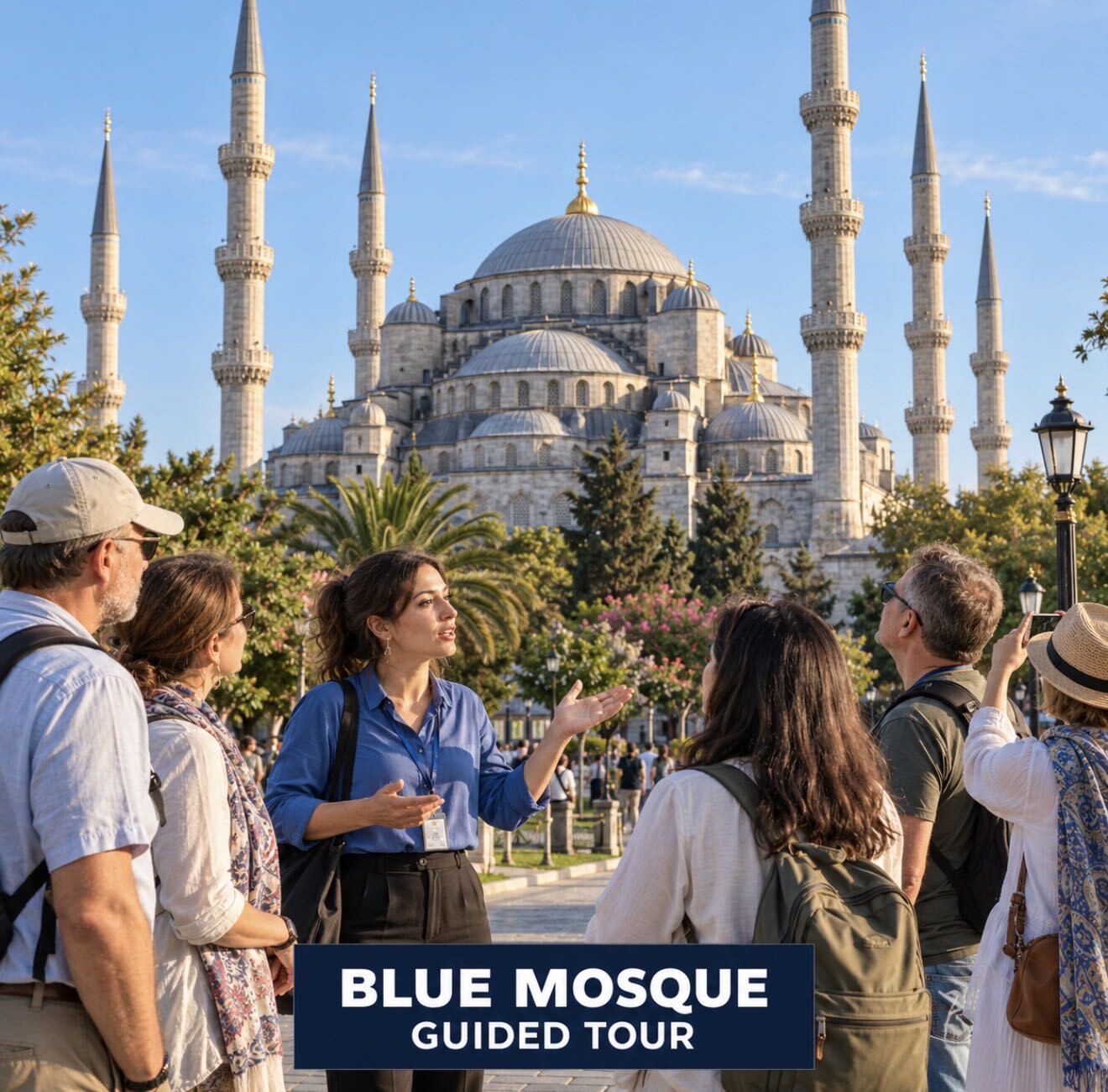
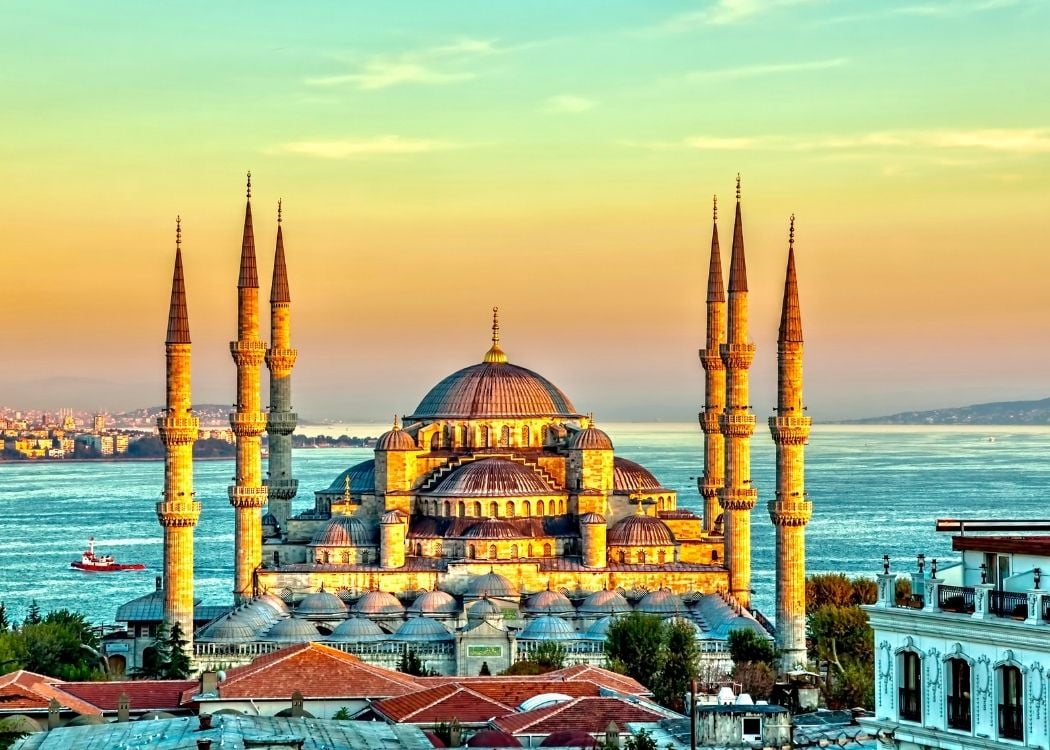
For many visitors, this is the ceremonial beginning of the Islamic Heritage of Istanbul. Its cascading domes, six minarets, and large open courtyard make it visually unforgettable, but what matters more is how naturally it still functions as a living mosque. It was conceived as a statement of dynastic legitimacy facing the older Byzantine grandeur of Hagia Sophia. Inside, look beyond the “blue tiles” cliché: notice scale, symmetry, calligraphy, suspended lamps, and the way the central dome organizes the worship experience. Arrive early morning or later in the afternoon, allow 30–45 minutes, and be ready for visitor flow controls around prayer times. Afterward, walk through Sultanahmet Square toward the top things to do in Istanbul, or connect the religious and imperial layers with a well-designed Old City tour.
Süleymaniye Mosque
If we were planning this trip for a friend with one must-see Ottoman mosque, this would often be our recommendation. Designed by Mimar Sinan for Sultan Süleyman the Magnificent, it sits above the Golden Horn with a calm authority many travelers find more moving than the Blue Mosque. The proportions are extraordinary: grandeur without heaviness, beautifully controlled light, a courtyard that frames the sky, and the tombs of Süleyman and Hürrem adding emotional depth. Most tourists miss this: spend time in the surrounding complex and approach the mosque from different streets in Süleymaniye and Vefa. Allow 60–90 minutes, wear comfortable shoes — the hills are real — and combine with lunch in nearby Fatih food spots.
Eyüp Sultan Mosque
If the Blue Mosque is ceremonial and Süleymaniye is imperial, Eyüp Sultan is devotional. This is one of the most spiritually significant sites in Istanbul because it is associated with Abu Ayyub al-Ansari, a companion of the Prophet Muhammad. The atmosphere is intimate and prayer-centered: worshippers, families, supplicants, cemetery paths, and a district that still feels spiritually active. Do not skip Eyüp if your main interest is spirituality rather than postcard views. Take the cable car or walk up to Pierre Loti Hill for views over the Golden Horn, but spend more time around the mosque and cemetery first — the mosque district itself is the spiritual heart. Combine with an Eyüp neighborhood guide and a Golden Horn route.
Fatih Mosque
The Fatih Mosque carries enormous symbolic weight: it stands on the site of the former Church of the Holy Apostles and is associated with Mehmed II, the conqueror of Constantinople. The present structure reflects later rebuilding after earthquake damage, but its significance remains substantial. It suits travelers interested in the early Ottoman transformation of the city, and the surrounding neighborhood’s strong religious character makes it a window into contemporary religious culture. Do not come expecting the same visual “wow” as the Blue Mosque — Fatih rewards visitors who care about meaning, continuity, and district context.
Rüstem Paşa Mosque
Tucked above the commercial energy of Eminönü, Rüstem Paşa is one of the most refined smaller imperial mosques in the city, famous for its Iznik tiles. What makes it especially rewarding is the contrast between the busy market streets below and the serenity of the mosque above. Insider tip: approaching the mosque is part of the experience — let yourself move through the han and market atmosphere; the transition from commerce to contemplation is very Ottoman in spirit. Combine it with the Spice Bazaar, the Eminönü waterfront, and a ferry crossing for one of the best short religious-cultural circuits in the city.
Şehzade Mosque
Often overshadowed by larger names, Şehzade is one of Sinan’s early masterpieces and an excellent stop for travelers interested in the evolution of Ottoman mosque architecture. It feels spacious, elegant, and less burdened by constant tour traffic. Choose it if you have already seen the headline sites, want to understand Sinan’s development before Süleymaniye, or are staying in Fatih and want an easy, meaningful visit.
Mihrimah Sultan Mosque in Edirnekapı
Often skipped by first-time visitors, but well worth the effort for those interested in architecture, urban views, and a quieter sacred atmosphere. Its light-filled interior and position near the old land walls create a very different emotional tone — a sense of air and openness many visitors remember strongly. A good choice if you want beauty without intensity, especially when exploring the walls, Fener-Balat, or the northwestern historic peninsula.
 City fabric
 Beyond the Big Names: Ottoman Spirituality in the City Fabric
To understand the Islamic Heritage of Istanbul, you have to look past individual monuments to the system of belief, charity, and memory around them.
Külliye culture: more than a mosque
These complexes united worship with social care and learning. A mosque might sit beside a madrasa, hospital, soup kitchen, bath, market infrastructure, or charitable service institution funded through endowments — one reason Ottoman religious architecture feels urban rather than isolated. When visiting major sites, ask yourself: what else was this place built to support? Where did people study? Where did they eat? How did water reach the site? These questions turn a beautiful building into a living system.
Türbes and saintly memory
Tombs, or türbes, play an important role in Istanbul’s sacred geography. Some belong to sultans and royal figures, others to scholars, mystics, or companions of the early Islamic world. Visitors often encounter people reciting Qur’an, making supplication, or sitting quietly nearby. The türbes around Süleymaniye, Eyüp, and various imperial complexes are part of how memory and sanctity were organized in Ottoman life — not side notes.
Cemeteries and cypress landscapes
Ottoman cemeteries were not hidden away. They often formed part of the visual and spiritual atmosphere around mosques and hillsides. Gravestones, cypress trees, and sloping burial grounds remind visitors how strongly mortality and remembrance were integrated into the city’s religious landscape. Most tourists miss this because they hurry between major doors and ticket lines — slow down in the outer spaces.
Sufi heritage in Istanbul
Although many formal dervish lodges no longer operate as they once did, Sufi heritage remains central to the city’s religious history. Orders such as the Mevlevi and Halveti shaped devotional life, education, ethics, literature, music, and urban patronage. Be careful not to confuse serious spiritual heritage with shallow stage performance: some commercial “whirling dervish” shows are visually polished but spiritually thin. If context matters to you, choose a venue known for interpretation and heritage framing rather than spectacle alone.
 Routes
 Best Itineraries for Exploring the Islamic Heritage of Istanbul
Four route templates, from a single free morning to a three-day reflective trip.
The Essential Introduction
Works well for travelers with one free morning or afternoon in a broader Istanbul itinerary:
- Start at the Blue Mosque early in the morning.
- Walk through Sultanahmet Square to understand the ceremonial center.
- Continue toward the Grand Bazaar axis and transfer toward Süleymaniye.
- Spend meaningful time at Süleymaniye Mosque and its grounds.
- Finish with tea and a simple local meal in the district.
Walking estimate: around 35–50 minutes total, plus hills. Best for: first-time visitors, short stays, architecture-focused travelers. Trade-off: you experience the imperial core, but not the devotional atmosphere of Eyüp.
Imperial and Devotional Istanbul
Morning: Blue Mosque before peak crowds. Late morning: Süleymaniye Mosque and complex. Lunch: Fatih or Eminönü depending on your route. Afternoon: Eyüp Sultan Mosque. Late afternoon: the surrounding cemetery paths or Golden Horn viewpoints. Evening: return by ferry or road. Avoid this mistake: adding too many “bonus” mosques — three major spiritual stops in one day is enough if you actually want to feel them.
A Deeper Sacred City Route
Day 1 — Sultanahmet, Eminönü, Süleymaniye: Blue Mosque, historic square context, Rüstem Paşa Mosque, the Spice Bazaar area, Süleymaniye Mosque, and a traditional dinner in Fatih, Eminönü, or Sirkeci.
Day 2 — Fatih, Eyüp, Edirnekapı or Üsküdar: Fatih Mosque, Şehzade Mosque if architecture interests you, Eyüp Sultan Mosque and district, then Mihrimah Sultan in Edirnekapı or a crossing to Üsküdar for waterside mosque culture. Best for: spiritual travelers, returning visitors, and those wanting religious continuity in neighborhood life.
For Travelers Seeking Depth
A third day gives you something precious in Istanbul: space. Include Islamic arts, calligraphy, slower meals, local conversations, and prayer time without pressure. Day 1: Sultanahmet and Süleymaniye. Day 2: Fatih and Eyüp. Day 3: Üsküdar mosques, a ferry crossing, a museum or cultural institution related to Ottoman religious art, and a food-focused evening. It can be worth comparing a self-guided plan with curated Istanbul tours — for first-timers, one guided half-day early in the trip improves everything else.
 Access & etiquette
 Prayer, Visiting Hours, and What Non-Worshippers Should Know
Mosques in Istanbul are active houses of worship first — access policies can shift with restoration, holidays, and Friday crowds, so always allow flexibility.
Can non-Muslims visit?
Yes, many of the major mosques welcome non-Muslim visitors outside prayer times, provided dress and behavior are respectful. However, not every sacred site functions equally as a visitor site — some smaller neighborhood mosques may feel more private, even if access is technically open.
Can Muslims pray at these mosques?
Yes, and many travelers specifically plan visits around prayer. If this is part of your journey, build in extra time, avoid rushing from one prayer to the next across long distances, and remember that Friday noon requires especially careful transport planning.
What about Friday prayer?
Friday can be deeply meaningful, especially at major imperial mosques — but it is logistically challenging. Arrive very early, expect crowds, and do not schedule tight museum or transfer windows around it. If you are not attending prayer, Friday midday is generally not the best time for sightseeing inside the major mosques.
 Food & rhythm
 Food and Rest Stops That Fit a Spiritual Heritage Day
A thoughtful religious itinerary is not only about monuments — it needs pause, nourishment, and rhythm.
Where to eat between mosque visits
- Sultanahmet: good for convenience, but quality varies — avoid places relying only on location.
- Eminönü: excellent for quick, classic stops between Rüstem Paşa and ferry routes.
- Fatih: better for fuller local meals and a more neighborhood-based atmosphere.
- Eyüp: ideal for tea, lighter meals, and a slower pace after the mosque complex.
- Üsküdar: great for waterside tea and a relaxed evening meal after a ferry crossing.
What kinds of food suit this route best?
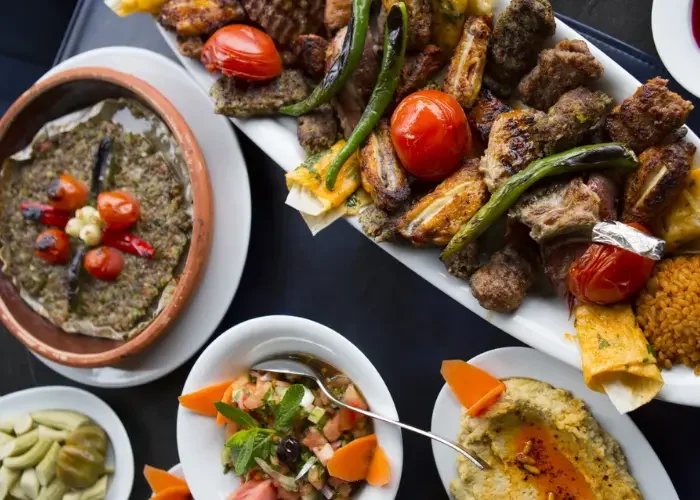
Avoid heavy, overly long meals in the middle of a sacred-site day. Better choices include soup, pide, kofte, kuru fasulye, rice dishes, börek, and tea stops. Save your most elaborate dinner for after the day’s main visits — this keeps the day grounded and gives you more energy for walking. For route-specific ideas, use Istanbul food guides and neighborhood dining pages rather than random nearby options.
 Reflection
 Photography, Reflection, and Experiencing These Places Well
The city offers plenty to capture — and, less often, the chance to be still inside beauty. Take that chance when it comes.
Best photography opportunities
Süleymaniye’s courtyards and terraces offer some of the city’s most beautiful architectural compositions. The Blue Mosque exterior is strongest in the early and late parts of the day when the square breathes a little more. Eyüp is less about grand skyline shots and more about atmosphere: courtyards, cemetery paths, details, and devotional mood.
How to photograph respectfully
- Do not photograph people in prayer up close without clear permission.
- Avoid blocking movement in entrance areas.
- Keep your voice low while setting up shots.
- If interior photography seems disruptive in a smaller mosque, skip it.
When to put the camera away
Some of the most meaningful sacred experiences in Istanbul happen when you stop documenting and simply sit for ten minutes. The city offers plenty to capture; it offers less often the chance to be still inside beauty.
 Smart spending
 When Tours, Passes, and Transfers Actually Make Sense
Helpful planning is not about buying more — it is about removing friction where it genuinely improves your day.
When a guided tour is worth it
A guided tour adds the most value if this is your first visit, your time is limited, or you want real context on Ottoman religious architecture, dynastic patronage, and sacred urban planning. In areas like Sultanahmet and Süleymaniye, a good guide can help you understand what you are seeing in half the time. Consider a selective guided tour in Istanbul rather than multiple generic tours.
When an attractions pass helps
Because many mosques are not ticketed the way museums are, a city pass is most useful when your itinerary also includes major museums, cisterns, palaces, or other paid sites on nearby days. If your trip is mainly prayer, mosque visits, ferries, and neighborhood exploration, do not overbuy — compare your route first with available Istanbul passes.
When airport transfer is worth paying for
If you are arriving late at night, traveling with elders or children, carrying luggage for a tightly planned spiritual trip, or heading toward Friday prayer soon after check-in, a pre-arranged transfer can remove a lot of stress. Otherwise, public transit and taxis may be enough depending on your arrival airport and hotel location.
When to book food experiences
A carefully chosen food experience can add real value, especially in markets, conservative neighborhoods, or across the Bosphorus. The best choices complement the heritage route rather than interrupt it: think local breakfast, neighborhood lunch, or evening tasting walk, not a rushed midday detour. Explore practical options through food tours in Istanbul if culinary context matters to your trip.
 Signature day
 A Thoughtful 1-Day Spiritual Route We Often Recommend
If someone asked us for the most balanced single day focused on the Islamic Heritage of Istanbul, this is what we would suggest.
From imperial symbolism to contemplative depth
- Start early at the Blue Mosque.
- Walk quietly through the surrounding historic square while crowds are still manageable.
- Move to Süleymaniye before lunch.
- Eat a simple local meal nearby in Fatih or Eminönü.
- Head to Eyüp in the afternoon.
- Stay through the softer late-day light and let the district slow you down.
- Return by the Golden Horn or ferry-linked route if practical.
This route works because it moves from imperial symbolism to contemplative depth. It gives you contrast, not repetition.
Getting Around Between Sacred Sites
Most travelers can cover the core sites using tram, metro, buses, and walking. The T1 tram is especially useful for Sultanahmet, Eminönü, and connections toward the old city.
Üsküdar is best reached by ferry if weather allows — this also adds one of the most beautiful transitions in the city.
Eyüp is easiest by bus, taxi, or a carefully planned Golden Horn route.
If you are arriving late, traveling with family, or trying to make a Friday prayer schedule work without stress, a pre-booked airport transfer or a private transfer for one half-day can be worth it. On a tighter budget and staying central, public transport is usually enough.
What to Book Ahead vs Keep Flexible
Worth booking ahead
- One high-quality guided half-day early in the trip — most valuable for first visits, short stays, and real context on Ottoman religious architecture and sacred urban planning.
- An airport transfer if you arrive late at night, travel with elders or children, or need Friday-prayer timing to work without stress.
- A city pass — but only when your mosque-focused days sit alongside major museums, cisterns, palaces, or other paid sites.
- A carefully chosen food experience: local breakfast, neighborhood lunch, or an evening tasting walk that complements the heritage route rather than interrupting it.
Keep flexible
- Mosque visits themselves — many are not ticketed the way museums are, so plan them day by day around prayer times.
- Public transport: tram, metro, buses, ferries, and short walks cover most major sacred sites efficiently.
- Meals: simple, local, well-placed stops beat over-planned reservations in the middle of a sacred-site day.
- Extra tours — one good guided experience can help; too many will fragment the trip.
A Balanced Day, Hour by Hour
Common Mistakes and Insider Tips
Avoid these mistakes
- Trying to see too many mosques in one day — depth beats quantity.
- Ignoring prayer times; this creates frustration and rushed visits.
- Dressing unprepared: carry a scarf, wear modest clothing, and choose shoes you can remove easily.
- Staying only in Sultanahmet — the old city is essential, but not sufficient for understanding Islamic Istanbul.
- Skipping Eyüp — many spiritually motivated travelers later say it was one of their most meaningful stops.
- Treating mosques like museums; these are active sacred spaces.
Insider tips
- Go mid-morning: the first prayer rush has passed, tour groups are below peak, and the light is beautiful for architecture.
- Carry your own lightweight tote for shoes instead of relying on mosque plastic bags.
- At Süleymaniye, approach from different streets in Süleymaniye and Vefa to see the mosque inside its living urban ecosystem.
- At Rüstem Paşa, let the han and market approach be part of the experience — the transition from commerce to contemplation is very Ottoman in spirit.
- Slow down in outer spaces: courtyards, cemeteries, and cypress-shaded paths hold some of the clearest insight into Ottoman spirituality.
- Don’t underestimate hills and walking time — historic Istanbul is physically more demanding than it looks on a map.
Frequently Asked Questions
What is the best way to experience the Islamic Heritage of Istanbul?
Which mosque should I visit first in Istanbul?
Is Eyüp Sultan worth visiting for tourists?
Can non-Muslims enter mosques in Istanbul?
What should women wear when visiting mosques in Istanbul?
What is the best time to visit mosques in Istanbul?
How many days do I need for a religious heritage trip in Istanbul?
Is Friday a good day to visit Istanbul’s mosques?
Are guided tours necessary for mosque visits in Istanbul?
Which neighborhoods are best for Islamic heritage in Istanbul?
Should I include Hagia Sophia in an Islamic heritage itinerary?
What are the most beautiful smaller mosques in Istanbul?
Can I build an Istanbul itinerary mainly around mosques and sacred sites?
Are there family-friendly sacred site routes in Istanbul?
What is the biggest mistake people make when exploring Islamic Istanbul?
How to Let Istanbul’s Sacred Side Stay With You
The Islamic Heritage of Istanbul is not only a collection of famous mosques — it is a way of reading the city through worship, charity, scholarship, memory, and beauty. If there is one mistake worth avoiding, it is treating this heritage as a sightseeing category rather than a living tradition. Come prepared, move respectfully, build in time, and choose fewer places more thoughtfully. You do not need to see every dome in the skyline to understand what matters here.
Plan your things to do in Istanbul