Quick verdict
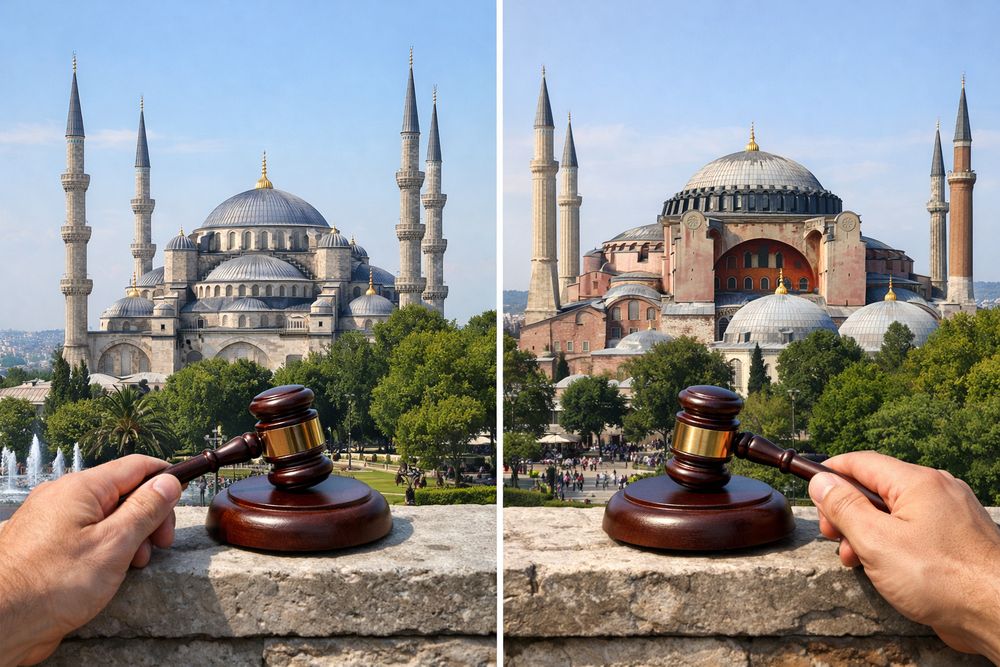
Choose the Blue Mosque if you want a calmer mosque visit, free entry, and an easier stop for a short Sultanahmet itinerary. Choose Hagia Sophia if you care most about historical scale, layered Byzantine and Ottoman history, and a bigger sense of monumentality. If you have 2–4 hours in the area, the best plan is to visit both early in the day.
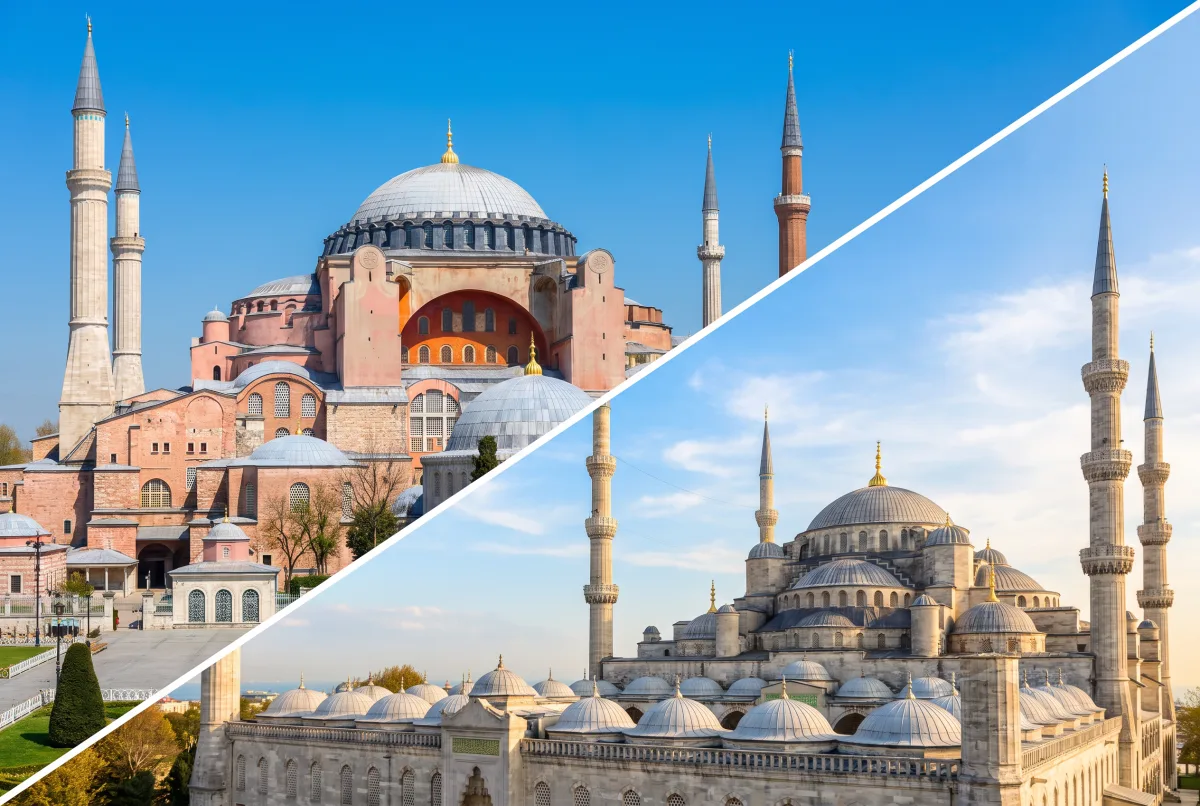
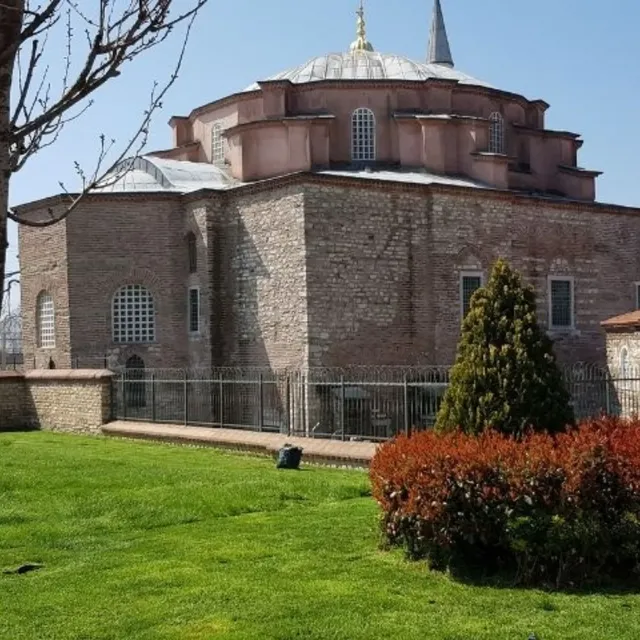
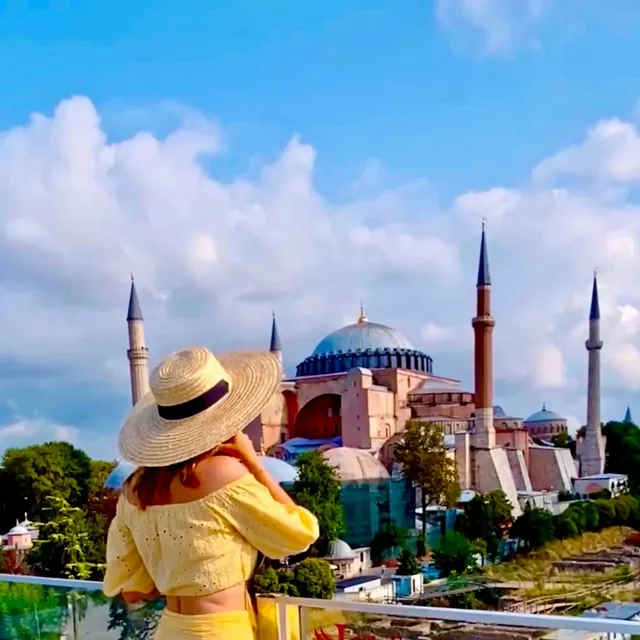
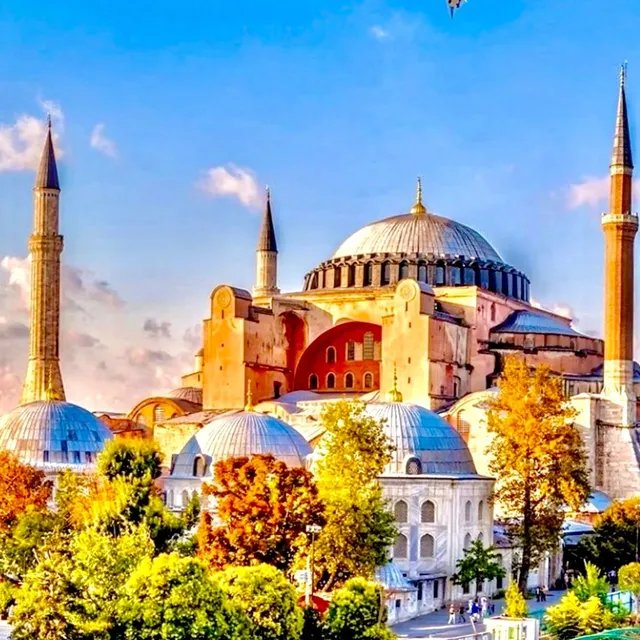
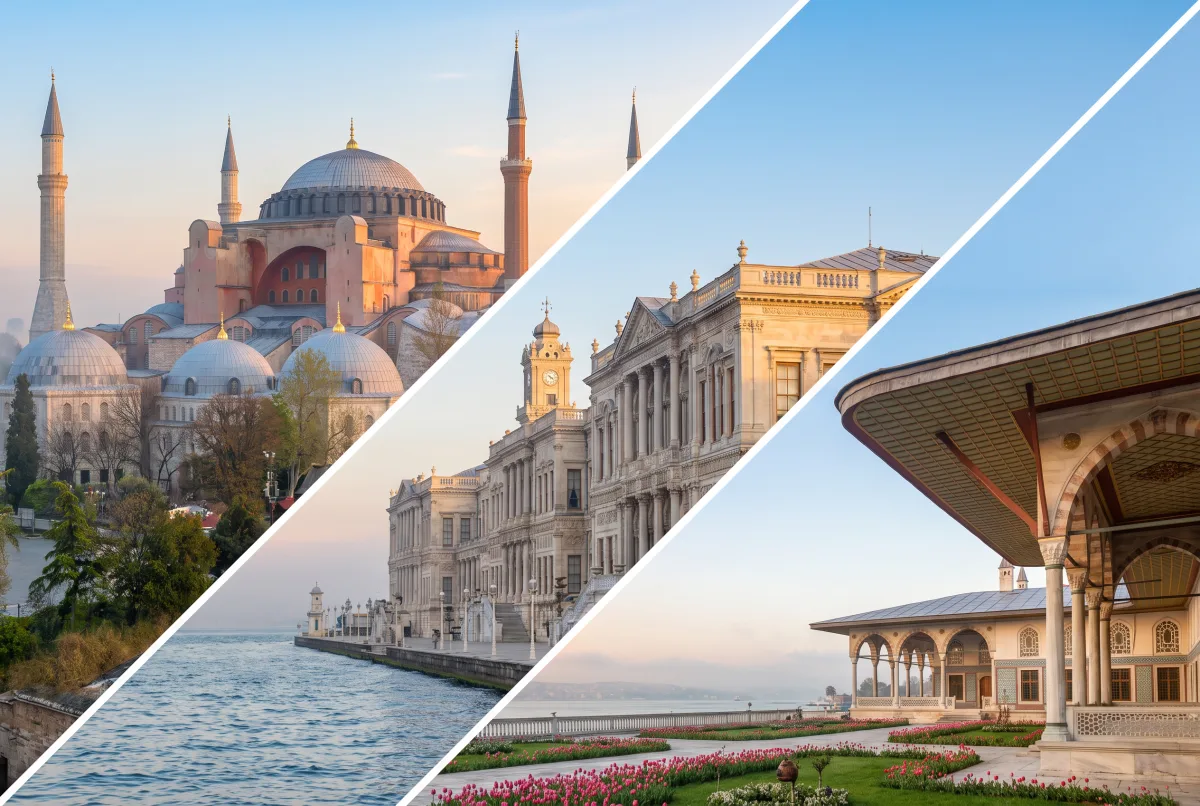
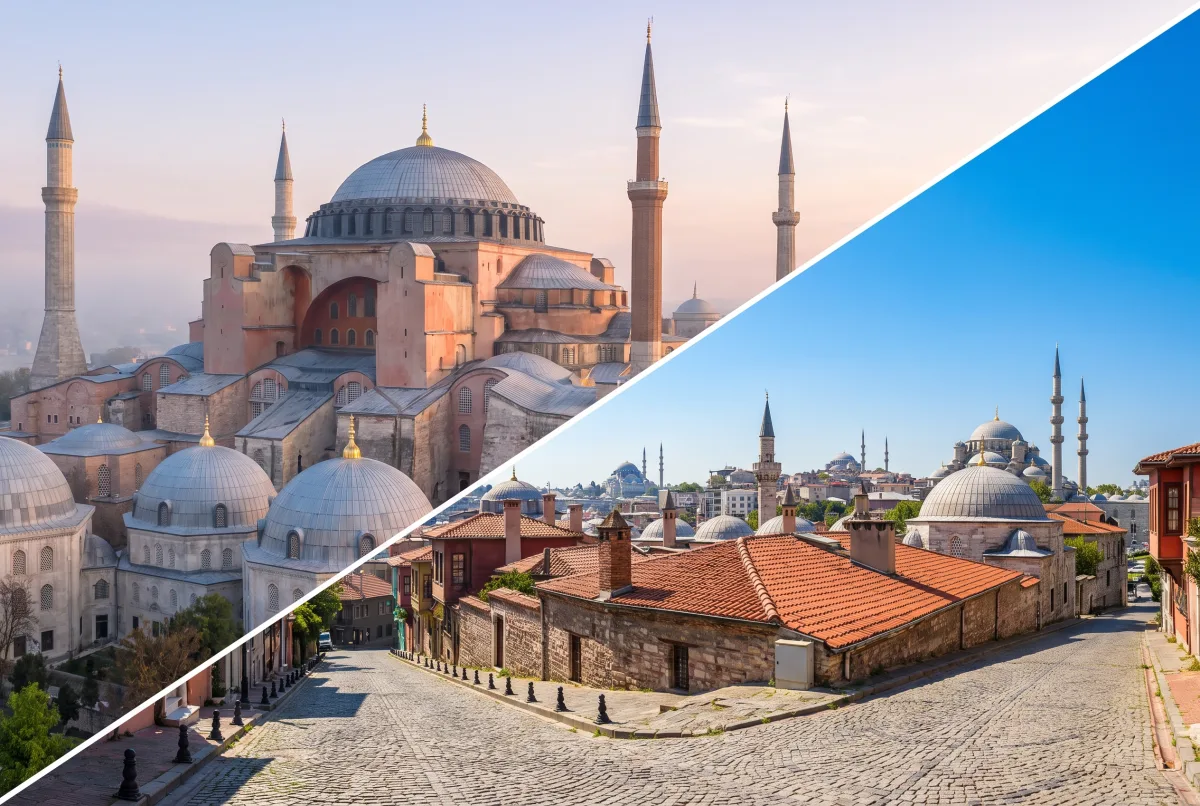
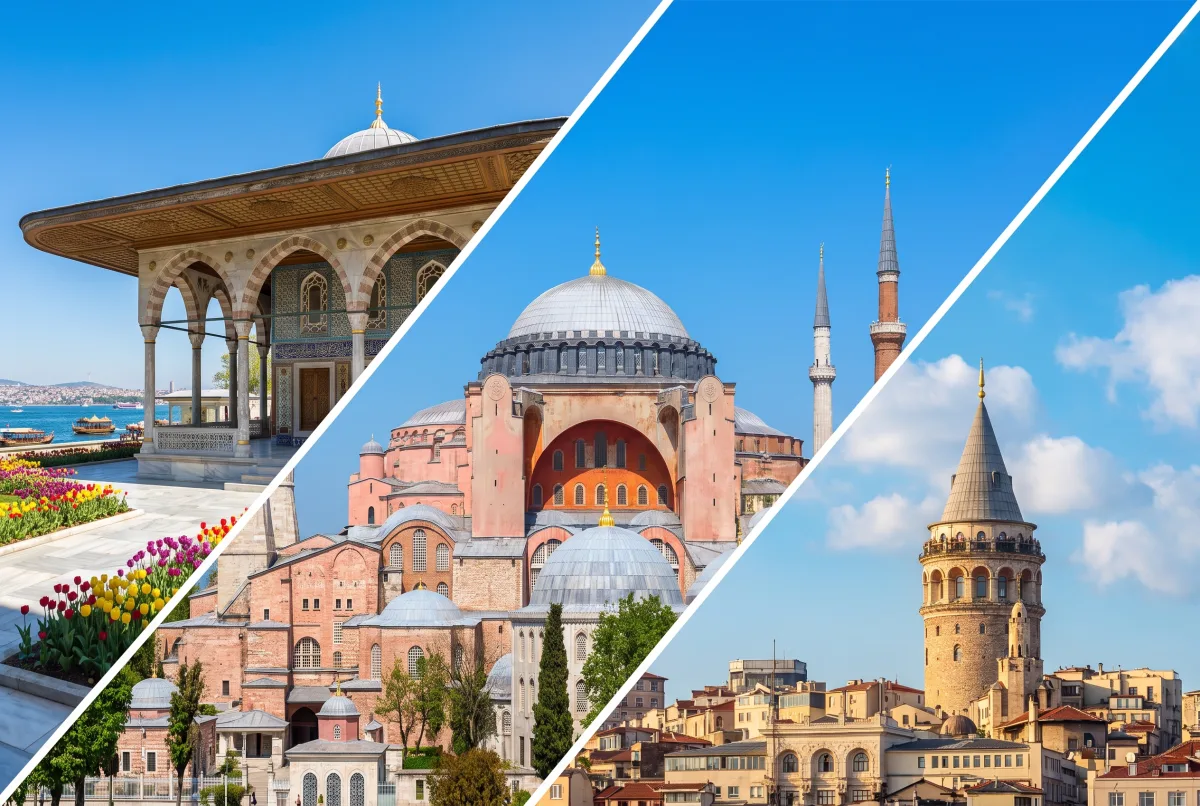
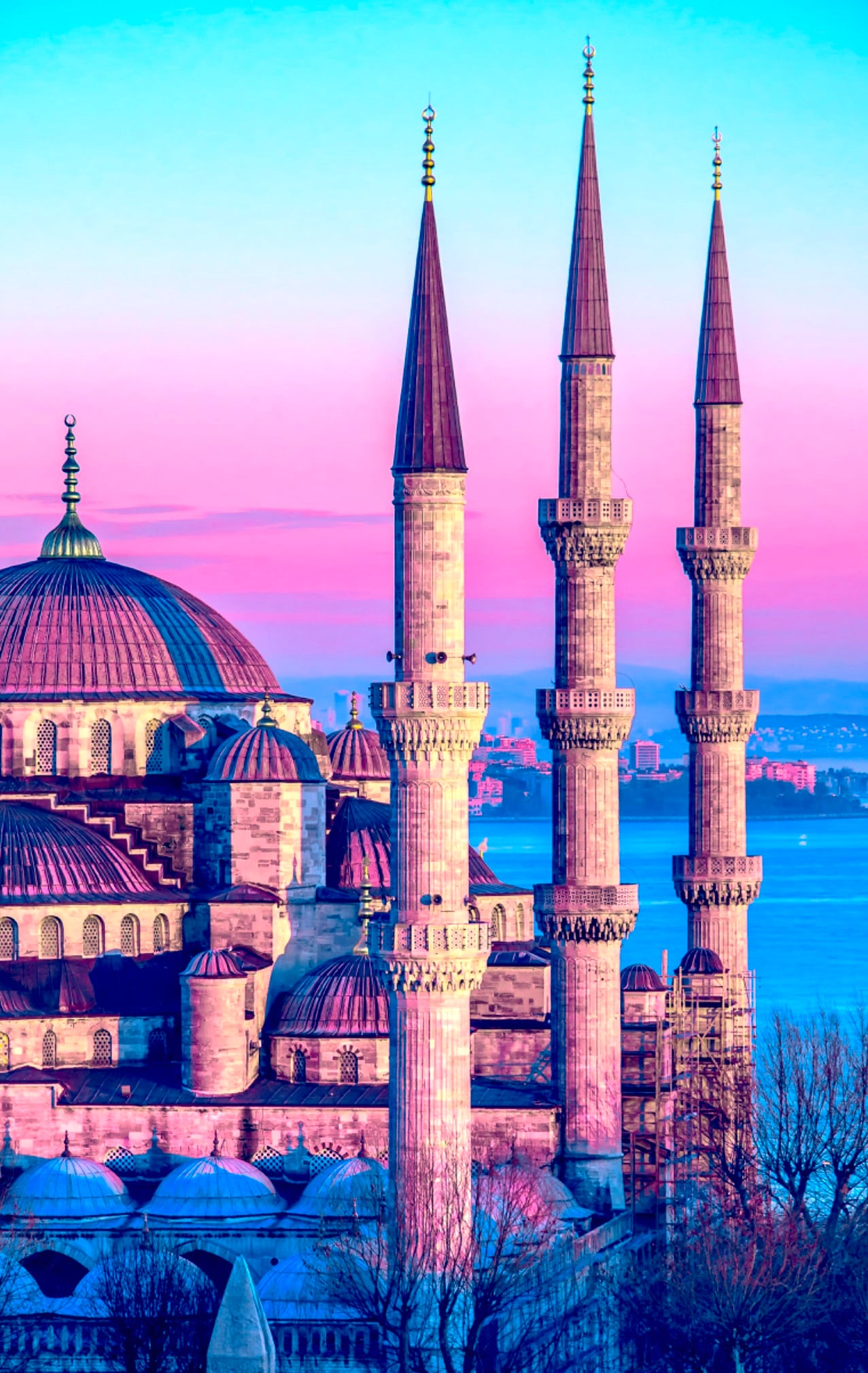
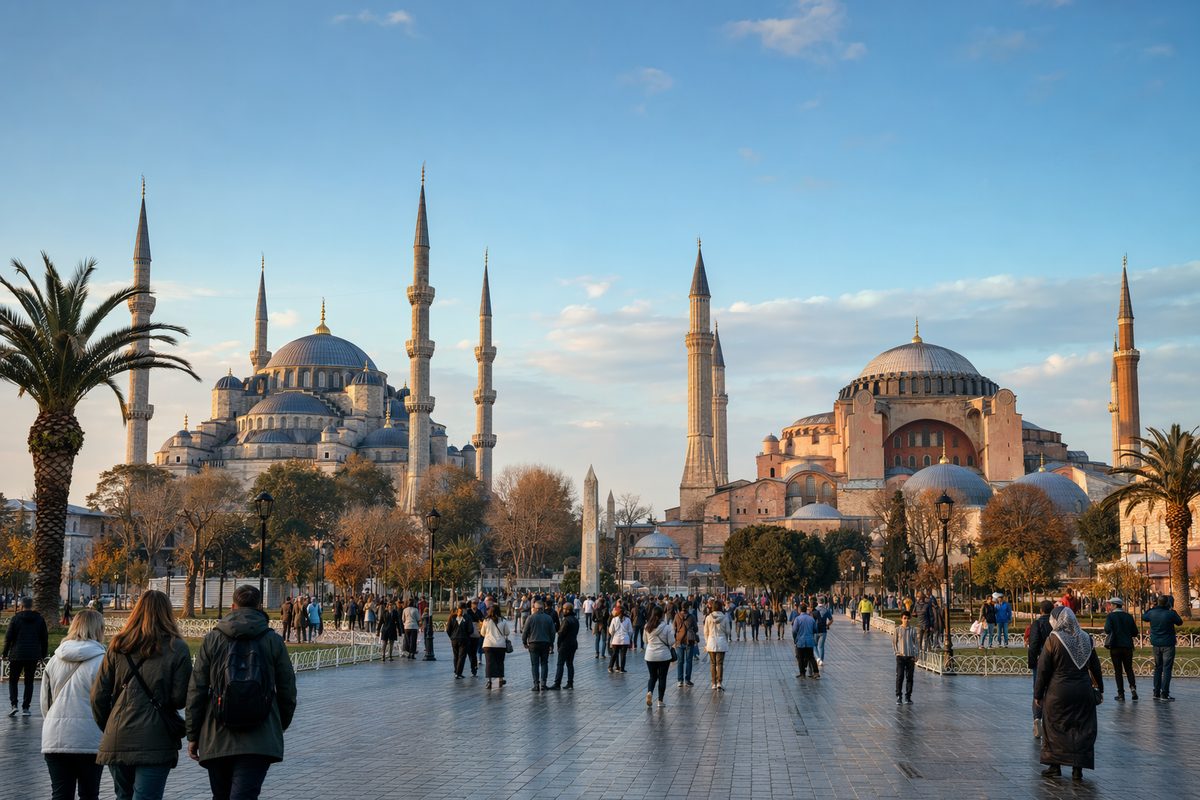
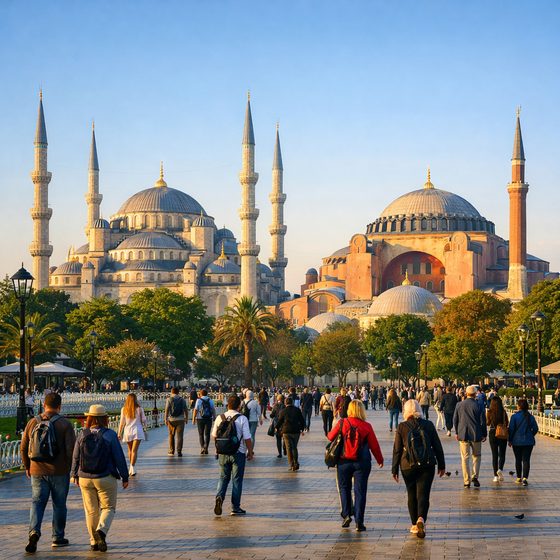
Blue Mosque is the common name for the Sultan Ahmed Mosque, an active Ottoman imperial mosque in Istanbul known for its six minarets and İznik tilework. Hagia Sophia is the common English name for Ayasofya, the monumental former Byzantine cathedral and later Ottoman mosque that now functions as a mosque again. Sultanahmet is Istanbul's historic core where both monuments stand a short walk apart, along with the Hippodrome, Basilica Cistern, and Topkapi Palace.
The practical difference is simple. Blue Mosque usually works better for travelers who want a straightforward mosque visit. Hagia Sophia usually works better for travelers who want the heavier historical experience. Access rules, queues, and prayer-time interruptions can affect both, especially at Hagia Sophia: Hagia Sophia visitor entry rules, visiting route, and any admission fee for non-worshippers; current daily visiting hours and prayer-time closures for Blue Mosque and Hagia Sophia.
Key differences at a glance
| Factor | Blue Mosque (Sultan Ahmed Mosque) | Hagia Sophia (Ayasofya) |
|---|---|---|
| Best for | Calm mosque atmosphere, Ottoman aesthetics, quick visit | World-history focus, major monument, layered architecture |
| Current function | Active mosque | Active mosque |
| Entry cost | Free | Policy can change for non-worshippers: Hagia Sophia visitor entry rules, visiting route, and any admission fee for non-worshippers |
| Typical feel | More devotional, balanced, easier to read | Larger, heavier, busier, more complex |
| Interior highlight | Tilework, windows, prayer hall symmetry | Vast dome, massive scale, visible layers of history |
| Queue risk | Can be busy, but often simpler | Often more variable and more crowded: current queue pattern and peak visiting windows for Blue Mosque and Hagia Sophia |
| Prayer-time impact | Tourist access can pause | Tourist access can pause and route rules may be stricter: current daily visiting hours and prayer-time closures for Blue Mosque and Hagia Sophia |
| Dress code | Modest dress required: current visitor dress-code rules and on-site covering availability at Blue Mosque | Modest dress required: current visitor dress-code rules and on-site covering availability at Hagia Sophia |
| If you only pick one | Better for ease and atmosphere | Better for scale and history |
| Best choice for first-timers | Both, if time allows | Both, if time allows |
Blue Mosque experience
The Blue Mosque is the better choice if you want a classic mosque interior that feels active, ordered, and approachable. It is often the easier visit to understand at a glance.
From outside, the mosque is defined by cascading domes and six minarets. Inside, the experience is more about proportion and detail than raw size. You notice the carpeted floor, filtered light, calligraphy, and tilework before you notice any single dramatic feature. That makes it a strong pick for travelers who want a sacred-space visit rather than a monument-first visit.
Blue Mosque entry is free. Because it is a working mosque, visitors still need to follow modest dress rules and avoid prayer-time disruption: current visitor dress-code rules and on-site covering availability at Blue Mosque; current daily visiting hours and prayer-time closures for Blue Mosque and Hagia Sophia.
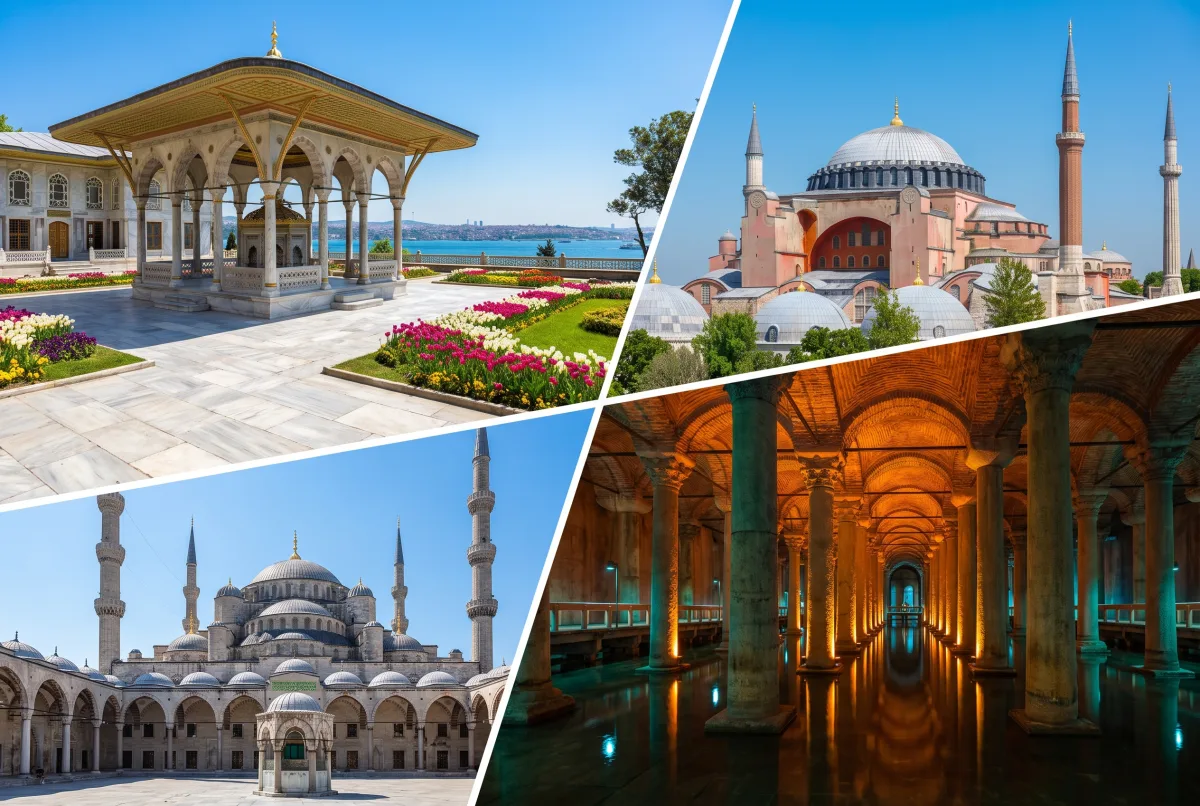
This stop is also easy to combine with nearby landmarks. Afterward, you can walk to the Basilica Cistern, continue across the old raceground at the Hippodrome of Constantinople, or head uphill toward Topkapi Palace.
Hagia Sophia experience
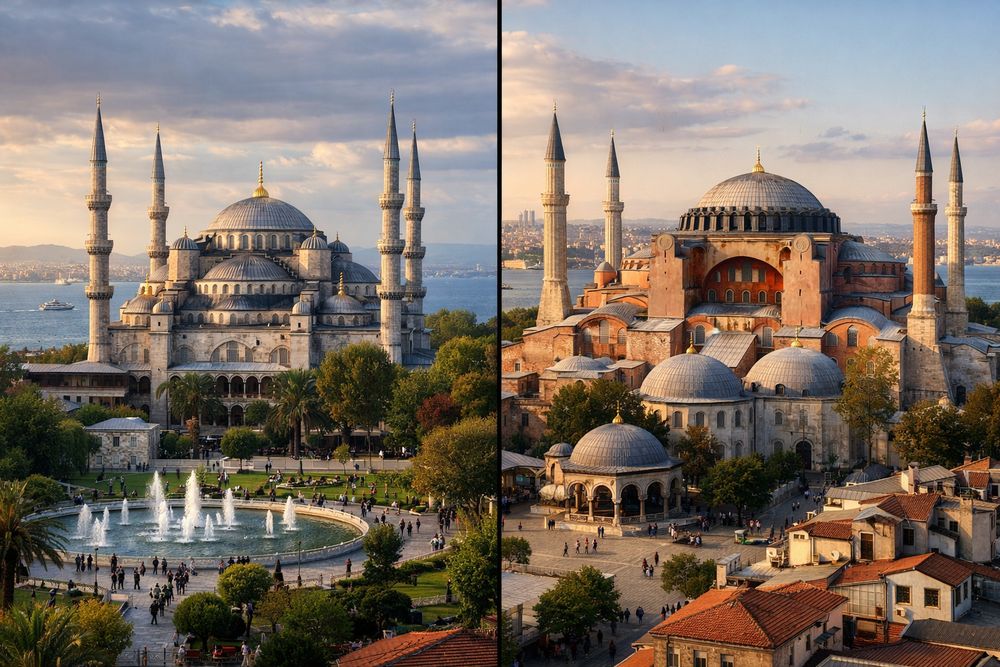
Hagia Sophia is the better choice if you want the strongest sense of Istanbul's long historical timeline in one building. It is usually the more memorable stop for travelers focused on empires, religion, and architectural scale.
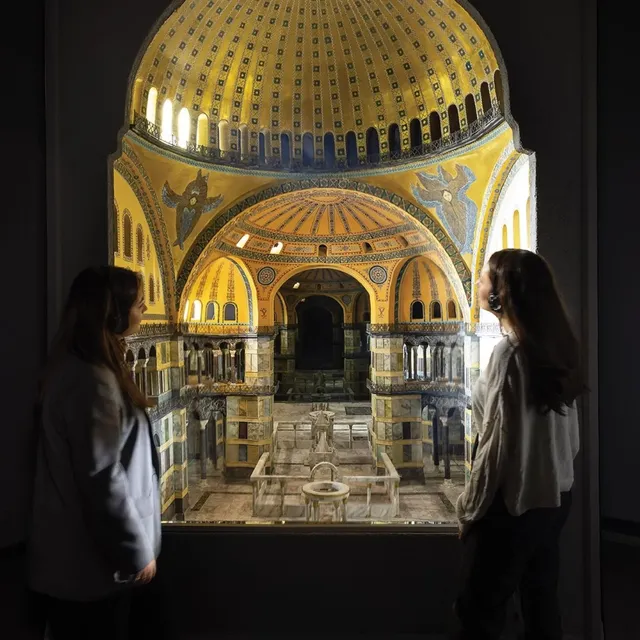
The space feels larger, older, and less uniform than the Blue Mosque. Instead of one clear decorative rhythm, you get a building shaped by many phases of use. That layered effect is the point. Some visitors find Hagia Sophia more powerful than beautiful; others find it harder to absorb because of crowds or access limits.
Because policies have changed in recent years, treat practical information here as provisional until publish time. Visitor entry route, viewing areas, restricted zones, and any fee for non-worshippers should be checked before you go: current visitor entrance, upper-gallery or viewing-area access, and any restricted zones at Hagia Sophia; Hagia Sophia visitor entry rules, visiting route, and any admission fee for non-worshippers. Prayer-time interruptions also matter: current daily visiting hours and prayer-time closures for Blue Mosque and Hagia Sophia. Current prices, opening hours and skip-the-line options are in our Hagia Sophia tickets guide.
Byzantine Empire is the medieval Roman state centered on Constantinople, and Hagia Sophia was its principal ceremonial church. Ottoman Empire is the empire that conquered Constantinople in 1453 and later used Hagia Sophia as a mosque. If you want more historical context after your visit, continue to Topkapi Palace or the Istanbul Archaeological Museums.
Best choice by travel style
If your priority is ease, Blue Mosque is usually the better pick. If your priority is historical weight, Hagia Sophia is usually the better pick. For most first-time visitors, doing both is still the smartest use of time.
Choose Blue Mosque if you want:
- a calmer devotional atmosphere
- free entry
- a shorter, simpler stop
- a more legible mosque interior
- a lower-stress visit for tight schedules
Choose Hagia Sophia if you want:
- the stronger headline monument
- Byzantine and Ottoman history in one place
- a bigger sense of scale
- a more complex architectural story
- the site most likely to feel once-in-a-lifetime
Choose both if:
- this is your first time in Istanbul
- you already plan to be in Sultanahmet
- you have a half day for the area
- you want to understand how the two monuments relate to each other
Quick chooser:
- Only 45–60 minutes: Blue Mosque
- Only one monument, history-first: Hagia Sophia
- Only one monument, atmosphere-first: Blue Mosque
- First trip to Istanbul: both
- Budget-sensitive stop: Blue Mosque, then exterior views of Hagia Sophia if needed
- Traveling with limited patience: Blue Mosque may be simpler, depending on queue conditions: current queue pattern and peak visiting windows for Blue Mosque and Hagia Sophia
How to do both
Seeing both in one outing is practical because they sit in the same part of Sultanahmet. The main variables are prayer times, current Hagia Sophia visitor policy, and queues.
Best order
Start with the Blue Mosque, then continue to Hagia Sophia. That order usually works well because the Blue Mosque is free, close to the square, and easier as a first mosque visit.
If current Hagia Sophia access rules make an earlier arrival smarter, reverse the order: current daily visiting hours and prayer-time closures for Blue Mosque and Hagia Sophia. Either way, check the latest rules the day before.
This pairing also works well inside a larger Sultanahmet route, so there is a clear internal-link opportunity to a full Sultanahmet itinerary.
Dress code and prayer times
Both sites are active mosques, so modest dress is expected. Shoulders and knees should be covered. Women may need a headscarf, and on-site covering availability should be confirmed before your visit: current visitor dress-code rules and on-site covering availability at Blue Mosque; current visitor dress-code rules and on-site covering availability at Hagia Sophia.
Tourist access can pause around prayers, so morning visits are usually easier. Friday midday can be especially inconvenient for sightseeing access: Friday access restrictions and tourist closure windows at Blue Mosque and Hagia Sophia.
This section also supports internal links to a mosque dress-code guide and an Istanbul transport or tram guide for reaching Sultanahmet efficiently.
Nearby stops worth adding
You can turn this into a strong half-day route.
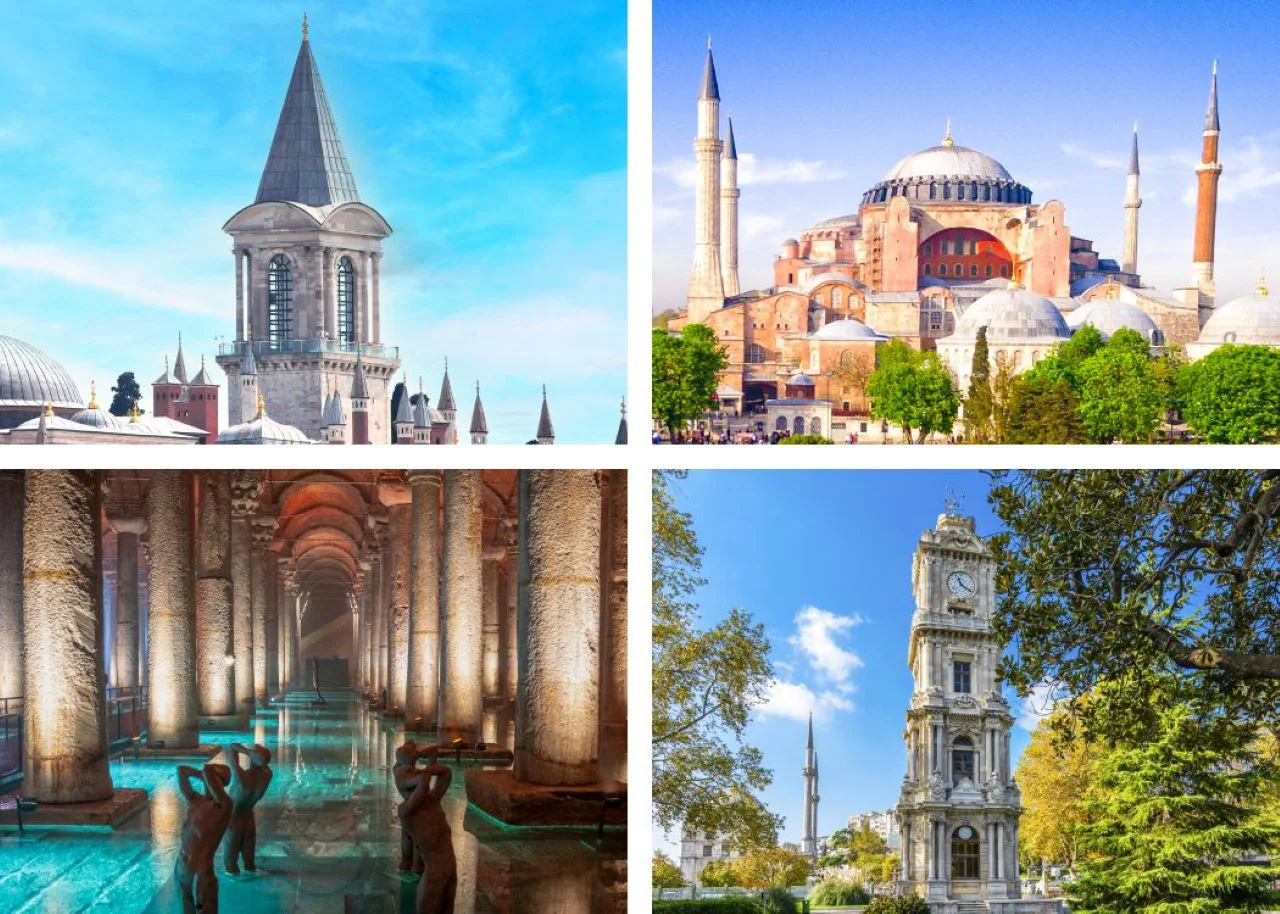
Begin in Sultanahmet. Visit the Blue Mosque. Cross to Hagia Sophia. Then head underground to the Basilica Cistern. After that, walk the Hippodrome of Constantinople, continue to Topkapi Palace, or add the Istanbul Archaeological Museums if you want a fuller history-focused day.
Later, if you want a water-based contrast to the old-city monuments, you can book a Bosphorus cruise.
Basilica Cistern is a Byzantine underground reservoir supported by columns and known for its low light and atmospheric walkway. Topkapi Palace is the former palace and administrative center of the Ottoman sultans. Istanbul Archaeological Museums is a museum complex covering ancient Anatolian, Greek, Roman, and Near Eastern history.
Final verdict
If you can visit both, do both. Blue Mosque gives you the clearer mosque experience; Hagia Sophia gives you the stronger monument experience.
If you can visit only one, use this decision matrix:
| Your priority | Best choice |
|---|---|
| Calm atmosphere and easy logistics | Blue Mosque |
| Maximum historical impact | Hagia Sophia |
| Free stop | Blue Mosque |
| First visit to Sultanahmet with enough time | Both |
| Shortest, simplest visit | Blue Mosque |
| Most iconic single monument | Hagia Sophia |
The best practical plan is simple: start early, dress respectfully, and check current access rules before you go: current daily visiting hours and prayer-time closures for Blue Mosque and Hagia Sophia; Hagia Sophia visitor entry rules, visiting route, and any admission fee for non-worshippers.