
In practical terms, class hours form the basis of the credit structure in higher education. Each weekly lecture hour is counted as one credit, and courses are assigned a set number of credit hours accordingly. Because many universities follow the same broad framework, students can plan their studies more clearly and track their progress toward graduation with greater confidence.
According to the Council of Higher Education in Turkey, bachelor’s degrees require 240 ECTS in total. Students who want to continue their studies need additional ECTS credits for graduate education: 120 ECTS for a master’s degree and 240 ECTS for a doctoral degree.
Highlights

- A higher governmental body oversees higher education.
- The European Credit Transfer and Accumulation System creates uniformity between schools.
- Credits are based on class hours.
- Students generally complete 30 credits per term for a bachelor’s degree.
- Student-centered approaches are central to the system.
How the credit system works in Turkey
When the Council of Higher Education in Turkey took over the administration of universities, the autonomy of universities turned into a pseudo-autonomy. One example of this practice is the current credit structure used by universities. Today, universities in Turkey are part of the ECTS model for greater uniformity. ECTS is a credit system that puts students at the center and awards credits according to the time they spend on lectures and academic work.
The main advantage of this approach is that ECTS is recognized in several countries. This makes international education easier than before, especially for students who may continue their studies in another country or need their coursework evaluated by another institution. Since universities in Turkey adopted the ECTS framework later than some European institutions, they were encouraged to adapt their teaching methods to an internationally recognized standard of equivalency.
For students, this means degree progress is measured through a defined number of credits. A bachelor’s degree requires at least 240 ECTS. A master’s degree requires 120 ECTS, while a doctoral degree requires 240 ECTS. These figures also show that a student generally needs 30 credits per term to graduate from a four-year bachelor’s program on time.
Why ECTS matters for international students
The use of ECTS can make student mobility more possible because universities can compare academic workloads more easily. For international students, this reduces some of the small but important differences between institutions, whether they are studying within Turkey or moving between countries. A more transparent system also helps students better understand what is expected of them during each semester.
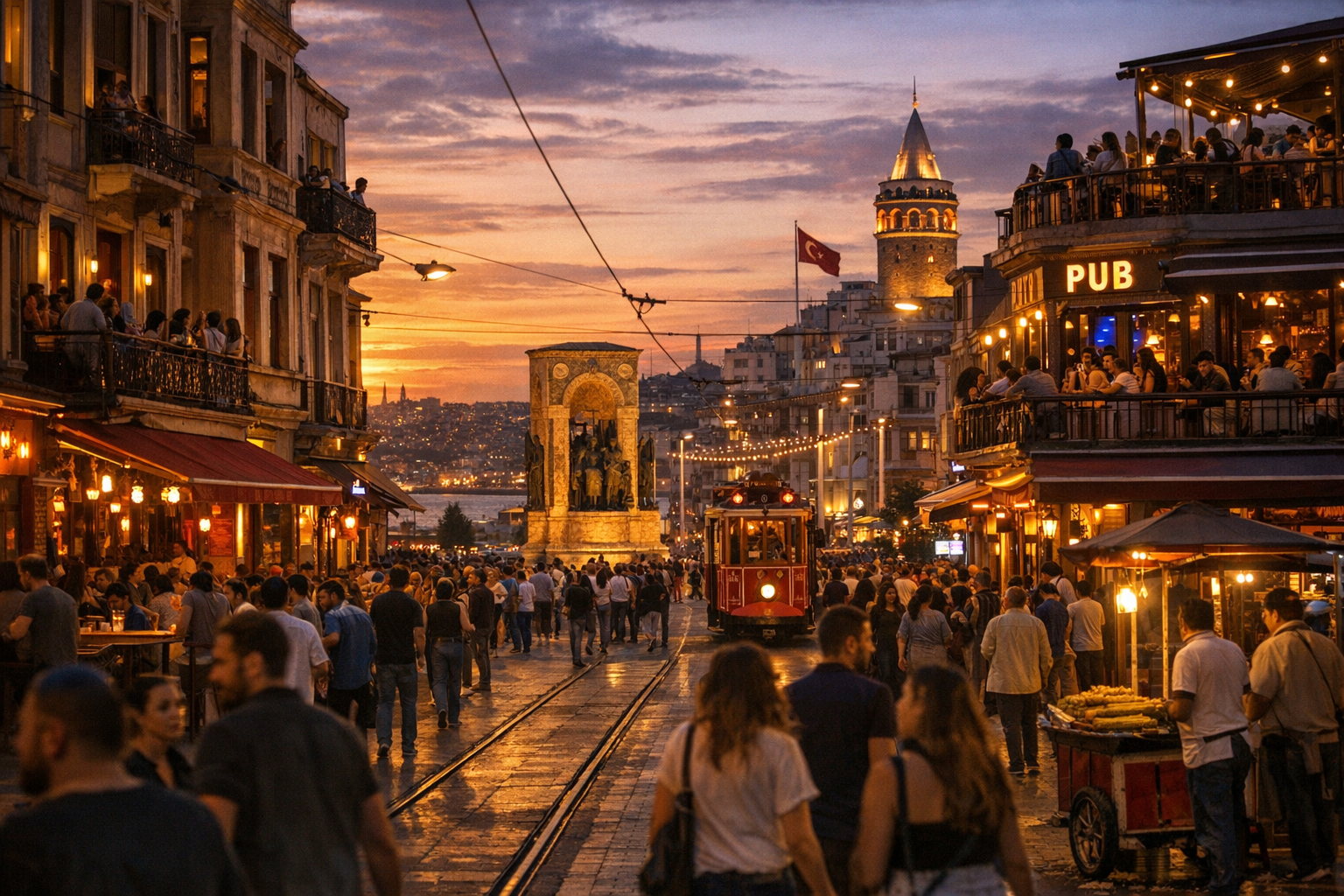
This can be especially helpful for those preparing for university life in a large and active city such as Istanbul. Outside the classroom, students often spend their free time getting to know major sites like the Grand Bazaar or meeting friends around Taksim Square, while still keeping track of credit loads, coursework, and academic deadlines.
ECTS is widely used across Europe, and students who want a basic overview of the framework can also review the background of the system on Wikipedia. For official information about higher education governance in Turkey, students should consult relevant Turkish public institutions and university resources, as policies and implementation details may vary by school.
What students should keep in mind
Although the broad system is standardized, each university may apply course structures, grading details, and departmental requirements in its own way. That means students should always check their university’s current regulations, course catalogs, and graduation conditions. The credit system provides a common framework, but the exact path to graduation still depends on the institution and the program.
For prospective students, the key takeaway is simple: the Turkish higher education system is designed to be compatible with international standards, and ECTS plays a major role in that compatibility. By understanding how credits are counted and how many are needed for each level of study, students can make more informed academic decisions from the start.
Credit system FAQ
How many ECTS credits are needed for a bachelor’s degree in Turkey?
According to the Council of Higher Education in Turkey, a bachelor’s degree requires 240 ECTS in total. This is typically spread across four years of study, which means students usually complete around 30 credits per term.
How many credits are required for master’s and doctoral degrees?
Students who continue their education beyond a bachelor’s degree need 120 ECTS for a master’s degree and 240 ECTS for a doctoral degree. Exact program structures can differ between universities, so checking the institution’s own requirements is important.
What is the main benefit of the ECTS model?
The main benefit of ECTS is comparability. Because it is used in several countries, it makes it easier for students and institutions to understand academic workload, recognize study periods, and support mobility between universities.
Are credits in Turkey based on class hours?
Yes, class hours are the basis of the credit structure described here. Each weekly lecture hour is worth one credit, and courses are assigned a set amount of credit hours within the university’s system.
Is the system the same at every university?
Not completely. Most Turkish universities have adapted ECTS concepts to their own credit and grading systems. The framework is shared, but course details, grading practices, and departmental expectations may vary from one university to another.