A little history makes the layout easier to understand. The market grew from two stone bedesten (beh-des-TEN, lockable vaults) built under Mehmed the Conqueror in the 1450s to store valuable goods. Trades clustered into their own streets under the Ottoman guild system. Gold merchants occupied one lane, leather traders another, and carpet sellers their own halls. That logic still survives today. Think of the Grand Bazaar as a map rather than a maze.
Grand Bazaar at a Glance
| Category | Details |
|---|---|
| Hours | Generally 9:00 AM to 7:00 PM, Monday through Saturday. Closed on Sundays. |
| Entry | Free |
| Size | More than 60 covered streets, over 4,000 shops, and 18 gates |
| Best Time to Visit | Weekday mornings between 9:00 AM and 11:00 AM |
| Payment | Cash often secures the best price, although cards are widely accepted |
| Bargaining | Expected for many items, especially crafts, carpets, jewelry, and lamps |
How the Bazaar Is Laid Out (and How Not to Get Lost)
The main artery of the market is Kalpakcilar Caddesi, the broad jewelry street that stretches from gate to gate and sparkles with gold displays. Branching off from it are lanes that still loosely follow their historical trades: Kuyumcular for jewelers, Yaglikcilar for textiles and scarves, Takkeciler for ceramics and lamps, and the peaceful Cevahir Bedesten at the center for antiques and premium-quality pieces.
You will get lost briefly, and that is perfectly normal. The Grand Bazaar has 18 named gates, making it easy to find your bearings again. Remember which gate you entered through, particularly the popular Nuruosmaniye Gate, and you can always navigate back.
It also helps to understand the scale. Although the number of shops sounds overwhelming, the entire market fits within a relatively compact footprint. You can walk from one side to the other in around fifteen minutes. The two domed bedesten halls form the historic core, while later additions expanded outward around them.
Before visiting, check the official Grand Bazaar website for current opening hours and holiday closures. The market is located within easy walking distance of many of the attractions covered in our Sultanahmet area guide.
What to Buy in the Grand Bazaar
Some products here offer excellent value and authentic craftsmanship. Others are mass-produced souvenirs marketed as treasures. Knowing the difference can save you money and help you take home something genuinely special.
1. Hand-Knotted Carpets and Kilims
This is the Grand Bazaar’s signature craft and where the largest purchases are made. It is also where many visitors make costly mistakes.
A handmade wool kilim (kee-LEEM, flat-woven rug) can vary significantly in price depending on age, quality, size, and craftsmanship. Premium silk pieces can cost many thousands of dollars. Reputable dealers, particularly around the historic Bedesten sections, will gladly explain knot counts, materials, and weaving techniques without pressuring you.
Insider tip: Ask to see the carpet in natural daylight near one of the gates. Authentic vegetable dyes reveal subtle color variations in sunlight, and trustworthy dealers are usually proud to demonstrate this.
Avoid shops that pressure you aggressively, prevent photography, or discourage close inspection of the rug’s reverse side.
2. Turkish Ceramics and Iznik-Style Tiles
Hand-painted bowls, plates, and decorative tiles in shades of cobalt blue, turquoise, and coral remain among Istanbul’s most beautiful souvenirs.
Authentic handmade ceramics usually show slight variations in brushwork and glazing. Many quality pieces feature an artist’s signature on the base. Machine-produced alternatives are cheaper and more uniform in appearance.
Takkeciler offers one of the best concentrations of ceramic shops in the bazaar. Ask whether an item is el yapimi (handmade) or factory-produced. Reputable sellers will answer honestly because both categories have their own price points and buyers.
3. Lamps and Lanterns
Mosaic lamps are among the most photographed items in the Grand Bazaar. Their colorful glass patterns create the warm glow that visitors remember long after leaving Istanbul.
When shopping for lamps, inspect the craftsmanship carefully. Quality pieces use properly soldered metal frames and hand-cut glass mosaics. Cheaper versions often use plastic components or glued decorations that lack the depth and character of authentic work.
Also confirm whether bulbs, wiring, and adapters are included, particularly if you plan to use the lamp outside Türkiye.
4. Gold, Silver, and Evil-Eye Jewelry
The Grand Bazaar remains one of Istanbul’s best-known destinations for jewelry shopping. Gold is generally priced according to weight, current market rates, and a workmanship fee.
Always ask for both the gram weight and purity level in writing. Established jewelers on Kalpakcilar Caddesi typically provide certificates and detailed receipts.
For smaller gifts, silver jewelry and the iconic nazar boncugu (evil-eye bead) are popular choices. Quality sterling silver pieces should carry a visible stamp indicating purity.
5. Turkish Delight, Spices, and Tea
You will find lokum (Turkish delight), saffron, herbal teas, and spice blends throughout the Grand Bazaar. While the selection can be tempting, prices are often higher than those at the nearby Spice Bazaar.
Always taste before buying. Reputable vendors freely offer samples because they know the quality will sell itself. Fresh pistachio Turkish delight should be soft and fragrant, not dry or overly chewy.
Be particularly cautious with saffron. Genuine saffron is one of the world’s most expensive spices and is sold in small quantities. If a large bag is being offered at a suspiciously low price, it is probably not authentic saffron.
For edible souvenirs specifically, I usually recommend heading downhill toward Eminonu. Our Spice Bazaar and Eminonu guide explains why many locals prefer shopping there for food products.
6. Leather Goods and Textiles
Leather jackets, handbags, belts, and wallets are common throughout the sections near Mahmutpasa Gate. Quality varies enormously, so inspect materials carefully before making a purchase.
Good leather should feel supple, smell natural, and feature clean stitching and well-finished lining. Do not rely solely on labels or verbal claims.
Among textiles, one of the best-value purchases is the traditional pestemal (pesh-teh-MAHL), a flat-woven Turkish hammam towel. Lightweight, practical, and easy to pack, it makes an excellent souvenir or gift.
One honest warning: leather sellers can sometimes be among the most persistent merchants in the bazaar. If a deal feels rushed or pressured, move on. There are hundreds of alternatives.
7. Antiques, Calligraphy, and Curiosities
The quieter corners of the historic Bedesten house some of the Grand Bazaar’s most fascinating treasures. Here you will find Ottoman coins, antique maps, calligraphy panels, silver objects, miniature paintings, and collectible artifacts.
These shops cater to serious collectors and knowledgeable buyers. Prices can be substantial, but so is the expertise.
If purchasing an authentic antique, ask about export regulations. Türkiye restricts the export of certain historical artifacts and antiquities, and reputable dealers should be able to explain any documentation requirements.
What to Skip
The Grand Bazaar offers many wonderful products, but not everything is worth your money. A few categories are better purchased elsewhere or avoided entirely.
- Mass-produced “I Love Istanbul” souvenirs that can often be found cheaper outside the bazaar.
- Luxury-brand watches and handbags offered at suspiciously low prices. These are not authentic designer products.
- Cheap saffron sold in large bags. Genuine saffron is expensive and sold in small quantities.
- Food products as your primary shopping focus. The Spice Bazaar generally offers better selection and pricing.
- Shops recommended aggressively by touts. These often carry higher markups.
None of this means the Grand Bazaar is a tourist trap. Quite the opposite. It remains one of the world’s great shopping destinations. It simply rewards visitors who can distinguish authentic craftsmanship from mass-produced souvenirs.
How to Bargain Politely and Effectively
Bargaining in the Grand Bazaar is not a confrontation. It is a social ritual, often accompanied by tea, conversation, and hospitality. Your attitude matters just as much as your negotiating strategy.
If a shopkeeper offers tea, accepting it does not commit you to making a purchase. It is simply part of the shopping culture.
Here is the approach I use:
- Browse first and stay calm. Avoid showing overwhelming excitement about a specific item.
- Ask the price and pause. Give the seller’s opening offer time to settle before responding.
- Make a respectful counteroffer. Negotiations often begin below the asking price and gradually move toward a middle ground.
- Bundle purchases. Buying multiple items often creates opportunities for additional discounts.
- Use cash when possible. Paying in Turkish lira may result in a better final price.
- Be willing to walk away. This remains one of the most effective negotiation tools available.
There are also a few important etiquette rules.
- Do not negotiate aggressively if you have no intention of buying.
- Once a final price is accepted, avoid reopening negotiations.
- Remain friendly throughout the discussion, regardless of the outcome.
One useful phrase is son fiyat ne? (sohn fee-YAHT neh), meaning “What is your final price?” Using it politely signals that you understand local bargaining customs.
It is also helpful to read the seller’s behavior. If a merchant dramatically lowers the price before you respond, the original markup was likely very high. If they move only slightly, they may be dealing in products with tighter profit margins or genuinely higher-quality goods.
Keep in mind that not everything is negotiable. Food products, packaged sweets, beverages, and items with clearly printed prices are often sold at fixed rates.
Fair Price Reference Guide
| Item | Typical Price Range | Shopping Tip |
|---|---|---|
| Small Wool Kilim | Varies significantly by size and quality | Inspect the reverse side and buy from reputable dealers. |
| Hand-Painted Ceramic Bowl | Mid-range handcrafted souvenir | Look for an artist signature underneath. |
| Mosaic Glass Lamp | Depends on size and craftsmanship | Check for soldered metalwork rather than glued parts. |
| Silver Evil-Eye Pendant | Affordable souvenir category | Look for sterling silver markings. |
| Turkish Delight | Varies by ingredients and quality | Taste before purchasing. |
| Leather Bag | Depends heavily on leather quality | Inspect stitching and lining carefully. |
| Pestemal | Generally affordable | Lightweight, practical, and easy to pack. |
Prices in the Grand Bazaar fluctuate regularly due to exchange rates, material costs, and market conditions. Treat any quoted figure as a guideline rather than a fixed benchmark.
Bargaining Cheat Sheet
- The first price is rarely the final price.
- Paying in Turkish lira may improve your negotiating position.
- Bundle items whenever possible.
- Walking away politely remains one of the strongest bargaining tools.
- Accepting tea is hospitality, not an obligation to buy.
Practical Tips for Your Visit
The best time to visit the Grand Bazaar is on a weekday morning between 9:00 AM and 11:00 AM, before tour groups fill the main lanes. The atmosphere is calmer, shopkeepers have more time to talk, and browsing becomes much more enjoyable.
Wear comfortable shoes, as the market covers a large area and you will spend more time walking than you expect. Keep bags zipped and close to your body in crowded sections, and set a rough budget before entering. The lamps, carpets, ceramics, and jewelry can be surprisingly tempting.
Several traditional tea houses and small cafes inside the bazaar provide excellent places to rest and people-watch between shopping sessions.
Foreign visitors may be eligible for a VAT (KDV) refund on qualifying purchases from participating stores displaying a Tax Free sign. Ask for the necessary paperwork when making your purchase and keep all receipts for airport processing. Current regulations can change, so check the latest requirements before traveling.
Getting here is easy via the T1 Tram, which stops at Beyazit-Kapalicarsi directly beside one of the market entrances. For route details, see our Istanbul public transport guide.
If you prefer a more structured experience, guided market walks and cultural experiences are available through the Istanbul Tourist Pass®, providing additional context about the history, architecture, and traditions of the bazaar.
You can also combine your visit with nearby attractions. Our Istanbul street food guide highlights excellent local food stops nearby, while the Hagia Sophia visitor guide covers one of the city’s most famous landmarks just a short walk away.
Where to Refuel Inside and Nearby
- Sark Kahvesi for traditional Turkish coffee and a classic Grand Bazaar atmosphere.
- Fes Cafe for tea, sweets, and a quieter place to take a break.
- Nuruosmaniye Gate area for kebabs, doner, and casual local restaurants.
- Cemberlitas, just a few minutes away, where visitors can combine shopping with a traditional hammam experience. See our best hammams guide for recommendations.
Istanbul Tourist Pass®
If you plan to visit several major attractions during your stay, the Istanbul Tourist Pass® can help simplify your trip. Depending on the package, it may include guided tours, attraction entry, cultural experiences, and additional benefits that complement a day exploring the Grand Bazaar and Istanbul’s historic center.
Frequently Asked Questions
What are the Grand Bazaar opening hours?
The Grand Bazaar is generally open from 9:00 AM to 7:00 PM, Monday through Saturday, and is closed on Sundays. Hours may vary during religious holidays and special occasions, so it is always worth checking before your visit.
Is bargaining expected at the Grand Bazaar?
Yes. Bargaining is part of the shopping culture for many items, especially carpets, lamps, jewelry, textiles, and decorative crafts. Approach negotiations politely and with a sense of humor for the best experience.
What are the best things to buy at the Grand Bazaar?
Hand-knotted carpets, kilims, Turkish ceramics, mosaic lamps, silver jewelry, textiles, and traditional crafts remain among the most popular and authentic purchases.
Can I pay by card, or should I bring cash?
Most shops accept credit cards, but cash in Turkish lira often provides greater flexibility when negotiating. Carrying some cash is recommended even if you plan to pay electronically.
How can I avoid overpaying?
Compare prices at multiple shops, inspect quality carefully, avoid high-pressure sales tactics, and be prepared to walk away if something does not feel right. Knowledge and patience are your best tools.
How much time should I spend at the Grand Bazaar?
Most visitors enjoy spending two to three hours exploring the market. Shoppers interested in carpets, antiques, or serious collecting may wish to allow half a day or more.
How do I get to the Grand Bazaar?
The easiest option is the T1 Tram to Beyazit-Kapalicarsi. The market is also within walking distance of Sultanahmet, Cemberlitas, and several major historic attractions.
Useful Turkish for the Bazaar
| Turkish | Pronunciation | Meaning |
|---|---|---|
| ne kadar? | neh kah-DAR | How much? |
| son fiyat ne? | sohn fee-YAHT neh | What is your final price? |
| cok pahali | chok pah-hah-LUH | Too expensive |
| indirim | in-dee-REEM | Discount |
| tesekkurler | teh-sheh-kur-LEHR | Thank you |
The Grand Bazaar Istanbul remains one of the world’s most remarkable shopping destinations. Beyond the thousands of shops, it offers a living connection to centuries of trade, craftsmanship, and daily life in Istanbul.
Take your time, explore beyond the busiest lanes, enjoy a cup of Turkish tea, and treat bargaining as part of the cultural experience. Whether you leave with a hand-painted ceramic bowl, a handmade kilim, or simply memories of the atmosphere, the Grand Bazaar is an experience that stays with visitors long after they return home.
]]>Before choosing your transportation, get an Istanbulkart, the rechargeable transit card used on metros, buses, trams, ferries, and most public transportation services throughout the city. It is one of the most useful purchases you can make upon arrival. Our Istanbulkart how-to guide explains how to buy and top up your card at the airport.
Which airport are you landing at?
| Airport | Details |
|---|---|
| Istanbul Airport (IST) | European side, approximately 40 to 45 km northwest of the city center. Most international flights arrive here. |
| Sabiha Gokcen Airport (SAW) | Asian side, approximately 35 to 50 km southeast of central Istanbul. Popular with domestic and budget airlines. |
| Fastest budget option from IST | M11 Metro to Gayrettepe, then transfer to the M2 line. |
| Easiest option from IST | Havaist shuttle bus. |
| Door-to-door transportation | Taxi or pre-booked private transfer. |
| Typical travel time | 45 to 90 minutes depending on traffic and destination. |
Istanbul Airport (IST): Your Four Options, Step by Step
Istanbul Airport is connected to the city by metro, shuttle bus, taxi, and private transfer services. Here is exactly how each option works, from the most affordable to the most convenient.
Option 1: The M11 Metro (Cheapest)
The driverless M11 Metro line connects Istanbul Airport directly to the city’s metro network. It is the most affordable option and avoids road traffic entirely.
- Exit the arrivals hall and follow the green M11 / Metro signs to the station. The walk usually takes 5 to 10 minutes.
- Purchase and load an Istanbulkart from the red ticket machines. Cash and credit cards are accepted.
- Take the M11 toward Gayrettepe. The journey takes approximately 35 to 40 minutes.
- At Gayrettepe, transfer to the M2 Metro for Sisihane, Taksim, or Vezneciler.
- For Sultanahmet, continue to Vezneciler and either walk or transfer to the T1 Tram.
The metro is usually the most economical way to reach the city center. Depending on transfers and fare updates, costs are generally much lower than shuttle buses or taxis. Travel times typically range from 60 to 80 minutes from airport to destination.
The main disadvantage is that transfers can be inconvenient when carrying heavy luggage. In addition, the M11 does not operate 24 hours a day. Check current schedules on the Metro Istanbul official website before traveling.
Option 2: The Havaist Shuttle Bus (Best Balance of Price and Convenience)
Havaist operates modern coaches connecting Istanbul Airport with major districts including Taksim, Besiktas, Kadikoy, and Yenikapi. For many visitors, it offers the best balance between cost and convenience.
- Follow the signs from arrivals to the Havaist departure area outside the terminal.
- Locate the platform serving your destination.
- Purchase your ticket using a bank card, contactless payment, or the Havaist mobile app.
- Buses generally depart every 30 to 60 minutes.
- Upon arrival, continue to your hotel by taxi, metro, tram, or on foot.
Havaist buses provide comfortable seating, luggage storage, air conditioning, and direct service to key parts of the city. For first-time visitors traveling with suitcases, this is often the easiest transportation option.
Check routes, schedules, and current fares on the Havaist official website before your trip.
Option 3: Taxi (Most Direct)
Official yellow and turquoise taxis are available 24/7 outside the arrivals terminal. A taxi offers the most direct route to your accommodation and is often the best option for families, groups, or late-night arrivals.
- Ignore anyone offering transportation inside the terminal and proceed directly to the official taxi stand.
- Confirm that the driver will use the meter (taksimetre) before departure.
- Note the taxi’s license plate and vehicle color.
- Pay the metered fare at the end of the journey.
- Keep some smaller bills available in case the driver has limited change.
Taxis are particularly convenient if you are traveling with several people or a large amount of luggage, since the fare can be shared among passengers.
Option 4: Pre-Booked Private Transfer or Hotel Car
A private airport transfer provides a driver waiting at arrivals, fixed pricing, luggage assistance, and direct transportation to your hotel. Many services use spacious vans such as Mercedes Vito vehicles, making them especially popular with families and larger groups.
The biggest advantages are convenience and predictability. There is no waiting in line, no need to navigate public transportation, and no concerns about traffic-based fare increases.
An airport transfer is also included with certain Istanbul Tourist Pass® packages. If you are already planning to visit major attractions, combining your airport transportation with your sightseeing pass can simplify your first day in Istanbul.
For a full breakdown, see our Istanbul museum pass and ticket guide to compare the value of bundled transfers versus standalone bookings.
Sabiha Gokcen Airport (SAW): The Asian-Side Airport
If you land at Sabiha Gokcen Airport (SAW), your transportation options differ because you begin your journey on Istanbul’s Asian side. The most affordable route is the M4 Metro, which connects the airport to Kadikoy. From there, travelers can continue to the European side using the Marmaray rail line or a Bosphorus ferry.
Another popular option is the HAVABUS shuttle, which provides direct service to Taksim and Kadikoy. Taxis and private transfers are also available outside the terminal.
If your itinerary includes exploring the Asian side of Istanbul, arriving through SAW can actually be an advantage. Our Kadikoy waterfront guide highlights many attractions you can easily visit before crossing to the European side.
- M4 Metro + Marmaray: The most economical option, typically taking 75 to 100 minutes to reach the historic center.
- HAVABUS Shuttle: Direct service to Taksim and Kadikoy with minimal transfers.
- Taxi or Private Transfer: The most convenient option, especially for groups, families, and late-night arrivals.
Cost and Time Comparison
| Option | Typical Cost | Travel Time | Best For |
|---|---|---|---|
| M11 Metro + Transfer (IST) | Lowest-cost option | 60-80 min | Solo travelers, light luggage, daytime arrivals |
| Havaist Shuttle Bus (IST) | Moderate | 60-90 min | Most visitors with luggage |
| Taxi (IST) | High | 45-75 min | Groups, late arrivals, heavy luggage |
| Private Transfer (IST) | High | 45-75 min | Families and travelers wanting fixed pricing |
| M4 Metro + Marmaray (SAW) | Lowest-cost option | 75-100 min | Budget-conscious travelers |
| HAVABUS (SAW) | Moderate | 60-90 min | Easy transportation from the Asian side |
Transportation fares in Istanbul change frequently. Always verify current prices before your trip.
Quick Decision Guide
- Traveling on the smallest budget? Take the M11 Metro from IST or the M4 Metro from SAW.
- Traveling with a suitcase? The Havaist or HAVABUS shuttle is usually the easiest option.
- Arriving after midnight? Choose a taxi or private transfer.
- Want the least stressful arrival? Book a private transfer in advance.
Common Mistakes to Avoid
- Using unofficial taxis. Always use the official taxi ranks outside the terminal.
- Accepting a fixed fare without checking. Official taxis generally operate using a meter.
- Confusing IST and SAW. The two airports are located on opposite sides of the city and are more than an hour apart in normal traffic.
- Skipping the Istanbulkart. It makes public transportation significantly easier and more convenient.
- Assuming the metro runs all night. Metro services have operating hours and should be checked before late-night arrivals.
- Carrying only large bills. Smaller shops, kiosks, and taxi drivers may not always have change available.
Once you arrive in the city, your Istanbulkart can be used on metros, trams, buses, ferries, and funiculars throughout Istanbul. For more information, see our Istanbul public transport guide.
If this is your first visit, our 3-day Istanbul itinerary can help you plan your first few days efficiently. Travelers staying in the historic center should also read our Sultanahmet area guide for transportation tips and nearby attractions.
Getting to Specific Neighborhoods
Sultanahmet (Historic Center)
Take the M11 Metro to Gayrettepe, transfer to the M2 line, and continue toward Vezneciler before connecting to the T1 Tram. Travelers seeking maximum convenience may prefer a taxi or private transfer.
Taksim and Beyoglu
The Havaist shuttle provides one of the easiest routes from Istanbul Airport to Taksim. Alternatively, take the M11 Metro and transfer to the M2 line.
Kadikoy
Havaist offers direct service to Kadikoy. Travelers can also combine metro and ferry routes. See our Kadikoy guide for recommendations on what to do in the area.
Besiktas
Havaist buses provide convenient access to Besiktas. Depending on your final destination, a short taxi ride may still be required.
Airport Hotels
Hotels near Istanbul Airport are best reached by taxi, hotel shuttle, or private transfer. Always confirm transportation arrangements directly with your accommodation before arrival.
You can preview transportation routes using Google Maps and learn more about ferry connections in our Bosphorus and ferry overview.
Istanbul Tourist Pass®
If you are planning to visit Istanbul’s major attractions, consider purchasing the Istanbul Tourist Pass®. Depending on the package you choose, it can include airport transfers, guided tours, attraction entry, and additional transportation benefits, making your arrival and sightseeing experience more convenient.
Frequently Asked Questions
What is the cheapest way to get from Istanbul Airport to the city center?
The M11 Metro is usually the most affordable option. After reaching Gayrettepe, you can transfer to the M2 Metro to continue toward Taksim, Sisihane, or Vezneciler. While travel times vary depending on connections, the metro remains the best choice for budget-conscious travelers.
How much does a taxi cost from Istanbul Airport to Sultanahmet?
Taxi fares vary depending on traffic, route, and current taxi tariffs. Because transportation prices in Istanbul are updated regularly, it is best to check the latest rates before traveling. Always use an official taxi and ensure the meter is running throughout the journey.
Does the Metro run all night from Istanbul Airport?
No. The M11 Metro does not operate 24 hours a day. If you arrive late at night or in the early morning, you may need to use a taxi, private transfer, or shuttle service instead. Always check the latest operating hours before your trip.
How do I get from Istanbul Airport to Taksim?
The easiest option is usually the Havaist shuttle bus, which offers direct service to Taksim. Alternatively, you can take the M11 Metro to Gayrettepe and transfer to the M2 Metro line.
Is Sabiha Gokcen Airport far from the city center?
Sabiha Gokcen Airport is located on Istanbul’s Asian side. Depending on your destination and traffic conditions, reaching central areas such as Sultanahmet, Taksim, or Besiktas can take between one and two hours using public transportation or taxi services.
Should I book an airport transfer in advance?
Pre-booking an airport transfer can be a good choice for families, large groups, travelers arriving late at night, or anyone who prefers a fixed price and a driver waiting upon arrival. Budget travelers can usually rely on the metro and shuttle services without difficulty.
Can I use one Istanbulkart for multiple people?
Yes. A single Istanbulkart can generally be used for multiple passengers on most public transportation services by tapping multiple times. However, individual cards are often more convenient for groups, especially when making transfers.
Useful Turkish for Your Airport Transfer
| Turkish | Pronunciation | Meaning |
|---|---|---|
| havalimani | hah-vah-lee-mah-nuh | Airport |
| Istanbulkart | ees-tahn-bool-kart | Rechargeable public transportation card |
| taksimetre | tahk-see-meh-treh | Taxi meter |
| ne kadar? | neh kah-dar | How much? |
| sehir merkezi | sheh-heer mer-keh-zee | City center |
Whether you choose the Metro, Havaist, HAVABUS, taxi, or a private transfer, getting from Istanbul’s airports to the city is relatively straightforward once you understand your options. Choosing the right transportation depends on your budget, arrival time, luggage, and final destination.
For most visitors, the combination of an Istanbulkart and Istanbul’s extensive public transportation network makes exploring the city simple and affordable from the moment they arrive.
]]>What follows is not a ranked chart pulled off the internet. It is the list I would hand a friend flying in next week: 25 flavors, where to find each one, what I paid in April 2026, the best version I know of, and the honest note on which ones are worth your stomach space and which one I would quietly skip.
How to Graze the City at a Glance
| Topic | Details |
|---|---|
| Budget per snack | 15–250 TL; a full grazing day runs 600–900 TL |
| Best grazing zones | Eminonu waterfront, Kadikoy market, Beyoglu back lanes, Karakoy |
| Payment | Cash preferred though many vendors accept cards |
| Vegetarian-friendly | Simit, gozleme, roast chestnuts, kumpir, cig kofte and more |
| Best time | Breakfast 8–10 AM, fish and mussels 4–8 PM |
| Golden rule | Eat where locals queue |
Why Eating on the Street is the Real Istanbul
Street food here is not a novelty lane staged for visitors. It is a centuries-old habit. Ottoman esnaf (tradespeople) ate from the same kinds of carts that still line the ferry piers, and the etiquette has barely changed: queue, point, pay, eat where you stand, and hand the paper back.
The geography matters too. The fishing carts cluster where the boats land at Eminonu, the produce-driven snacks live inside Kadikoy Market, and the late-night fryers follow the bars up the hill in Beyoglu. Knowing which flavor belongs to which corner is half the skill.

The Morning Flavors (8 AM to Noon)
1. Simit — The Sesame Ring That Runs the City
If one food is the heartbeat of the streets, it is simit: a crisp-chewy ring crusted in toasted sesame, sold from red glass carts on practically every corner. A plain one costs around 15–20 TL in April 2026.
Best move: ask for it sicak (hot) and pair it with white cheese. It becomes a complete breakfast for under 50 TL and travels perfectly on the ferry.
2. Borek — The Pastry That Rewards the Early Riser
Borek is layered filo brushed with butter and filled with cheese, spinach, or minced meat. Su boregi, the soft water-borek version, is the queen of the category and often sells out before lunchtime.
Expect to pay 60–110 TL per portion. The humble bakeries around Besiktas Market consistently outperform the polished chains.
3. Gozleme — Hand-Rolled Flatbread Done Properly
Watching gozleme being made by hand is part of the experience. Thin dough is rolled on a wooden board, filled with cheese, spinach, or potato, folded over, and cooked on a sac griddle.
Prices typically range from 80–140 TL. The potato-and-cheese version remains my favorite on a chilly morning.
4. Pogaca and Acma — Istanbul’s Grab-and-Go Breakfast
Pogaca is a soft savory bun while acma is richer, glossier, and slightly sweeter. Office workers buy them by the thousands every morning.
Most bakeries charge between 20–40 TL each.
5. Menemen From a Hole-in-the-Wall
Menemen is eggs scrambled with tomatoes, peppers, and sometimes sucuk sausage. It is not a cart food but belongs to the same fast, affordable tradition.
A good copper pan costs around 120–180 TL and should always be eaten with fresh bread.
The Midday Flavors (Noon to 4 PM)
6. Doner — The One Everyone Knows, Done Right
Stacked meat turning slowly on a vertical spit remains Istanbul’s most famous fast lunch. A durum usually costs between 120–220 TL.
7. Tantuni — Mersin’s Gift to Istanbul
Finely chopped beef cooked on a steel plate and wrapped with parsley, tomatoes, and chili. Around 130–200 TL.
8. Kokorec — For the Adventurous
Lamb intestine seasoned with oregano and chili, chopped on the grill, and stuffed into bread. One of Istanbul’s most divisive street foods.
9. Kumpir — Ortakoy’s Loaded Potato
A giant baked potato mashed with butter and cheese, then topped with whatever catches your eye. Around 150–250 TL.
10. Cig Kofte — Spicy and Vegetarian
Today’s commercial version is meat-free and built around bulgur, chili, and pomegranate sauce. Around 40–90 TL.
11. Midye Dolma — Stuffed Mussels by the Shell
Rice-stuffed mussels sold individually for 12–18 TL each. Freshness matters more here than anywhere else.
The waterfront & afternoon flavors (4 PM to 8 PM)
12. Balık ekmek – the grilled fish sandwich
This is the one I would tell you to eat first. At Eminönü, mackerel is grilled on rocking boats moored to the quay, then folded into half a loaf with onion, lettuce, and a generous squeeze of lemon. Expect to pay 150–220 TL (April 2026). You eat it leaning on the railing, looking across toward Galata, inevitably getting lemon on your sleeve.
Skip the boats with the loudest touts and find the Kadıköy version near the fish market, which is often cleaner and better grilled. Either way, add their pickle-juice shot if you are feeling brave. See our Bosphorus waterfront eating notes for favorite spots.
13. Midye tava – fried mussels on a stick
Threaded on skewers, battered, and deep-fried, midye tava comes with a garlicky walnut sauce called tarator that is almost worth the visit on its own. A generous portion costs around 120–180 TL (April 2026).
The Beyoğlu fish-market stalls and the Kadıköy fryers are consistently reliable.
14. Kestane – roast chestnuts and the smell of Istanbul
From glowing charcoal carts comes kestane, roast chestnuts sold by weight. Expect to pay around 80–140 TL for 250 grams (April 2026).
They are a winter signature that lingers into cool spring evenings. The smell drifting through Taksim is worth the detour even if you do not buy any.
15. Mısır – grilled or boiled corn
The chestnut carts often double as mısır stands, selling corn either boiled (haşlanmış) or charred over coals (közde). Prices typically range from 40–70 TL per cob (April 2026).
Charred, salted, and eaten while walking is still the best way to enjoy it. It remains one of the city’s cheapest pleasures.
16. Nohutlu pilav – chickpea rice from the white carts
The spotless white carts parked near offices sell nohutlu pilav: buttery rice with chickpeas, sometimes topped with shredded chicken. A serving costs around 90–150 TL (April 2026).
It is unglamorous, filling, lunch-on-a-bench food and a window into how Istanbul actually eats during the workweek.
17. Mobile gözleme and wrap carts
Portable gözleme and wrap carts appear near parks, transit hubs, and ferry terminals throughout the afternoon. Cheese or spinach-filled flatbreads generally cost 80–130 TL (April 2026).
They are the savory counterpart to the sweet carts and a lifesaver between meals when restaurants are between lunch and dinner service.
The sweet flavors (any time you like)
18. Baklava – by the piece
You do not need a boxed kilo. The best shops sell baklava by the piece, usually 60–120 TL each for pistachio varieties (April 2026).
A single warm square with a glass of tea is often exactly the right amount. Look for fıstıklı baklava with a deep green center and pastry that shatters rather than sags.
19. Künefe – hot, cheesy, and irresistible
Künefe combines shredded kadayıf pastry, stretchy unsalted cheese, syrup, and pistachio. Expect to pay around 140–220 TL (April 2026).
Order it the moment you see it and eat it immediately while it is still hot. The Hatay-style shops around Karaköy and Aksaray are particularly good.
20. Dondurma – the famous stretchy ice cream
Dondurma, thickened with salep and mastic, stretches almost like taffy. Vendors often accompany the purchase with a playful performance before finally handing over the cone.
A serving typically costs 60–120 TL (April 2026). Seek out authentic Maraş-style versions for the characteristic chewy texture.
21. Lokma and halka tatlısı
Lokma are small fried dough balls soaked in syrup. They are frequently distributed at community events but are also sold from carts for 60–110 TL per serving (April 2026).
The ring-shaped halka tatlısı offers a similar experience in a different shape. Both are best eaten warm.
22. Macun – the rainbow candy of childhood
More curiosity than culinary masterpiece, macun is made from colorful fruit pastes wound onto a stick from a brass tray. Prices range from 40–80 TL (April 2026).
Try it once for the spectacle and the history rather than for a life-changing flavor experience.
The drinks (the part visitors forget)
23. Çay and Turkish coffee
Çay, black tea served in a tulip-shaped glass, remains the social glue of Istanbul. It typically costs 15–35 TL (April 2026).
Turkish coffee generally costs 60–110 TL and is meant to be sipped slowly. The grounds settle at the bottom and are not meant to be consumed.
When a vendor offers tea, accepting it is often part of the hospitality experience.
24. Boza and sahlep
On cool evenings you may still hear a boza seller calling through the streets.
Boza is a thick fermented millet drink dusted with cinnamon and roasted chickpeas. Expect to pay 50–90 TL per serving (April 2026).
The historic Vefa Bozacısı has been serving it since 1876. Sahlep, hot and creamy, is its sweeter cousin.
25. Şalgam and şıra
Şalgam is a tart, salty fermented purple-carrot drink traditionally paired with grilled meats. A glass usually costs 30–60 TL (April 2026).
It is definitely an acquired taste and the one flavor on this list that many visitors quietly abandon halfway through. If sour drinks are not your thing, order sweet grape şıra instead.
Street food prices at a glance
| Flavor | Typical price (April 2026) | Where it’s best |
|---|---|---|
| Simit (sesame ring) | 15–20 TL | Red carts everywhere, especially Kadıköy Pier |
| Su böreği | 60–110 TL | Beşiktaş market bakeries |
| Gözleme | 80–140 TL | Kadıköy and Beyoğlu market stalls |
| Döner dürüm | 120–220 TL | Side streets off İstiklal Avenue |
| Tantuni | 130–200 TL | Mersin-style shops in Beyoğlu |
| Kumpir | 150–250 TL | Ortaköy |
| Midye dolma | 12–18 TL each | Karaköy and Kadıköy waterfronts |
| Balık ekmek | 150–220 TL | Eminönü and Kadıköy fish market |
| Künefe | 140–220 TL | Karaköy and Aksaray |
| Çay | 15–35 TL | Almost everywhere |
A first-timer’s grazing crawl (half a day, under 700 TL)
Start in Kadıköy: enjoy a hot simit with cheese followed by a slice of börek.
Continue through the market: stop for a gözleme and a glass of tea.
Take the ferry to Eminönü: check the Şehir Hatları ferry timetable and enjoy a balık ekmek by the waterfront.
Finish with stuffed mussels and baklava: end the afternoon with midye dolma and a single warm piece of baklava.
Total cost: approximately 600–700 TL per person (April 2026).
How to eat on the street like a local
A few unwritten rules will improve the experience immediately. Follow the queue: turnover means freshness, and locals rarely line up for bad food. Carry some cash because, while many vendors now accept cards and QR payments, smaller carts and the busiest fish vendors often prefer cash during rush hour.
When eating seafood, choose stalls with visible turnover, fresh ice, and active customers. Most visitors enjoy Istanbul street food for days without issues, but busy vendors are always the safest choice.
As for etiquette, accept the tea when it is offered, return shells and paper wrappers to the vendor when possible, and avoid bargaining over inexpensive food items. Bargaining belongs in the Grand Bazaar, not at a street-food cart.
Tipping is not expected. Rounding up a small amount is appreciated but never required.
If you prefer a guided experience, food tours can be an enjoyable introduction to the city. Otherwise, simply follow your nose. Pair this guide with our Kadıköy market guide and Turkish breakfast spots guide for a full day of eating across Istanbul.
Where to go for each meal of the day
- Breakfast (8–10 AM): Kadıköy Market for börek and simit, or a bakery in Beşiktaş for poğaça and açma.
- Lunch (Noon–3 PM): Beyoğlu side streets for döner and tantuni, or office-district carts for nohutlu pilav.
- Late afternoon (4–7 PM): Eminönü, Karaköy, and Kadıköy waterfronts for fish sandwiches and stuffed mussels.
- Evening desserts: Karaköy for künefe, neighborhood pastry shops for baklava, and nearly anywhere for tea and dondurma.
- After midnight: The famous wet-burger and soup stalls around Taksim come alive when the bars close.
For the bigger picture of Istanbul’s food culture, see our Istanbul restaurants overview and the Eminönü and Spice Bazaar guide, which help connect the city’s street-food culture with its markets, restaurants, and neighborhoods.
Istanbul Tourist Pass®
While street food is one of the most affordable ways to experience Istanbul, many visitors combine their culinary discoveries with the city’s major attractions. The Istanbul Tourist Pass® offers access to many of Istanbul’s most popular experiences, including guided tours, Bosphorus cruises, and iconic landmarks throughout the city.
If you are planning a busy sightseeing itinerary alongside your food adventures, comparing individual attraction costs with the benefits of the pass can help you determine which option offers the best value for your trip.
Frequently asked questions
Is street food in Istanbul safe to eat?
Generally, yes. Choose vendors with high turnover, visible cleanliness, and active local customers. Seafood should always be purchased from busy stalls where products are kept chilled and moving quickly.
How much does a day of street food cost in Istanbul?
A realistic budget is approximately 600–900 TL per person for a full day of grazing in April 2026, including breakfast, savory snacks, desserts, and drinks.
What is the most famous street food in Istanbul?
Balık ekmek, the grilled fish sandwich served along the Eminönü waterfront, is widely considered Istanbul’s signature street-food experience. Simit follows closely behind as the city’s everyday snack.
Is there good vegetarian street food in Istanbul?
Absolutely. Simit, gözleme, roast chestnuts, corn on the cob, kumpir, vegetarian çiğ köfte, baklava, lokma, and many other snacks are suitable for vegetarians.
What should I drink with Istanbul street food?
Traditional black tea remains the classic companion. Turkish coffee pairs beautifully with desserts, while şalgam is commonly enjoyed with grilled meats.
When is the best time of day to eat street food in Istanbul?
Breakfast pastries are freshest between 8 and 10 AM, while waterfront fish and mussel vendors are often at their best between 4 and 8 PM.
Do Istanbul street vendors take cards?
Many vendors now accept cards and QR payments, especially in central districts. However, carrying cash is still recommended for smaller carts and ferry-side vendors.
Useful Turkish for eating on the street
- simit (see-MEET) – sesame-crusted bread ring
- balık ekmek (bah-LUHK ek-MEK) – grilled fish sandwich
- ne kadar? (neh kah-DAR) – how much?
- acılı (ah-juh-LUH) – spicy
- afiyet olsun (ah-fee-YET ol-SOON) – enjoy your meal
Final thoughts
The best street food in Istanbul is not necessarily the most famous item, the most photographed cart, or the snack that appears on every social-media list. It is the moment itself: a hot simit on a ferry crossing, a fish sandwich eaten beside the Bosphorus, a glass of tea shared with a vendor, or a plate of stuffed mussels at sunset.
For all the city’s magnificent palaces, mosques, and museums, some of Istanbul’s most memorable experiences still cost less than a cup of coffee in many European capitals. Follow the locals, trust the busy carts, eat according to the rhythm of the day, and leave room for one more snack than you planned.
Because in Istanbul, the street is still where the city eats.
]]>This guide is designed to be that plan. After years of exploring these streets, museums, and monuments, it has become clear that many visitors lose valuable time in unnecessary lines, overcrowded routes, and tourist traps that are easy to avoid with a little preparation.
Below, you’ll find the major attractions, estimated April 2026 ticket prices and opening hours, the smartest order to visit them, where to eat nearby, and practical advice on making the most of your time.
Note: Prices and opening hours reflect April 2026 estimates and should always be verified on official websites before visiting. Foreign visitor rates at major attractions are reviewed regularly and may change.
Sultanahmet at a Glance
| Category | Details |
|---|---|
| Location | Fatih district on Istanbul’s Historic Peninsula, European side |
| What it is | The Roman, Byzantine, and Ottoman center of the city, home to Istanbul’s most famous landmarks |
| Time needed | One full day for highlights, two days for a relaxed visit |
| Getting there | T1 Tram to Sultanahmet or Gulhane stations |
| Best time | Arrive at your first attraction by 9:00 AM |
| Closed days | Topkapi Palace closes Tuesdays; some museums close Mondays; mosques close during prayer times |
| Typical major attraction cost | Approximately 1,500-2,500 TL per attraction (April 2026) |
A Little History, Because It Changes What You See
The hill occupied by Sultanahmet began as the acropolis of ancient Byzantium, a Greek colony founded around 660 BC. In 330 AD, Emperor Constantine transformed the city into Constantinople, the new capital of the Roman Empire.
For more than a thousand years, Constantinople was among the wealthiest and most influential cities in the world. The Hippodrome served as its civic center, while Hagia Sophia became its spiritual heart.
Following the Ottoman conquest in 1453, Sultan Mehmed II did not destroy the city. Instead, he adopted and transformed it. Hagia Sophia became a mosque, Topkapi Palace rose above the Bosphorus, and Ottoman architects gradually reshaped the skyline.
Today, Sultanahmet feels like three civilizations occupying the same space. Roman monuments stand beside Byzantine structures and Ottoman masterpieces. Once you begin noticing these layers, the district reveals itself in a completely different way.
For a deeper look into Ottoman history, see our Topkapi Palace guide.
The Major Attractions, One by One
These are the essential Sultanahmet things to do, arranged in roughly the order that makes the most sense for a day of sightseeing.
Hagia Sophia (Ayasofya)
Hagia Sophia remains one of the world’s most extraordinary buildings. Completed in 537 during the reign of Emperor Justinian, it served as the largest enclosed space on Earth for nearly a thousand years.
The structure has lived many lives: Byzantine cathedral, Ottoman mosque, museum, and today, once again, a working mosque.
The enormous dome appears to float above the interior thanks to innovative engineering that was centuries ahead of its time. Even today, the scale of the building remains astonishing.
Visitors use a dedicated upper-gallery route that is separate from worshippers. Admission is approximately €25 or 1,500 TL (April 2026 estimate).
- Hours: Daily, excluding prayer times
- Time needed: 60-90 minutes
- Best time: 9:00 AM
What most visitors miss: The Byzantine mosaics in the upper gallery, particularly the famous Deesis Mosaic, are among the finest surviving artworks in the city.
For complete visitor information, see our Hagia Sophia visitor guide.
The Blue Mosque (Sultan Ahmet Mosque)
Facing Hagia Sophia across Sultanahmet Square, the Blue Mosque is one of Istanbul’s defining landmarks.
Built in the early 17th century, it is famous for the more than 20,000 handmade Iznik tiles that decorate its interior and create the soft blue glow that inspired its nickname.
Unlike many nearby attractions, entry remains free because it is an active place of worship.
- Admission: Free
- Hours: Daily, except during prayer times
- Time needed: 30-45 minutes
Visitors should dress respectfully. Shoes must be removed, shoulders and knees covered, and women should cover their hair. Scarves and robes are available free of charge at the entrance.
What most visitors don’t know: Mid-afternoon is often quieter than the morning rush, especially after large tour groups have moved on.
Recent restoration work has also left the mosque looking better than it has in years.
Topkapi Palace and the Harem
For nearly four centuries, Topkapi Palace served as the political center of the Ottoman Empire.
Rather than a single palace building, it is an enormous complex of courtyards, kitchens, gardens, pavilions, treasury rooms, and ceremonial halls overlooking the Bosphorus.
Highlights include the famous Spoonmaker’s Diamond, the Topkapi Dagger, and the Sacred Relics collection.
- Topkapi Palace: Approximately 1,500 TL
- Harem ticket: Approximately 1,000 TL additional
- Closed: Tuesdays
- Time needed: 2-3 hours
What most visitors don’t know: Head directly to the Treasury and Harem when the palace opens. These areas become significantly more crowded later in the day.
Save the gardens and Bosphorus-view terraces for the afternoon.
See our complete Topkapi Palace guide.
The Basilica Cistern (Yerebatan Cistern)
A few minutes from Hagia Sophia lies one of the district’s most atmospheric attractions.
The Basilica Cistern was constructed during the 6th century to store water for the Great Palace of Constantinople. Today, its 336 columns rise dramatically from shallow water illuminated by carefully designed lighting.
The famous Medusa-head column bases remain one of the most photographed features inside.
- Admission: Approximately 2,000 TL
- Hours: Daily
- Time needed: 45 minutes
What most visitors don’t know: The longest lines typically form between late morning and early afternoon. Early morning and evening visits are considerably more comfortable.
Advance reservations are recommended through the official Basilica Cistern website.
The Hippodrome (Sultanahmet Square)
Many visitors walk through the Hippodrome without realizing its significance.
This large open square was once the sporting and political center of Byzantine Constantinople, where chariot races attracted tens of thousands of spectators.
Three historic monuments remain from the original complex:
- The Obelisk of Theodosius
- The Serpent Column
- The Walled Obelisk
At the northern end stands the elegant German Fountain, presented by Kaiser Wilhelm II in 1900.
- Admission: Free
- Hours: Open 24 hours
- Time needed: 15-20 minutes
What most visitors don’t know: The curved southern retaining wall of the original Hippodrome, known as the Sphendone, still survives behind modern buildings and reveals the true scale of the ancient arena.
Istanbul Archaeology Museums
Tucked below Topkapi Palace and often overlooked by visitors rushing between bigger attractions, the Istanbul Archaeology Museums are among the finest museum complexes in the world.
The collection spans thousands of years of history, from Mesopotamia and Ancient Egypt to Greece, Rome, Byzantium, and the Ottoman Empire. The undisputed highlight is the Alexander Sarcophagus, whose remarkably preserved battle scenes still retain traces of their original paint.
The complex consists of three museums:
- Archaeological Museum
- Museum of the Ancient Orient
- Tiled Kiosk Museum
- Admission: Approximately 600 TL
- Closed: Mondays
- Time needed: 60-90 minutes
What most visitors don’t know: While Hagia Sophia and Topkapi Palace can feel crowded throughout the day, the Archaeology Museums often remain surprisingly quiet, even during peak season. It is one of the best-value attractions in Sultanahmet.
Little Hagia Sophia and the Quieter Corners
About ten minutes downhill from the main square sits one of Sultanahmet’s most underrated landmarks: Little Hagia Sophia (Kucuk Ayasofya Mosque).
Originally built in the 6th century as the Church of Saints Sergius and Bacchus, it later became a mosque during the Ottoman period. Many architectural historians consider it a precursor to Hagia Sophia itself.
The atmosphere here could not be more different from the busy square above. The surrounding streets of Kadirga offer a glimpse into a more residential side of the neighborhood, where tea houses, local workshops, and historic wooden buildings create a completely different experience.
- Admission: Free
- Hours: Daily, except during prayer times
- Time needed: 20-30 minutes
What most visitors don’t know: The streets around Little Hagia Sophia are among the most peaceful parts of the historic peninsula and reward slow exploration far more than any checklist of attractions.
Sultanahmet Ticket Prices 2026 at a Glance
The table below summarizes the estimated Istanbul museum ticket prices for Sultanahmet attractions as of April 2026.
| Attraction | Price (April 2026) | Hours / Closed Day | Recommended Time |
|---|---|---|---|
| Hagia Sophia Gallery | ~€25 / ~1,500 TL | Daily (except prayer times) | 60-90 min |
| Blue Mosque | Free | Daily (except prayer times) | 30-45 min |
| Topkapi Palace | ~1,500 TL | Closed Tuesdays | 2-3 hrs |
| Topkapi Harem | ~1,000 TL | Closed Tuesdays | 45 min |
| Basilica Cistern | ~1,300 TL | Daily | 45 min |
| Istanbul Archaeology Museums | ~600 TL | Closed Mondays | 60-90 min |
| Hippodrome | Free | Always Open | 15-20 min |
| Little Hagia Sophia | Free | Daily (except prayer times) | 20-30 min |
Foreign visitor rates are subject to change. Verify current prices before your visit.
Tickets, the Museum Pass, and the City Pass: What Actually Saves Money?
This is one of the most common questions visitors ask when planning a trip to Sultanahmet.
1. Individual Tickets
Buying tickets separately is the simplest option if you only plan to visit a handful of attractions.
However, costs add up quickly. Hagia Sophia, Topkapi Palace, and the Basilica Cistern alone can exceed 4,000 TL per person.
The advantage is flexibility. You only pay for what you actually visit.
2. The Official Museum Pass Istanbul
The Museum Pass Istanbul is issued by the Turkish Ministry of Culture and Tourism and covers many state-run museums.
It generally includes:
- Topkapi Palace
- Topkapi Harem
- Istanbul Archaeology Museums
- Several additional museums across the city
Important: It does not include Hagia Sophia or the Basilica Cistern.
For current pricing and inclusions, check the official muze.gov.tr museum portal.
You can also read our detailed Istanbul Museum Pass guide.
3. Tourist City Passes
Commercial city passes combine attraction entries with experiences such as guided tours, Bosphorus cruises, airport transfers, and other activities.
A city pass can provide excellent value for travelers planning a busy sightseeing schedule across several days.
However, visitors who prefer a slower pace may find individual tickets more economical.
For a detailed comparison, see our Museum Pass versus City Pass comparison.
Quick Rule of Thumb
- Busy sightseeing trip: A Museum Pass or city pass usually saves money and time.
- Only two or three attractions: Individual tickets are usually cheaper.
- Remember: Hagia Sophia and the Basilica Cistern generally require separate admission from the official Museum Pass.
How to Get to Sultanahmet
Sultanahmet is one of the easiest parts of Istanbul to reach using public transportation.
The most important line is the T1 Tram, which stops directly at Sultanahmet and Gulhane.
- From Taksim: Take the F1 Funicular to Kabatas and transfer to the T1 Tram.
- From the Asian Side: Take a ferry to Eminonu and either walk uphill or continue one stop on the tram.
- From Istanbul Airport (IST): Use the M11 Metro and connect via the M2 Metro and T1 Tram. See our airport-to-city transport guide.
- Within Sultanahmet: Everything in this guide is walkable once you arrive.
An Istanbulkart is the easiest way to pay for public transportation. A standard tram ride costs approximately 27 TL as of April 2026.
If arriving from the Asian side, consult the Sehir Hatlari ferry timetable for current schedules.
Where to Eat in and Around Sultanahmet
The restaurants directly surrounding Sultanahmet Square are convenient, but many are overpriced and aimed primarily at tourists.
Walking just a few minutes away usually results in better food and lower prices.
These are the types of places that consistently deliver a better experience.
- For kofte: Traditional meatball restaurants along Divanyolu offer filling meals for approximately 180-260 TL.
- For local Turkish cooking: Head toward the Grand Bazaar and look for an esnaf lokantasi, where workers eat lunch. Expect home-style dishes for around 200-300 TL.
- For breakfast: The areas around Gulhane and Sirkeci offer some excellent Turkish breakfast spots. See our best Turkish breakfast spots guide.
- For dessert: Baklava and tea remain one of the neighborhood’s best traditions, typically costing 150-250 TL.
For a broader culinary exploration, see our Istanbul street food guide.
If you’re looking for a more local evening atmosphere, consider taking a ferry to the Asian side and exploring the restaurants featured in our Kadikoy waterfront guide.
Where to Stay: Is Sultanahmet the Right Base?
For first-time visitors focused on Istanbul’s historic attractions, Sultanahmet is an excellent place to stay. Most of the city’s most famous landmarks are within walking distance, allowing you to maximize sightseeing time and minimize transportation.
The trade-off is that Sultanahmet becomes relatively quiet after dark. While there are restaurants and cafes, it lacks the nightlife, local energy, and neighborhood atmosphere found elsewhere in the city.
If you prefer a more balanced experience, consider staying in Beyoglu near the Galata Tower or around Besiktas on the Bosphorus, then visiting Sultanahmet during the day.
Many repeat visitors choose exactly that approach.
Best Time to Visit: Time of Day, Day of Week, and Season
Timing has a huge impact on your experience in Sultanahmet.
Time of Day
The best strategy is simple: arrive when attractions open.
Being at Hagia Sophia or Topkapi Palace at 9:00 AM often means experiencing the quietest and most pleasant hour of the day. Tour groups and cruise passengers typically arrive later in the morning.
Day of Week
- Topkapi Palace is closed on Tuesdays.
- Istanbul Archaeology Museums are closed on Mondays.
- Friday midday prayers affect mosque visiting hours.
- Weekends are generally busier at free attractions.
Season
- Spring (April-May): Ideal weather, blooming tulips, and comfortable temperatures.
- Autumn (September-October): Pleasant weather and fewer crowds.
- Summer: Long days but intense crowds and heat.
- Winter: Quieter and more affordable but often cold and rainy.
If the weather changes unexpectedly, keep indoor attractions such as the Basilica Cistern and Archaeology Museums as backup options.
Sample Itineraries
The Essential Half-Day Visit
- 9:00 AM: Hagia Sophia and the upper gallery.
- 10:30 AM: Blue Mosque.
- 11:15 AM: Walk through the Hippodrome.
- 12:00 PM: Basilica Cistern.
- 1:00 PM: Lunch away from the main square.
The Full-Day Experience
- 9:00 AM: Topkapi Palace and Harem.
- 11:30 AM: Istanbul Archaeology Museums.
- 12:30 PM: Lunch.
- 2:00 PM: Hagia Sophia.
- 3:30 PM: Blue Mosque and Hippodrome.
- 4:30 PM: Basilica Cistern.
Two Relaxed Days
Spread the major attractions across two mornings and leave afternoons flexible.
Add Little Hagia Sophia, Kadirga’s residential streets, nearby Gulhane Park, and perhaps a Bosphorus cruise from Eminonu.
For spring visitors, combine your itinerary with the Tulip Festival guide. If you are considering a cruise, our Bosphorus cruise guide compares the available options.
Etiquette, Scams, and Small Things That Matter
- Mosque dress code: Shoes off, shoulders and knees covered, women should cover their hair.
- Prayer times: Mosques temporarily close to visitors during the five daily prayers.
- Commission-based approaches: Be cautious of overly friendly strangers directing you toward carpet shops, bars, or restaurants.
- Shoeshine trick: If a shoeshiner drops a brush and encourages interaction, it is often part of a sales routine.
- Photography: Photography is generally permitted outdoors. Inside mosques, avoid photographing worshippers and do not use flash.
- Accessibility: The square and tram line are relatively accessible, but Topkapi Palace, the Basilica Cistern, and many historic streets contain stairs and uneven surfaces.
What It All Costs: A Sample Budget
| Item | Estimated Cost (April 2026) | Notes |
|---|---|---|
| Hagia Sophia | ~1,500 TL | Gallery route |
| Topkapi Palace + Harem | ~2,500 TL | Combined admission |
| Basilica Cistern | ~1,300 TL | Timed-entry ticket |
| Lunch, tea, and dessert | ~450 TL | Local restaurant |
| Public transportation | ~80 TL | Using Istanbulkart |
| Total | ~5,830 TL | Full sightseeing day |
The total can be reduced significantly by skipping one paid attraction or using a museum or city pass when appropriate.
Frequently Asked Questions
What are the main things to do in Sultanahmet?
The major highlights are Hagia Sophia, the Blue Mosque, Topkapi Palace, the Basilica Cistern, the Hippodrome, and the Istanbul Archaeology Museums. Together they represent Roman, Byzantine, and Ottoman history in one compact area.
How much do Sultanahmet attractions cost in 2026?
As of April 2026 estimates, expect approximately 1,500 TL for Hagia Sophia, 1,500 TL for Topkapi Palace, 1,000 TL for the Harem, 1,300 TL for the Basilica Cistern, and 600 TL for the Archaeology Museums. The Blue Mosque, Hippodrome, and Little Hagia Sophia are free.
Is the Istanbul Museum Pass worth it?
It can be excellent value if you plan to visit several state museums. However, it generally does not include Hagia Sophia or the Basilica Cistern, which many visitors mistakenly assume are covered.
How long do you need in Sultanahmet?
One full day covers the major attractions. Two days allows a slower pace and time for museums, neighborhood walks, and less-visited sites.
How do I get to Sultanahmet from Taksim or the airport?
From Taksim, take the F1 Funicular to Kabatas and transfer to the T1 Tram. From Istanbul Airport, use the M11 Metro and connect through the city’s rail network.
Can I visit Hagia Sophia and the Blue Mosque on the same day?
Absolutely. They stand directly opposite each other across Sultanahmet Square and are commonly visited together.
Is Sultanahmet safe?
Yes. It is one of the safest and most heavily visited areas of Istanbul. Basic awareness of belongings and common tourist scams is generally sufficient.
Useful Turkish for Sultanahmet
- cami (jah-MEE) – mosque
- saray (sah-RYE) – palace
- muze (mew-ZEH) – museum
- giris (gee-REESH) – entrance
- kac para? (kahch pah-RAH) – how much?
Conclusion
Sultanahmet is the historical heart of Istanbul, where Roman, Byzantine, and Ottoman history intersect within a remarkably walkable area.
Whether your focus is the grandeur of Hagia Sophia, the treasures of Topkapi Palace, the atmosphere of the Basilica Cistern, or simply wandering through streets layered with centuries of history, Sultanahmet rewards thoughtful planning more than almost anywhere else in the city.
Arrive early, prioritize your must-see attractions, allow time to wander between monuments, and remember that some of the district’s most memorable moments happen not inside the landmarks, but in the streets connecting them.
Istanbul Tourist Pass®
If your itinerary includes multiple attractions beyond Sultanahmet, consider checking the Istanbul Tourist Pass®. The pass includes access to many of Istanbul’s most popular experiences and can help save both time and money depending on the number of attractions you plan to visit during your stay.
]]>This is not a generic roundup scraped from a map. These are my favorite Istanbul photography spots, with the details most lists leave out: where the light comes from, the exact time that works best, when crowds become a problem, and quieter alternatives when the famous viewpoints are packed.
Times are spring-specific. Sunrise in April is roughly 6:15-6:45 AM, while sunset falls between 7:30-8:00 PM, making golden hour surprisingly convenient compared with summer.
The Classic Skyline Shots
Start here. These are some of the best photo locations in Istanbul for wide skyline views and postcard-worthy compositions.
1. Galata Bridge at Dawn
This is one of the most reliable photography locations in the city. Stand on the Eminonu side and shoot toward Suleymaniye Mosque as the first ferries arrive. At dawn, the fishermen have not yet filled the bridge, the sky glows pink behind the domes, and the damp surface reflects the morning light.
By 9:00 AM, the bridge becomes crowded and much of the atmosphere disappears.
The shot: A wide-angle composition leading the eye along the bridge toward Suleymaniye Mosque.
Best light: 30 minutes after sunrise.
Tip: The fish sandwich boats beneath the bridge create excellent foreground elements later in the day. Return at dusk for warm lighting and reflections.
2. Suleymaniye Mosque Terrace
The rear terrace of Suleymaniye Mosque offers one of the finest panoramic views in Istanbul. From here, you can see the Golden Horn, the Bosphorus bridges, and the Asian side in a single sweeping frame.
The location remains surprisingly quiet compared with the city’s more famous viewpoints. Sunset is the ideal time to visit, when warm light washes across the rooftops below and the call to prayer echoes from dozens of minarets.
The shot: Golden Horn panorama framed by the mosque and surrounding rooftops.
Best light: The hour before sunset.
Tip: Dress modestly even if you plan to stay outdoors, and visit the mosque interior afterward. The late-afternoon light inside is remarkable.
See our Suleymaniye Mosque guide for directions and walking routes.
3. Galata Tower from Buyuk Hendek Street
Most visitors photograph Galata Tower from its crowded base. A better angle can be found along Buyuk Hendek Street, where the tower rises dramatically above historic apartment buildings and cobblestone streets.
The composition feels unmistakably Istanbul without relying on the standard postcard perspective.
The shot: Galata Tower framed at the end of a descending cobbled street.
Best light: Between 9:00 and 10:00 AM.
Tip: A medium telephoto lens compresses the scene beautifully and emphasizes the tower’s scale.
For tower visits and surrounding routes, see our Galata Tower guide.
4. Pierre Loti Hill
Take the cable car from Eyup to Pierre Loti Hill and you’ll be rewarded with one of the most atmospheric views of the Golden Horn. The foreground is filled with cypress trees from the historic cemetery below, while the city unfolds across the horizon.
The shot: The Golden Horn framed by dark cypress silhouettes.
Best light: Sunset.
Tip: Ride the cable car uphill and walk down through the historic cemetery for additional photo opportunities.
5. The Painted Houses of Balat
Balat is one of the most photographed neighborhoods in Istanbul, known for colorful facades, steep cobblestone streets, hanging laundry, and countless resident cats.
The famous rainbow-colored houses on Kiremit Caddesi attract the crowds, but the most rewarding images are often found in the quieter side streets nearby.
The shot: A steep lane lined with colorful houses, ideally with a person or cat providing scale.
Best light: Between 9:00 and 11:00 AM.
Tip: Visit on a weekday morning and remember that people live here. Be respectful when photographing homes and residents.
See our Balat neighborhood guide for a walking route.
6. The Spice Bazaar’s Light Shafts
Inside the Spice Bazaar (Misir Carsisi), sunlight filters through high windows and lands on colorful displays of saffron, dried fruit, spices, and Turkish delight.
The contrast between bright highlights and shadowy corridors creates some of Istanbul’s most dramatic market photography.
The shot: A vendor or spice display illuminated by a beam of sunlight.
Best light: Mid-morning.
Tip: Ask permission before taking close-up portraits of vendors. A friendly conversation and a small purchase often help.
See our Spice Bazaar and Eminonu guide.
7. The Grand Bazaar’s Painted Vaults
The beauty of the Grand Bazaar is often above eye level. Its painted ceilings, historic arches, and hanging lamps create strong geometric compositions that work particularly well for architectural photography.
The oldest section, the Ic Bedesten, is especially photogenic.
The shot: Long corridors of repeating arches or a perfectly symmetrical ceiling composition.
Best light: Any time, as the bazaar is primarily an indoor location.
Tip: Arrive early on a weekday for the quietest conditions and cleanest compositions.
See our Grand Bazaar guide for visiting tips and shopping etiquette.
8. Kuzguncuk’s Wooden Houses
On the Asian side of Istanbul, Kuzguncuk feels like a quieter, less-discovered version of Balat. Restored Ottoman wooden houses painted in soft blues, greens, and creams line the streets, while mature trees create beautiful natural frames throughout the neighborhood.
The district has a relaxed atmosphere that makes it one of the most photogenic residential areas in the city.
The shot: Traditional wooden facades along Icadiye Caddesi framed by trees overhead.
Best light: Late afternoon when warm sunlight filters through the trees.
Tip: Visit the community garden at the upper end of the neighborhood and combine your visit with a day exploring Kadikoy and the Asian side.
Water, Ferries, and the Bosphorus
9. Ortakoy Mosque and the Bosphorus Bridge
This is one of Istanbul’s most iconic photography locations. The elegant Ortakoy Mosque sits directly beneath the 15 July Martyrs Bridge, creating a composition that combines Ottoman architecture with modern engineering.
While the view is famous, it remains genuinely spectacular, particularly during blue hour when both the mosque and bridge are illuminated.
The shot: Ortakoy Mosque in the foreground with the bridge arching above.
Best light: Blue hour immediately after sunset.
Tip: Weekday evenings are considerably less crowded than weekends.
See our Besiktas and Ortakoy guide for planning your visit.
10. The Open Deck of a Bosphorus Ferry
Some of Istanbul’s most memorable photographs can be taken from a simple commuter ferry. The open rear decks provide constantly changing views of the skyline, waterfront mansions, palaces, mosques, and seagulls following the boat’s wake.
The route between Eminonu and Kadikoy is particularly rewarding, while longer Bosphorus journeys offer even more opportunities.
The shot: Seagulls above the wake with Istanbul’s skyline in the background.
Best light: Late afternoon.
Tip: Sit on the right side when traveling north from Eminonu for the best views of waterfront palaces and mansions.
See our Bosphorus ferry comparison guide for route options.
11. Maiden’s Tower from Salacak
The classic view of Maiden’s Tower (Kiz Kulesi) is found along the Salacak waterfront in Uskudar. From here, the tower rises from its tiny islet while the Historic Peninsula forms a dramatic backdrop across the water.
As sunset approaches, fishermen gather along the shore and the entire scene glows with warm light.
The shot: Maiden’s Tower framed against the old-city skyline.
Best light: Sunset.
Tip: Include a fisherman’s silhouette in the foreground to add scale and atmosphere.
Gardens and Spring Color
12. Emirgan Park’s Tulip Terraces
During the annual Istanbul Tulip Festival, Emirgan Park becomes one of the most colorful places in the city. Millions of tulips cover the slopes above the Bosphorus, while historic Ottoman pavilions provide perfect focal points for photographs.
For spring photography, few locations can compete with Emirgan.
The shot: Curving bands of tulips leading toward the Bosphorus or one of the historic pavilions.
Best light: Early morning shortly after the park opens.
Tip: Visit before 9:00 AM on weekdays. Weekend afternoons can become extremely crowded.
13. Gulhane Park’s Tulip Avenue
Located beside Topkapi Palace, Gulhane Park offers a different type of tulip photography. Rather than wide open lawns, visitors find long tree-lined avenues filled with flowers, creating strong leading lines and tunnel-like compositions.
Its central location makes it one of the easiest spring photography stops to combine with sightseeing.
The shot: A long perspective view down the tulip-lined avenue.
Best light: Mid-morning.
Tip: Combine your visit with the major landmarks of Sultanahmet.
See our complete Sultanahmet area guide.
14. Judas Trees Along the Bosphorus
For a brief period each April, the hillsides above the Bosphorus fill with blooming erguvan (judas trees). Their vivid magenta blossoms create one of Istanbul’s most distinctive spring landscapes.
The areas around Emirgan, Bebek, and the upper Bosphorus are especially rewarding during peak bloom.
The shot: A flowering judas tree framed against the deep blue waters of the Bosphorus.
Best light: Late afternoon with gentle backlighting.
Tip: The bloom period is short, usually lasting only a few weeks. If you’re visiting specifically for the blossoms, schedule this early in your trip rather than leaving it until the final days.
Rooftops, Viewpoints, and Long-Distance Views
15. Buyuk Camlica Hill
Buyuk Camlica Hill is the highest natural viewpoint in Istanbul and offers sweeping views across both continents, the Bosphorus, the Sea of Marmara, and the Historic Peninsula.
In spring, the landscaped gardens fill with seasonal flowers, adding color to the panoramic scenery.
The shot: A wide skyline composition including both Bosphorus bridges and the Historic Peninsula.
Best light: The hour before sunset on a clear day.
Tip: Visibility matters more than timing here. If the day is hazy, consider saving this location for another evening.
16. A Karakoy Rooftop Bar
The rooftops of Karakoy and Beyoglu offer some of the city’s best elevated views. Looking across the Golden Horn toward Sultanahmet, photographers can capture Istanbul’s most recognizable skyline while enjoying a comfortable setting.
The shot: Historic Peninsula skyline across the water, ideally with foreground elements such as tea glasses or café tables.
Best light: Blue hour.
Tip: Choose a rooftop that faces southeast toward the old city for the most dramatic views.
See our best rooftop bars in Istanbul guide.
17. Basilica Cistern
The Basilica Cistern is one of Istanbul’s most atmospheric photography locations. Reflections in the shallow water, dramatic lighting, and endless rows of ancient columns create a cinematic environment unlike anywhere else in the city.
The shot: Symmetrical rows of columns reflected in still water.
Best light: Lighting is artificial, making conditions consistent throughout the day.
Tip: Visit immediately after opening for the best chance of capturing clean compositions.
For tickets and visitor information, see the official Basilica Cistern website.
18. Inside Hagia Sophia
Photographing Hagia Sophia can be challenging, but the rewards are extraordinary. Light filtering through the dome windows creates dramatic beams that illuminate the vast interior and historic details.
As a working mosque, visitors should remain respectful and follow all current rules regarding photography and dress.
The shot: The central dome, calligraphy medallions, and shafts of natural light.
Best light: Late morning when sunlight reaches the upper windows.
Tip: Use a higher ISO setting and avoid flash photography.
See our Hagia Sophia visitor guide.
19. The Princes’ Islands by Bicycle
Buyukada, the largest of the Princes’ Islands, offers a completely different side of Istanbul. Historic wooden mansions, pine forests, flower-filled gardens, and car-free streets make it one of the city’s most rewarding photography destinations.
Late April is especially beautiful when spring flowers are in bloom.
The shot: Historic wooden villas, coastal roads, and elevated island viewpoints.
Best light: Late afternoon.
Tip: Plan a full-day trip rather than rushing. The island deserves time.
See our Princes’ Islands day trip guide.
20. Moda Waterfront at Sunset
The waterfront in Moda remains one of Istanbul’s most authentic sunset locations. Looking west across the Sea of Marmara, photographers can capture ferries crossing in front of the Historic Peninsula while locals gather in parks and tea gardens.
The atmosphere feels relaxed and distinctly local.
The shot: Ferries crossing a colorful sunset with the old-city skyline in silhouette.
Best light: The 30 minutes surrounding sunset.
Tip: Continue beyond the tea gardens to the grassy shoreline, one of the neighborhood’s favorite sunset viewpoints.
See our Kadikoy guide.
Quick Reference: Best Light and Timing
| Spot | Best Light | Crowd Level (Spring) |
|---|---|---|
| Galata Bridge | Just after sunrise | Low at dawn, busy by 9:00 AM |
| Suleymaniye Terrace | Before sunset | Moderate |
| Balat | 9:00-11:00 AM | Heavy near famous locations |
| Ortakoy Mosque | Blue hour | Heavy on weekends |
| Emirgan Park | Early morning | Heavy on weekend afternoons |
| Buyuk Camlica Hill | Before sunset | Moderate |
| Basilica Cistern | Any time | Busy at midday |
| Moda Waterfront | Sunset | Low to moderate |
Field notes updated for Spring 2026.
Practical Photography Tips
- Tripods: Generally permitted outdoors but restricted or prohibited inside many museums and religious sites.
- Mosque etiquette: Dress respectfully, remove shoes where required, and avoid photographing worshippers during prayer.
- Drones: Drone use is heavily restricted in central Istanbul and generally requires authorization.
- Weather: Spring weather changes quickly. Carry a microfiber cloth and be prepared for sudden showers.
- Respect residents: Neighborhoods such as Balat and Kuzguncuk are residential areas. Ask permission before taking close-up portraits.
Getting Between the Photography Spots
Most locations on this list are connected by public transportation, making an Istanbulkart the most useful travel tool for photographers exploring the city.
If your itinerary includes attractions such as Hagia Sophia, the Basilica Cistern, and other ticketed landmarks, a city pass may help reduce both costs and waiting times. Compare the attractions on your list before deciding.
Istanbul Tourist Pass®
If you’re planning to photograph several of Istanbul’s major landmarks during your visit, the Istanbul Tourist Pass® can help simplify your itinerary. The pass includes access to many of the city’s top attractions, guided experiences, and skip-the-ticket-line benefits, making it particularly useful for visitors combining photography with sightseeing.
Frequently Asked Questions
What Are the Best Photography Spots in Istanbul?
For first-time visitors, Galata Bridge at dawn, Suleymaniye Mosque Terrace, Balat, Ortakoy Mosque, and Emirgan Park offer the best combination of skyline views, street scenes, and seasonal color.
When Is the Best Light for Photography in Istanbul?
Golden hour immediately after sunrise and before sunset consistently provides the most flattering light. Blue hour is ideal for illuminated landmarks such as Ortakoy Mosque and the Bosphorus bridges.
Where Can I Take the Most Instagrammable Photos in Istanbul?
Balat’s colorful houses, Emirgan Park during tulip season, Ortakoy Mosque, the Grand Bazaar ceilings, and Karakoy rooftops are among the city’s most popular photography locations.
Is Spring a Good Time for Photography in Istanbul?
Spring is widely considered the best season for photography in Istanbul thanks to tulips, blooming judas trees, mild weather, and softer light.
Can I Use a Tripod or Drone in Istanbul?
Tripods are generally allowed outdoors but often restricted inside museums and religious buildings. Drone regulations are strict, and permits are typically required.
Do I Need to Pay to Photograph These Locations?
Most outdoor photography locations are free to visit. Fees apply only at selected attractions such as the Basilica Cistern, Hagia Sophia visitor areas, and Galata Tower.
Useful Turkish for Photographers
- erguvan (ehr-goo-VAHN) – judas tree
- fotograf (fo-toh-RAHF) – photograph
- cekebilir miyim? (cheh-keh-bee-LEER mee-yeem) – may I take a photo?
- gun batimi (gewn bah-tuh-MUH) – sunset
- tesekkurler (teh-shek-kur-LER) – thank you
Final Thoughts
Spring transforms Istanbul into one of Europe’s most rewarding photography destinations. From tulip-filled parks and Bosphorus ferries to historic skylines and colorful neighborhoods, the city offers an extraordinary variety of subjects within a relatively compact area.
Whether you’re visiting for a weekend or spending several weeks exploring, these 20 locations provide an excellent starting point for capturing Istanbul at its most photogenic. Arrive early, follow the light, stay flexible with the weather, and you’ll return home with images that truly reflect the character of the city.
]]>Every April, the city the Ottomans once called the capital of the lale (LAH-leh, tulip) repaints itself. Parks that are plain green eleven months of the year erupt into millions of blooms, and the busiest of them all is Emirgan Park on the European shore of the Bosphorus. If you only have time for one flower stop this spring, this is the one to make.
This is a local’s walkthrough: when the blooms actually peak, how to reach Emirgan without a car, where the best photo terraces hide, what it costs in April 2026, and the small timing tricks that determine whether you get empty paths or a wall of tripods. I’ve done this walk most springs for the better part of a decade, usually badly caffeinated and slightly too early.
The Festival at a Glance
| Category | Details |
|---|---|
| Dates | Runs throughout April 2026 (citywide). Blooms usually peak early to mid-April. |
| Main Site | Emirgan Park (Emirgan Korusu), Sariyer, European side. |
| Entry | Free, every day, sunrise to sunset. |
| Best Time to Visit | Before 9:00 AM on a weekday for empty paths and soft light. |
| Other Major Sites | Gulhane Park, Yildiz Park, Goztepe Park, and Camlica Hill. |
| Crowds | Heavy on weekend afternoons; calm on weekday mornings. |
| Weather | 8–17°C (46–63°F), changeable. Pack a light layer and a small umbrella. |
A Short History: Why a City Celebrates a Flower
The tulip is not a Dutch invention borrowed by Turkey. The story actually runs in the opposite direction. Native to the steppes of Central Asia, the flower traveled west with Turkic peoples and became an obsession of the Ottoman court. So significant was its influence that the early 18th century became known as the Lale Devri (Tulip Era), a period remembered for elaborate gardens, poetry, and eventually speculative trading in rare bulbs.
The bulbs that helped spark Holland’s famous tulip craze were originally shipped from Istanbul.
The modern festival, revived by the municipality in 2005, is both a celebration of civic identity and a way of reclaiming this historical connection. Each year, well over ten million bulbs are planted across Istanbul’s parks. Understanding that history changes how the displays appear: the sweeping bands of color are inspired by traditional Ottoman garden design rather than simply decorative flowerbeds.
You can still see the tulip’s influence throughout Istanbul. Tulip motifs appear on Iznik tiles inside mosques, in traditional carpets, and on historic fountains across the city.
The Ottoman court even developed its own distinctive Istanbul tulip, a slim, almond-shaped flower with pointed petals that looks very different from the rounded tulips many visitors associate with the Netherlands. Some festival displays still include these heritage varieties, and they are worth seeking out.
When Is the Istanbul Tulip Festival 2026?
Officially, the festival runs throughout April. In reality, flowers do not follow calendars. Bloom timing depends heavily on winter weather, and in a typical year the most colorful and photogenic period falls during the first two weeks of April.
Visitors arriving in late March may find many buds still unopened, while those arriving at the very end of April may discover that some early plantings have already begun to fade.
If your travel dates are flexible, aim for April 6-18, 2026. This period is generally the safest window for peak bloom.
If your dates are fixed, don’t worry. The city intentionally plants different tulip varieties that bloom at slightly different times, ensuring that displays remain attractive throughout the month.
Late-season visitors should head for the cooler, north-facing slopes of Emirgan Park, where blooms tend to last longer than on the sun-exposed terraces.
Because bloom timing is weather-dependent, the best way to check conditions before your visit is by reviewing recent photos shared from the park in the days leading up to your trip.
Getting to Emirgan Park Without a Car
Emirgan Park is located along the Bosphorus shoreline in the Sariyer district, north of central Istanbul. One detail that surprises many visitors is that there is no metro station directly at the park.
The easiest ways to reach Emirgan are by bus or ferry, and on a sunny spring day the ferry option can be one of the highlights of the experience.
By Bus
From Kabatas, where the T1 tram and Taksim funicular connect, buses 22, 22RE, and 25E travel along the Bosphorus shoreline to Emirgan. Depending on traffic, the journey usually takes between 30 and 40 minutes.
A ride with an Istanbulkart costs approximately 27 TL (April 2026).
By Ferry
When schedules allow, you can take a Bosphorus ferry to Emirgan’s small pier or to nearby Istinye and complete the journey with a short taxi ride. This option transforms transportation into part of the sightseeing experience.
Check current departures on the Sehir Hatlari timetable and read our Bosphorus ferry guide before planning your trip.
Inside the Park: Where the Best Tulips Are
Emirgan Park is much larger than many first-time visitors expect. Originally an imperial hunting estate, it rises steeply from the Bosphorus and covers a substantial area.
The park’s most impressive tulip displays are concentrated in several key sections. Knowing where they are will save time and help you make the most of your visit.
The municipality usually publishes updated planting maps and seasonal information shortly before the festival begins.
A simple way to think about the layout is this: the ornamental pond and main terrace occupy the lower section near the entrance, the historic pavilions sit across the middle slopes, and wooded walking trails extend toward the upper reaches of the park.
Most visitors stay near the pond. Those who continue uphill are often rewarded with the quietest and most scenic parts of Emirgan.
The Main Terrace and Central Pond
Just beyond the lower entrance lies the park’s most recognizable scene: sweeping curves of colorful tulips surrounding the ornamental pond with glimpses of the Bosphorus beyond.
This is also the busiest area in the entire park.
Arrive by 8:30 AM on a weekday and you’ll often have clear views for photography. By midday on weekends, the same location can become extremely crowded.
Early mornings are particularly rewarding, with gardeners tending the grounds, ferry horns drifting up from the Bosphorus, and soft light illuminating the flowerbeds.
The Three Historic Pavilions
Three restored Ottoman-era pavilions add architectural beauty to Emirgan’s floral displays and create some of the park’s most photogenic scenes. The Yellow Pavilion (Sari Kosk), Pink Pavilion (Pembe Kosk), and White Pavilion (Beyaz Kosk) are scattered across the middle slopes of the park.
The Yellow Pavilion contains a café with a terrace overlooking the gardens. Expect to pay approximately 120 TL for tea and around 180 TL for a slice of cake (April 2026).
The flowerbeds below the Pink Pavilion are often among the most colorful in the park, featuring dense displays of mixed tulip varieties and vibrant color combinations.
For photographers, the pavilions provide a valuable focal point. Tulips alone are beautiful, but combining flowers with Ottoman architecture creates far more memorable images.
The Upper Slopes for Late Blooms and Fewer Crowds
As you continue uphill toward the northern side of the park, the crowds begin to thin noticeably. The wooded upper slopes remain cooler throughout the day, meaning tulips often bloom slightly later here than in the lower sections.
If you’re visiting during the final weeks of April and the main terraces are beginning to fade, these upper paths can still provide excellent displays.
Bring water and wear comfortable shoes. Emirgan Park is much steeper than many visitors expect.
These upper trails are where the park begins to feel less like a festival and more like a forest. On a weekday morning, you’re more likely to encounter local joggers, retirees enjoying a walk, or a cat sleeping on a sunny stone wall than large tour groups.
Many benches along these trails offer beautiful Bosphorus views framed by pine trees, creating some of the most peaceful spots in the entire park.
Whenever friends tell me they weren’t particularly impressed by Emirgan, I usually discover they never ventured beyond the central pond. The upper slopes often become visitors’ favorite part of the park.
Beyond Emirgan: Other Parks in the Istanbul Tulip Festival
Although Emirgan Park is the festival’s most famous location, the celebration extends across Istanbul. Several other parks offer excellent displays and are easier to combine with traditional sightseeing.
Gulhane Park
Located beside Topkapi Palace and within walking distance of Hagia Sophia, Gulhane Park is the easiest tulip destination to include in a Historic Peninsula itinerary.
The displays are smaller than those at Emirgan, but the tree-lined avenues filled with flowers create a beautiful atmosphere.
Entry is free, and you can easily combine a visit with our complete Sultanahmet area guide.
Yildiz Park
Situated between Besiktas and Ortakoy, Yildiz Park offers a quieter and more relaxed experience than Emirgan.
The combination of tulips, blooming Judas trees, historic pavilions, and Bosphorus views makes it one of Istanbul’s most underrated spring destinations.
Pair your visit with our Besiktas and Ortakoy guide.
Goztepe 60. Yil Parki
On the Asian side, Goztepe Park is known for its elaborate floral displays, including large carpet-style tulip arrangements that attract photographers from across the city.
It combines perfectly with a stroll through Kadikoy and the waterfront districts nearby.
See our Kadikoy guide for ideas on planning your afternoon.
Camlica Hill
Camlica Hill combines spring tulips with one of the most spectacular panoramic views in Istanbul. From the terraces, visitors can enjoy sweeping vistas across both continents, the Bosphorus, and the Sea of Marmara.
If you’re deciding between flowers and skyline views, Camlica lets you enjoy both.
Which Park Is Best?
If someone asks for the single best place to see tulips in Istanbul, the honest answer is still Emirgan Park.
For scale, variety, and Bosphorus scenery, nothing else comes close.
However, if convenience matters more than scale, Gulhane Park is often the better choice. You can easily combine it with Hagia Sophia, Topkapi Palace, and the Blue Mosque during a single morning of sightseeing.
Most first-time visitors are building a broader spring itinerary rather than dedicating an entire trip to flowers. In that situation, it often makes sense to combine the tulip displays with Istanbul’s major attractions instead of treating them as a separate excursion.
A Sample Tulip Season Day in Istanbul
This itinerary balances flower viewing, local neighborhoods, and Bosphorus scenery while avoiding the busiest crowds.
- 8:00 AM – Leave central Istanbul and head toward Emirgan Park.
- 8:30-10:30 AM – Explore the main terraces, pavilions, and upper slopes while the light remains soft.
- 10:45 AM – Enjoy tea and a simit at the Yellow Pavilion café.
- 11:30 AM – Return toward Besiktas by ferry or bus.
- 1:00 PM – Have lunch in Besiktas and continue to Yildiz Park.
- 4:00 PM – Finish the day in Ortakoy with tea and Bosphorus views.
What It Costs and Why Spring Is Such Good Value
One of the best things about the Istanbul Tulip Festival is that the flowers themselves are completely free. A tulip-focused day out typically costs little more than transportation, a café stop, and any paid attractions you decide to add to your itinerary.
| Item | Cost (April 2026) | Notes |
|---|---|---|
| Park Entry (All Festival Parks) | Free | Open daily from sunrise to sunset |
| Single Bus or Tram Ride | ~27 TL | With Istanbulkart |
| Tea and Cake at a Pavilion Café | ~250-350 TL | For two people |
| Bosphorus Commuter Ferry | ~30-40 TL | Per journey with Istanbulkart |
| Long Bosphorus Tour | ~350 TL | Round-trip from Eminonu |
| Topkapi Palace | ~1,500 TL | Gulhane Park remains free |
Prices were verified in April 2026 and may change. Foreign visitor rates generally apply at state-run museums and attractions.
Compared with the rest of the year, spring offers an excellent balance between weather, crowd levels, and value. Summer brings larger crowds and higher accommodation prices, while winter can feel gray and damp despite lower costs. April combines mild temperatures, longer daylight hours, and Istanbul’s most colorful seasonal displays.
For a broader overview of spring travel, see our things to do in Istanbul in April guide.
Practical Tips from a Frequent Visitor
- Visit on a weekday whenever possible. The difference between Tuesday morning and Sunday afternoon can be dramatic.
- Stay on the designated paths. Walking into flowerbeds damages the displays and may result in fines.
- Dress in layers. April temperatures can change significantly throughout the day, and brief rain showers are common.
- Bring water and snacks. There are cafés inside the park, but affordable food options are limited.
- Accessibility is best in the lower sections. The main terraces are paved and generally manageable for strollers and wheelchairs, while the upper slopes are steeper and more challenging.
- Photographers should arrive early. The first hour after opening consistently offers the quietest conditions and best lighting.
If You’re Planning to Visit Multiple Attractions
The tulip parks themselves are free, so city passes only become valuable when combined with paid attractions.
If your itinerary includes places such as Topkapi Palace, Hagia Sophia, Bosphorus cruises, and other major sights within a few days, the Istanbul Tourist Pass® may help reduce costs while simplifying planning.
However, because the tulip displays require no ticket, there is no reason to purchase a pass solely for the festival. Calculate the value based on the rest of your sightseeing plans.
Istanbul Tourist Pass®
If you’re planning to explore Istanbul’s most popular attractions during your spring trip, the Istanbul Tourist Pass® can help save both time and money. The pass includes access to many of the city’s top experiences, guided tours, and skip-the-ticket-line benefits, making it a convenient option for visitors combining the Tulip Festival with Istanbul’s major landmarks.
Frequently Asked Questions
When Is the Istanbul Tulip Festival 2026?
The festival runs throughout April 2026 across parks and public gardens throughout Istanbul. In most years, tulips reach their peak during the first two weeks of April, although exact timing depends on winter weather conditions.
Is Emirgan Park Free to Enter?
Yes. Entry to Emirgan Park is completely free throughout the year. Visitors only need to cover transportation costs and any food or drinks purchased inside the park.
What Is the Best Time to Visit Emirgan Park?
Weekday mornings before 9:00 AM offer the best experience. Crowds are smaller, lighting conditions are ideal for photography, and the park feels significantly more peaceful.
How Do I Get to Emirgan Park from Sultanahmet or Taksim?
From Taksim, take the funicular to Kabatas and continue by bus 22 or 25E. From Sultanahmet, take the T1 tram to Kabatas before transferring to the same bus routes. Ferries combined with a short taxi ride provide a scenic alternative.
Where Else Can I See Tulips in Istanbul?
Besides Emirgan Park, excellent displays can be found at Gulhane Park, Yildiz Park, Goztepe 60. Yil Parki, Camlica Hill, and various landscaped areas throughout Sultanahmet and the Bosphorus shoreline.
Do I Need Tickets or Reservations for the Tulip Festival?
No. The festival is free and requires no tickets or reservations. Advance booking is only necessary if you plan to combine your visit with guided tours, Bosphorus cruises, or ticketed attractions.
Useful Turkish for Your Tulip Trip
- lale (LAH-leh) – tulip
- park – park
- kosk (kurshk) – pavilion
- cay (chai) – tea
- ne kadar? (neh kah-DAR) – how much?
Final Thoughts
The Istanbul Tulip Festival 2026 is one of the most beautiful times of year to experience the city. Whether you spend an entire morning wandering through Emirgan Park’s famous terraces or simply add a quick stop at Gulhane Park between major attractions, the tulips offer a glimpse into a tradition deeply connected to Istanbul’s history.
For the best experience, arrive early, allow time to explore beyond the main terrace, and remember that the upper slopes often reveal the park’s most rewarding views. With millions of blooms spread across the city and the Bosphorus providing a spectacular backdrop, April remains one of the most memorable months to visit Istanbul.
]]>That is where the right Istanbul trip planning websites help. A good planning site can save you time, prevent mistakes, and help you build a smooth itinerary. Below are four trusted options visitors often use when organizing a trip: Istanbul-Tourist-Information.com, Istanbul Tourist Pass®, Visit.istanbul, and us Istanbul.com. Each one has a different strength, and using a mix of them makes planning much easier.
Istanbul-Tourist-Information.com
Istanbul-Tourist-Information.com is run by a local travel company and it feels practical and well-organized. The site covers many of the questions travelers have before landing, from neighborhood guidance to useful tips about sightseeing, transport, and local customs. It is especially helpful if you want straightforward answers and you like planning with clear, structured information.
Another reason travelers use this site is that it is not only a guide. You can also find tours and ticket options there, and they offer real support through their local office in the Beyoglu area. If you like the idea of planning online but also knowing there is a team on the ground, it can be a comforting resource.
Istanbul Tourist Pass®
Istanbul Tourist Pass® is one of the most useful planning tools if you want to build your trip around top sights and experiences without dealing with separate tickets all day. Instead of jumping between different pages and trying to compare options one by one, the site helps you see what is included, what needs a reservation, and how to structure your days around the highlights you care about because it includes more than 100 top attractions and tours!
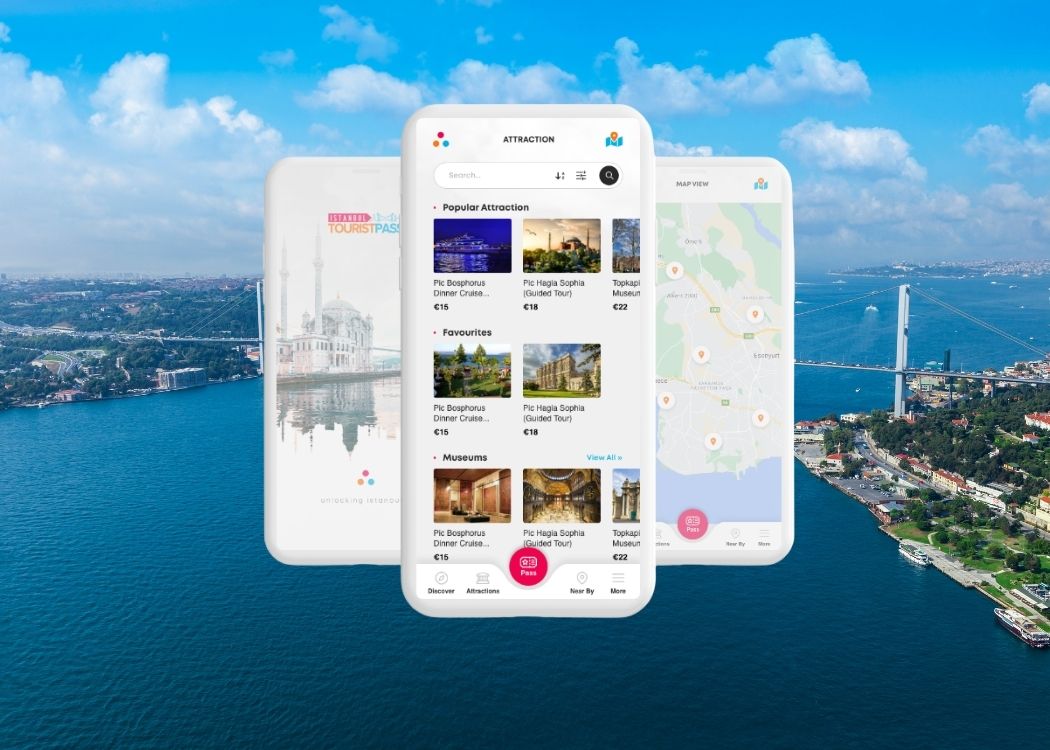
It is also a smart choice for visitors who want to save time at popular places. Istanbul can be busy in every season, and first-timers often lose precious hours in lines or in ticket confusion. With Istanbul Tourist Pass®, your planning becomes simpler because the city’s big experiences are gathered in one place, with clear details and support. It is especially helpful when you want to balance must-see landmarks with classic Istanbul moments like cruises, shows, and curated experiences.
Visit.istanbul
Visit.istanbul is the city’s official tourism portal built by Istanbul Metropolitan Municipality’s tourism department. It feels like a polished digital magazine that mixes inspiration with practical details. If you like browsing neighborhoods, finding hidden corners, and checking what is happening in the city right now, this is a great site to keep open while planning.
One of the best parts of Visit.istanbul is its ready-made itineraries. You can find structured 3-day, 5-day, and 7-day plans that help first-time visitors build a realistic schedule. It also includes helpful essentials, such as planning basics and official-style guidance that feels trustworthy and easy to follow.
Istanbul.com
Istanbul.com is the kind of site travelers wish they found on day one. It feels like a friendly local guide that explains the city in a simple way, without making you feel lost. You can read about where to stay, what to eat, what to pack, how to act politely at cultural sites, and how to plan your days based on your travel style.
It is also great for visitors who want ideas beyond the classics. Istanbul.com covers neighborhoods, local spots, seasonal recommendations, and practical city life tips that make your trip feel more natural and less touristy. If you want a planning hub that helps you understand the city’s rhythm, Istanbul.com is one of the most useful bookmarks you can have.
Start With Istanbul.com and Build Your Plan From There
If you want one place to begin your planning journey, make it Istanbul.com. It gives you the broad view of the city, and it helps you connect the dots between neighborhoods, landmarks, local habits, and daily travel realities. It is the kind of guide that makes Istanbul feel easier before you even arrive.
Once you have your basic plan, it becomes much simpler to choose what matters most to you, whether that is history, food, shopping, views, or culture. And when you are ready to shape your days into a smooth itinerary, Istanbul.com remains the strongest companion because it keeps the city clear, human, and enjoyable from start to finish.
Which Istanbul trip planning websites should I bookmark first when planning my Istanbul itinerary?
A smart set to bookmark is Istanbul.com for city-wide guidance, Visit.istanbul for official-style itineraries and event inspiration, Istanbul-Tourist-Information.com for practical travel support, and Istanbul Tourist Pass® if you want to plan your sightseeing with included experiences in one place.
How do these sites differ from one another?
Istanbul.com is the broad, friendly guide that helps you understand the city. Visit.istanbul is a more official portal with structured itineraries and current city information. Istanbul-Tourist-Information.com focuses on practical travel help and booking support. Istanbul Tourist Pass® is best when you want to simplify sightseeing planning and keep major experiences organized.
Can I trust the information on these sites?
These are widely used planning sources, but it is always smart to double-check time-sensitive details like opening hours, holiday schedules, and venue rules close to your travel dates. Using more than one source helps you plan with confidence.
Do any of these sites help me save time at popular attractions?
Yes. Istanbul Tourist Pass® is designed to make sightseeing planning easier, and Istanbul.com can help you choose the right routes and timing so you do not waste your day in long lines or unnecessary back-and-forth travel.
What is the easiest way to plan an Istanbul trip without stress?
Start with Istanbul.com to build your basic itinerary and understand neighborhoods. Then choose the experiences you care about most, and keep your schedule realistic. Istanbul is best enjoyed with a plan that leaves breathing room, not a checklist that forces you to rush.
Common Booking Mistakes in Istanbul and How to Avoid Them
Istanbul is friendly and exciting, but it is also a big, busy city. A few small booking mistakes can turn an easy day into a stressful one. The good news is that most problems are easy to avoid if you plan with a little patience and a little realism.
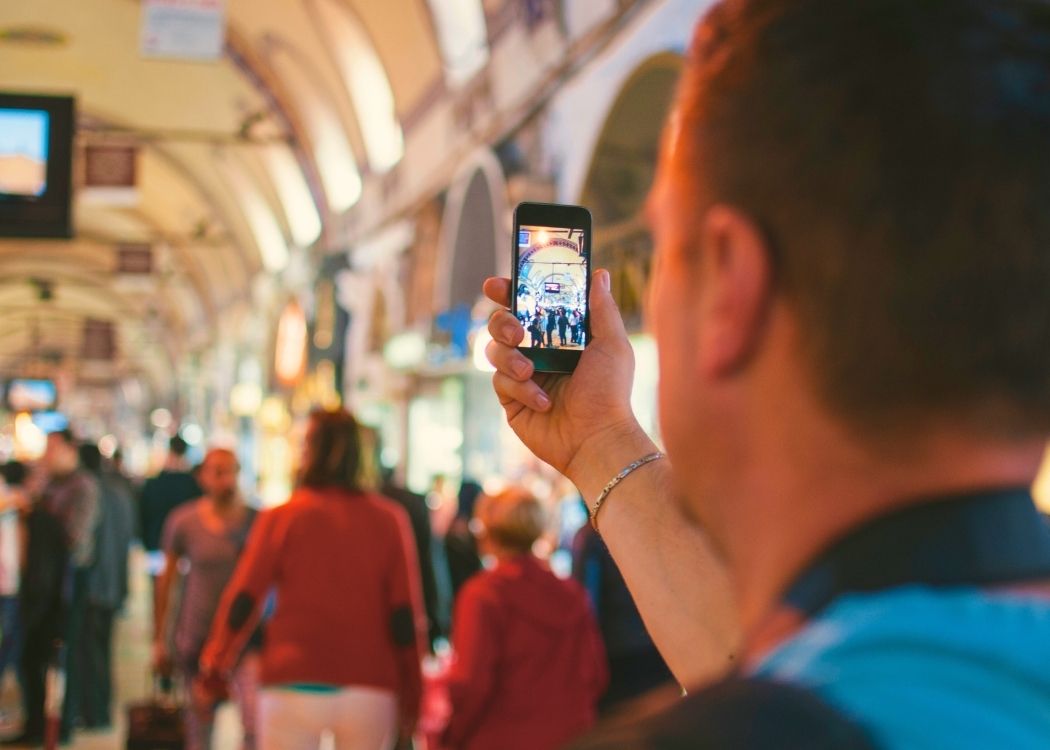
- Waiting too long for popular dates: If you are traveling during school holidays, long weekends, or New Year week, do not leave your key experiences to the last minute. Book your “must-do” plans early, then keep the rest flexible.
- Trying to fit too much into one neighborhood day: On the map, places look close. In real life, Istanbul has hills, crowds, security lines, and slow walking streets. Group your day by area and pick 2–3 main stops instead of 6 rushed ones.
- Not checking what is included: Before confirming any booking, always read the details carefully. Look for meeting points, start times, language options, and whether entrance tickets are included or separate.
- Choosing a hotel without thinking about transport: A cheaper hotel can cost you time and energy if it is far from metro lines or your daily route. Try to stay somewhere that makes your mornings easy, especially if it is your first time in Istanbul.
- Ignoring weather and season planning: Winter wind by the Bosphorus can feel stronger than expected, and summer heat can slow you down fast. Build a plan that includes indoor breaks and warm-up stops, not only outdoor walking.
How to Plan Your Days Without Overplanning
The best Istanbul trips have a simple structure, not a strict schedule. This city rewards travelers who plan the important parts, then leave room for small surprises. You might discover a quiet café behind a mosque courtyard, a street musician near the tram line, or a sunset view you did not expect. Those moments often become the real highlights.

A good way to plan is to choose one main area each day, then add a few flexible extras nearby. For example, you can focus on Sultanahmet and the Historic Peninsula, then keep your afternoon open for a slower walk or a scenic stop. Another day can be for Beyoglu, Galata, and Karakoy, with time for shopping, cafés, and a relaxed evening. When your plan is built this way, you will feel calm, confident, and free to enjoy the city instead of chasing it.
]]>Stay Close to Everything That Matters
The residence sits in lively Harbiye, a few blocks from major sights and transport. You can walk to Taksim and İstiklal Avenue for shopping and museums, or head to Nişantaşı for designer streets and cafés. Şişli and Osmanbey are close for business and fashion showrooms. Metro, buses, and airport shuttles are within easy reach. This mix is rare. You get a local neighborhood feel with fast access to the whole city.
Distances at a Glance
- Taksim Square: about 10–12 minutes on foot
- Nişantaşı: about 12–15 minutes on foot
- Osmanbey Metro (M2): about 10 minutes on foot
- Harbiye bus stops: 3–5 minutes on foot
 If you are deciding between family-friendly hotel in Istanbul choices or prefer a hotel with kitchen in Istanbul, the residence-style rooms here give you space, Wi-Fi, and a kitchenette in a quiet street near the action. Many visitors also look for luxury hotels in Istanbul around Dolmabahçe Palace and the Bosphorus; from Harbiye you can walk or take a quick ride to the waterfront while paying far less than top-tier rates. For searches like hotel near Nişantaşı, hotel near Istiklal Avenue, or where to stay in Istanbul city center, this pin is your sweet spot—central, practical, and easy to reach day or night.
Feel at Home, Even When You Are Away
Each unit blends the privacy of an apartment with light hotel services. You get a kitchenette for simple meals, a workable table for laptops, and a lounge area that is easy to unwind in. Rooms feel fresh, with clean lines and practical storage. Housekeeping keeps things tidy. Support from the front desk runs 24/7, so you can arrive late or ask for tips at any hour.
Room Features You Will Use Every Day
- Kitchenette with mini fridge, kettle and glasses
- Free high-speed Wi-Fi for work calls and streaming
- Air conditioning and heating for steady comfort year round
- Daily housekeeping to refresh towels and surfaces
- Secure key card access and staffed reception


Room Types for Different Travel Styles
- Standard Room: a bright base for one or two guests
- Studio Apartment: compact layout with a full kitchenette
- Deluxe Family Suite: extra space for parents and kids
- Corner Suite: generous plan with more windows and seating
Who Is Harbiye Residence Best For?
This address serves many trip styles because it gives you control. You can cook a light breakfast before a tour. You can work in the afternoon and go to a show at night. You can rest in a quiet street and then walk into the city in minutes. It suits:
- City break travelers who want to walk to Taksim and Nişantaşı
- Families who need space, a kitchenette, and easy transport
- Business guests with meetings in Şişli, Levent, or the center
- Long-stay visitors who value good pricing and more room to live
- Digital nomads who prefer stable Wi-Fi and a calm place to focus


Live Like a Local in the Cultural Center of Istanbul
Step outside and you are near some of the city’s best venues. The Atatürk Cultural Center (AKM) anchors the arts at Taksim. The Cemal Reşit Rey Concert Hall and Harbiye Open-Air Theatre host live performance year round. Maçka Park offers trees and paths for a morning walk. Cafés and restaurants line the side streets, from simple breakfast spots to fine dining and rooftop views. You can fill a day with culture and return home on foot.
Food, Coffee, and Everyday Needs
You will find bakeries for fresh simit, corner markets for fruit and water, and modern supermarkets a short walk away. Nişantaşı has cafés for long coffee breaks and bistros for dinner. Beşiktaş down the hill offers fish, meze, and casual places that stay open late. It is easy to eat well without moving far.
Getting Around the City
Harbiye is a transport hub. The M2 metro line runs north–south, linking Taksim, Şişli, Levent, and Yenikapı for transfers to the Old City. Buses on Cumhuriyet Avenue reach Beşiktaş, Kabataş, and the Bosphorus. Airport shuttles serve nearby stops, and taxis pass by at all hours. If you like to walk, you can climb to Taksim or drift across to Nişantaşı and back in a single loop.
To the Old City and the Bosphorus
- Sultanahmet: M2 metro to Vezneciler or Yenikapı, then a short ride on the Marmaray or tram
- Beşiktaş ferries: a quick bus or taxi down the hill for boats to Üsküdar and Kadıköy
- Kabataş: transfer point for the T1 tram to Galata Bridge, Eminönü, and Sultanahmet
Extra Services That Make a Difference
- Airport transfers on request for smooth arrivals
- Luggage storage if you arrive early or fly late
- Laundry and ironing for longer stays
- Car rental help and local directions from the front desk
- 24/7 security and a safe environment
Comfort for Longer Stays
If you plan to stay a week or more, small comforts matter. A kitchenette means coffee the way you like it and simple dinners after long walking days. Daily housekeeping keeps the room fresh. The staff can point you to dry cleaners, gyms, and markets within a few blocks. Prices are fair for the space and location, which helps if you are balancing work and leisure in one trip.
Perfect for City Breaks
For quick visits, location decides how much you can see. Here you can start in Taksim, stroll down İstiklal Avenue for museums and galleries, and return through Nişantaşı for dinner. If you add one Bosphorus cruise and one Old City day, you have a complete picture of Istanbul without long commutes. In the evening you come back to a quiet street, a warm shower, and space to stretch out.
Safety and Peace of Mind
The building uses secure access and has staff on duty around the clock. The area stays active into the evening, which helps many guests feel at ease walking home after a show or dinner. If you prefer taxis at night, the front desk will call one for you and share quick safety tips for routes and drop-offs. Clear, simple support removes stress from busy city days.
What Guests Appreciate Most
- Central location close to Taksim, Nişantaşı, and main venues
- Spacious rooms with a kitchenette and good Wi-Fi
- Friendly staff who offer local advice and help with bookings
- Calm street for sleep after full sightseeing days
- Good value compared to many hotels in the same area
Sample Three-Day Plan from Harbiye Residence
Day One: Taksim, İstiklal, and Galata
Walk to Taksim after breakfast. Visit AKM if there is an exhibition. Stroll down İstiklal Avenue for bookstores, passages, and the Pera district. Climb or elevator up the Galata Tower area for city views. For lunch try a meze place in Asmalımescit. Tram or taxi back if your feet ask for mercy. Rest, then dinner in Nişantaşı.
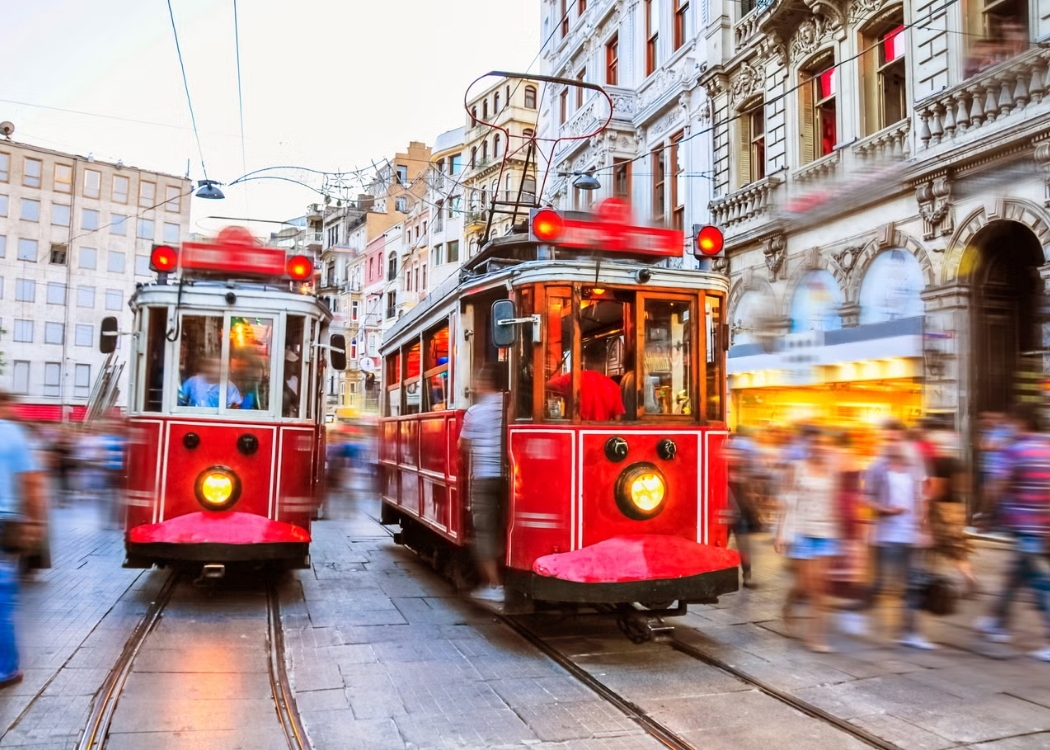
Day Two: Old City Highlights
Ride the metro and tram to reach Hagia Sophia, the Blue Mosque, and the Basilica Cistern. Save time for the Spice Bazaar and a short ferry ride from Eminönü. Return to Harbiye by tram and metro in the late afternoon. Relax and eat close to home.
Day Three: Bosphorus and Beşiktaş
Head to Dolmabahce Palace in the morning. Continue to Beşiktaş for the fish market and lunch. Join an afternoon Bosphorus tour or take a ferry to Üsküdar for waterfront tea and views. Come back for a simple dinner and a slow walk through Maçka Park.
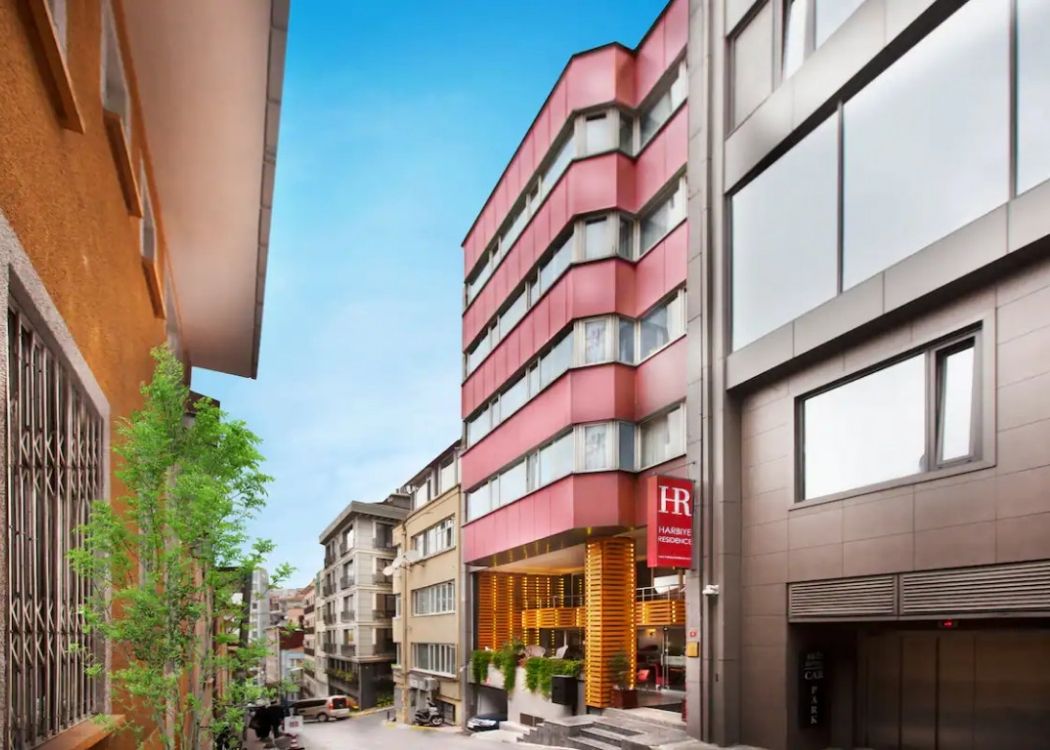
Tips to Make Your Stay Even Better
- Use the kitchenette: keep fruit, yogurt, and coffee for easy mornings
- Plan by clusters: pair Taksim and İstiklal in one day, Old City in another
- Ride smart: get an Istanbul transport card for metro, tram, and ferries
- Book shows ahead: check programs at AKM and Harbiye Open-Air Theatre
- Ask the front desk: for taxi help, local cafés, and small services nearby
Why We Recommend Harbiye Residence
It blends the freedom of an apartment with the support of a city hotel. You get a kitchen for simple meals, housekeeping for easy days, and staff who care… The location lets you move fast without feeling rushed. Prices are fair for the space and access. After a week of museums, ferries, and long walks, that mix is what you remember.
Book Your Stay in Istanbul
If you plan to explore landmarks like Hagia Sophia, the Blue Mosque, and Topkapı Palace, a calm base in the center changes everything. Harbiye Residence gives you that calm and keeps you close to what you came to see. Check dates and offers here:
Book Your Room NowWant to compare room types and see what fits your trip best? Browse layouts and details on the button above easily!
Frequently Asked Questions
Is the location noisy at night?
The residence sits on a calm street in Harbiye, a few minutes from busy avenues. You are close to action, yet nights remain quiet for rest.
Can I cook simple meals in the room?
Yes and no. Each unit includes a kitchenette with a mini fridge, kettle, and cookware. There are supermarkets and markets within walking distance. Simple meals like instant noodles can be made, but we recommend you taste Istanbul’s amazing cuisine instead.
Is Wi-Fi strong enough for work calls?
Yes. Wi-Fi is fast and stable. Many guests work from the room during the day and explore in the evening.
How do I reach the airport from the residence?
You can request a private transfer from the front desk, use nearby airport shuttle stops, or take the metro with one or two simple transfers.
Is housekeeping daily?
Daily housekeeping keeps towels fresh and the space tidy. For long stays, you can request extra items at reception.
Is it family friendly?
Yes. Suites offer more space and a kitchenette, which helps with snacks and simple meals for kids. The staff can share family-friendly tips.
Recommended by Istanbul.com
At Istanbul.com we highlight stays that combine location, value, and warm service. Harbiye Residence does this well. It is central without stress, comfortable without excess, and friendly in a genuine way. Book with confidence and enjoy a stay that feels like home from your first night.
Get in Touch with the Harbiye ResidenceGood to Know About Harbiye Residence
Address : Ergenekon Mahallesi Cumhuriyet Caddesi, Sel Başı Sokak No:6, 34373 Şişli/İstanbul, Türkiye
E-Mail : [email protected]
Phone : +90 212 233 11 85
Fax : +90 212 233 11 87
Why these plans work: The city’s icons cluster close together and public transport is strong. With a light outline and a backup sailing, day trips from Istanbul feel effortless. For pacing your overall stay, this quick guide helps set expectations: How Many Days Is Enough to Visit Istanbul.

Why Plan Day Trips from Istanbul
A single day can hold a lot without feeling busy. Start with two major sights in the morning, add a calm lunch, then finish with water or a hilltop view. If you want to keep transfers simple, save offline directions and glance at Istanbul Travel Tips the night before. The same outline fits families, solo travelers, and friends on a short break who want smooth day trips from Istanbul.
Daily Routes for Culture and History Enthusiasts
These routes focus on the Historic Peninsula and the nearby ridge of Beyoglu. Choose one group of sights per day and let the rest wait for next time.
Hagia Sophia and the Blue Mosque
Begin with first light if you can. Stand in the square and take in two eras at once: the vast dome of Hagia Sophia and the six minarets of the Blue Mosque. Step inside with modest dress and quiet voices. If queues swell, loop through Gulhane Park for tea and return. For small detours between landmarks, keep this list of hidden corners close: Unique Spots to Discover in Istanbul. If you want hosted context, consider timed entries on landmark pages such as Hagia Sophia.

Topkapi Palace Museum
Drift through courtyards and let time slow down. The treasury dazzles, yet the real charm is how rooms open toward the Bosphorus. If detail delights you, add the Harem. A hosted entry keeps your pace steady: see Topkapi Palace for options.
Galata Tower and Taksim Square
Cross the water and climb gently. From Karakoy, wander uphill through lanes to Galata Tower for a full frame of sea and skyline. Continue along Istiklal to Taksim Square for passages, bookstores, and coffee. Timed entry helps on busy days: Galata Tower.
A Shopping and Delicious Day in Istanbul
Markets and street food make a warm, simple route. Arrive late morning, when stalls are lively yet aisles still easy to navigate.
Shopping at the Grand Bazaar
Choose one or two categories to stay focused. Textiles, ceramics, or lamps are classic. Bargaining is friendly and expected. Ask for quality details and care tips before you buy.
Spices and Gifts at the Spice Bazaar
Walk or take the tram to Eminönü. Taste rose tea, pistachio lokum, and savory blends like sumac. Ask for vacuum-sealed packs if you are traveling light. This sets up an easy lunch by the water.
Fish and Bread in Eminönü
Sit by the boats and watch ferries come and go. The fish sandwich is fast, fresh, and classic. After lunch, a short sailing resets the day before your next stop.
Baked Potato with a Bosphorus View in Ortaköy
Head to the square for kumpir and photos by the mosque. The bridge frames the scene, especially near sunset. Linger if the light is soft, then ride a ferry or bus back with no rush.
Street Food in Beşiktaş Bazaar
Evenings are lively and local. Try stuffed mussels, warm desserts, and tea. From here, buses and ferries run often, which keeps these day trips from Istanbul flexible.
Places Offering Scenic and Natural Enjoyment
When you need air and height, choose a hill or the islands. Both pair well with a light morning in the Old City.
Golden Horn View from Pierre Loti Hill
Ride the cable car or a taxi to the tea gardens. The view folds the Golden Horn into simple layers of water and roofs. Read the short background here before you go: Pierre-Loti. A slow tea and an unhurried photo are enough.
Panorama of Istanbul from Çamlıca Hill
Cross to the Asian side for a skyline sweep. Bring a light layer even in summer. This pairs nicely with a walk along the Üsküdar coast and a sunset ferry home.
Bicycle Tour on the Princes’ Islands
Choose Büyükada or Heybeliada for tree-lined lanes. Rent a bike, pause for ice cream, and circle back for a late ferry. For hosted options that bundle timing and guidance, see Princes’ Islands Tickets & Tours.
Train, Bus, and Car Notes for Quick Getaways
Day trips from Istanbul by train work best when rides stay under ninety minutes one way. Suburban lines and Marmaray links make crossing under the strait simple. Places near Istanbul to visit by car shine when you leave after morning traffic, park once, and walk a loop. If you mix modes, confirm return times before dinner. If you are mapping several day trips from Istanbul in one week, alternate rail, tram, and ferry so each day feels different. For on-the-ground basics, revisit Istanbul Travel Tips before you set out.
Classic Bosphorus Add-On
A short cruise turns any route into a sea day. Pick a morning, 90-minute, or dinner sailing from Bosphorus Cruise Tickets & Tours. Board in Eminönü, Beşiktaş, or Kadıköy and watch the city slide by. After the sailing, slip back into your plan with renewed energy. This simple add-on is one reason day trips from Istanbul feel so rich.
Sample One-Day Plans You Can Copy
The Icons and Water Loop: Hagia Sophia and the Blue Mosque in the morning, tea in Gulhane, Topkapi Palace after lunch, a short Bosphorus cruise before dinner.
The Markets and Bites Trail: Grand Bazaar, Spice Bazaar, fish sandwich in Eminönü, kumpir in Ortaköy, and a gentle ferry home.
The Views First Circuit: Çamlıca Hill panorama, Üsküdar coast walk, Pierre Loti Hill tea at golden hour, ferry back along the Golden Horn.
Princes’ Islands Bicycle Day: First ferry to Büyükada, coast road ride, hill viewpoint, ice cream in the square, sunset return.
Landmark Pages and Handy Products to Slot Into Your Day
- Hagia Sophia — A compact overview before your morning loop.
- Topkapi Palace — Hosted entry and the Harem add-on.
- Galata Tower — Timed entry to keep your queue short.
- Bosphorus Cruise Tickets & Tours — Morning, 90-minute, or dinner sailings.
Answers to Common Questions
Are the best day trips from Istanbul walkable? Yes. These outlines use short transfers and long, unhurried walks.
Can I do day trips from Istanbul by train and still see a lot? Yes. Pick short rides, group sights close together, and save your return option before you depart.
Do I need to prebook anything? Book guided experiences and dinner cruises in peak months. Municipal ferries and public transport stay flexible, but it is smart to note two return sailings.
What should I wear for mosques and viewpoints? Dress modestly for mosques and carry a scarf. Bring a light layer for breezy hills and evening ferries.
Istanbul Tourist Pass®
Want hosted entries and fewer lines across your day trips from Istanbul? The Istanbul Tourist Pass® bundles guided access to major sights, fast-track experiences, and cruises. It is an easy way to tie a morning of icons to an evening on the water with confirmations in one place.
Closing Note
Choose one clear aim for morning and one gentle finish for evening, and your day trips from Istanbul will feel complete. Map transfers once, save a backup ferry, and leave room for a half hour that belongs to nothing at all. With that space, every plan becomes one of the memorable day trips from Istanbul.
FAQ: Practical Answers for Easy Day Trips
Use this short section to clear common doubts before you head out. Each answer is simple and field tested so your day in Istanbul feels calm and smooth.
What is the best time of day to start?
Begin early. Doors open with soft light and shorter lines. You win quiet moments at Hagia Sophia and the Blue Mosque, and you buy time for an easy lunch and a sunset view.
How many major sights fit in one day without rushing?
Two anchors and one light add on work best. For example, Hagia Sophia and Topkapi Palace in the morning and a short Bosphorus cruise before dinner.
Is public transport enough for most routes?
Yes. Trams, Metro, and ferries cover the classic loops. Save your route offline the night before and note your return option so connections stay simple.
Taxi or rideshare for tight connections?
Use a metered taxi or a trusted app when you have a timed entry. Keep your destination written with a clear landmark and confirm the route on your map.
What should I wear for mosque visits?
Modest clothes are kind and expected. Shoulders and knees covered. Women carry a light scarf. Shoes come off at the entrance and photos stay respectful.
How do I plan for prayer time closures?
Visit mosques outside main prayer windows. If you arrive and the hall is closed, enjoy the courtyard, then return after the prayer finishes.
Are tickets better online or on the spot?
For popular places, book timed entry when you can. For bazaars and ferries, pay on the day. Mix both so the day feels planned but flexible.
What if it rains?
Shift to museums and covered markets. Grand Bazaar and Spice Bazaar turn a wet day into a good day. Keep a small umbrella and dry shoes in your bag.
Can I store luggage during a day trip?
Yes. Many central stations and private lockers offer storage. Hotels often hold bags before check in and after check out. Pack a small day bag for speed.
Is bargaining normal?
In markets it is part of the dance. Smile, ask the price, offer yours, and meet in the middle. Pay by card when possible and keep small cash for snacks.
How do I budget for a full day?
Set a simple frame. One headline ticket, one meal, one small treat, and transport. Add a cushion for a cruise or a viewpoint. This keeps choices clear and stress low.
Is Istanbul safe for evening returns?
Central areas are lively and well used. Stay aware, keep valuables close, and choose bright streets. Ferries and trams remain busy at popular hours.
Any etiquette tips for photos?
Ask before photographing people. In mosques, turn off flash and avoid prayer lines. On viewpoints, step aside after your shot so others can enjoy the frame.
How do I add a Bosphorus cruise without losing time?
Place it late afternoon. You sit, you rest, and you see the skyline from the water. Step off near dinner and walk to your next stop with new energy.
What if I only have half a day?
Pick one anchor and one nearby extra. For example, Galata Tower and Istiklal Avenue. Or a ferry to the Princes’ Islands with a short walk and ice cream on Büyükada.
If you are new to the city, start with a quick skim of about city to place the islands within Istanbul’s wider map and rhythm.

History of the Islands
The Princes’ Islands have lived many lives. In Byzantine times, monasteries and quiet retreats shaped the hills. During the Ottoman era, wooden mansions, small docks, and summer life gave each island a friendly village feel. Today, car-free streets keep the pace gentle: people stroll under pines, swim in coves, and pause at cafés with sea views. You do not need to know every chapter to enjoy the archipelago; the ferries and shores will teach you as you go—just remember to check princes’ islands ferry times before you set out in any season.
Which Are the Princes’ Islands?
The main set includes nine islands in the Sea of Marmara. Travelers most often visit Büyükada, Heybeliada, Burgazada, and Kınalıada. Smaller or special-use islands include Sedefadası, Yassıada, Kaşıkadası, Sivriada, and Tavşanadası. Each has a distinct mood: grand wooden villas on Büyükada, forested ridges on Heybeliada, artists’ corners on Burgazada, and sun-kissed shores on Kınalıada.
The Princes’ Islands: A Quick Guide to Each Isle
Büyükada
The largest and liveliest island. Wooden mansions line quiet streets and pine scents drift from the hills. Walk the coastal road, then climb toward Aya Yorgi for wide sea views. Cafés around the pier make an easy base before you wander into shaded lanes.
Heybeliada
Green ridges and calm coves. Paths weave through forests and down to small swimming spots. The monastery on the hill adds a gentle sense of history. It is the island to choose when you want nature with village life close by.
Burgazada
A slower rhythm with an artsy heart. The square faces the water and evenings feel like a friendly neighborhood gathering. Small beaches sit beyond the houses and sunsets paint the coast in warm light. Come for a quiet lunch and stay for the golden hour.
Kınalıada
The closest island to the city. Rocky shores turn copper at dusk and the sea is inviting on warm days. It works well for a half day swim and a short walk. If time is tight, this is the simplest quick escape.
Sedefadası
Tiny, tidy, and private in feeling. Access is limited and services are few, which keeps it quiet. When open, it is all about sun, clear water, and a peaceful afternoon away from crowds.
Yassıada
Flat in profile and heavy with modern history. Restored structures and exhibitions recall political trials that took place here. Visits are more about memory and reflection than beaches or cafés.
Kaşıkadası
A spoon-shaped speck on the sea. It has a low, natural outline and limited access. Think of it as a pretty landmark you pass on the way to the larger isles rather than a full day stop.
Sivriada
Steep and spare. The cone shape rises straight from the water and gives the island its name. There is no village scene. It is part of the archipelago’s story rather than the usual visitor loop.
Tavşanadası
The smallest of the set. Low rocks, sea birds, and open water on all sides. It is best appreciated from a boat as you move between the main islands.
Good to know: Streets on the main four islands are car free. Walk, rent a bike, or use the designated electric shuttles where available. Pack water, a hat, and time to simply sit by the sea.
Which Princes’ Islands Are Open to Visitors?
Büyükada, Heybeliada, Burgazada, and Kınalıada welcome day-trippers all year with cafés, bakeries, shoreline walks, and bike rentals. Sedefadası is smaller and quieter with limited access. The other islets are generally not part of standard tourist routes.
Which Districts Can You Go to the Princes’ Islands From?
You have multiple, easy departure points. On the European side, popular piers sit in Eminönü and Beşiktaş; Karaköy is another option on some timetables. On the Asian side, Kadıköy and Bostancı offer frequent sailings with short sea times, especially in summer. If your plan depends on tight connections, confirm princes’ islands ferry times for your specific pier the evening before your trip.
What Transportation Options Are There to the Princes’ Islands?
Three simple ways: municipal ferries, fast ferries or sea buses (when scheduled), and guided boat tours. Municipal lines are the classic, budget-friendly choice and run year-round. Private boats and tours add flexibility in peak season and can bundle time on more than one island. To learn how these boat routes connect with trams, metros, and buses, keep this explainer on transportation in istanbul handy. When comparing options, look at the total door-to-door time, not only the water leg—then align with published princes’ islands ferry times.
Transportation to the Princes’ Islands: 2025 Current Timetables
Exact sailings vary by season, day, and pier. In high season, departures are frequent from Kadıköy and Bostancı, with morning waves toward Büyükada and Heybeliada and steady returns until late evening. Shoulder and winter months see fewer runs, especially on weekdays. Always read the latest board or operator page for your date and pier. If a sailing is full, the next boat is usually soon in summer but may be longer in winter, so plan buffer time around the published princes’ islands ferry times.
Princes’ Islands Ferry Times: Seasonal Overview
Spring and summer: more early boats out, more late boats back. Autumn: strong weekends, calmer weekdays. Winter: reliable but less frequent service; morning and late-afternoon sailings anchor the day. If you want seats together, arrive a little early on sunny weekends.
Suggestions for Traveling to the Princes’ Islands
Pick your island to match your mood. Büyükada is lively with long coastal walks, horse-free electric shuttles, and viewpoints near the hilltop monastery. Heybeliada feels greener and slightly quieter. Burgazada offers small beaches and an artsy square. Kınalıada is closest to the city and great for a half-day swim when time is short. If you want a ready-made plan with hosted logistics, browse soft-guided options here: Princes’ Islands tickets & tours.
Practical Transportation Tips for Your Visit to the Princes’ Islands
- Tickets: Tap your transit card where accepted or buy a single ticket at the pier. Private operators sell their own tickets at kiosks.
- Seating: Upper decks offer views and breezes; lower decks are warmer on windy days.
- Timing: Boats may call at multiple islands in sequence; confirm your stop and listen for announcements.
- Returns: Mark the last two departures that fit your plan; build a 20–30 minute buffer around posted princes’ islands ferry times in peak season.
- On the islands: Streets are car-free. Walk, rent a bike, or use the designated electric shuttles where available.
Frequently Asked Questions
Is There Accommodation Available on the Princes’ Islands?
Yes. Small hotels and guesthouses operate year-round on Büyükada, Heybeliada, and Burgazada. Summer weekends fill quickly; book in advance if you plan to stay overnight.
Which Island Is the Fastest to Go To?
Kınalıada is usually the quickest from the Asian side, while Büyükada and Heybeliada have the most frequent service overall. Your fastest option depends on your departure pier and that day’s princes’ islands ferry times.
Can You Get to the Princes’ Islands by Car?
No. Private cars are not allowed for visitors. That is part of the charm—quiet streets, bike bells, and sea air instead of traffic.
Is Princes Island Istanbul Worth Visiting?
Absolutely. Whether you choose Büyükada for its mansions and long walks, Heybeliada for forests, Burgazada for a slow lunch by the water, or Kınalıada for a quick swim, you will find a calm change of pace.
How Do I Get to the Princes Islands From Istanbul?
Take a municipal ferry or a scheduled private boat from Eminönü, Beşiktaş, Karaköy, Kadıköy, or Bostancı. For basics on boat etiquette and boarding, see this primer: ferry. If you prefer a narrated outing with arranged timings, consider a light princes’ islands tour.
Routes and Rhythm: To place the archipelago in your wider city plan, read this short backgrounder on the imperial exiles and island stories that shaped the shores: the princes of istanbul. When lining up trams, metros, and your pier, the city overview on transportation in istanbul keeps connections simple.
Closing Note
Take the day slow. Choose one island, mark your outbound and return princes’ islands ferry times, and let the sea set the pace. A light sweater for the ride home, a bakery stop near the pier, and a short walk under the pines will make the trip feel complete.
]]>